
MPs task NARO to bridge gap between research and farmers
Kyambadde said the platform would enable farmers to access relevant agricultural technologies while providing feedback to researchers on which technologies were working and which needed improvement.
NARO director general Dr Yona Baguma explains to members of the committee during the visit at NaCORI. (Courtesy photos)
________________
The chairperson of Parliament's Agriculture Committee, Amelia Kyambadde, has urged the National Agricultural Research Organisation (NARO) to establish a platform that brings together researchers, agricultural extension workers and farmers to improve the uptake of agricultural technologies.
She said the platform would enable farmers to access relevant agricultural technologies while providing feedback to researchers on which technologies were working and which needed improvement.
Such information could then be used to improve service delivery.
Kyambadde made the call on November 17, 2026, while leading a delegation from her committee on a visit to NARO's vaccine production plant at Nakyesasa in Wakiso district.
She cited the fisheries sector as an example, saying that, as a farmer, she had not interacted with an extension worker to guide her or share the latest research findings in the sector.
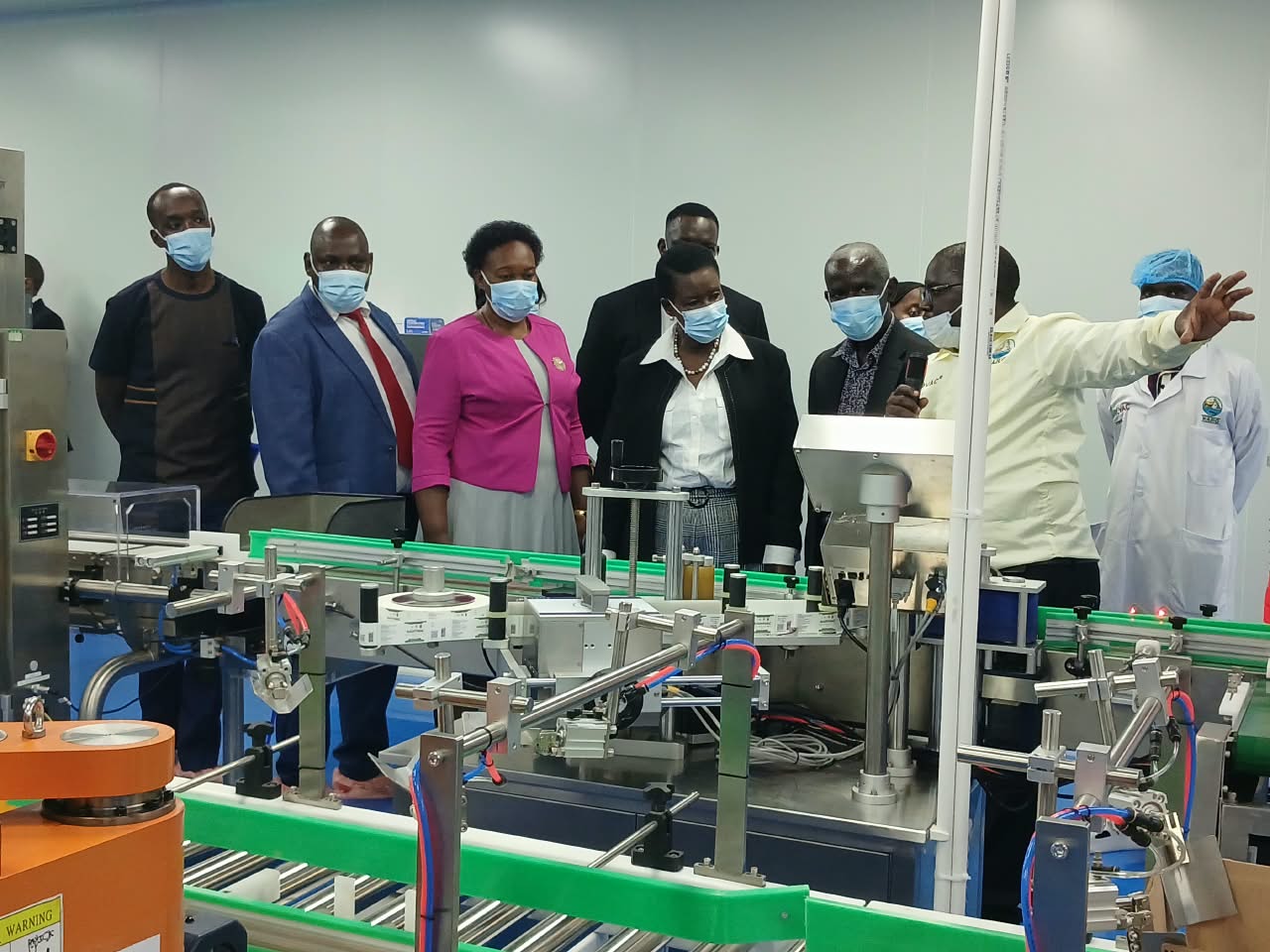
MPs being taken around the anti-tick vaccine production line
“So how does research connect to the extension worker, connect down to the farmer? Because I can see there is a vacuum there. For fisheries, it doesn’t apply, and I am also noticing, it is the same in the crop production. When we talk of the new seeds like purple potatoes, where are they, who is telling the farmer where to find the seed,” wondered Kyambadde.
During the same meeting, committee member Christopher Kibazanga asked NARO to explain why it had taken so long to breed parent stock, particularly for layer hens, which are currently imported from the Netherlands and Turkey.
In response, NARO director general Dr Yona Baguma told the committee that connecting researchers, extension workers and farmers would require resources and a policy shift.
Baguma said the policy should provide for extension workers to receive additional training at the national level, enabling them to acquire new knowledge and pass it on to farmers.
“But there is a gap due to a lack of enough resources, which prevents some extension workers from getting additional training on each technology that is released, so they continue to pass on old information,” he said.
Adding that, “This would be a policy issue because NARO has many technologies which extension workers lack information about.
“So, it should be a policy that at least at the beginning of every season the extension workers who are in Northern Uganda are clustered together in the same region. If that is done, we shall have this knowledge passed on to the farmer, which will cause a dramatic change in food production in this country,” he added.
On the rollout of the vaccine, NARO deputy director in charge of research Dr Swidiq Mugerwa said the organisation was reviewing applications from potential off-takers ahead of the start of vaccine distribution in Uganda in January 2027.
The committee members also commended NARO for its efforts towards developing an anti-tick vaccine and urged the organisation to begin distribution in cattle corridor districts, which they said were among the areas most affected by tick-borne diseases.
The committee was scheduled to continue its visit to NARO on Wednesday with a tour of the National Coffee Research Institute in Mukono district.
The committee on November 19, 2026, visited the National Coffee Research Institute (NaCORI) in Mukono district, where members were briefed on research milestones aimed at improving Uganda’s coffee production and strengthening the sector’s resilience to climate change.
During the visit, NARO officials said they had collected 365 coffee genotypes to support breeding high-yielding varieties, expected to be released in 2027.
They also highlighted efforts to develop three new Arabica varieties adapted to mid-altitude areas by grafting them onto Robusta rootstock, alongside efforts to improve the drought resilience of Robusta by grafting it onto Excelsa rootstock.