
Farmers urged to lead climate action as livestock emissions face scrutiny
Kagoro said the livestock sector, while critical to livelihoods and the economy, must transition into part of the solution through deliberate mitigation and adaptation measures.
Participants pose for a group photo at the workshop. (Courtesy)
_______________
Livestock farmers must be placed at the centre of efforts to tackle greenhouse gas emissions if Uganda is to effectively respond to climate change.
Dr Joseph Ruhinda Kagoro, chief executive officer of the Uganda Meat Producers Cooperative Union Ltd, said the livestock sector, while critical to livelihoods and the economy, must transition into part of the solution through deliberate mitigation and adaptation measures.
“We need to approach this problem from both a mitigation and adaptation angle,” he said, noting that Uganda is already experiencing the effects of climate change through erratic weather patterns that are affecting farm productivity, animal growth, and reproduction.
Kagoro was speaking during a two-day Livestock Monitoring, Reporting and Verification (MRV) capacity-building and action planning workshop at the Sheraton Kampala Hotel on April 7, 2026.
The event, which focuses on understanding livestock MRV frameworks, emissions sources, targeted interventions, and data gaps, brought together scientists and sector stakeholders to chart a way forward on reducing Uganda’s emissions.
Data presented at the meeting indicates that the livestock sector contributes about 20 percent of the country’s greenhouse gas emissions.
The workshop is supported by the World Bank in partnership with the Government of Uganda.
“It takes two to tango. We cannot do without livestock, but we must also play our part in reducing emissions,” Kagoro said.
He noted that livestock remains the backbone of rural livelihoods, particularly across the cattle corridor, which spans nearly half of the country.
According to Kagoro, the sector supports an estimated 71 percent of households and contributes about 4.5 percent to Uganda’s Gross Domestic Product, making it indispensable despite its environmental impact.
Climate cost
He said farmers are ready to engage in climate action but require support through knowledge sharing, financing, and technology transfer.
Kagoro called for targeted investments in animal nutrition, noting that improved feeds and pasture quality can significantly reduce methane emissions while boosting productivity.
“We need better pastures and feeding systems that increase nutritive value while lowering emissions per unit of production,” he said.
He also highlighted the need for improved manure management, describing it as a major but often overlooked source of emissions.
“With the right infrastructure and knowledge, manure can be better managed to reduce emissions while producing organic fertiliser to improve soil fertility,” he added.
Kagoro further emphasised the importance of genetic improvement and better breeding practices to enhance feed conversion efficiency and shorten the time animals take to reach market weight.
“If we reduce the growth period of a bull from two to three years to about one and a half years, we achieve higher output with lower emissions,” he explained.
“We need intentional, large-scale financing, not small pilot projects if we are to make meaningful progress,” he said.
Kagoro also pointed to gaps in data collection, saying most farmers lack the tools and knowledge to measure their emissions, making it difficult for the government to generate accurate national data.
He called for investment in monitoring systems and deployment of trained personnel, including veterinarians and ICT specialists, to support data collection at the farm level.
Fixing the system
Looking ahead, he stressed the importance of addressing emissions across the entire livestock value chain, from production to processing and export, through traceability and carbon footprint tracking.
“We must be able to mitigate emissions at every stage of the value chain if we are to achieve real impact,” he said.
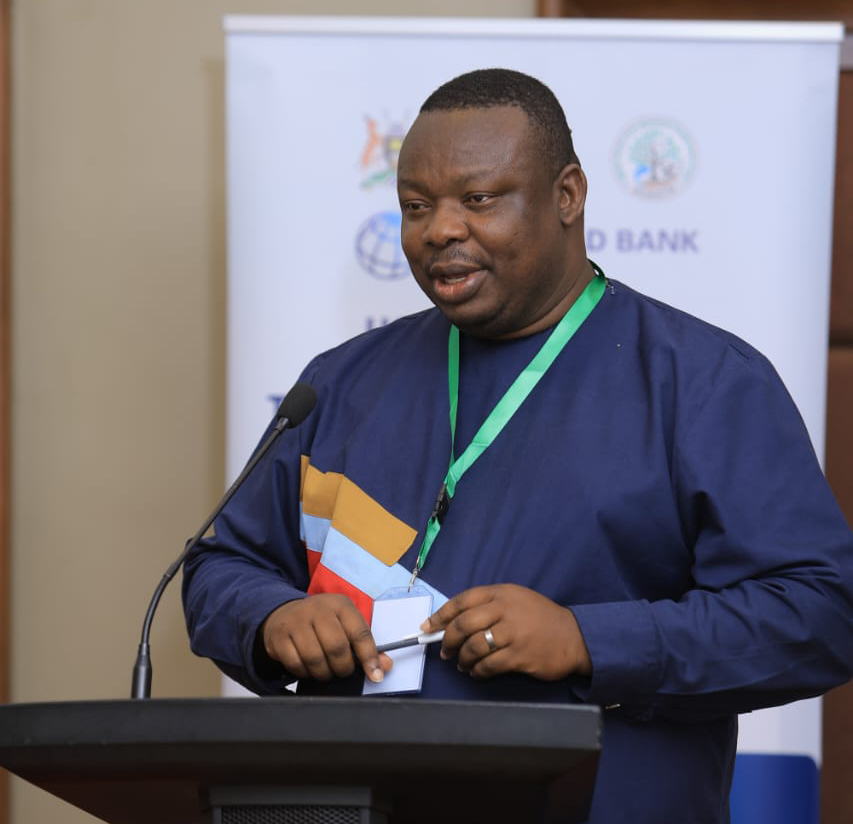
John Ilukor, official at the World Bank. (Courtesy)
Kagoro welcomed support from development partners, including the World Bank, and reaffirmed farmers’ willingness to be part of the solution.
“We believe we have a role to play, and we are ready to play that role for the betterment of Uganda and the world in the fight against climate change,” he said.
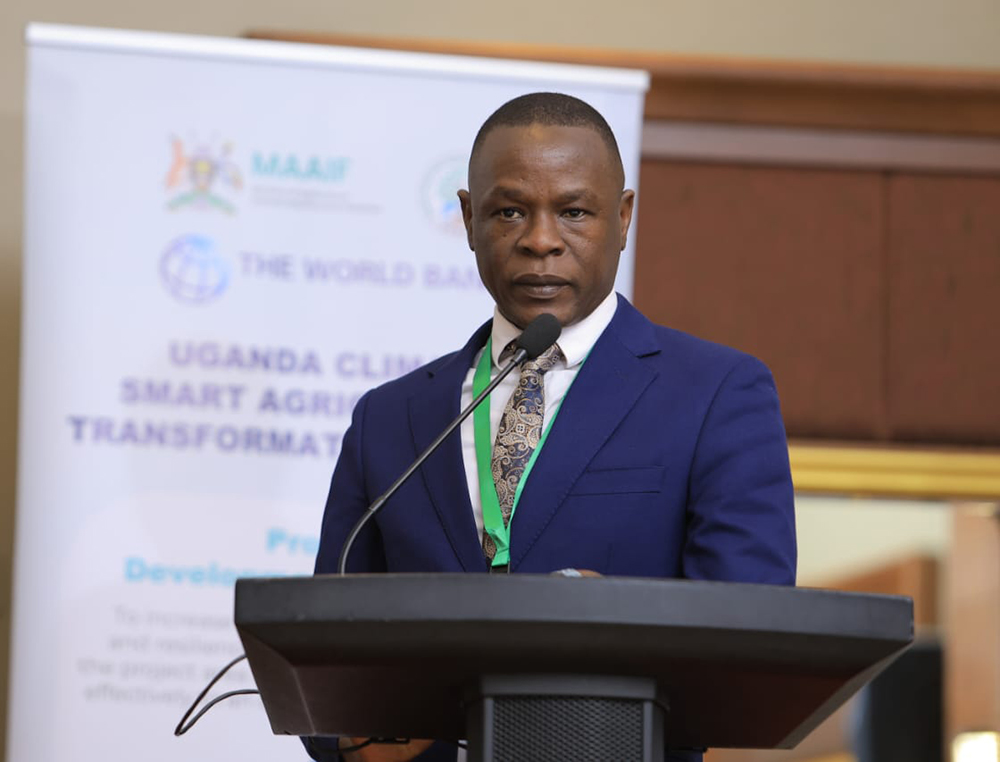
Dr Emmanuel Zziwa, climate change expert Food and Agricultural Organization. (Courtesy)
Dr Emmanuel Zziwa, a climate change expert at the Food and Agriculture Organisation (FAO), said while emissions in Uganda come from multiple sectors, including transport, energy, agriculture, and land use change, the livestock sub-sector alone represents a substantial share that cannot be ignored.
He explained that much of these emissions come from cattle, particularly through a biological process known as enteric fermentation, where methane gas is released during digestion.
“About 83 percent of emissions from cattle come from enteric fermentation, mainly through belching. Another 11 percent comes from manure management, while around 5 percent is linked to feed production and transportation,” he said.
Rethinking emissions strategy
Despite the figures, Zziwa cautioned against simplistic solutions such as reducing livestock numbers, noting the sector’s critical role in Uganda’s economy, food systems, and social fabric.
“We cannot say that reducing emissions means reducing the number of animals. Livestock supports livelihoods, provides food, and has social value.
Cutting numbers would have economic consequences, including job losses,” he said.
According to Zziwa, Uganda currently relies largely on estimation methods, which calculate emissions based on animal numbers and standard emission factors. While useful, such methods limit the country’s ability to implement targeted mitigation strategies.
“What we are advocating for is moving from estimation to actual measurement. When you measure emissions, you can identify practical interventions to reduce them without compromising productivity,” he said.
Among the recommended interventions are improving livestock breeds and enhancing feeding practices.
Zziwa explained that higher-yielding breeds can produce more milk or meat using the same resources, thereby reducing emissions intensity.
“For example, if one animal produces 10 litres of milk instead of two animals producing the same amount, you reduce overall emissions,” he said.
He also highlighted the importance of better feeding, noting that improved feed quality can reduce methane emissions generated during digestion.
“When animals are fed better-quality feed, they emit less methane. This not only reduces emissions but also improves productivity,” he said.
Other mitigation measures include improved manure management systems, such as the use of biogas digesters, which can convert waste into energy while reducing emissions.
Tracking livestock emissions
Zziwa revealed that Uganda is working to establish a Monitoring, Reporting and Verification (MRV) system for the livestock sector, with support from the World Bank and implementation under the Ministry of Agriculture, Animal Industry and Fisheries.
The system is expected to help track emissions more accurately and assess the effectiveness of mitigation interventions.
“We want to measure, report, and verify emissions so that we can promote sustainable livestock production. This will ensure that what we produce today does not compromise future production,” he said.
While acknowledging that developing countries like Uganda contribute relatively less to global emissions, Zziwa stressed that every contribution matters.
“Greenhouse gases accumulate over time. What we emit today adds to what was emitted decades ago. Methane can stay in the atmosphere for up to 30 years, while carbon dioxide can persist for up to 200 years,” he explained.
He likened emissions to a “black spot” on a road that causes accidents, saying even small contributions should not be ignored.
Zziwa added that reducing emissions in livestock systems could also boost productivity, as energy lost through methane emissions could instead be used for growth and milk production.
“When you reduce emissions, you actually improve efficiency. An animal will produce more when less energy is lost,” he said.
He called on stakeholders in the livestock sector to embrace climate-smart practices that both enhance productivity and reduce environmental impact.
“This is an opportunity for Uganda to adopt interventions that will not only mitigate climate change but also increase production and improve livelihoods,” he said.