
Experts call for Professionalism as Uganda National Agricultural Extension Week opens
According to Dr Richard Miiro, Chairperson Uganda Forum for Agricultural Advisory Services (UFAAS), the huge knowledge gap within the sector needs to be bridged to enable extension workers to address the needs of farmers.
Dr Richard Miiro, Chairperson Uganda Forum for Agricultural Advisory Services (UFAAS). (Courtesy)
_______________
Players across the agriculture value chain say it is critical that extension workers receive professional training so as to unlock Uganda’s potential through resilient agribusiness-focused food systems.
According to Dr Richard Miiro, Chairperson Uganda Forum for Agricultural Advisory Services (UFAAS), the huge knowledge gap within the sector needs to be bridged to enable extension workers to address the needs of farmers.
The call was made on Monday during the opening of the Uganda National Agricultural Extension Week 2026 (UGNAEW2026) being held at Silver Springs under the theme: Unlocking Uganda's Agricultural Potential: Multi-actor Agricultural Extension and Advisory services for Resilient, digital and Market-Oriented Agri-Food Ecosystems.”
The event is organised by the Uganda Forum for Agricultural Advisory Services (UFAAS) in partnership with the African Forum for Agricultural Advisory Services (AFAAS), the Ministry of Agriculture, Animal Industry and Fisheries (MAAIF), and other partners.
“We need proper licensing, standards and training of public and private providers to enable them to reach thousands of farmers requiring these services and support the sector that currently employs over 70% of Ugandans,” Dr Miiro noted.
These core skills and competencies include communication, organisational skills, and problem-solving abilities. These skills are essential for effective communication with farmers and for managing agricultural development programs.
The other is client-led services that allow extension workers to tailor their interventions to the specific needs of beneficiaries, leading to more effective and responsive services.
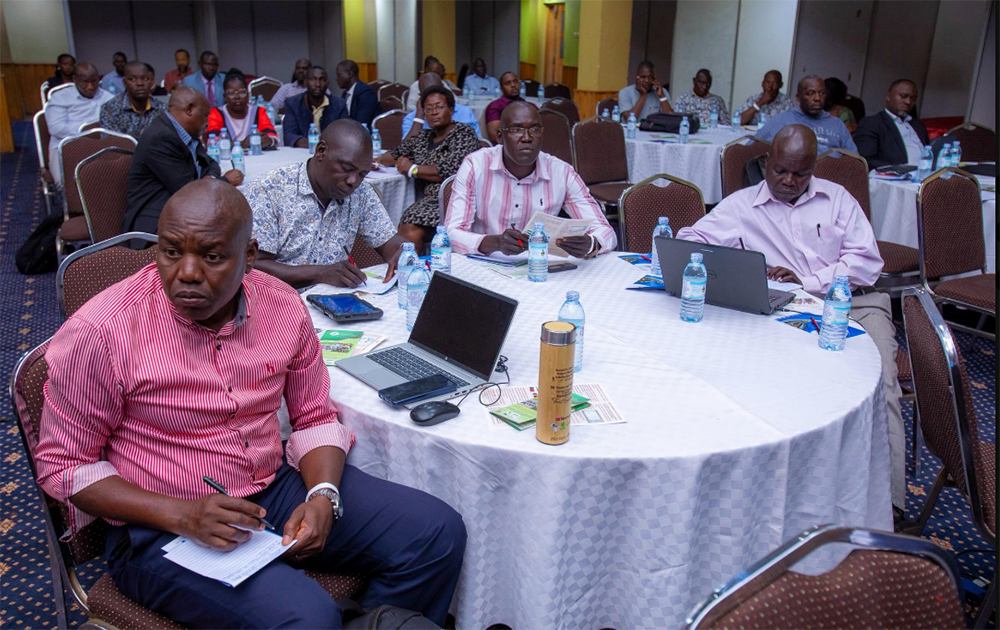
Participants listen keenly during one of the sessions at the Uganda National Agricultural Extension Week in Kampala. (Courtesy)
Training and development can help extension workers stay updated with the latest agricultural knowledge and technologies, ensuring they can provide the best possible service to farmers.
“This conference is happening at a time when the agriculture sector is grappling with multiple challenges and we need to act now. We need to tackle pests and diseases, climate change, price fluctuations and now global uncertainties.”
Meanwhile, Beatrice Luzobe, chief executive officer of UFAAS, highlighted that the week brings together 200-400 participants physically and virtually from 40+ districts.
This includes farmers, private companies, government, and NGOs to share innovations and also engage in field visits to farms doing dairy, value addition, and urban farming to acquire the necessary knowledge.
Dr Carl Erik Larsen, the executive director of the Global Forum for Rural Advisory Services (GFRAS), commended strides by UFAAS and partners for spearheading the cause, highlighting how crucial extension workers are to the sector.
He, however, urged the players not to focus more on limited funding for extension workers as a major hindrance to their output, but rather develop result-oriented strategies to support the farmers.
“Funding is critical, but we must first show the outcome off what has been allocated to the sector. Once we have proper systems, then financing becomes secondary. Larsen added.