
Coffee gains ground in Teso as Serere farmers receive 50,000 seedlings
On April 13, 2026, a fresh wave of optimism swept through the district as the Ministry of Agriculture, Animal Industry and Fisheries distributed 50,000 clonal Robusta coffee seedlings to farmers.
Minister Hellen Adoa launching the distribution of clonal robusta to farmers and leaders in Serere district on Monday at the district headquarters. (Photo by Godfrey Ojore)
_________________
For decades, the fertile plains of the Teso sub-region were synonymous with cotton, a crop that once defined household incomes and sustained livelihoods.
Today, that legacy is steadily fading, replaced by a new promise taking root in the soils of Serere: coffee farming.
On April 13, 2026, a fresh wave of optimism swept through the district as the Ministry of Agriculture, Animal Industry and Fisheries distributed 50,000 clonal Robusta coffee seedlings to farmers.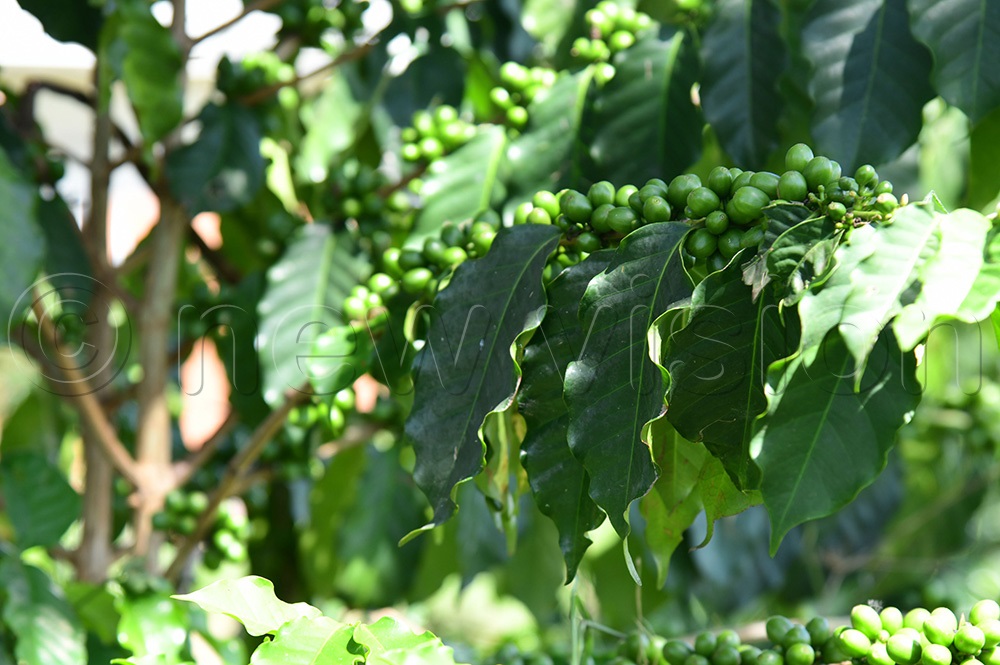
The robusta coffee fruiting at Kateta Hill View Secondary School Demonstration School. (Photo by Godfrey Ojore)
The beneficiaries, more than 500 in number, include local leaders, councillors, institutions and schools, all united by the hope of tapping into a more reliable and lucrative agricultural future.
A shift born of necessity
Teso’s transition to coffee has not been by chance, but by circumstance. Cotton, once the backbone of the local economy, has suffered a dramatic decline.
Prices have plummeted to about sh1,000 per kilogram, leaving farmers earning as little as sh100,000 per acre, far from enough to meet basic needs such as school fees.
Cassava, which stepped in as both a food and cash crop, has also failed to fill the gap. With prices now hovering around sh800 per kilogram, families often find themselves selling off their entire harvest to cover urgent expenses, only to be left grappling with food shortages.
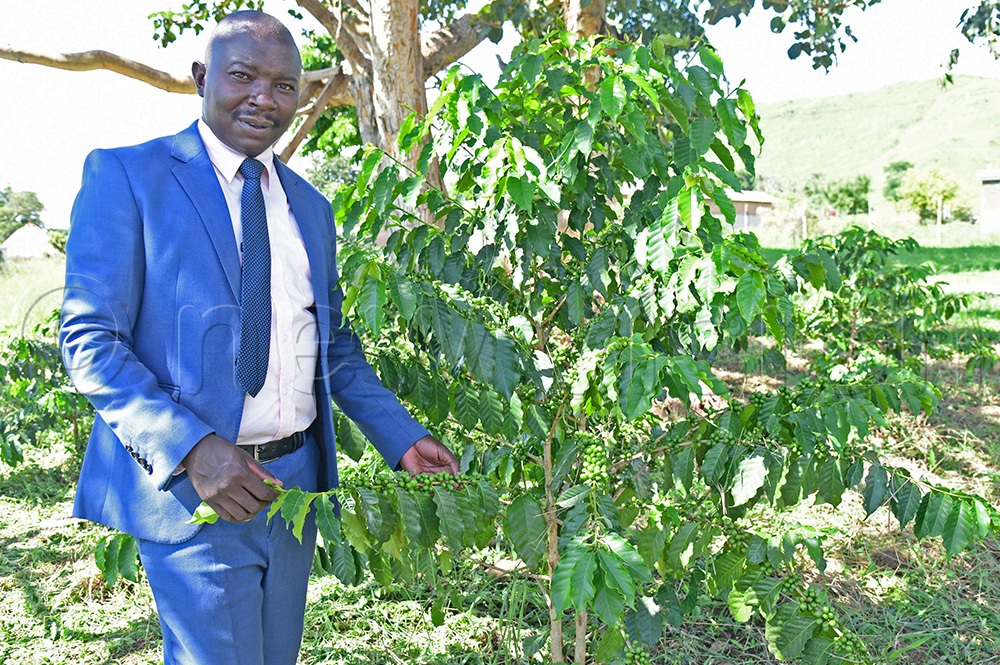
The head teacher of Kateta Hill view secondary school Emmanuel Olaboro at the demonstration farm of the school. (Photo by Godfrey Ojore)
Even government efforts to revive incomes through fruit processing have fallen short. A factory intended to absorb the region’s orange production has struggled to match supply, leaving farmers with limited options.
It is against this backdrop that leaders have turned to coffee, an enterprise widely regarded as stable, resilient and globally competitive.
The seedling distribution follows a successful appeal by Serere Woman Member of Parliament and State Minister for Fisheries, Hellen Adoa, who lobbied the agriculture ministry to pilot coffee farming in the district.
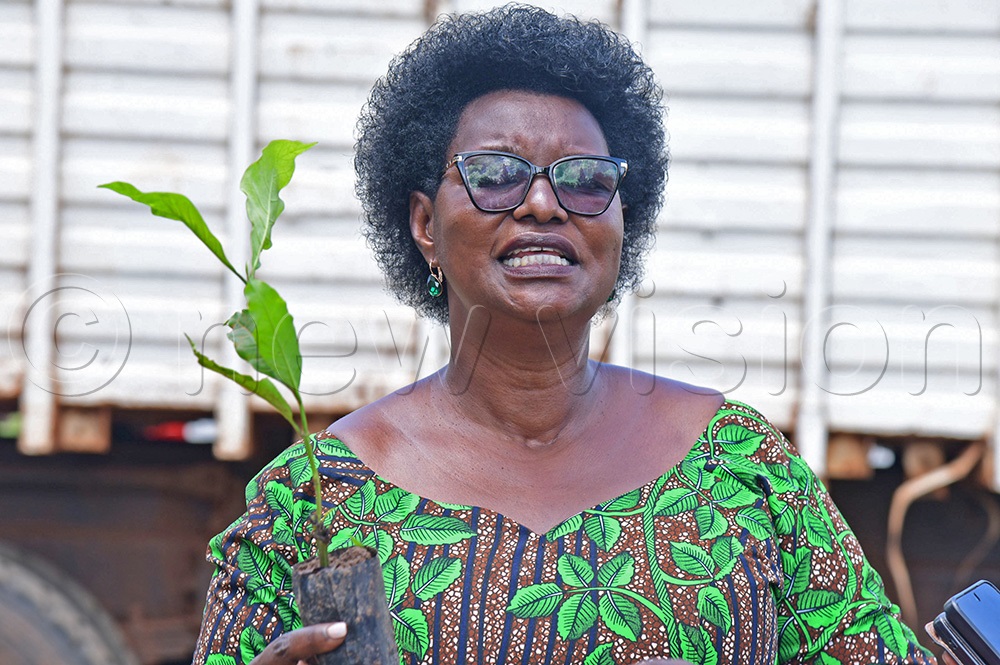
Minister Hellen Adoa speaking to Serere people as she held a robusta coffee seedling. (Photo by Godfrey Ojore)
“I wrote to the ministry requesting for coffee seedlings so that we can pilot coffee farming in Serere,” Adoa said during the handover ceremony. “I am happy that they responded by providing 50,000 clonal Robusta seedlings.”
She emphasised the crop’s economic potential, noting that coffee prices have remained consistently above Shs3,000 per kilogram, far more stable than cotton.
“Coffee farming is the way to go,” she added. “The global demand is high, and we cannot even fully satisfy it.” Adoa said.
Why Robusta fits Teso
Agricultural experts are confident that the region’s climate and soils favour Robusta coffee, unlike Arabica, which thrives in high-altitude areas such as Bugisu.
Ronald Onyangai, a regional agricultural officer, explained that soil testing and climatic assessments confirmed Robusta as the ideal variety for Teso.
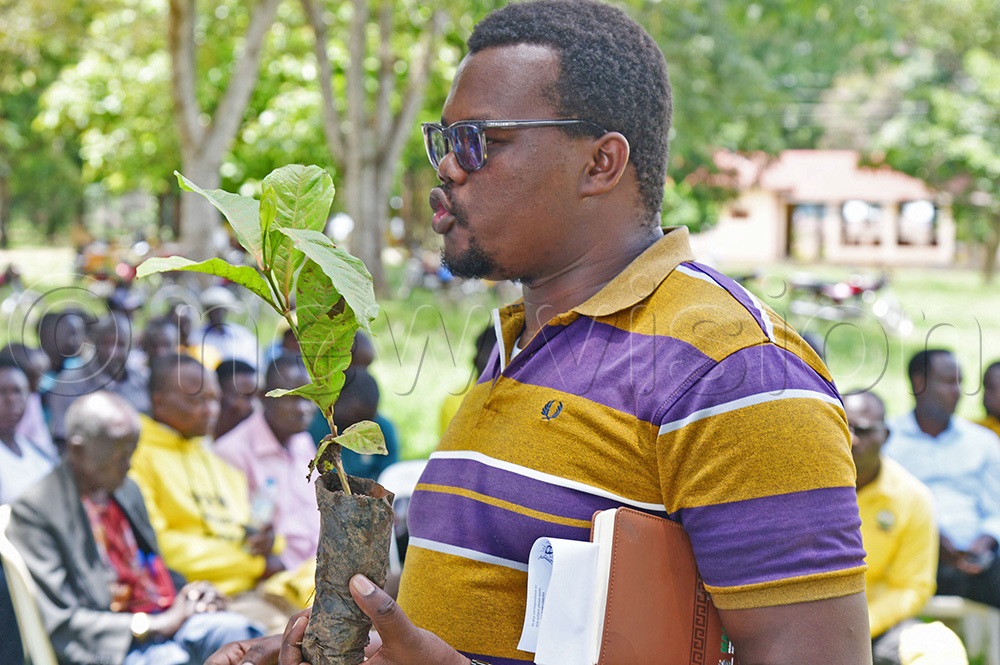
Ronald Onyangai, a regional agricultural officer at the Ministry of Agriculture, Animal Industry and Fisheries speaking to Serere farmers as he held a coffee seedling. (Photo by Godfrey Ojore)
“Robusta performs well in low-altitude areas like Teso,” he said. “Arabica would struggle here due to higher temperatures and increased vulnerability to pests, which would require costly interventions,” Onyangai said.
Among the beneficiaries is Kateta Hill View Secondary School, where a demonstration garden established just a year ago is already bearing fruit. The school has now received an additional 210 seedlings to expand the project.
“We started the demonstration garden to support the new practical-based curriculum,” said head teacher Emmanuel Olaboro. “It also helps students learn modern farming techniques.”
For individual farmers like Grace Akullo, a retired teacher, coffee represents more than just a crop; it is a lifeline.
“With the harvest expected in about two years, I believe coffee will supplement my pension and improve my quality of life,” she said after receiving 110 seedlings.
District agricultural officer Caroline Asekenye Ikodet urged farmers to treat coffee farming as a serious investment.
“A coffee garden is like a shop you must open and inspect every day,” she advised. “Regular monitoring is key to preventing diseases and ensuring good yields,” Asekenye said.
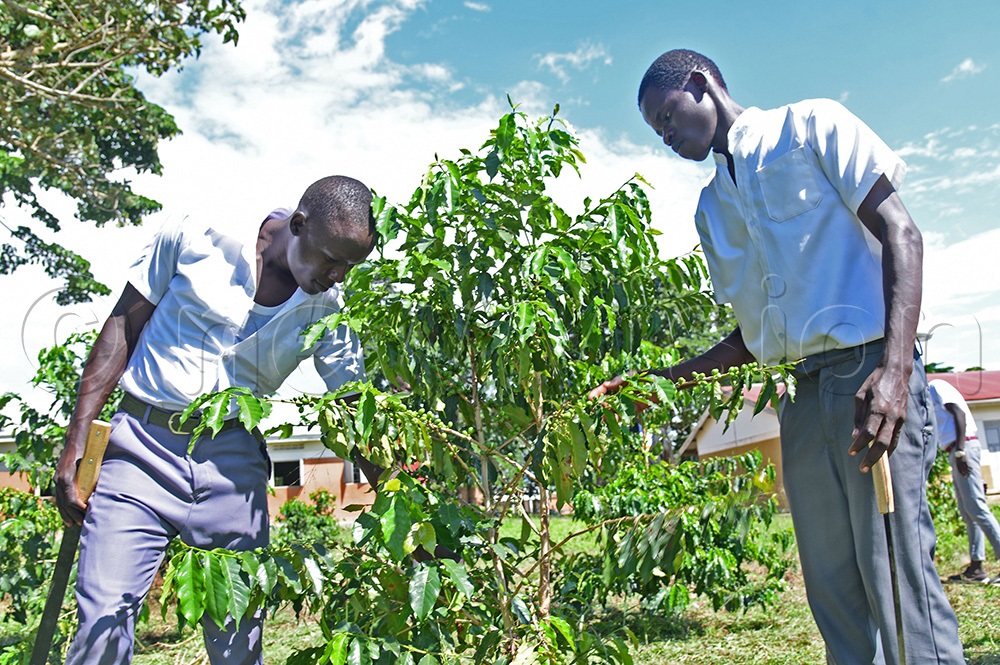
Students of Kateta Hill View at their demonstration garden. (Photo by Godfrey Ojore)
Local leaders echoed the need for responsibility. Resident district commissioner John Stephen Ekoom warned against neglecting the seedlings, while LC5 chairperson-elect Engineer Martine Onguruco praised the initiative as a timely boost to household incomes.
As the first seedlings take root across Serere, the district stands at the beginning of what many hope will be a transformative journey. If nurtured well, coffee could restore dignity to farming, stabilise incomes and rewrite the economic story of Teso, one harvest at a time.