
Support zero export of unprocessed raw materials — Museveni asks coffee farmers
The President says that stopping the export of unprocessed raw materials like coffee, for example, would enhance Uganda’s industrialisation agenda and create more jobs and incomes, adding that this is a step in the right direction.
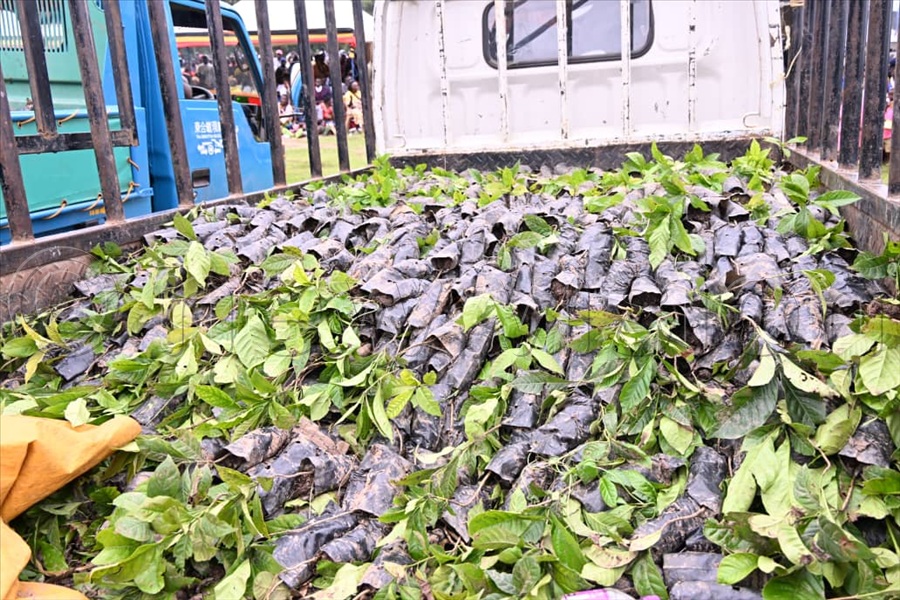
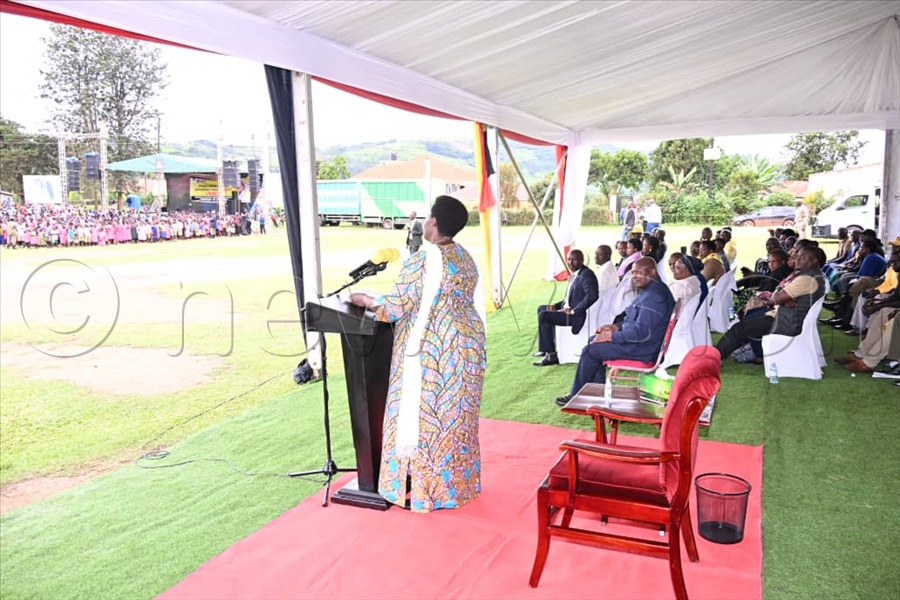
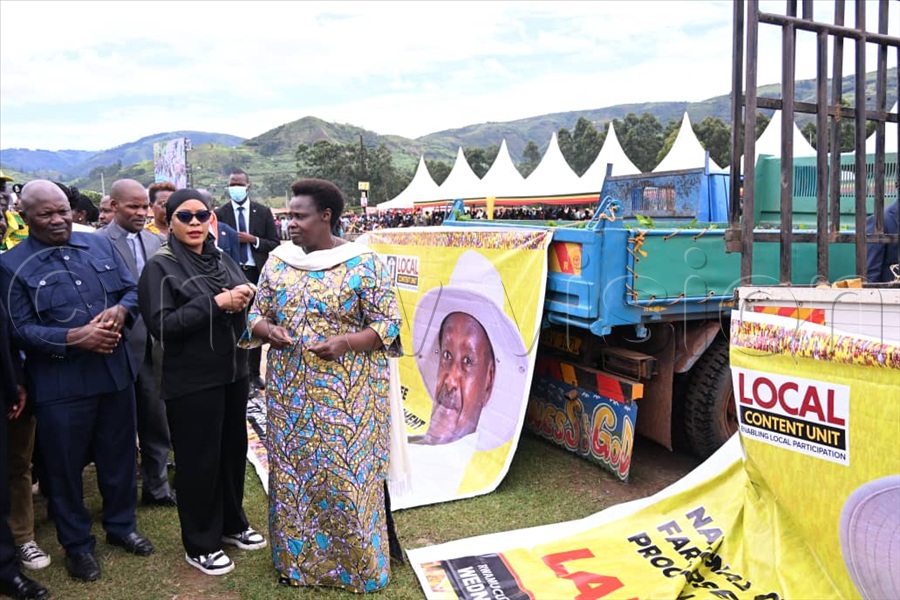
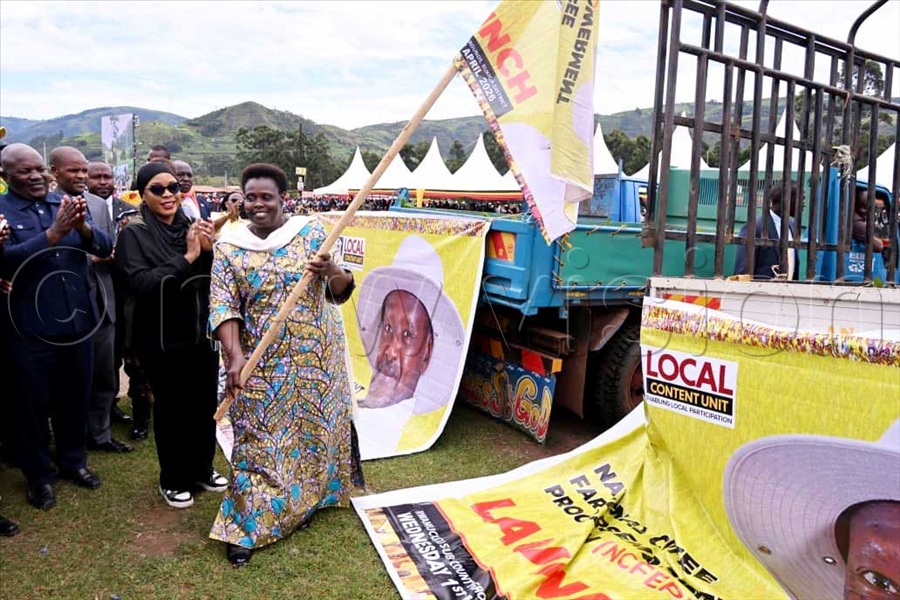
The Vice President, Jessica Alupo (R), flagging off the distribution of coffee seedlings to farmers after launching the National Coffee Farmers Empowerment Program (NCFEP) at Muhanga in Rukiga district, on April 01, 2026. Next to her is Hajati Amina Mukalazi, the head of the State House Local Content Unit. (Credit: Eddie Ssejjoba)
In order to achieve Uganda’s industrialisation agenda, farmers should support the National Resistance Movement (NRM) government's efforts to stop the export of raw materials, says President Yoweri Museveni.
The President says that stopping the export of unprocessed raw materials like coffee, for example, would enhance Uganda’s industrialisation agenda and create more jobs and incomes, adding that this is a step in the right direction.
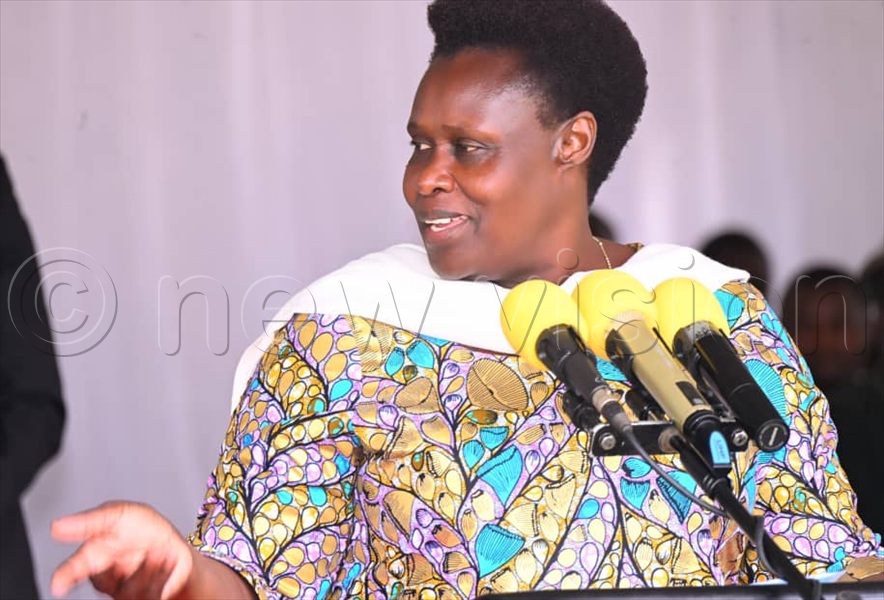
“We must continue to add value to our coffee, cotton, minerals, among others, to create jobs and incomes for our people and revenues for the government to carry out our mega infrastructure projects,” the President said in a statement read for him by the Vice President (VP), Jessica Alupo.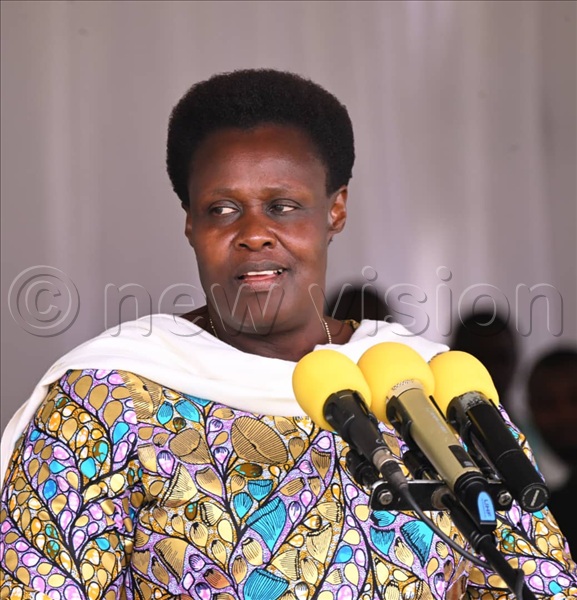
According to the President, the NRM government continues to prioritise the coffee sector because of its significant contribution to economic growth and foreign exchange earnings, in addition to the livelihoods of millions of households involved in the coffee value chain. (All Photos by Eddie Ssejjoba)
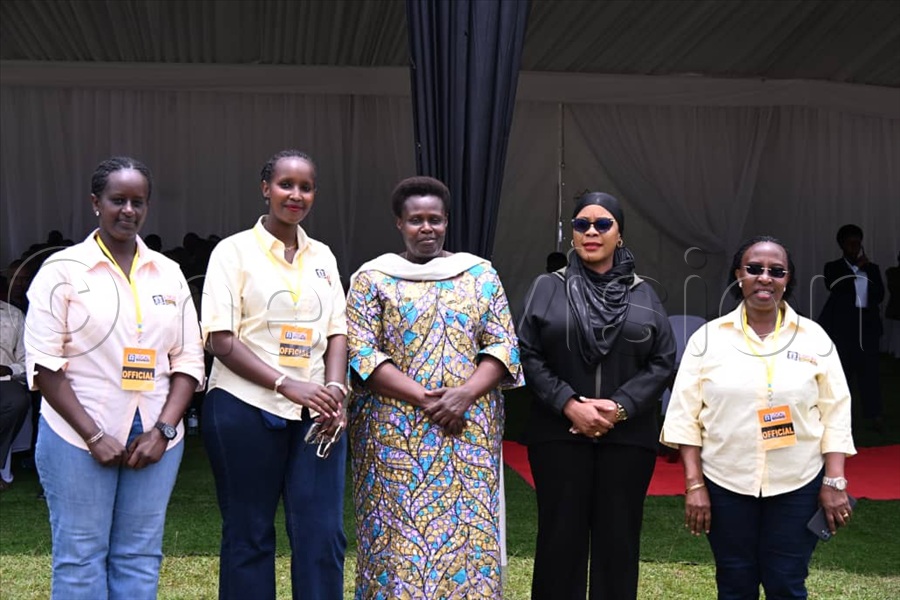
She represented him at the launch of the National Coffee Farmers Empowerment Program (NCFEP) held on Wednesday, April 1, 2026, at Muhanga town in Rukiga district. The VP flagged off the nationwide programme and distributed coffee seedlings to farmers in the area.
The programme is spearheaded by CoffPass Growers Uganda Limited, working in collaboration with the State House Local Content Unit under the leadership of Hajati Amina Mukalazi.
In November 2025, President Museveni called upon African heads of state under the African Union to enforce laws that prevent the export of unprocessed products, saying this would be supported by efforts to reduce non-tariff barriers.
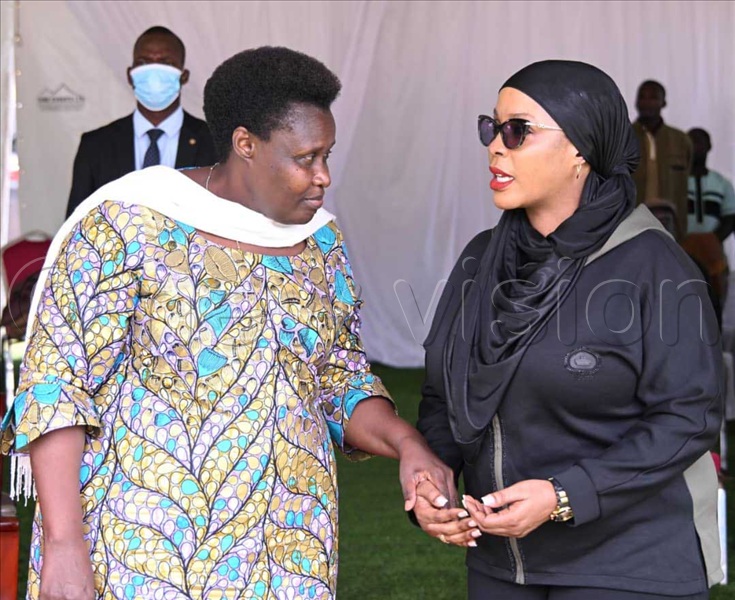
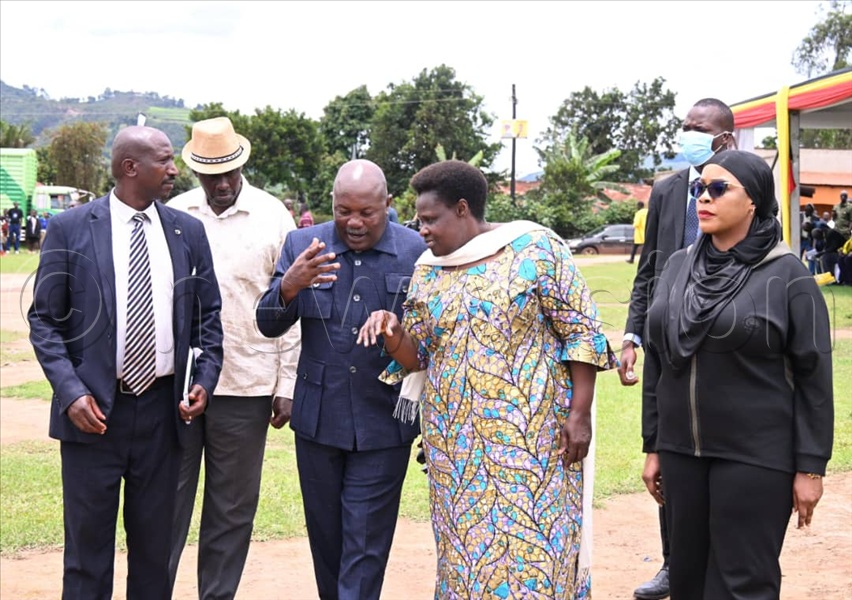
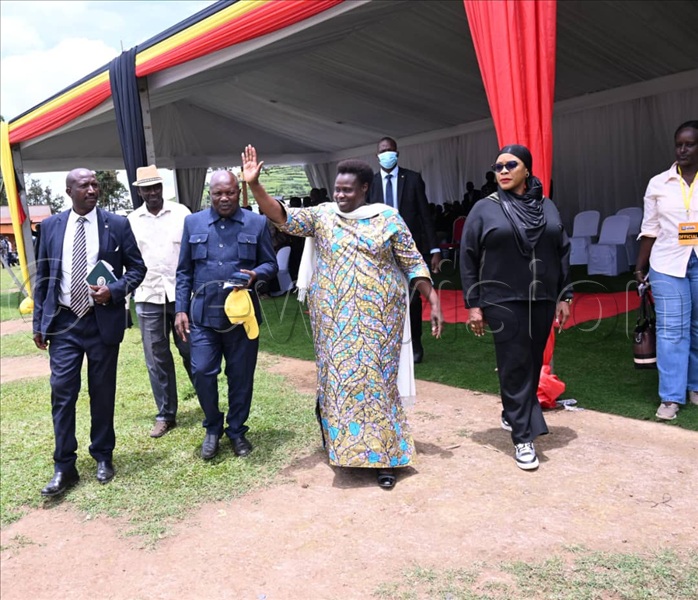
The Vice President, Jessica Alupo (L), chatting with Hajati Amina Mukalazi, the head of the State House Local Content Unit. after flagging off the distribution of coffee seedlings to farmers and launching of the National Coffee Farmers Empowerment Program (NCFEP) at Muhanga in Rukiga district, April 01,2026.
He said Uganda’s industrial base has expanded due to a sustained focus on mandatory value addition. He explained that coffee costs two dollars when exported raw, and when processed, it fetches 20 to 50 dollars, ten times more value.
“I want to commend the State House Local Content Unit, under Hajat Aminah Mukalazi and all the partners involved, for this well-coordinated effort initiative, which is focused on mobilising and supporting the coffee farmers to access quality seedlings and adopt improved agronomic practices,” the President stated, adding that a prosperous coffee sector is good for Uganda.
According to the President, the NRM government continues to prioritise the coffee sector because of its significant contribution to economic growth and foreign exchange earnings, in addition to the livelihoods of millions of households involved in the coffee value chain.
The President explained that the government had taken several interventions to boost coffee production, which include scaling up the distribution of quality coffee seedlings and inputs across the country through Operation Wealth Creation (OWC).
Others are strengthening farmer training, extension services and sensitisation across the country, and enhancing monitoring and supervision to ensure proper implementation.
The President said that because of the above measures, coffee production in Uganda currently stands at 8.4m bags of coffee.
“Previously, we have been fetching less value from our coffee because of exporting it in raw form to Europe, the USA, and other countries. The cleverer countries, which produce little or no coffee at all, were the ones processing our coffee and reaping a lot of profits from it,” he said.
But through enhanced value addition, better market access and policies that prioritise farmers’ welfare, “government is committed to ensuring that Uganda’s coffee fetches the value it deserves on the global stage”.
Consequently, the President further explained, the NRM has already laid the foundation for Uganda’s economic take-off, based on the many years of hard work, sacrifice and correct prioritisation, which he said has paid off.
“Uganda now boasts of the necessary social and economic infrastructure to support the country’s qualitative leap into middle-income status.
These include a wide natural resources base, a healthy and educated labour force, which has been achieved on account of the NRM’s mass immunisation campaigns against the killer diseases and the free education and skilling policies, like the Universal Primary Education, Universal Secondary Education and the Presidential Skilling Hubs.
Others are a favourable investment climate, characterised by low costs of doing business, good roads, enough electricity, cheap labour, among others, the internal market of 46m people, up from 14m when the NRM took over in 1986.
The other is the advantage of the East African market of over 500 million people and the African market boasting of a population of 1.4 billion.
Mukalazi said the launch of NCFEP was a significant milestone in their journey to transform livelihoods and empower people through agriculture.
She described it as a bold step towards economic inclusion, wealth creation, and sustainable development of farmers.
“Through this program, we are committed to equipping farmers with skills, knowledge, quality inputs, and market linkages. The earlier farmer sensitisation and training sessions are a clear demonstration that this initiative is not theoretical, but practical, targeted, and people-centred,” she told the gathering.
She explained that the initiative aligned with the government's vision of ensuring that wealth creation starts at the grassroots, with farmers at the center.
She appealed to the coffee farmers to remain committed and cooperate to benefit from the strategic support offered by government.
“I wish to humbly recognise His Excellency Yoweri Kaguta Museveni’s vision of transforming Uganda through programs like this one; his leadership has laid the foundation for empowering households through agriculture and value addition,” she said.
She added that she was pleased that the President would continue to support the programme to train and sensitise farmers, offer timely quality seedlings and inputs, and strengthen monitoring and implementation, as well as expand it to reach more beneficiaries across the country.
She said they anticipated the programme to attract investors in coffee processing and give jobs to the local people.
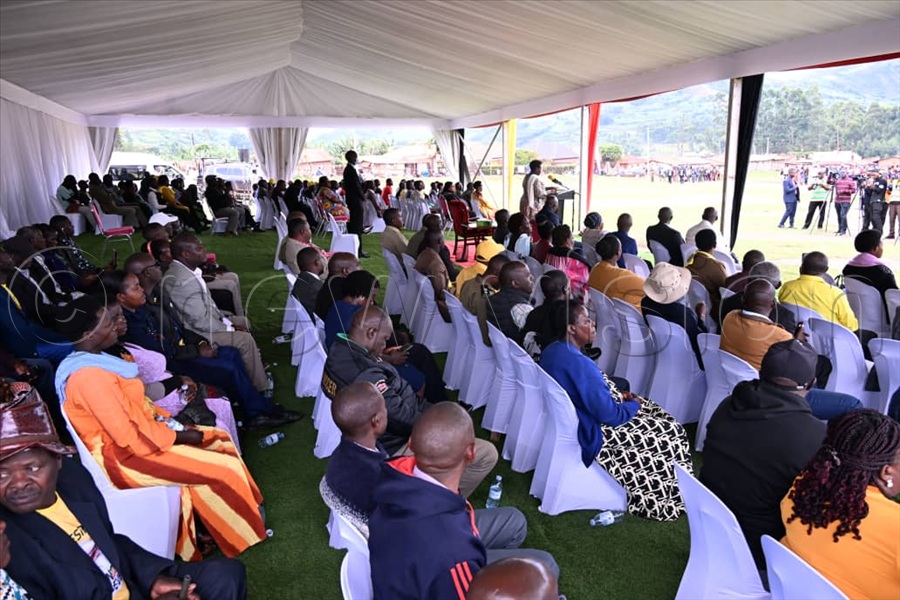
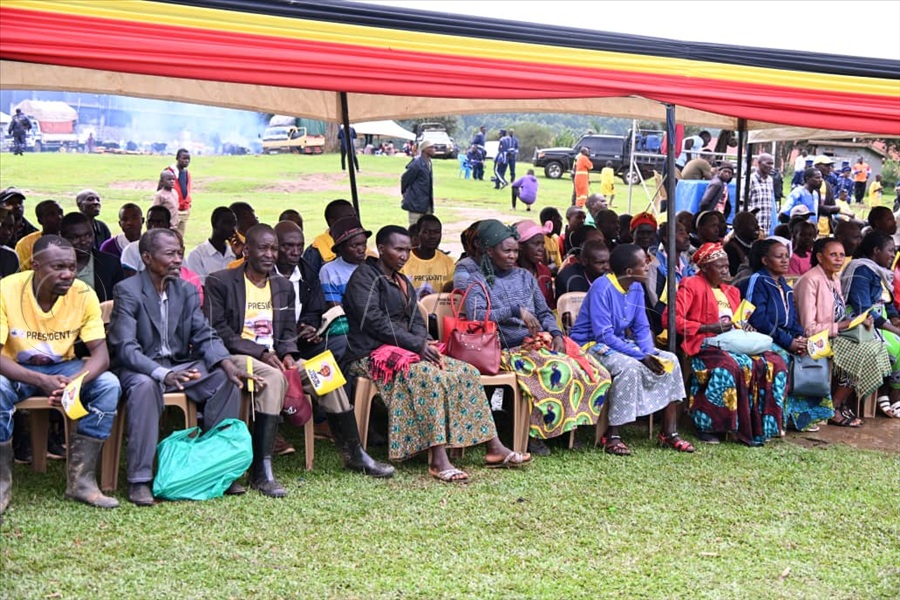
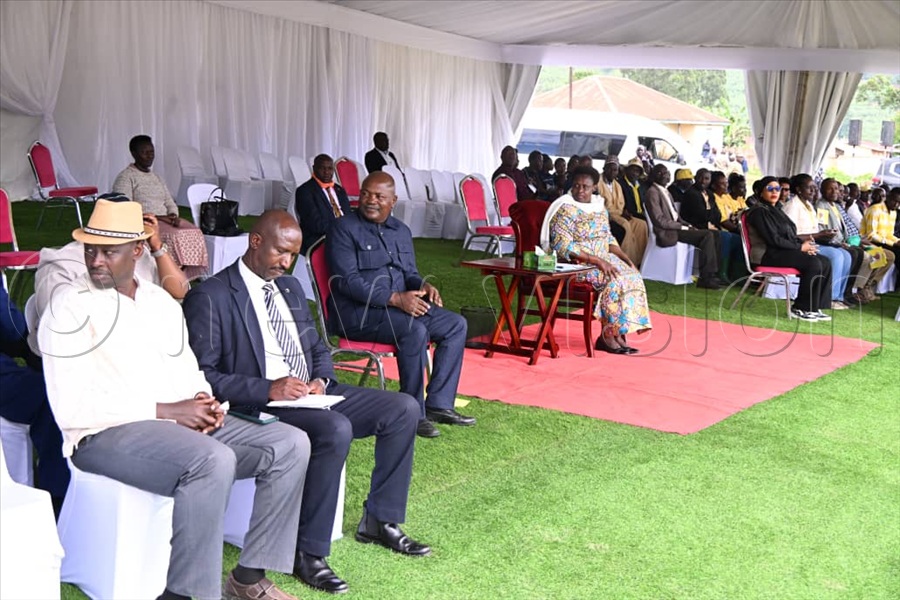
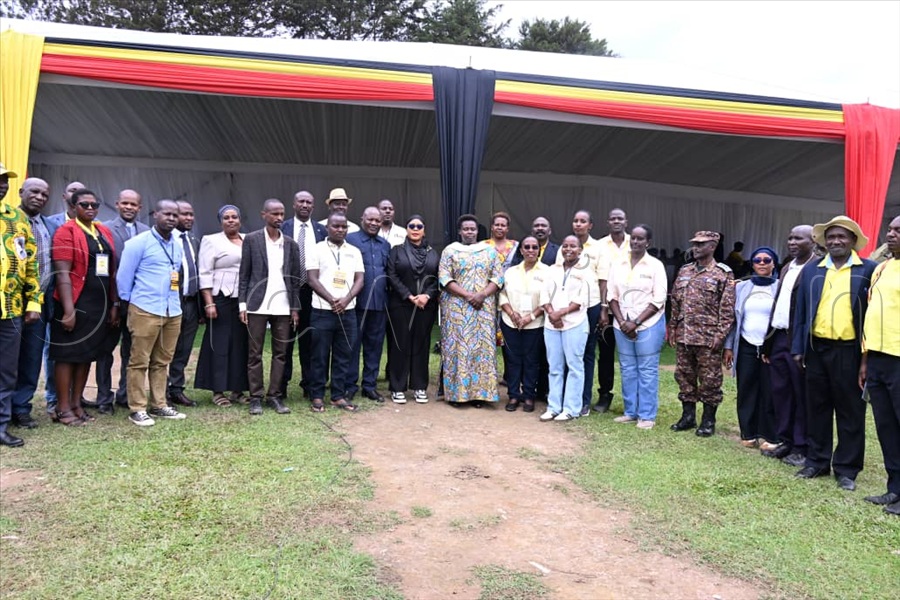
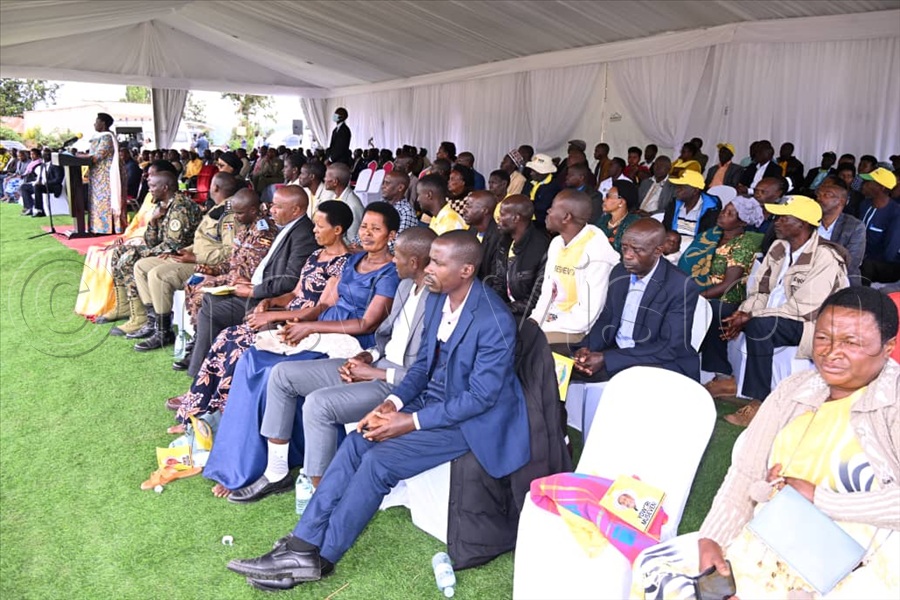
The function was attended by local leaders in Rukiga and coordinators of the farmers’ groups that benefitted from the free coffee seedlings.