
Climate change: Farmers demand more irrigation investment for coffee, cocoa
The consultations, which opened on Tuesday, August 18, at the Golden Tulip Hotel, Kampala, are also focusing on policy and institutional reforms that can increase private-sector participation, strengthen agribusiness, and mobilise investment across key value chains.
The World Bank Group has pledged to double its financing to $9 billion annually and mobilise an additional $5 billion to support the initiative.
A group of farmers gathered at an AgriConnect stakeholders meeting in Kampala has called for increased investment in irrigation and rainwater harvesting to protect coffee and cocoa production from the growing effects of climate change.
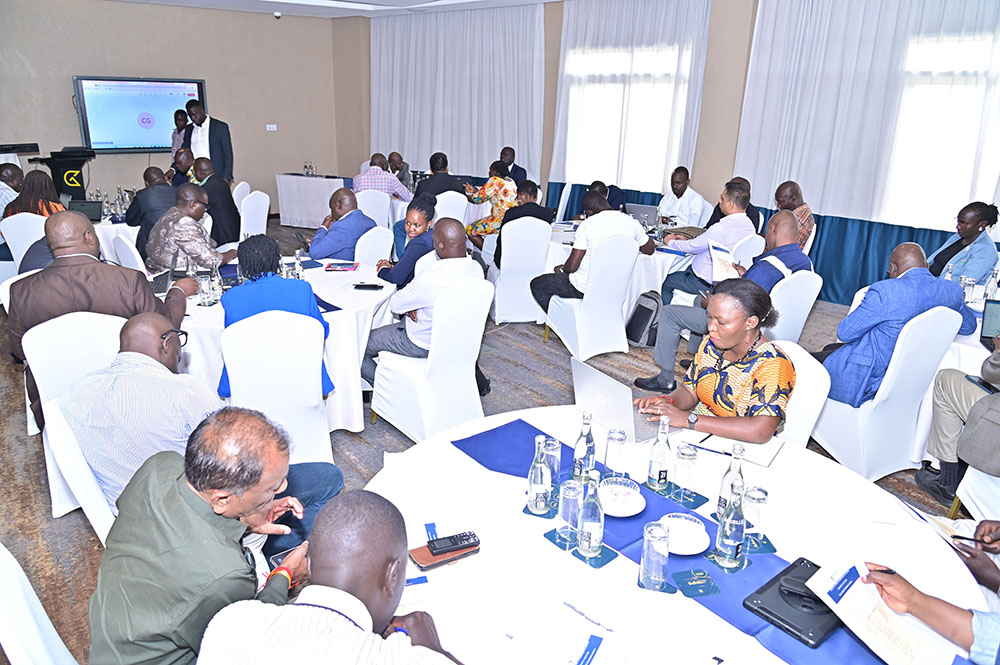
Organised by the Ministry of Agriculture, Animal Industry and Fisheries in partnership with development partners, including the World Bank, the discussion intends to identify high-impact investments in agriculture.
The consultations, which opened on Tuesday, August 18, at the Golden Tulip Hotel, Kampala, are also focusing on policy and institutional reforms that can increase private-sector participation, strengthen agribusiness, and mobilise investment across key value chains.
AgriConnect is a World Bank Group initiative aimed at helping smallholder farmers move from subsistence production to surplus by improving access to markets, finance, cooperatives, technology and digital tools.
The World Bank Group has pledged to double its financing to $9 billion annually and mobilise an additional $5 billion to support the initiative.
Dr Gerald Kyalo, the Commissioner for Coffee Development at the Ministry of Agriculture, said Uganda has more than 600,000 hectares of coffee, but less than 3% is irrigated.
Robert Kabushenga remarks.
“Many coffee farmers have already lost their gardens to drought,” he said.
Kyalo said farmers also needed access to affordable financing to acquire irrigation equipment, fertilisers and other inputs.
“When you have access to finance, you can access irrigation, you can buy fertiliser, you can buy processing equipment, you can buy many things,” he said.
David Kyeyune, a coffee and cocoa farmer, said unreliable rainfall and prolonged dry spells are making it difficult to establish new plantations, with young coffee and cocoa seedlings drying up before they mature.
He said climate change was already affecting productivity and threatening farmers’ investments.
“People are trying to invest in new plantations, new gardens of cocoa and coffee, but you find that the seedlings die. The take-off of the seedlings is quite low because of the low rainfall,” Kyeyune said.
He urged the Government to invest in irrigation and rainwater harvesting to enable farmers to continue producing even when rainfall is insufficient.
Irrigation projects, he advised, should be implemented on a large scale instead of spreading resources thinly across different parts of the country.
Kyeyune suggested that the Government could concentrate investment in one area, enabling a large number of farmers to access irrigation before moving to another region.
He said such an approach would have a greater impact than implementing small projects in many districts at the same time.
Kyeyune cited an irrigation scheme he visited in Arusha, Tanzania, where horticultural farmers use a common water system to irrigate their gardens.
He said Uganda could adopt a similar model in major agricultural production areas.
Tony Mugoya, the chief executive officer of the Uganda Coffee Farmers Alliance, said the lack of water for production was one of the major challenges facing farmers.
He called for a national agricultural financing scheme to help farmers invest in irrigation and other production needs.
Mugoya said climate change was making it increasingly important for farmers to have reliable access to water instead of depending entirely on rainfall.
The stakeholders’ meeting is part of efforts by the Ministry of Agriculture and the World Bank to develop an AgriConnect Compact covering key commodities, including coffee, cocoa, cassava, maize and dairy.
The initiative seeks to identify key challenges in agricultural value chains and agree on interventions to increase production, create jobs and improve farmers’ incomes.
For farmers, however, the success of these interventions will depend largely on how effectively the country addresses the growing water shortages caused by changing weather patterns.