Why Gen Al-Burhan is hesitant to confront Cairo after deadly border strike
Sudan's Sovereignty Council said Sudanese and Egyptian leaders had been in contact since the October 10 deadly strike.
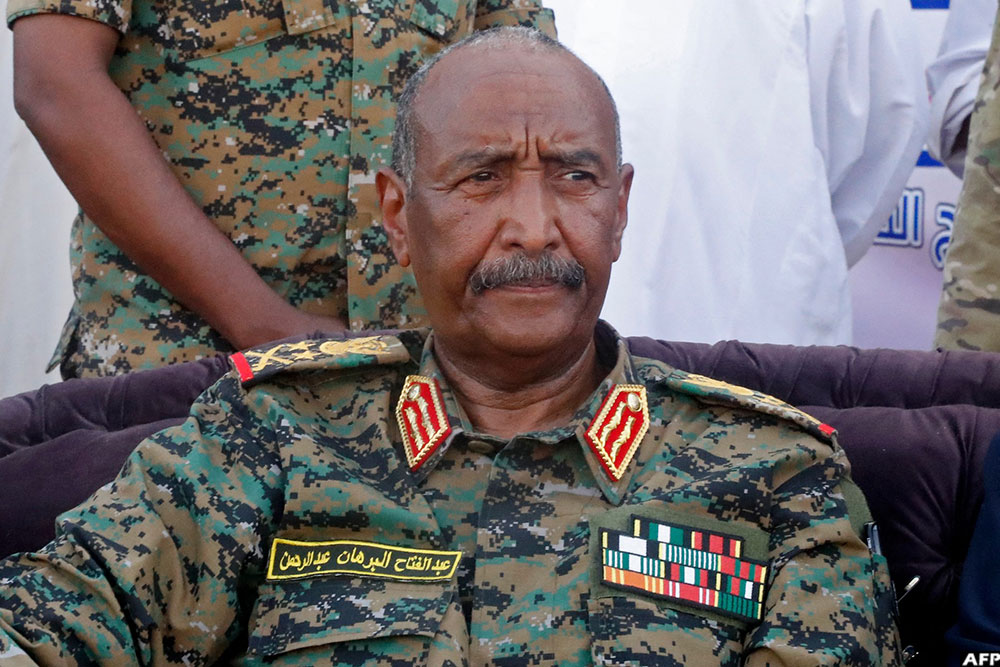
Sudan's de facto leader and army chief Abdel Fattah al-Burhan. (AFP)
________________________
The deaths of dozens of artisanal gold miners in a reported airstrike near Egypt’s border on October 10 have brought renewed attention to Gen. Abdel Fattah al-Burhan’s response and Sudan’s handling of the incident.
Miners and activists blamed Egyptian Air Force jets for the strike, as videos showing the victims circulated across Sudanese social media.
Sudan’s Sovereignty Council and the authorities in Port Sudan, however, remained silent for two days.
Sudan Tribune placed the attack site in the far north of Red Sea State, while The New York Times, according to a summary by the Africa Centre for Strategic Studies, reported that the area was under army control and had largely remained insulated from the fighting that has engulfed much of Sudan.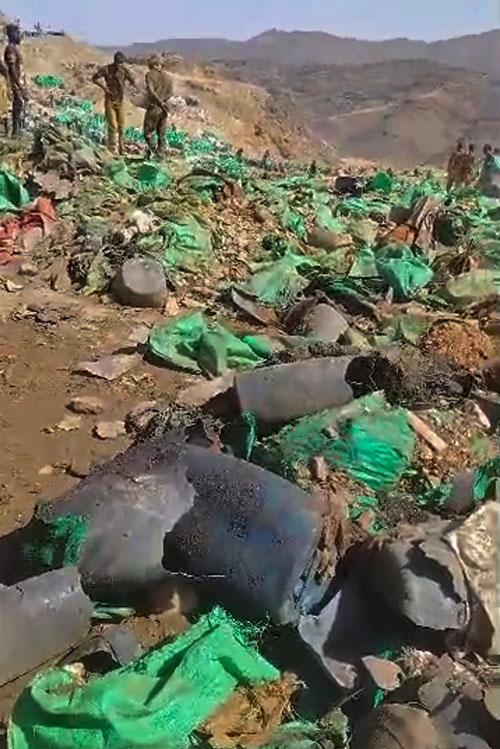
This screen grab made from the UGC footage obtained on October 12, 2026 shows people inspecting the site of an airstrike in the mining area of Jabal al-Uqaydat, in Sudan
Dozens killed, thousands displaced
The toll remains uncertain, with published figures ranging from 13 to more than 200. Two survivors told AFP that a jet struck the site at about 8 am while thousands of people were working in the area.
Emergency Lawyers, a rights group based in Khartoum, reported 72 deaths the following day (October 11), citing preliminary information, Al Jazeera reported. The Sudan Doctors Network recorded 13 dead and 28 wounded on the same day and warned that the figure would rise, the Associated Press reported.
Subsequent reports cited significantly higher casualty figures. Two eyewitnesses told The New York Times that at least 65 people were killed and 120 or more wounded, and three survivors told Sudan Tribune that at least 200 died and more than 15,000 workers fled into caves and mountains. A health official treating the wounded told the Sudanese outlet Ayin that the toll was likely between 150 and 250.
Cairo says strikes were meant to control ‘chaos’ in the mining area.
Egypt has not officially acknowledged the strike, though its officials have defended its move. Two Egyptian security officials quoted by Reuters said the operation was meant to end “chaos” along the border and stop Egyptian and Sudanese groups from seizing control of mining areas, according to a Reuters report carried by SABC.
On October 12, Egyptian military spokesman Col Ahmed Atman announced the army and police were pressing ahead with the third phase of a campaign against illegal gold mining in the Eastern Desert, after dropping leaflets warning criminal elements, to enforce full sovereignty within Egypt’s borders, Asharq Al-Awsat reported.
Atman's statement described the operation inside Egypt and did not mention an airstrike in Sudan. A separate army statement urged people in both countries to rely on official sources and dismissed what it called rumours and foreign agendas.
Emergency Lawyers disputed Cairo’s account. The rights group accused Egyptian aircraft of targeting civilian miners. It said repeated attacks showed an Egyptian desire to take control of Sudan’s natural resources, AFP reported.
Khartoum issued its first response on October 12, when the Sovereignty Council expressed condolences for Sudanese citizens killed in the border area and announced a fact-finding committee of prosecutors, judicial officials and security representatives, Sudan Tribune reported.
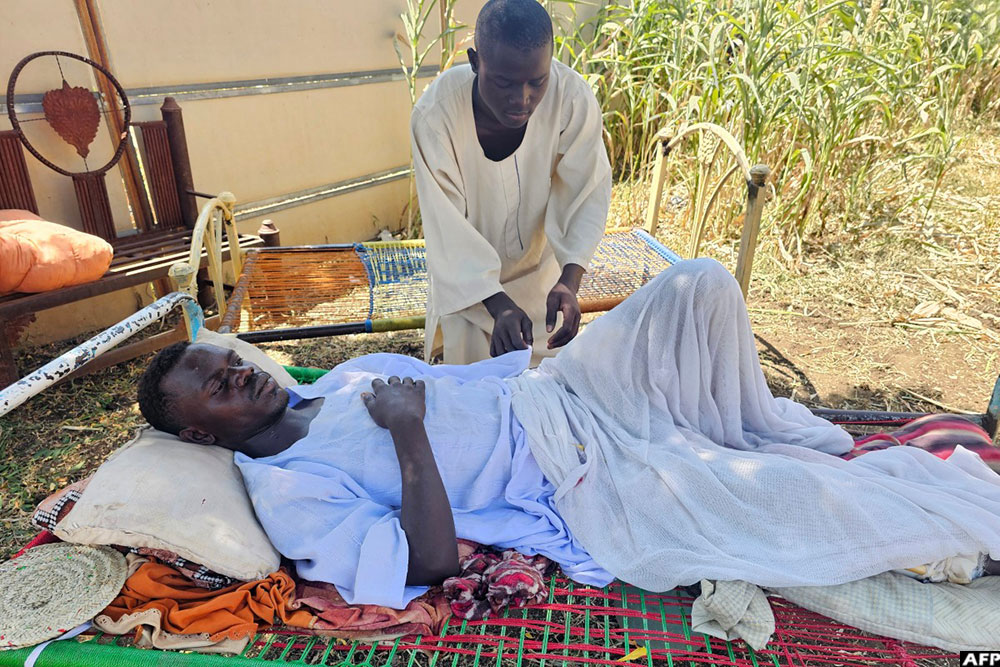
Mohamed Ali Hamza, 29, was injured during the October airstrikes on a gold mine on the Sudan-Egypt border
Yet another incident
Gen. Al-Burhan’s muted response to the latest airstrike in Shamal al-Wadi has raised questions about Sudan’s sovereignty, a principle he has repeatedly portrayed himself as committed to defending.
The council’s statement echoed the pattern Al-Burhan set after an earlier strike on the same mine. On June 16, two airstrikes hit Jabal al-Uqaydat at 6 am, while a third targeted a nearby location, eyewitnesses told the Sudanese platform Sahih Sudan, The Standard reported. A Sudanese medical source later put the June toll at 23, according to a report by Mada Masr.
Ground operations followed on June 21, when a force of about 60 military vehicles surrounded mining sites in the Wadi El Atri area, opened fire and arrested 67 Sudanese miners, the rights group Darfur Victims Advocacy said, citing witnesses, Radio Dabanga reported.
Egypt’s military said it had detained 223 people, including 136 foreign nationals. Officials at the Argeen crossing said more than 3,000 deported Sudanese miners had passed through on their way to Dongola, according to the same report.
Controversial response
Al-Burhan first addressed the June strike in a speech to residents of Al-Ritaj in Red Sea State, where he said Sudan respected its neighbours to the north and east.
“Our northern neighbour must be respected, and its borders must not be crossed, so that people do not cause problems for themselves and for the state,” he said, as quoted by Al-Araby Al-Jadeed, which published the remarks in Arabic.
In October, Al-Burhan once again ordered an investigation without naming the party responsible for the attack, while his foreign relations adviser, Amjad Farid, described the attack as “an unjustified and unacceptable crime”.
Neither that statement nor his June call for a response grounded in the logic of the state, reported by Kenya’s The Standard, was followed by a public formal protest to Egypt.
Gold smuggling
Jabal al-Uqaydat sits within the gold-rich Nubian Shield geological belt, and a significant share of the gold mined along this border is smuggled to Egypt.
In a March 2025 report, Chatham House researchers Ahmed Soliman and Suliman Baldo estimated that unofficial and smuggled exports to Egypt account for about 60 per cent of the gold produced in Northern, River Nile and Red Sea states, at a rate of more than 100 kilogrammes a day and a total of more than 60 tonnes in 2023 and 2024.
Official gold exports to Egypt in 2024 were worth about $16 million, around one per cent of Sudan’s total, according to Central Bank of Sudan data cited in the report.
In March, Sudanese miners reportedly forced an Egyptian mining company out of a disputed border area and set fire to some of its equipment. The ensuing clashes with Egyptian border guards left at least nine miners dead, according to local officials cited by Darfur24 in a report published in June.
Alleged coordination under scrutiny
Miners have also questioned the conduct of Sudan’s own forces.
The Joint Forces Unit guarding the mountain, drawn from pro-government Darfur armed movements, withdrew a day before the June strike, after workers had a run-in with staff of an Egyptian mining company nearby, a miner told Alhurra.
Miners quoted by Sahih Sudan said the unit left four hours before the attack, according to The Standard. Workers told Alhurra that the withdrawal and the government’s muted response led them to suspect the two governments had coordinated to clear miners from the area for the Egyptian company, although no evidence has established such coordination.
The suspicion draws on how closely Cairo and Al-Burhan’s army are aligned.
Egypt is one of Al-Burhan’s closest regional allies, although it regards the war along its 1,200-kilometre border with Sudan as a threat to its own security, AFP reported.
Satellite images reviewed by Reuters showed a Turkish-made Bayraktar Akinci drone at Egypt's East Oweinat airstrip, about 60 kilometres from the Sudanese border, The New Arab reported in February.
The New York Times reported that drones operating from the base were carrying out strikes inside Sudan. An analysis published by The Horn Review in June argued that the army stayed silent over the strikes because it depends on its alliance with Egypt to fight the Rapid Support Forces.
Transparency and accountability
Political groups, armed movements and rights organisations have called for an international investigation, Sudan Tribune reported.
The civilian Somoud alliance, led by Sudan's former prime minister Abdalla Hamdok, said the targeting of civilians could not be justified on security grounds. It also held the authorities appointed by the armed forces responsible for what happens in areas under their control, The National reported.
The precise location of the strikes remains disputed.
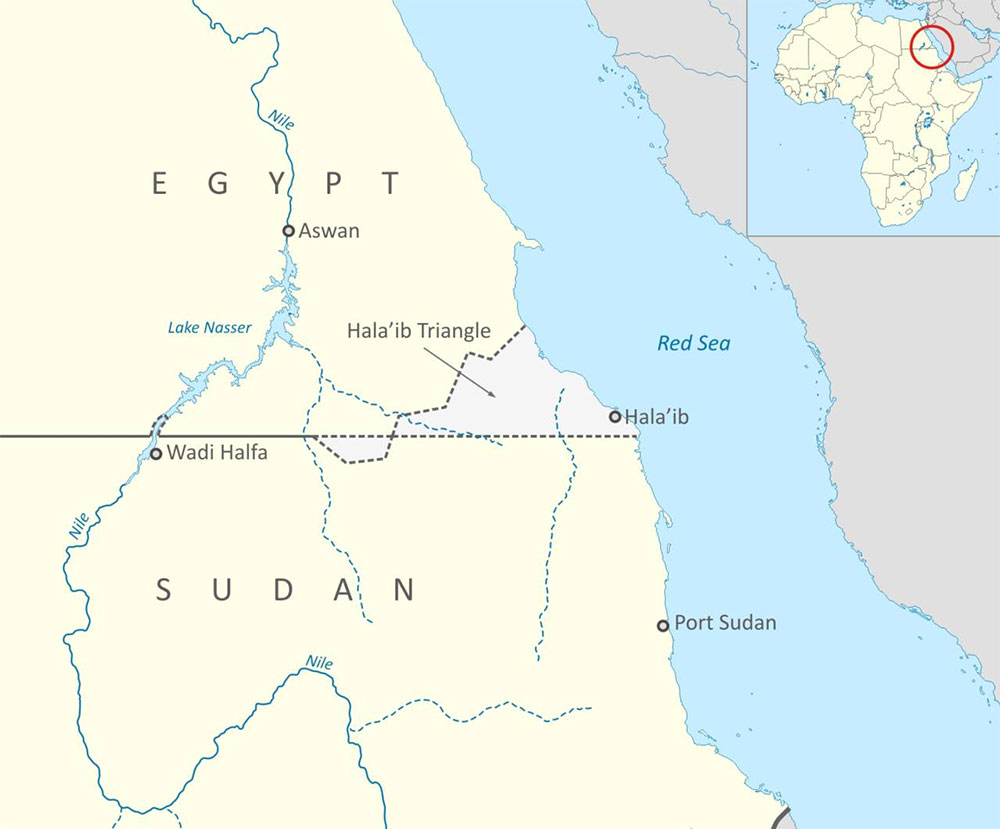
Egypt has maintained that its June operation took place inside Egyptian territory, while the Sudan Doctors Network described the October strike site as reportedly in Egypt. But Sudanese rights groups say the raids hit Sudanese territory, Egypt Independent reported.
The area lies near Hala’ib and Shalateen, the triangle claimed by Sudan and administered by Egypt. Mada Masr placed Shamal al-Wadi north of the triangle, while AFP reported that the Al-Ansari gold market, where survivors sought refuge, lies just south of it.