
World
China to send pair of giant pandas to U.S. for international panda cooperation
Chinese President Xi Jinping announced the news on Thursday, local time, at the arrival ceremony at the White House during his state visit to the United States, saying that Ping Ping and Fu Shuang will arrive at their new home in Zoo Atlanta and meet with the American people in a few days.
China to send pair of giant pandas to U.S. for international panda cooperation
By: Xinhua News Agency, Journalist @New Vision
________________
A pair of Chinese giant pandas, Ping Ping and Fu Shuang, will soon travel to the United States, which is set to further boost international cooperation on giant panda protection.
Chinese President Xi Jinping announced the news on Thursday, local time, at the arrival ceremony at the White House during his state visit to the United States, saying that Ping Ping and Fu Shuang will arrive at their new home in Zoo Atlanta and meet with the American people in a few days.
The latest move came after the China Wildlife Conservation Association (CWCA) signed an agreement on international cooperation in giant panda protection with Zoo Atlanta last year.
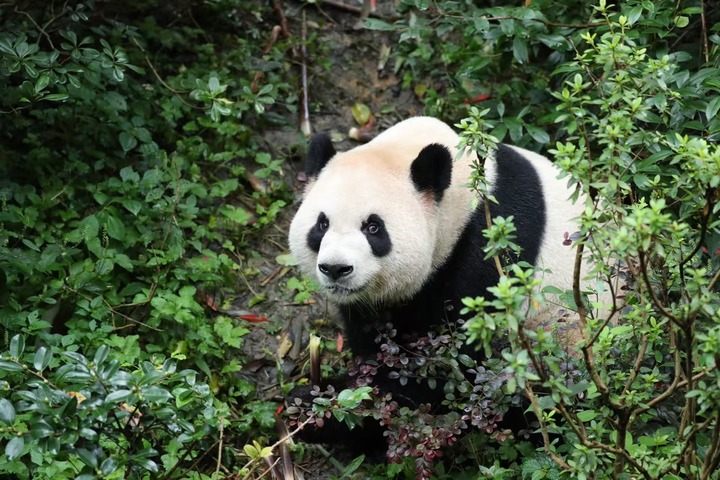
Under the agreement, the pair of male Ping Ping and female Fu Shuang, from the Chengdu Research Base of Giant Panda Breeding in southwest China's Sichuan Province, will embark on a 10-year protection cooperation program in the United States.
To create a more comfortable and safer living environment for the two pandas, the U.S. side has carried out venue renovations and upgrades with technical assistance from Chinese experts.
Giant panda ties between China and the United States go back a long way. In April 1972, two giant pandas -- Ling Ling and Xing Xing, arrived in the United States following the visit of then U.S. President Richard Nixon to China in February the same year.
More than 8,000 Americans welcomed Ling Ling and Xing Xing in the rain. In their first month on public display, they attracted more than one million visitors. Giant pandas have since helped foster friendship between the Chinese and American peoples.
China-U.S. giant panda protection cooperation is one of China's longest-running and most far-reaching international wildlife protection initiatives. In 1994, the CWCA signed an agreement with the San Diego Zoo, officially launching the cooperation program.
Over the past three decades, the two sides have conducted joint research in key areas including panda behaviour, nutrition, genetics and disease prevention, achieving significant breakthroughs in breeding techniques. Through the cooperation, pandas in the United States have successfully bred and raised 17 cubs to date -- six in San Diego, four in Washington and seven in Atlanta.
In 2024, China and the United States launched a new round of giant panda protection cooperation, as more pandas successively travelled to the United States.
The new round of cooperation is expected to help the two countries achieve more results in the prevention and treatment of major panda diseases, and in scientific and technological exchanges, making new contributions to global biodiversity protection and the friendship between the Chinese and American peoples, experts said.
China-U.S. giant panda protection cooperation is one of China's longest-running and most far-reaching international wildlife protection initiatives. In 1994, the CWCA signed an agreement with the San Diego Zoo, officially launching the cooperation program.
Over the past three decades, the two sides have conducted joint research in key areas including panda behaviour, nutrition, genetics and disease prevention, achieving significant breakthroughs in breeding techniques. Through the cooperation, pandas in the United States have successfully bred and raised 17 cubs to date -- six in San Diego, four in Washington and seven in Atlanta.
In 2024, China and the United States launched a new round of giant panda protection cooperation, as more pandas successively travelled to the United States.
The new round of cooperation is expected to help the two countries achieve more results in the prevention and treatment of major panda diseases, and in scientific and technological exchanges, making new contributions to global biodiversity protection and the friendship between the Chinese and American peoples, experts said.