
China hosts global journalists for four-month media exchange initiative
The journalists are in Beijing for the second half of the 2026 China International Press Communication Centre (CIPCC) programme, one of China’s major media exchange initiatives, hosted under the China Public Diplomacy Association.
Someof the participants. PHOTOS: Jacky Achan
On the leafy grounds of Renmin University of China, where rows of trees shade broad walkways and the rhythm of campus life unfolds around lecture halls and historic buildings, more than 100 journalists from across the developing world gathered on Friday for the opening of a new chapter in their China experience.
The journalists are in Beijing for the second half of the 2026 China International Press Communication Centre (CIPCC) programme, one of China’s major media exchange initiatives, hosted under the China Public Diplomacy Association.
For many, the welcome at Renmin University's Haidian campus in the capital Beijing was more than an orientation; it was the first step into four months of journalism training, cultural exchange, official visits and encounters designed to offer a closer look at a country they have often reported on from afar.
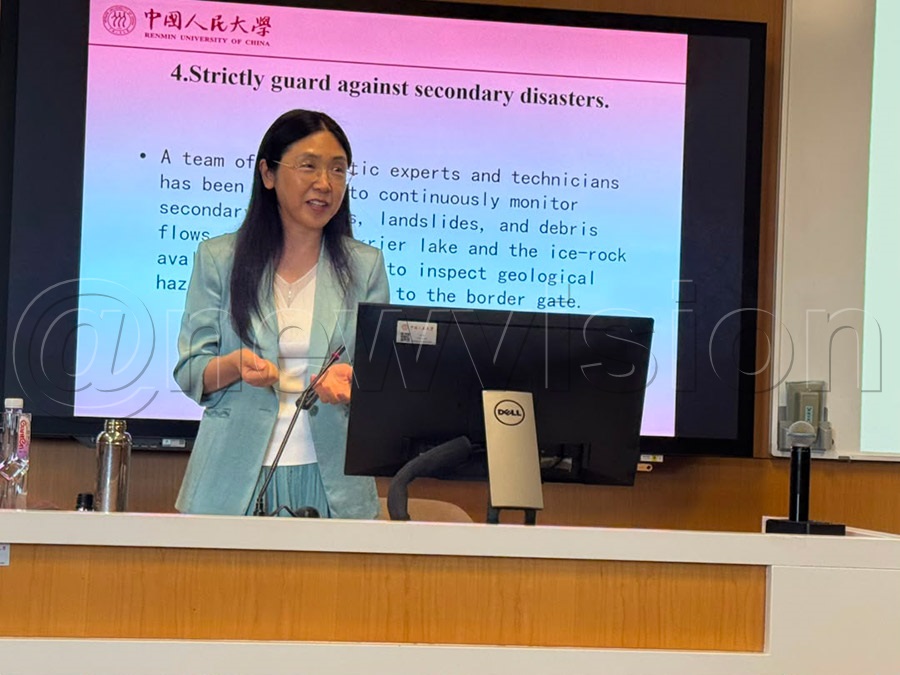
Prof Zhong Xin giving a lecture to the journalists
The journalists, drawn from more than 90 countries across Africa, the Asia-Pacific, Latin America and the Caribbean, Eurasia, the Arab world, and Central and Eastern Europe, were welcomed and oriented by Yu Lei, Director of CIPCC; Wang Weiran, Director of CAPPC and CIPCC; and Prof. Yan Yan, Associate Dean of the School of Journalism and Communication at Renmin University, among others.
Addressing the journalists, Yu Lei said the four-month programme would combine journalism training with diplomatic programmes, cultural immersion and official visits in and beyond Beijing, giving participants an opportunity to witness China’s development first-hand and engage with the country beyond the headlines.
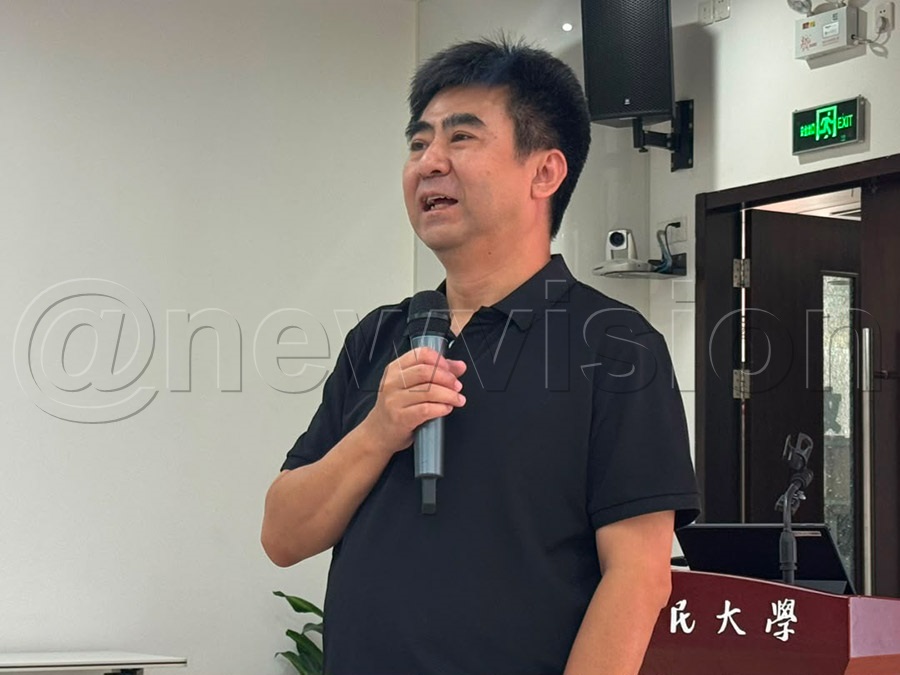
Yu Lei, the Director of CIPCC
The programme’s evolution reflects the expanding scope of China’s engagement with journalists from the developing world. Launched in 2014 with just nine journalists from Africa, CIPCC gradually broadened its reach. Between 2015 and 2019, it expanded to include journalists from the Asia-Pacific, Latin America and the Caribbean, Eurasia, the Arab world, and Central and Eastern Europe.
The COVID-19 pandemic forced the programme to move online in 2020 and 2021, when activities were organised virtually for alumni. It resumed in person in 2022 and has continued to grow in scale and reach.
This year, more than 100 journalists from over 90 countries have been invited to China for a four-month programme centred on China’s development, journalism, media and cultural exchange.
At Renmin University, the journalists were introduced to the School of Journalism and Communication and briefed on campus life and the guidelines that will shape their stay.
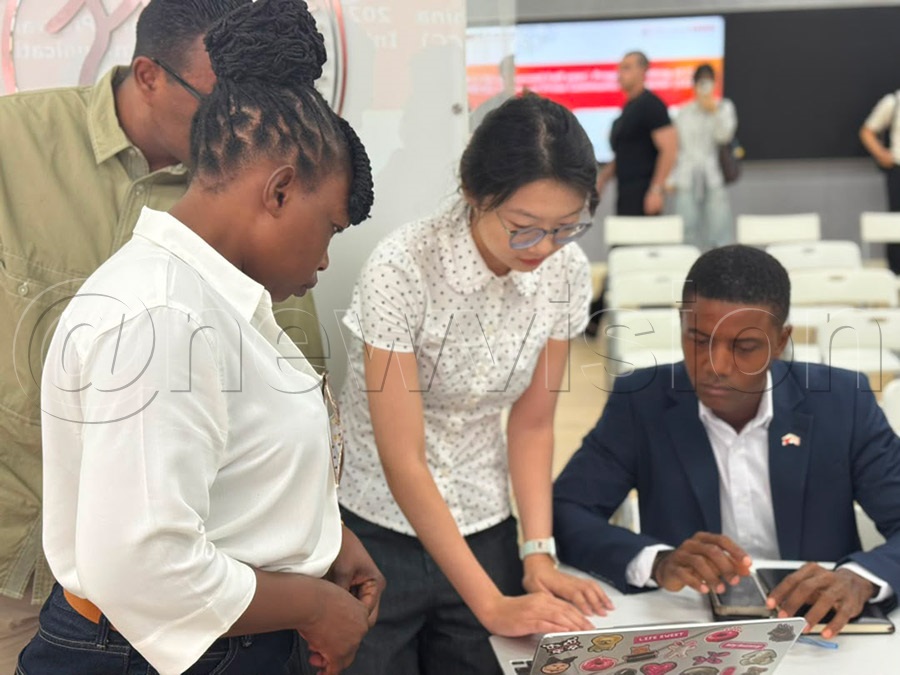
The orientation was followed by a lecture led by Prof. Zhong Xin, a doctoral supervisor and director of international programmes at the School of Journalism and Communication, Renmin University. The session focused on the recent mudslide along the Nepal-China border, bringing a current regional issue into the classroom and underscoring the programme’s effort to connect journalists with timely developments and issues of public interest.
The orientation marked the beginning of what promises to be a journey not only through China’s media and communication landscape, but also through its cities, institutions, culture and rapidly changing society.
For the participating journalists, the months ahead offer a chance to look beyond familiar narratives, meet the people behind them and gather stories from a country whose transformation continues to command attention around the world.