
Where robots meet tradition: Uganda's story at CIFTIS 2026
The Ugandan presence was modest in size but focused in purpose: to increase the country's visibility, promote its products and services, and create connections that could develop into commercial opportunities.
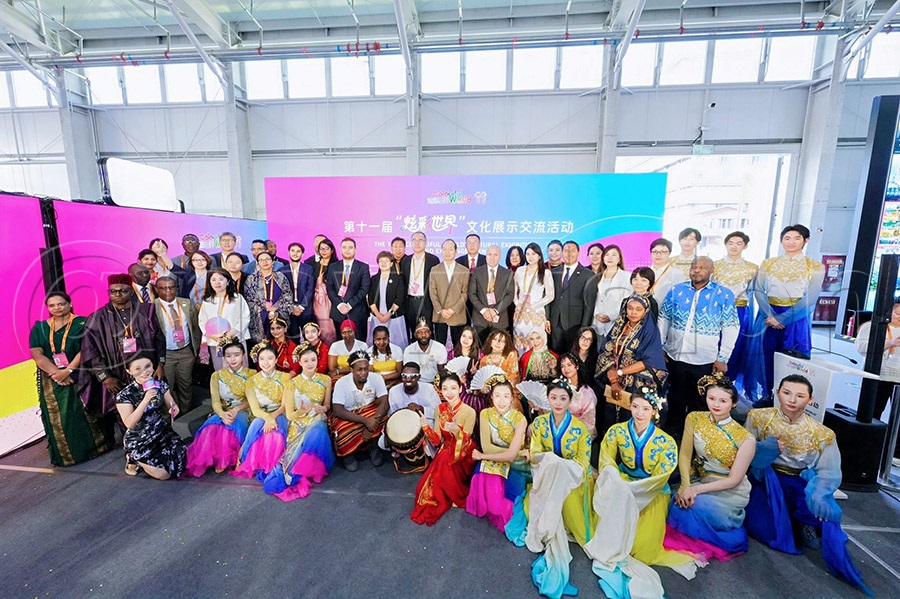
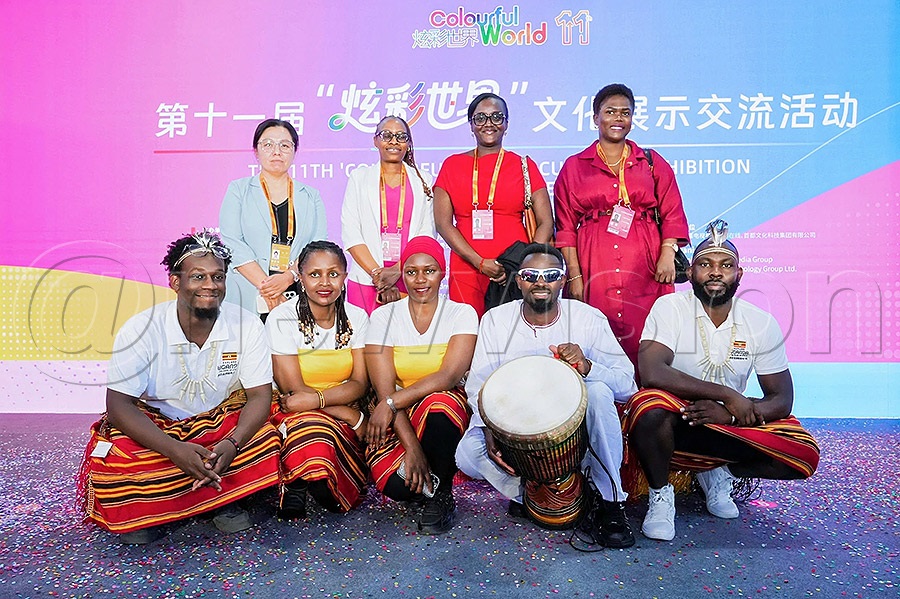
A Ugandan dance troupe performing at the China International Fair for Trade in Services. PHOTOS: Jacky Achan
Amid robots, immersive technology, traditional crafts and entertainment, Uganda had its own story to tell at the China International Fair for Trade in Services (CIFTIS) 2026 edition held from September 9 to 13 at Shougang Park in Beijing.
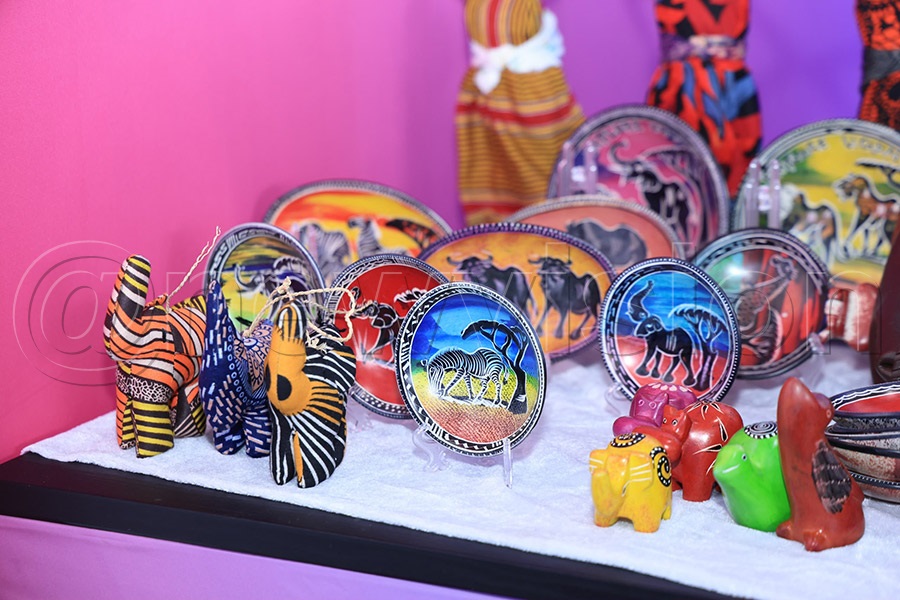
At the Ugandan booth, videos from the Uganda Tourism Board played alongside displays of Ugandan crafts, bags, decorative handmade products and coffee. The booth offered visitors a compact introduction to Uganda's tourism, culture and commercial potential.
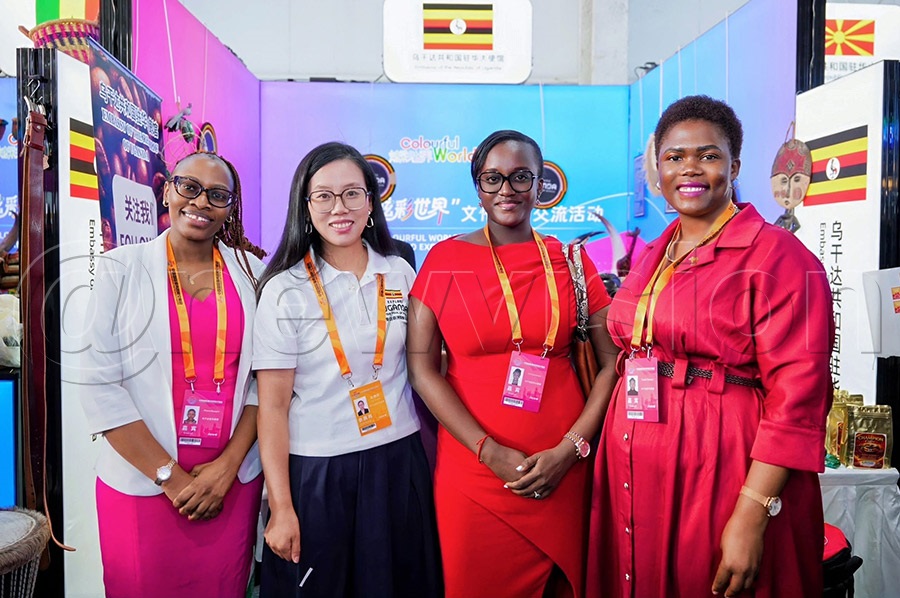
Ugandan cultural performers also took part in the opening activities, while Third Secretary Tina Georgina Kabazaire of the Embassy of Uganda in Beijing participated in a cultural salon and made a presentation on Ugandan coffee and tourism.
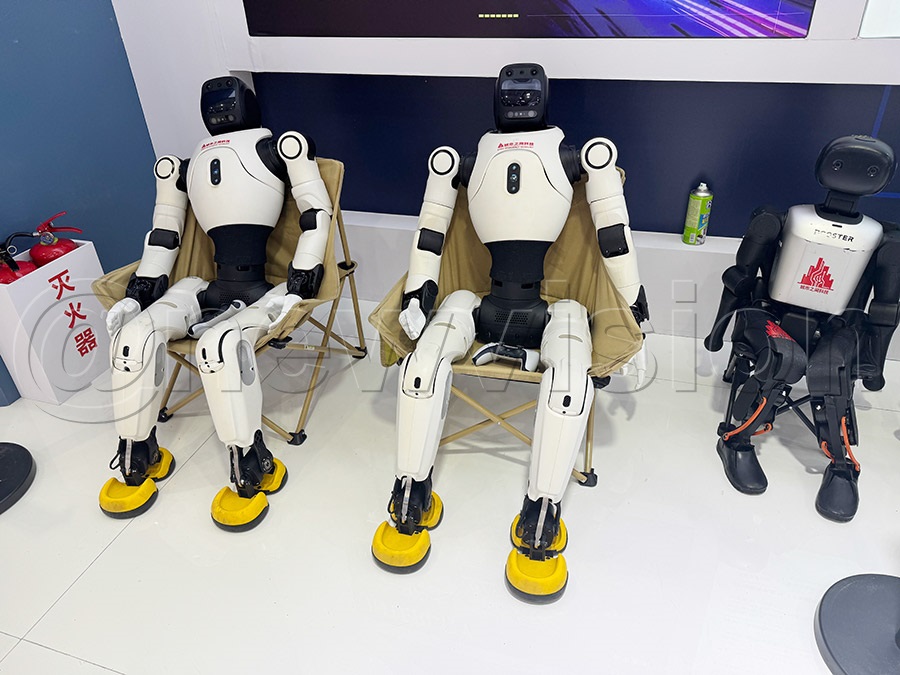
Robots were part of the China International Fair for Trade in Services
The Ugandan presence was modest in size but focused in purpose: to increase the country's visibility, promote its products and services, and create connections that could develop into commercial opportunities.
Kabazaire explained that Uganda's approach to international expos varies according to the size and nature of each event. At some exhibitions, the Embassy invites private-sector players from Uganda to participate, with companies funding their own attendance and showcasing products in areas such as agriculture, tourism and energy.
But for CIFTIS this year, the Embassy worked with Ugandan businesses already operating in China. Participants displayed Ugandan products, including crafts, bags, decorative handmade items and coffee.
Coffee was the flagship product. "Coffee is the number one product we are pushing in China," Kabazaire said.
That push comes as Uganda's coffee trade with China has expanded rapidly. According to official figures, the value of coffee exports to China rose from $10.37 million in 2023 to $28.64 million in 2024, an increase of 278 percent.
The growth continued into 2025. In March, Uganda exported 35,532 60-kilogramme bags of coffee to China, up from 12,264 bags in February, a 190 percent month-on-month increase. The surge made China Uganda's second-largest coffee market in Asia, behind Japan, and sixth-largest market globally at the time.
Kabazaire said Uganda's coffee exports to China tripled between 2023 and 2026, attributing the growth to broader economic and commercial diplomacy efforts by the Ugandan government and its missions abroad.
The government has allocated specific funding to enable Ugandan missions to promote the country's products and investment opportunities internationally. According to Kabazaire, the funding has strengthened the missions' ability to participate in exhibitions, secure space and connect Ugandan businesses with potential partners.
But promoting a product at an exhibition is only the beginning.
Kabazaire noted that Embassy officials can make introductions and create opportunities, but some engagements require technical expertise from institutions in Uganda, including agencies such as the Uganda Investment Authority.
That coordination is increasingly part of Uganda's economic and commercial diplomacy strategy in China.
Over the past two years, Kabazaire said, the effort has helped increase Uganda's visibility in different parts of the country. Places where Uganda was previously little known have become more familiar with the country, its products and its opportunities.
Coffee has been central to that effort.
Ugandan coffee is increasingly appearing in Chinese coffee shops, according to Kabazaire. But she also pointed to challenges that have affected the value Ugandan producers receive from the Chinese market.
In the past, she said, Ugandan coffee could be bought and blended with other coffee or repackaged and sold under another identity not linked to Uganda. The Embassy is therefore placing greater emphasis on branding and promoting coffee clearly as a Ugandan product.
The objective is to ensure that the growing demand for Ugandan coffee also translates into greater recognition and value for Uganda.
From a booth to a factory
The Embassy's strategy does not end when an exhibition closes.

Ugandans trying out A virtual reality headset at the China International Fair for Trade in Services
At CIFTIS, Ugandan representatives made new contacts and collected business leads. The Embassy keeps a database of those contacts and follows up after events, sometimes inviting potential partners to the Embassy or to subsequent Uganda-focused events where there is more time to discuss business opportunities.
Kabazaire described this follow-up as an important part of the Embassy's commercial diplomacy.
A contact made at an exhibition may initially amount to little more than a conversation, but continued engagement can eventually lead to a visit to Uganda, a meeting with the relevant government institution and, potentially, an investment.
She recalled one such case involving a company the Embassy encountered at another exhibition in China.
After the initial meeting, the Embassy maintained contact with the company and eventually invited its representatives to Uganda. They visited coffee farms, saw the production process and subsequently began making repeated trips to the country.
The Embassy then connected the company with the Uganda Investment Authority, which assisted with the investment process.
About a year after the initial encounter, Kabazaire said, the company had established a coffee factory in Uganda valued at approximately $1 million.
The example illustrates why the Embassy continues to attend trade fairs even when an immediate transaction does not emerge.
The value of an exhibition can lie in the relationship that follows.
As Kabazaire explained, a meeting at a trade fair can develop into something much larger, whether through an investment, a business partnership or an order for Ugandan products.
More than a trade fair
Uganda's participation at CIFTIS also involved the country's Ministry of Trade.
Two representatives from the Ministry were present at the fair and participated in some of the meetings, while the Embassy was given a platform to make a presentation.
Kabazaire's presentation focused on coffee and tourism, two areas she identified as among Uganda's main priorities in the Chinese market.
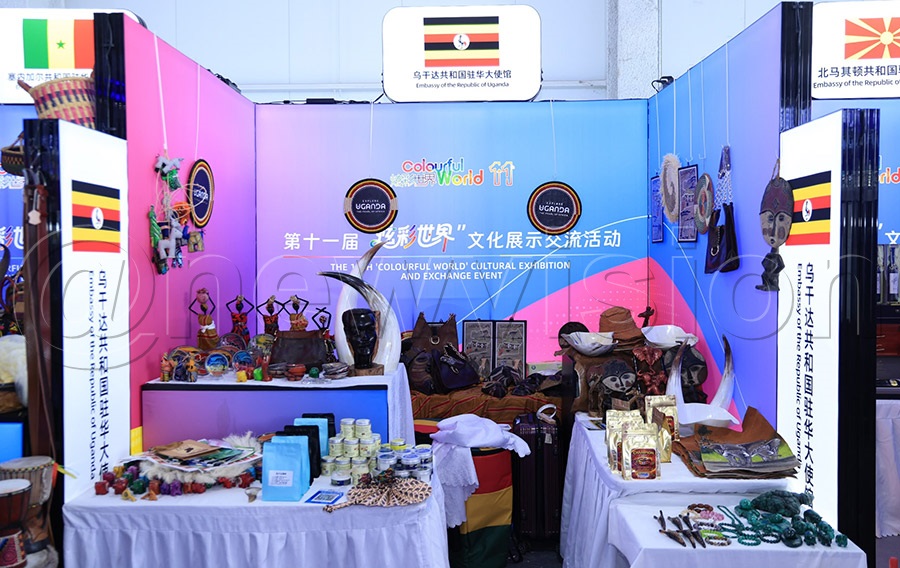
Uganda's trade booth
The Uganda booth also featured promotional videos supplied by the Uganda Tourism Board. The Embassy works with UTB to ensure that material used by Uganda's missions abroad carries consistent information about the country's tourism attractions and opportunities.
The effort reflects a broader strategy of economic and commercial diplomacy.
Ugandan missions are increasingly using international exhibitions not simply as places to display products, but as platforms for identifying potential partners and maintaining relationships with companies, investors and other stakeholders.
CIFTIS provided another such platform.
Uganda had participated in the fair the previous year, and Kabazaire said the Embassy intends to continue engaging with similar events because they create opportunities to market the country and generate business leads.
For Uganda, visibility itself is part of the process.
The country is seeking to become better known in a market of more than a billion consumers, while using products such as coffee and tourism as entry points for broader commercial engagement.
Where technology meets tradition
That broader purpose of CIFTIS was visible throughout the fair.
In some parts of Shougang Park, visitors could watch robots performing practical tasks and experience immersive virtual reality built around China's lunar exploration programme.
In another, a paper-cutting artist, Yuan Xiuli from Fengning Manchu in the Hebei exhibition area, used traditional techniques to create intricate silhouette designs by hand. Chinese paper-cutting, or jianzhi, was inscribed by UNESCO on the Representative List of the Intangible Cultural Heritage of Humanity in 2009.
Nearby, a local Chinese band performed for visitors, while other exhibitors displayed handmade products and offered food and beverages.
The juxtaposition was striking. The robots represented an effort to automate and commercialise services that once depended entirely on human labour. The lunar VR attraction demonstrated how digital technology can transform science and storytelling into immersive experiences.
The paper-cutting artist represented a very different form of expertise: knowledge accumulated over generations and expressed through the human hand.
Together, the displays suggested that the modern services economy is becoming increasingly broad. Technology, culture, entertainment, tourism, food and craftsmanship can all become part of the same commercial and international exchange.
A changing services economy
That may ultimately be what made CIFTIS 2026 distinctive. It was not simply an exhibition of companies selling services. It was a demonstration of how services are increasingly experienced.
A robotic arm can prepare and serve a drink when a customer pays up. A visitor can walk through a virtual reconstruction of the lunar surface without leaving Beijing.
An artist can turn a sheet of paper into a detailed portrait. A performance can introduce visitors to a region's culture.
A cup of coffee can become a gateway to a country's agricultural sector, tourism industry and investment opportunities.
For Uganda, the fair offered a smaller but important version of the same idea.
Though not large enough to accommodate a wide range of companies from home, the Uganda booth provided space to present coffee, crafts, tourism and culture while allowing Embassy and Ministry representatives to meet potential partners. The real measure of those encounters, however, may come later.
Ultimately, CIFTIS was more than a trade fair. It was a meeting point between technology and tradition, between commerce and culture, and between countries looking for new ways to connect. /END