
POATE 2026 showcases Uganda’s tourism rebirth
This year’s POATE carried an unmistakable atmosphere of triumph and renewal.
The CEO UTB, Juliana Kagwa having a word with Sheraton Hotel General Manager Philippe Bartencoup and folks in the film industry at Speke Resort Munyonyo. (Courtesy photos)
________________
If you have not visited Speke Resort Munyonyo in the last five years, you may need a tour guide to appreciate its astonishing transformation into one of Africa’s emerging convention destinations.
What was once primarily a lakeside leisure retreat has steadily evolved into a sprawling convention complex whose modern architecture reflects Uganda’s growing confidence in hosting international events.
The setting is breathtaking. The blue skies merge effortlessly with the shimmering waters of Lake Victoria, known to ancient communities as Nalubaale, creating a majestic backdrop for the 2026 Pearl of Africa Tourism Expo (POATE). The name translates to “home of spirits”. The scenery alone tells the story of a country repositioning itself firmly on the global tourism stage.
This year’s POATE carried an unmistakable atmosphere of triumph and renewal. President Yoweri Museveni appeared visibly pleased as he toured the exhibition grounds, nodding approvingly and smiling at the swelling numbers of exhibitors, buyers, investors and tourism stakeholders who thronged the venue during the three-day event.
The mood reflected far more than a successful expo. It symbolised Uganda’s determined return to the international tourism map after the devastating disruption caused by the COVID-19 pandemic.
The transformation of Munyonyo itself became part of the tourism narrative. Delegates who remembered the old resort expressed amazement at the expansion of conference halls, landscaped gardens, lakeside walkways and hospitality facilities that now rival convention centres in Kenya, Rwanda, South Africa and Ethiopia.
The resort’s evolution mirrors Uganda’s broader ambition to position itself as both a leisure destination and a hub for Meetings, Incentives, Conferences and Exhibitions (MICE) tourism.
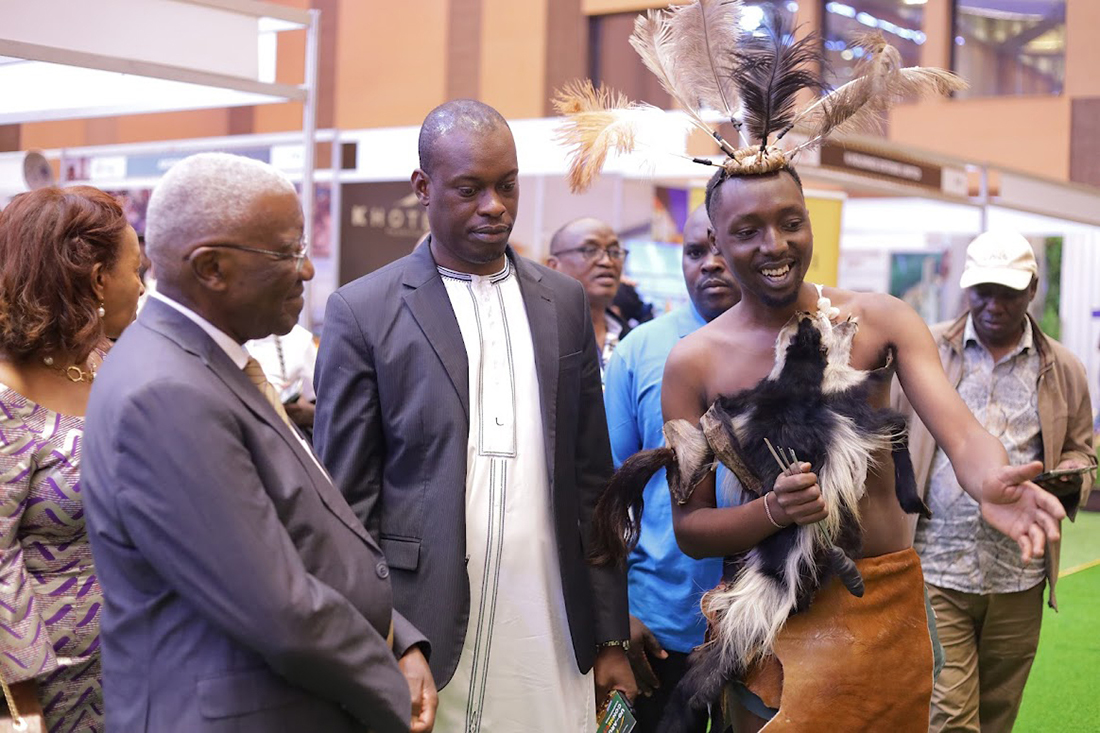
Minister of Tourism, Wildlife and Antiquities Tom Butime and Martin Mugarura appreciate culture as one of tourism attraction in Uganda.
POATE 2026 also demonstrated how Uganda’s tourism sector is diversifying beyond traditional gorilla tracking and wildlife safaris. Sports, culture, crafts, culinary specialists and technology innovators are now among the country’s attractions.
Across the exhibition halls, tour operators marketed community tourism experiences designed to immerse visitors in local cultures.
The Ewaffe stall attracted crowds with Buganda cuisine, traditional juices, cultural dress codes and ancient love potions that sparked curiosity among guests. Kaynella Farm narrated the deep Ankole roots in livestock keeping and crop farming, giving visitors insight into western Uganda’s pastoral traditions.
Eco-tourism packages prominently promoted Uganda’s iconic attractions, from mountain gorillas and tree-climbing lions to the thunderous beauty of Murchison Falls National Park. Guests were enticed with stories of boat cruises along the River Nile and adventures within Queen Elizabeth National Park.
The message from POATE 2026 was unmistakable: modern travellers are increasingly seeking authentic experiences rather than merely ticking destinations off a checklist.
International buyers mingled freely with local entrepreneurs while tourism boards from across East Africa showcased regional partnerships aimed at attracting more global travellers. The expo became both a celebration and a marketplace, a place where deals were negotiated, networks established and Uganda’s tourism future reimagined.
“Ugandans love their beer, nyama choma and the sandy beach. You can always tell when they are headed for Mombasa. Their dress code, English-Kiswahili accent and purchasing power give them away,” joked Victor M. Shitakha, chairman of the Kenya Tourism Authority.
Joan Ndungu of Diani Beach concurred, adding that newlywed couples are in the habit of having their honeymoon on the islands. Many return to celebrate every anniversary.
Antonio Fernandes from the United Kingdom became emotional while narrating his return to Uganda decades after leaving during the regime of Idi Amin Dada.
“I felt good seeing my school still standing — Buganda Road Primary School. I even visited the classrooms where I studied. I can walk through Nakasero with my eyes closed. Watoto Church was previously a cinema hall,” Fernandes recalled warmly. He said he now hopes to market Uganda to his clients as an ideal destination for honeymoons and special events.
For many observers, the greatest achievement of POATE 2026 was the restoration of confidence, confidence in Uganda’s ability to host major international gatherings, confidence in the resilience of the tourism sector and confidence that the Pearl of Africa brand is once again commanding global attention.
As the sun set over Nalubaale and lights glittered across the Munyonyo shoreline, POATE 2026 left behind more than colourful memories of exhibitions and cultural performances. It left a powerful impression that Uganda’s tourism industry is no longer merely recovering; it is reinventing itself for a new global era.