
Kasubi Tombs ready for full tourism comeback after restoration
“The restoration of the Muzibu-Azaala-Mpanga has been successfully completed, with the final works completed on August 19, 2026, through the installation of the main entrance gate,” the minister said in a statement delivered during the launch.
(L-R) Basil Ajer, the Director of Tourism, Wildlife, and Antiquities at the Ministry of Tourism, Wildlife and Antiquities in Uganda, Owek Israel Kazibwe Kitooke, the Minister of Information, Mobilization, and Kingdom Spokesperson Buganda Kingdom, and David Wasajja, Prince of Buganda Kingdom officially launching UNESCO cultural projects in Uganda during a high-level stakeholder forum and official launch at Hotel Africana on September 2, 2026. (Photos by Mary Kansiime)
________________
The Kasubi Tombs, historic burial grounds of Buganda’s kings, are set for a full tourism comeback following the completion of restoration works more than 16 years after a devastating fire destroyed the main royal tomb.
The renewed push to reopen and strengthen the site has received a sh757m ($200,000) boost from the Government of Japan to improve security, disaster preparedness and the long-term resilience of the UNESCO World Heritage Site.
According to Dr Basil Ajer, director of tourism at the Ministry of Tourism, Wildlife and Antiquities, who represented tourism minister Tom Butime at the launch of new UNESCO-supported heritage sites of Rwenzori Mountain and Kasubi Tombs at Hotel Africana on September 2, 2026, the final restoration works at Kasubi were completed on August 19, 2026, with the installation of the main entrance gate.
Ajer said the government is now waiting for the Buganda kingdom to officially reopen the restored site, paving the way for Ugandan and international visitors to return to one of the country’s most important cultural attractions.
“The restoration of the Muzibu-Azaala-Mpanga has been successfully completed, with the final works completed on August 19, 2026, through the installation of the main entrance gate,” the minister said in a statement delivered during the launch.
He invited Ugandans and international visitors to experience the restored cultural site, describing the Kasubi Tombs as a unique global cultural treasure.
The tombs were severely damaged by a fire in March 2010, which destroyed the Muzibu-Azaala-Mpanga, the main thatched structure where the remains of four former kings, or Kabakas, of Buganda are kept.
The destruction triggered a lengthy international restoration effort involving the Government of Uganda, the Buganda Kingdom, UNESCO, traditional artisans and development partners, with Japan emerging as one of the major supporters of the recovery.
Since the 2010 fire, the Government of Japan has provided about $650,000, equivalent to approximately sh1.625b at the time, towards the restoration of Kasubi through the UNESCO Japanese Funds-in-Trust for the Preservation of the World Cultural Heritage.
The latest $200,000 contribution will support a new phase of work aimed at ensuring that the restored site remains secure, resilient and capable of supporting sustainable tourism.
(L-R) Jacqueline Besigye Nyirachiza, the Commissioner for Museums at the Ministry of Tourism, interacting with Basil Ajer, the Director of Tourism, Wildlife, and Antiquities at the Ministry of Tourism, Wildlife and Antiquities in Uganda, during a high-level stakeholder forum and official launch at Hotel Africana on September 2, 2026.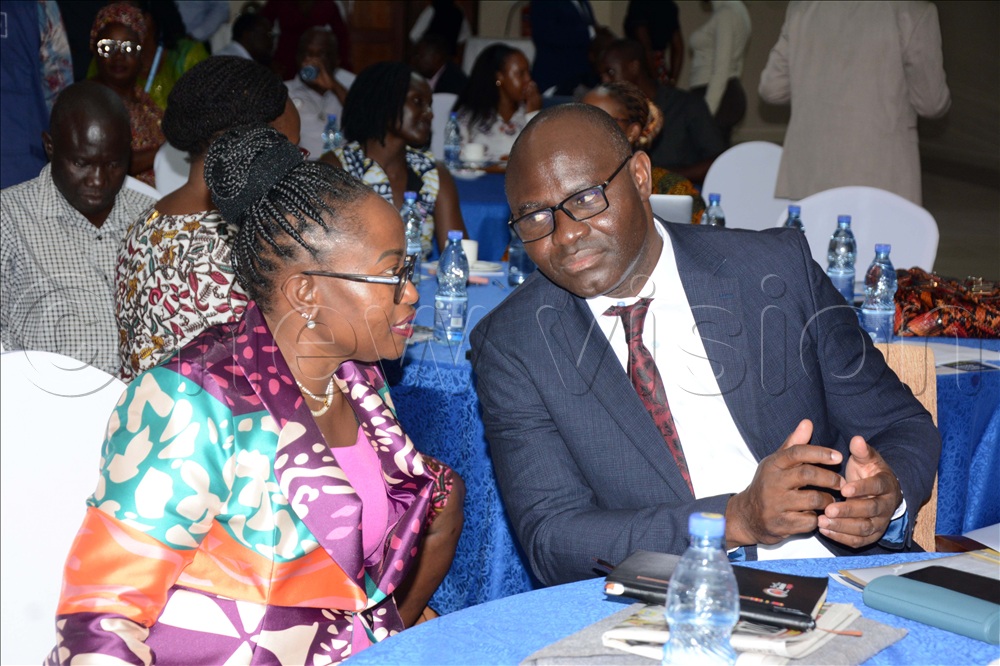
From destruction to recovery
The Deputy Head of Mission at the Embassy of Japan in Uganda, Yoshida Norimasa, said Kasubi’s removal from the World Heritage in Danger list in 2023 was a major milestone but stressed that restoration alone was not enough.
He said the new project would help open a new chapter focused on sustainable and resilient management of the site for future generations.
The project will focus on public accessibility, visitor experience, disaster preparedness and community participation.
“At the end of the day, the people of Buganda are the true custodians of this heritage, and empowering the local community is what makes this project so meaningful,” Yoshida said.
UNESCO Regional Office representative Judith Ogana said Kasubi should be treated as a living cultural and spiritual site, meaning that efforts to improve tourism must not undermine its authenticity or sacred character.
She said the new phase of UNESCO’s engagement would shift the focus from recovery after the 2010 fire to long-term resilience.
“We want to now focus on safeguarding the site, ensuring that there's respect for the sacred character of the site,” Ogana said.
The new Japanese-funded project, titled Resilience and Sustainable Recovery of the Tombs of Buganda Kings at Kasubi, will strengthen disaster-risk reduction and preparedness while improving the visitor experience.
Ogana said the site needed to be prepared not only for fire but also for other disasters and emergencies.
“How do we ensure that we reduce the risks but also think of preparedness? How do we prepare in case there's something in case there's an emergency?” she said.
Ogana said that beyond protecting the physical structures, the project is expected to change how visitors experience Kasubi. It will support exhibitions, signage, pathways and interpretation to help visitors better understand the history, traditions and significance of the tombs.
Visitor management will also be strengthened because Kasubi remains a sacred place. Ogana said increasing tourism must go hand in hand with ensuring that visitors understand and respect the character of the heritage site.
The project will therefore examine not only visitor numbers but also how tourists move through and interact with the site. It will also strengthen the capacity of traditional custodians and artisans while supporting apprenticeships, heritage-based livelihoods and tourism enterprises around the site.
Ogana said the wider objective was to safeguard World Heritage while enabling people to understand it, experience it and benefit from it sustainably.
The Kasubi experience will also be shared with other African countries, including Ghana, Kenya, Ethiopia, Tanzania, Mali and Benin, as part of UNESCO’s effort to spread lessons on sustainable heritage management.
Communities to benefit
Uganda Wildlife Authority executive director Dr James Musinguzi said communities around Kasubi and Rwenzori would be involved in storytelling, empowerment and other activities under the wider UNESCO-supported projects.
He said the community component could generate jobs, strengthen local participation and increase the economic contribution of heritage tourism.
“I am particularly very happy and glad about the inclusion of the community component where we are going to be working with the communities around Rwenzori, around Kasubi, for storytelling, empowerment,” Musinguzi said.
He urged stakeholders to take ownership of the projects so that the benefits continue after the formal project period ends.
“Let us truly own them and grow these projects from today onwards to benefit our children and diversify our tourism products,” he said.
The Buganda Kingdom welcomed the completion of the restoration, describing the Kasubi Tombs as the spiritual heart of the kingdom and an important symbol of its history, identity and traditions.
Buganda spokesperson Israel Kitooke, who represented Katikiro Charles Peter Mayiga, said the journey from the 2010 fire to the completion of restoration demonstrated what could be achieved through cooperation between institutions, traditional leaders and communities.
“Sustainable recovery requires us to ensure that the Kasubi Tombs remain protected against any threats, including climate change, urban development and human and natural disasters,” he said.
Kitooke said the kingdom wanted greater investment in the next generation of custodians, artisans, researchers, conservationists and cultural leaders who will maintain the heritage site.
He said the new project would help establish advanced disaster-risk management plans, support traditional custodians and develop sustainable sources of traditional materials needed to maintain the site.
The kingdom also wants traditional knowledge and skills to be passed on to younger generations so that the expertise required to maintain the unique thatched architecture is not lost.