
Eastern Uganda Regional Chess League Launches in Mbale
Organised by the Eastern Uganda Region Chess Association in partnership with the Uganda Chess Federation (UCF), the two-weekend competition marks a major milestone in decentralizing the sport across the country.
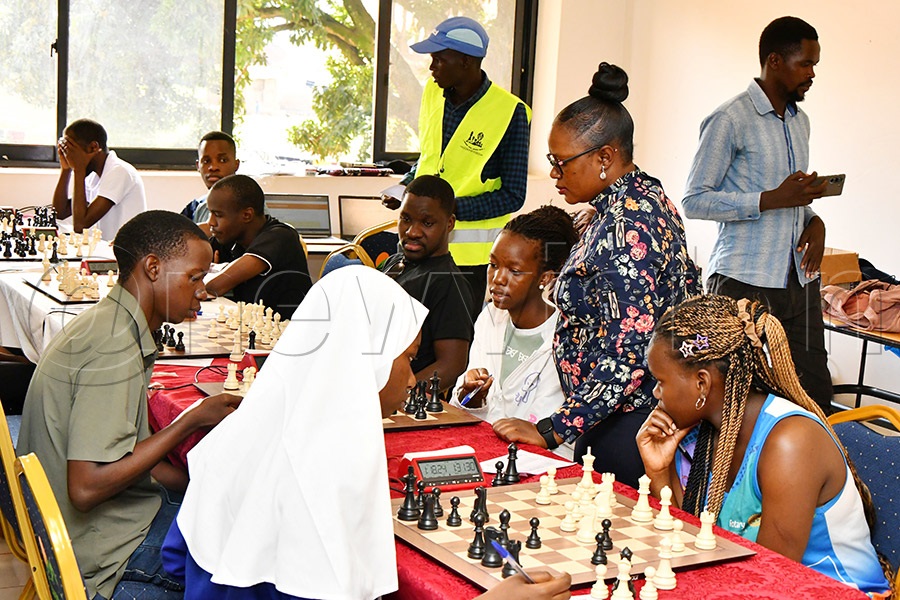
Chess players competing during the Eastern Region Chess League championship at Mountain Inn Hotel in Mbale City. Photo by Donald Kiirya
Fifteen teams converged at Mountain Inn Hotel in Mbale this weekend for the historic launch of the inaugural Eastern Uganda Regional Chess League.
Organised by the Eastern Uganda Region Chess Association in partnership with the Uganda Chess Federation (UCF), the two-weekend competition marks a major milestone in decentralizing the sport across the country.
The eight-round accelerated tournament will conclude on the weekend of November 28th–29th at Mansion Hotel in Jinja City, with top-performing teams earning qualification to the national league, regional East African competitions, and potentially the World Teams Chess League.
Decentralising the sport
Speaking at the opening ceremony on behalf of the UCF President, who is currently in Kazakhstan finalizing a Memorandum of Understanding with the International Schools Chess Federation—UCF General Secretary Walter Okas hailed the regional launch as a breakthrough aligned with National Council of Sports directives.
"This is the first time we are running regional events, and it is not easy for any region to do any of these activities. So for us to be able to achieve this is a milestone, which we should not take for granted," Okas said.
"Previously, the Uganda Chess Federation used to run all its events itself, but now we are in a regional dispensation. All regions are now being empowered to be able to run activities, bringing chess directly to your doorstep," he added.
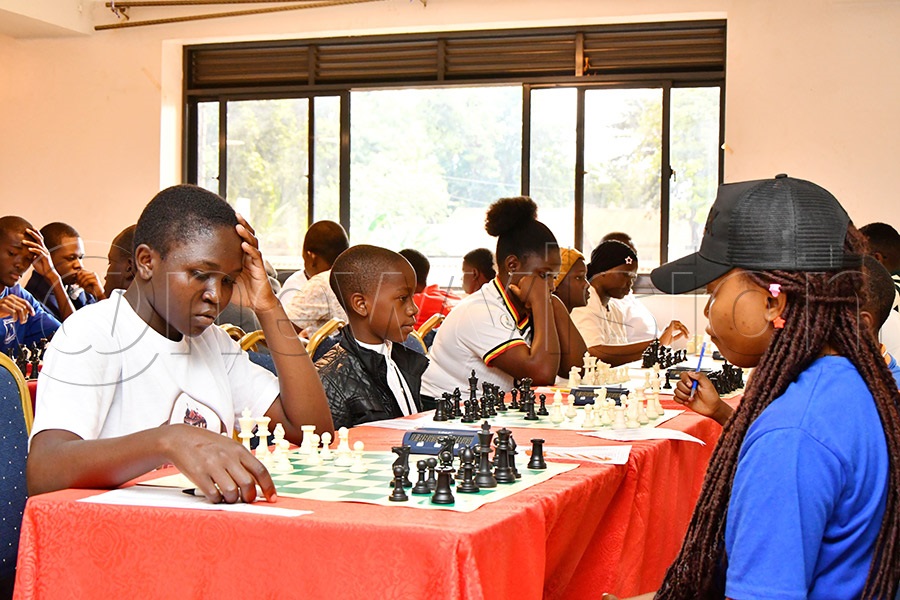
Chess players competing during the Eastern Region Chess League championship held at Mountain Inn Hotel in Mbale City. Photo by Donald Kiirya
Okas also commended team patrons for sponsoring the 15 participating clubs and noted that increased funding next year will allow for an expanded, longer league format.
League structure and youth inclusion
Abbey Mawerere, President of the Eastern Uganda Region Chess Association, welcomed players, officials, and club supporters while emphasizing fair play and strict adherence to FIDE regulations.
He highlighted the sport's unique appeal and praised the talent on display.
"The game of chess is a great game for people who are patient, people who are bright, and people who can see ahead. I'm told we have people here who can see 100 moves ahead—especially the young people," Mawerere remarked.
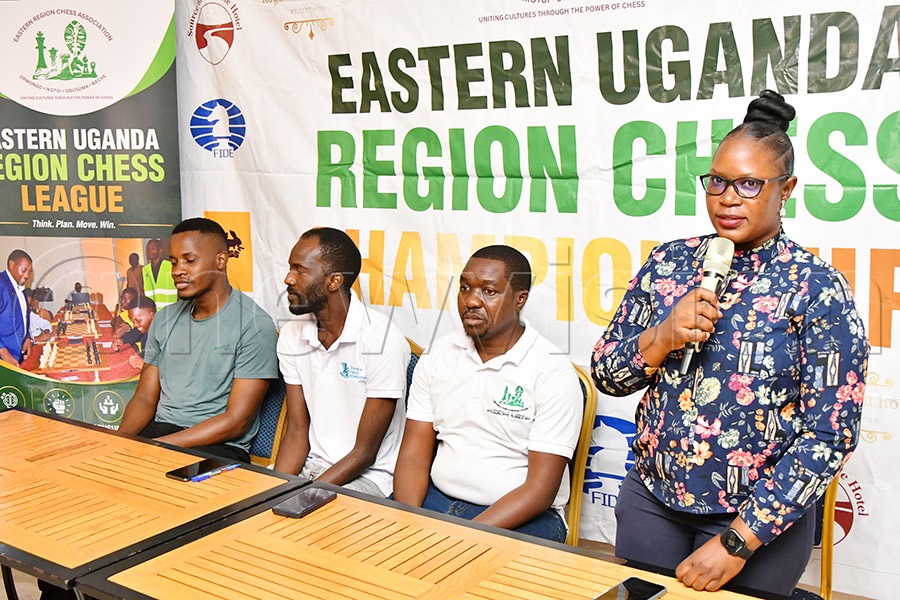
Victoria Nakiirya (right), UCF Secretary for Women Affairs and Chief Arbiter for the tournament, remarks at the kickoff of the Eastern Region Chess League championship held at Mountain Inn Hotel in Mbale City. Looking on are Abbey Mawerere (2nd right) and Walter Okas (2nd left), who were present. Photo by Donald Kiirya
To foster grassroots growth, the league utilizes a six-board team format featuring mandatory youth and female representation.
Allan Mbabani, General Secretary of the Eastern Uganda Region Chess Association, explained that while Boards 1 through 4 are open categories, Board 5 is strictly reserved for Under-16 juniors (Senior Four and below), and Board 6 is designated exclusively for female players.
"Why specifically is that gazetted? It is to help promote the youth into participation at a higher competitive level, and also to promote the ladies so we see an increase in female participation," Mbabani noted.
Beyond the league, Mbabani outlined broader national initiatives to integrate chess into school curriculums to boost critical thinking, extend programs to vulnerable communities such as refugees and prisons, and leverage social media and district representatives to distribute federation-donated chessboards to local schools and academies.
He also pointed to Jinja's rich chess pedigree, home to East Africa's only two International Masters, Elijah Emojong and Arthur Ssegwanyi, as inspiration ahead of Uganda hosting two major international events in Kampala next year, including the Africa Individual Schools Chess Championship.
Surge in female participation
Victoria Nakiirya, UCF Secretary for Women Affairs and Chief Arbiter for the tournament, expressed delight at the strong female turnout across all competing clubs.
"It is the first of its kind to happen for the Uganda Chess Federation as we are growing and pushing chess to the regions. The ladies, in particular, have turned up in big numbers. For all the teams I have observed, all have Board 6 players, which gives us courage that the game among ladies is also growing," Nakiirya said.
Confirming the technical format, Nakiirya added that the tournament follows FIDE rules across eight rounds, starting in Mbale before shifting to Jinja at the end of the month for the grand finale.
School teams competing include Wanyange Girls School, Kisiki College and Nabumali High School, and clubs include One More Child Academy from Jinja, Kamuli Chess Club, Olemwa Chess Club from Kamuli, Jinja Knights, Iganga Chess Club, Soroti Chess Club and Mbale Chess Club among others, and battled for early table supremacy as action got underway.