
Behind the medals: Uganda's athletes battle mental health in silence
Mental health has become one of the toughest opponents in modern sport, yet in Uganda, it remains largely unspoken.
Behind the medals: Uganda's athletes battle mental health in silence
Elite athletes are trained to endure pain. Torn muscles, fractured bones, fatigue and failure are part of the job. Yet behind the medals and national anthems lies a quieter struggle, one that does not show on X-rays or scoreboards.
Mental health has become one of the toughest opponents in modern sport, yet in Uganda, it remains largely unspoken. From depression and anxiety to burnout, eating disorders and fear of failure, athletes face intense pressure to perform while concealing their struggles from coaches, teammates and the public.
According to the State of Uganda Population Report 2025, themed “Mental Health: A Silent Emergency,” an estimated 24.2% of adults and 22.9% of children in Uganda are affected by mental health conditions.
However, the extent of the problem among Ugandan athletes remains unclear. There are no readily available national statistics establishing the proportion affected, making it difficult to assess the scale of their needs and the adequacy of existing support systems.
Competitive pressure, public criticism, injuries and financial insecurity can compound these challenges, while access to professional psychological support remains limited in many sporting disciplines.
From public ridicule to global glory
Joshua Cheptegei’s experience at the 2017 World Athletics Cross Country Championships in Kololo illustrates the psychological toll of public criticism.
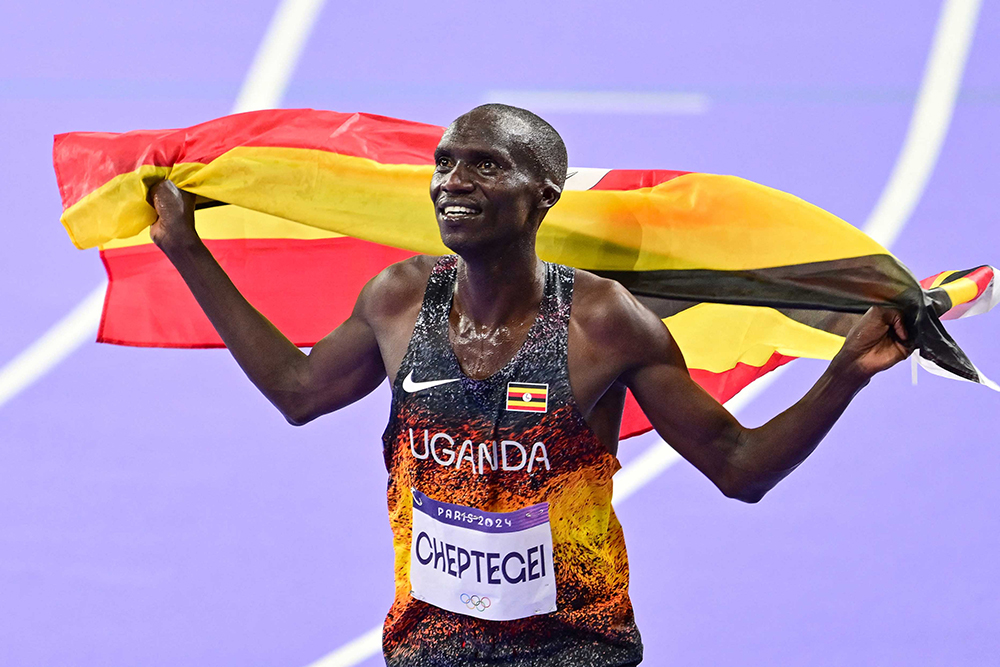
Joshua Cheptegei. AFP PHOTO
After leading the senior men’s race, he dramatically collapsed and finished 30th, having started at an unsustainable pace. Some spectators sympathised with him, while others mocked him on social media, accusing him of laziness and cowardice.
Now a multiple world champion and Olympic gold medallist, Cheptegei says the experience taught him lessons about patience and resilience.
“I can proudly say that I am a better athlete because of what happened in 2017. It taught me countless lessons about life and my career. You have to be patient,” Cheptegei said during a press conference at the 2023 World Athletics Cross Country Championships in Bathurst, Australia.
He has also publicly credited President Yoweri Kaguta Museveni for moral encouragement and access to medical care during a difficult period in his career.
Uganda Athletics vice president in charge of technical matters Benjamin Njia, who was part of the coaching team at the time, says counselling helped athletes cope with pressure and public expectations.
“There were a lot of counselling sessions from the management and Uganda Athletics,” Njia recalls. “We always tell athletes not to be pressured by the public. It takes time to be a star.”
He says athletes need to understand that success takes time and avoid measuring their worth against public expectations.
Cheptegei’s experience demonstrates the importance of support, but not every athlete has access to the same resources.
‘We had no one to run to’
Former She Cranes star Ruth Meeme knows the emotional toll of public criticism and injury.
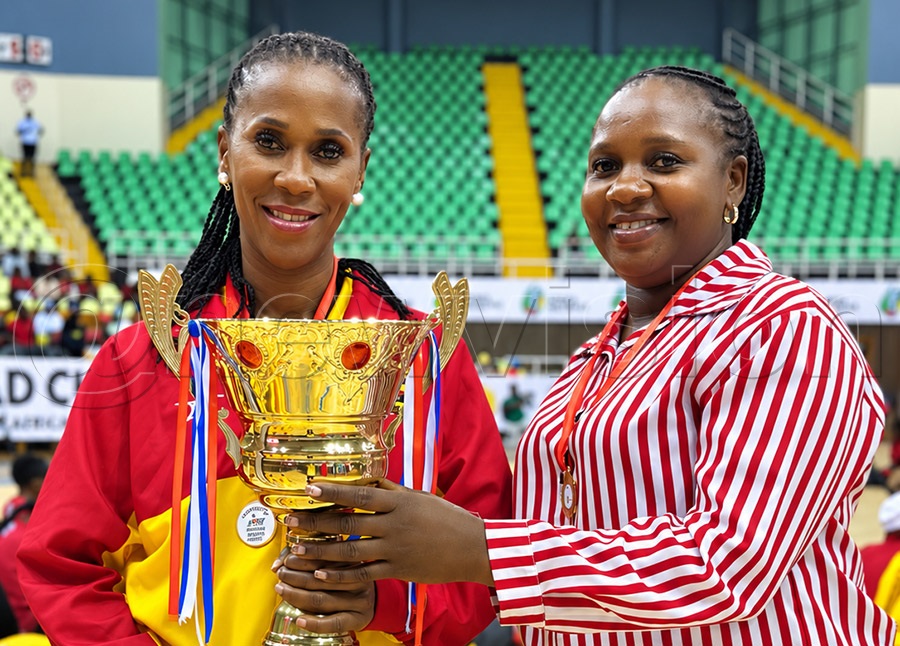
She Cranes assistant head coach Ruth Meeme (right) and She Cranes captain (left) pose for a photo with the Africa trophy they won in Nairobi
During her netball career, she faced cyberbullying and media criticism, with fans questioning her age and blaming her for team defeats.
“There was a time when people said we were too old to be on the national team,” Meeme says. “It hurt because I always gave my best. When the team lost, the blame was put on the mid-court. Yet netball is a team sport.”
She says athletes often lacked people they could confide in during difficult periods.
“In those hard times, we had no one to confide in,” she says.
Ahead of the 2022 Commonwealth Games, Meeme suffered a serious knee injury that disrupted her plans and left her struggling through rehabilitation.
“I had set my plans, but all were shattered,” she recalls. “Nobody checked on me. I trained through pain. The healing process was hell. It was lonely.”
After surgery, she transitioned into coaching. Now an assistant head coach with the national netball team, she encourages her players to speak openly about their struggles.
“I always encourage them to open up in times of hardship. I don't want them to go through what I went through,” she says.
Financial insecurity adds to the pressure
Gabriel Isaac Otuk, CEO of Fitness Health Nutrition Sports Company, says athletes’ psychological struggles can be mistaken for indiscipline when their performance declines.
“In Uganda, most sports operate on an amateur basis. Athletes can go for months without pay. That financial instability causes depression and performance failure,” Otuk says.
He argues that athletes who depend on sport for their livelihoods need greater financial security and better infrastructure.
“When your career cannot feed you, pressure becomes deadly,” he says.
Otuk calls for policy reforms that recognise mental health as an essential part of athletic performance rather than a sign of weakness.
Dropped from the national team, pushed to the brink
For weightlifter Dan Tumukunde, financial hardship, injury and disappointment nearly brought his sporting career to an end.

Athletes at Teryet High Altitude Centre
He says he experienced suicidal thoughts after being dropped from Uganda’s team selected for the 2024 All-Africa Games in Ghana. Having been selected for residential training, he invested his savings in preparation for the competition, expecting to receive a government allowance if he made the final team.
“When I was dropped, I stopped training and left the camp. I had used all my savings on training, expecting to receive a government allowance if I made the team. I had no money left, and I was mentally stressed,” Tumukunde says.
He later sustained an injury while training at his club and considered quitting the sport.
“I felt like quitting because I saw no future. My parents cautioned me against investing in a sport with no returns. Thanks to my coach and teammates, they motivated me to stay,” he says.
Tumukunde subsequently had an opportunity to meet mental health professionals through the Safe Place initiative, which seeks to educate athletes about financial management and mental health awareness.
However, weightlifting coach Khassim Nsubuga says the Uganda Weightlifting Federation (UWF) struggles to provide consistent psychological support because of limited resources.
“Under amateur sport, it is hard to have a qualified counsellor because it requires payment. No individual works for free, so we cannot access services we cannot afford,” Nsubuga says.
He confirms that Tumukunde was among 11 athletes selected for residential training ahead of the All-Africa Games. The federation eventually reduced the team to four because of financial constraints.
“He was not dropped because he was bad, but because other weightlifters had greater potential than him. With the limited resources, we could not exceed the number requested by NCS, though we wanted him and others to be part of the team,” Nsubuga says.
The account highlights the difficult choices federations face when resources are limited, as well as the personal consequences athletes can experience when their sporting ambitions are disrupted.
Beyond the competition
Sports medicine physician Dr Christopher Mbowa says athletes also face challenges when preparing for retirement, recovering from injuries or adjusting to unexpected career setbacks.
“Athletes are rarely guided on what to expect or how to prepare for life beyond sport. When things don't go as planned, they are left disappointed and confused,” Mbowa says.
He also raises concerns about exploitation within the sporting system, including financial, physical and sexual abuse. According to Mbowa, the absence of formal contracts can leave some athletes without adequate protection.
Acceptance and professional help
Mental health specialist Odeth Kempogo says acknowledging psychological distress is an important step towards recovery. She encourages athletes to seek professional assistance and speak to people they trust rather than isolate themselves.
“Acceptance is key to dealing with mental health. There is no healing without acceptance,” Kempogo says.
She advises those experiencing difficulties to seek help promptly and remain connected to supportive people.
“Stay with someone you feel safe with. Do not postpone treatment; seek professional help. Talk about it, do not isolate yourself,” she says.
Institutional gaps
Sports federations are taking different approaches to mental health support, but access to professional services remains uneven.

Federation of Uganda Football Associations (FUFA) spokesperson Ahmed Hussein says stigma prevents some athletes and coaches from seeking help. He says FUFA has an insurance policy covering national team players and coaches on national duty, allowing them to access counselling services.
At club level, Hussein says clubs are encouraged and expected to have medical teams that include professionals responsible for players’ mental wellbeing.
Uganda Volleyball Federation first vice president Abdallah Kiggundu, however, says the federation cannot afford to employ a mental health specialist full-time.
“The truth is that we do not have a specific budget for a mental health specialist because we cannot afford one. However, when we have national team duty, we engage one and pay them an allowance,” Kiggundu says.
He adds that the federation is working on a plan to encourage clubs to provide mental health services.
In February 2026, Uganda Athletics unveiled a safeguarding policy aimed at protecting athletes from exploitation, emotional and physical abuse, sexual abuse, bullying and cyber harassment. The policy represents an institutional step towards creating a safer sporting environment, although its implementation and impact will be important in determining how effectively athletes are protected.
A global mirror: Naomi Osaka
Uganda’s challenges reflect a wider struggle in international sport.
In 2021, tennis star Naomi Osaka withdrew from the French Open and skipped Wimbledon amid concerns about her mental health. She disclosed that she had experienced depression since 2018 and severe anxiety associated with press conferences.

Naomi Osaka. AFP PHOTO
Her decision attracted both support and criticism, highlighting how athletes can face scrutiny even when they speak openly about their psychological wellbeing.
Osaka’s experience reinforces a central issue facing athletes worldwide: the expectation to perform does not remove their need for mental health support.
Changing the narrative
The experiences of Cheptegei, Meeme and Tumukunde expose a troubling contradiction: sport celebrates toughness but can punish vulnerability.
Uganda has produced exceptional sporting talent, yet financial insecurity, injuries, public criticism and gaps in institutional support can leave athletes struggling to cope. Individual resilience matters, but it cannot replace accessible professional care and effective safeguarding.
Federations, clubs and sports administrators need to invest in qualified mental health professionals, provide confidential counselling and ensure athletes can seek help without fear of jeopardising their careers.
In a country that celebrates medals, the next victory may be teaching athletes that it is okay not to be okay and ensuring that when they speak up, someone is ready to listen.