
Uganda calls for strategic AI investment to boost jobs, productivity
Ambassador Tibaleka further noted that, within Uganda’s development context, artificial intelligence falls under the broader national emphasis on science, technology and innovation. However, he stressed that it must support, not replace, the foundations of productive transformation.
Uganda delegation comprising workers, employers and Government delegates at the 114th session of the International Labour Conference.
Uganda’s permanent representative to the United Nations, Marcel Robert Tibaleka, has called for robust and strategic investment in artificial intelligence to boost productivity and create opportunities across key sectors, including agriculture, health, education and industry.
“Technology should complement human work, reinforce skills development, improve productivity, and expand decent employment,” he said.
Ambassador Tibaleka further noted that, within Uganda’s development context, artificial intelligence falls under the broader national emphasis on science, technology and innovation. However, he stressed that it must support, not replace, the foundations of productive transformation.
He also highlighted the need for a renewed social contract anchored in social justice and decent work, in line with national development priorities.
Citing President Museveni’s emphasis on wealth creation, value addition, skilling and the full participation of households in the money economy, Tibaleka said Uganda is investing in practical skills, enterprise development and productivity through transformative wealth creation programmes.
This was during the recently concluded 114th session of the International Labour Conference in Geneva.
The annual gathering brought together governments, employers and workers from member states to discuss labour and social policy, review international labour standards and advance the decent work agenda.
Uganda was represented by a tripartite delegation led by Ambassador Tibaleka, alongside government officials and workers’ and employers’ representatives, reflecting the country’s commitment to social dialogue and tripartism.
Uganda was nominated by the Africa Group to serve in two technical roles at the 114th ILC. The country served as an advisor to both the Drafting Group of the General Discussion Committee on the Transformative Agenda for Gender Equality at Work and on the Recurrent Discussion Committee on Social Dialogue and Tripartism.
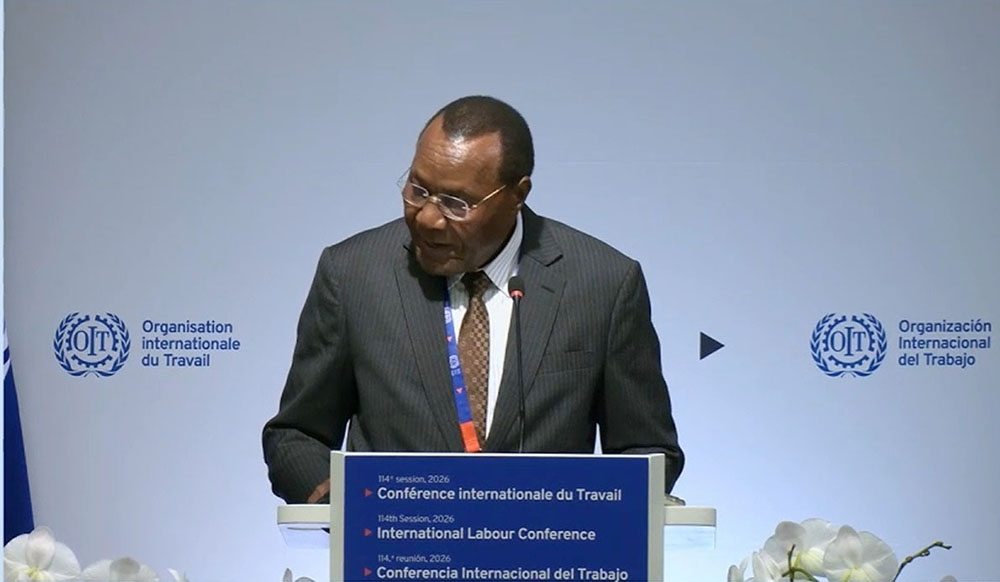
Marcel Robert Tibaleka
Uganda’s participation helped ensure that African perspectives and national experience in labour law reform, social dialogue and gender-responsive labour policy were reflected in the discussions.
The highlight of the conference was the adoption of the first-ever international labour standard on the platform economy, the Convention on Decent Work in the Platform Economy, 2026. The Convention establishes global standards to ensure decent work in digital labour platforms.
It provides criteria for determining employment status, guarantees fundamental rights and protections, and requires transparency and accountability in algorithmic management. It also mandates fair pay, non-discrimination, social security coverage, occupational safety and health, and protection of personal data.
The Convention further obliges platforms to disclose how algorithms allocate work, evaluate performance and impose sanctions. This landmark instrument modernises international labour standards and guides countries in regulating platform work within a rapidly evolving digital economy.
Platform work in Uganda includes ride-hailing services such as SafeBoda, Bolt and Uber; on-demand delivery platforms such as Glovo; online freelance marketplaces such as Upwork and Fiverr; and digital commerce platforms such as Jumia and Kikuubo, among others.
These platforms are expanding employment and income opportunities for young people, improving market access for small businesses, reducing transaction costs and stimulating new digital value chains across transport, logistics, retail and services.