
Musenero proposes sh500b annual science budget as Uganda targets knowledge-based economy
Musenero revealed that Uganda’s current STI investment stands at just 0.71% of GDP, far below the national target of 2.5% and significantly lower than countries such as Israel, South Korea, and Finland.
Uganda’s Minister for Science, Technology and Innovation, Monica Musenero with Vice President Jessica Alupo in a group photo during the event on Thursday, April 30. (PPU photos)
________________
Uganda’s Minister for Science, Technology and Innovation, Monica Musenero, has proposed a sh500b annual budget to bridge the country’s funding gap in science, technology, and innovation (STI), positioning it as a critical step toward economic transformation.
Speaking on Thursday, April 30, at the National Science Week currently underway at Kololo Ceremonial Grounds, Musenero delivered an almost two-hour, detailed five-year account of progress in the sector, insisting that Uganda must urgently transition from a raw material-based economy to a knowledge-driven one.
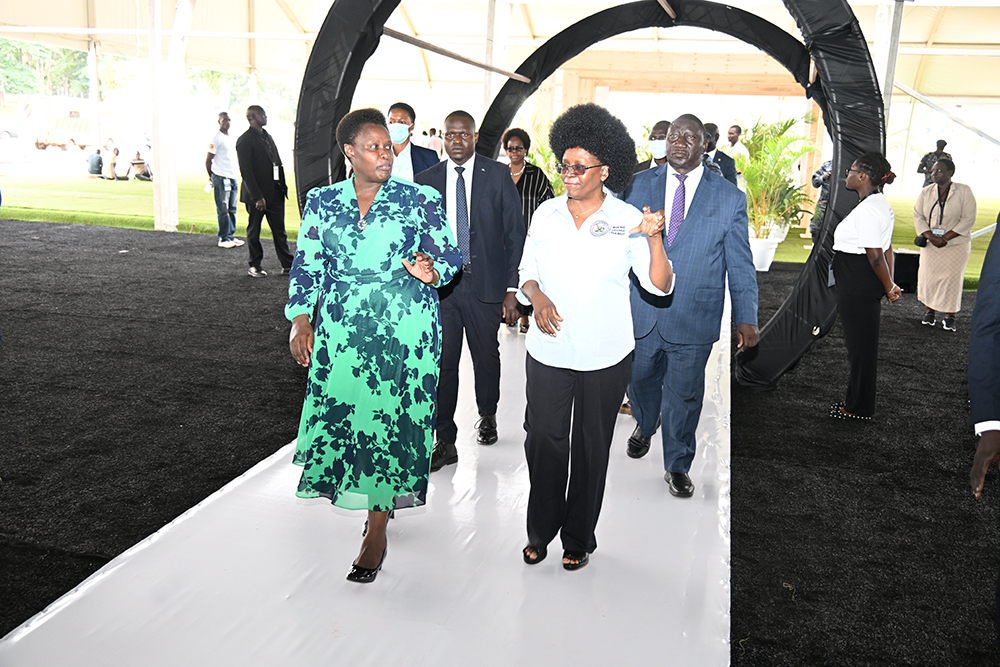
The event was officiated by Vice President Jessica Alupo, representing President Yoweri Museveni, who reiterated the government's commitment to using science as a tool to “tame nature” and drive development.
Musenero revealed that Uganda’s current STI investment stands at just 0.71% of GDP, far below the national target of 2.5% and significantly lower than countries such as Israel, South Korea, and Finland.
She said the proposed sh500b annual allocation would act as a “floor for the ignition phase,” enabling the country to scale innovations, support commercialisation, and move viable projects through what she described as the “valley of death” between research and market entry.
Musenero explained that over the past five years, government undertook a comprehensive diagnosis of why decades of investment in education and research had not translated into industries, jobs, or exports. The findings pointed to a fragmented innovation ecosystem, weak commercialisation pathways, limited access to appropriate financing, and what she termed a “black box," a systemic failure to convert knowledge into economic value.
To address this, the government developed a new STI economic model structured around a full value chain from idea generation and prototyping to manufacturing, branding, and market integration. Musenero said this approach is already yielding results across multiple sectors.
In manufacturing, Uganda has made significant strides in electric mobility, with locally produced vehicles now reaching up to 40% domestic content and a target of 65% by 2030. The country has manufactured about 25,000 electric vehicles and secured export orders worth $183m from markets including Nigeria, South Africa, and Ethiopia.
In health and biotechnology, Uganda has reduced dependence on imports by developing local diagnostic kits and advancing vaccine research. The country now holds patented vaccine platforms and has expanded its pool of scientists from fewer than 100 to more than 2,000 in specialised fields. Government investments in pharmaceutical ventures have also grown significantly in value, highlighting the commercial potential of science-led initiatives.
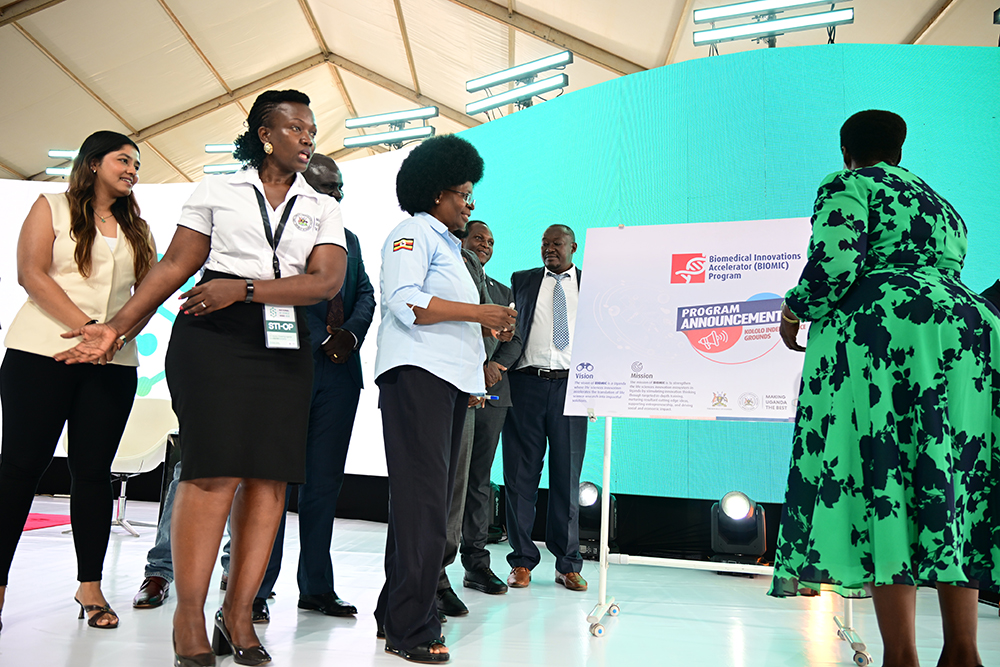
Uganda has also entered the global space economy, launched its first satellite, and developed capacity for satellite design and data systems. Additional advances have been made in electronics manufacturing, semiconductor research using local silicon resources, and infrastructure such as engineering and innovation centres supporting industrial development.
Musenero noted that these efforts have built an STI ecosystem valued at approximately $1.52b, about 4.5 times the government’s initial investment. The sector has created over 150,000 jobs, including more than 50,000 direct positions for STEM professionals, while benefiting hundreds of thousands of Ugandans through new products and services.
She added that the country has saved billions in imports and generated new tax revenues, while strengthening its economic sovereignty. Uganda now produces goods it once relied on external supply chains for, including diagnostic kits, vehicles, and industrial products.
Despite the progress, Musenero stressed that Uganda is still at the “runway” stage of transformation. She outlined four key priorities for the next phase: increased funding, stronger commercialisation of innovations, deeper integration of STI across all government sectors, and a shift in national mindset to fully embrace science as a driver of development.
She said the potential of science to contribute to tourism, citing examples like Russia’s science museums, and suggested that similar investments in Uganda could attract visitors while promoting a culture of innovation.
Musenero now understands that the foundation has been laid; sustained investment and coordinated effort will determine whether Uganda successfully transitions into a modern, knowledge-based economy.