
Why women-only conservation projects may fail
During the study, she examined the gendered socio-cultural roles performed by women in environmental conservation within a patriarchal structure.
NEMA Executive Director Dr Babirega Akankwasah plants a tree at Uganda Martyrs University in Nkozi. (Credit: Ritah Mukasa)
__________________ Researcher Christine Piloya. (Courtesy)
Conservation projects that target women while leaving out men who largely own and control resources may struggle to produce sustainable results, a five-year study conducted in Gulu district has found.
“Ending environmental degradation and enforcing conservation practices requires the inclusion of everyone, regardless of gender,” Christine Ruth Piloya, a development studies specialist and lecturer at Gulu University, says.
During her research, Piloya discovered that many conservation projects target only women, an approach she says cannot yield the desired results because most women do not own or control resources. She argues that engaging men is equally crucial to securing their support and ensuring the success of such projects.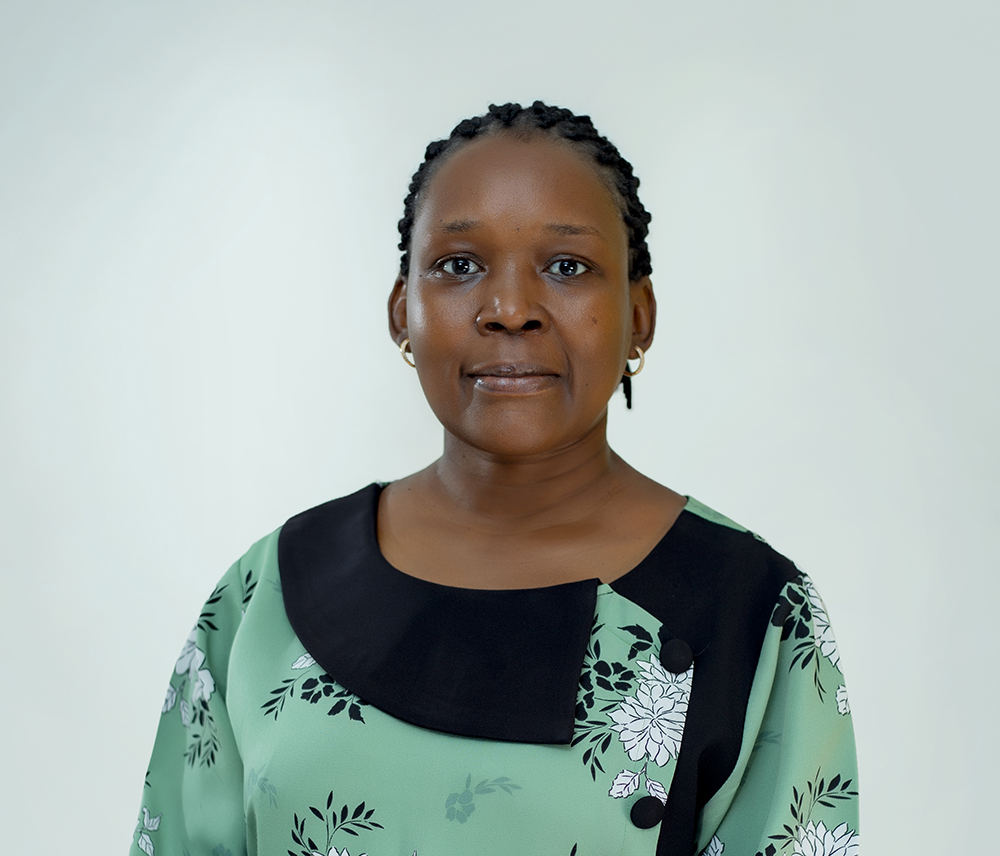
During the study, she examined the gendered socio-cultural roles performed by women in environmental conservation within a patriarchal structure.
She investigated the extent to which women’s access to, ownership of and control over resources in a patriarchal society affect their participation in environmental conservation in Gulu district. Piloya also assessed women’s influence on decision-making in environmental conservation.
She found that women serve as custodians of indigenous knowledge, influence attitudes and promote environmentally friendly values. They have also taken on activist roles in environmental movements, actively participated in ecosystem conservation and adopted environmentally friendly technologies, including tree planting.
“These findings align with global trends, where women are increasingly recognised as central figures in reforestation efforts,” she says.
Traditionally, forest management and restoration were male-dominated fields. However, as women acquire knowledge and skills through training, they become powerful agents of change and lead restoration initiatives with remarkable success.
Despite their contribution, cultural norms and values continue to hinder women’s participation in the public domain.
Her findings point to the need to address inequalities in access to and ownership of resources. They also call for the removal of barriers that prevent women from owning and controlling resources alongside men, thereby creating significant and sustainable environmental conservation outcomes.
Piloya says for conservation efforts to be more effective, civil society organisations, development partners and the government should, whenever possible, refrain from implementing conservation or empowerment projects that target only women, unless circumstances make such an approach necessary.
A five-year journey
“It has taken me five years to walk the PhD journey to the end,” Piloya, who is expected to receive a Doctor of Philosophy degree in development studies, majoring in gender studies, from Nkumba University on October 24, 2026, says.
There were times when she felt overwhelmed, but her professor’s words kept her going.
“When you enrol for a PhD,” the professor told her, “be ready to encounter casualties. But let them not distract you. Remain focused on the goal.”
Piloya’s main challenge was finance. However, by the grace of God, Gulu University supported her by paying her tuition for two years under the staff development fund.
The distance between her workplace in Gulu and Nkumba University presented another challenge. Physical meetings with her supervisors were not as regular as she would have desired, but her supervisors were understanding.
She particularly thanks Dr Anne Abaho and the late Dr Alex Barakagira for supporting her throughout the journey.
Barakagira’s death, just two weeks before Piloya’s viva voce, devastated her beyond words. A viva voce is the final oral examination during which a doctoral candidate defends their written thesis before a panel of academic examiners.
Early life
Piloya is the fifth of seven children raised by their mother after their father died when they were all still young.
“Mom sacrificed a lot to see us through school, though sadly, she never lived to enjoy the fruits of her sweat,” Piloya says.
After completing A-level, she enrolled for a diploma in education at Kyambogo University. She later pursued a bachelor’s degree in development studies at Gulu University on a government scholarship, graduating with a first-class degree.
Piloya subsequently obtained a postgraduate diploma in human resource management from the Uganda Management Institute and a master’s degree in rural development from Makerere University.
PhD is within reach for all
To those planning to pursue doctoral studies, Piloya says a PhD is within reach for anyone willing to stay focused and committed.
“A PhD is not for a chosen few. Anyone can attain it. If you got a bachelor’s and master’s, why not a PhD?” she says.
She adds: “Once enrolled for this programme, be ready to learn and stay focused. Humility and consistency are key.”
Over the next 10 years, Piloya sees herself firmly established in research and working as a senior consultant and professor in the field of gender.