
How the Nile River is turning against people
“We believe climate change is bringing disasters to us through water,” says Richard Musota, Assistant Commissioner in the Water Ministry. “We also know that environmental degradation is accelerating the impacts of climate change.” The average temperature in Uganda has risen by approximately 1.3°C since the 1960s, according to the International Organisation for Migration.
Collapsed homes in Amolatar district near Namasale landing site. (Credit: Gerald Tenywa)
A growing water crisis along Lake Victoria and the Nile has displaced communities and threatened millions. With extreme flooding expected to rise by 50%, Gerald Tenywa explores loss, resilience, survival, and the government’s response.
“I woke up in darkness with my clothes soaked in water,” says Moses Musoke, a fisherman on Makusa Island in Lake Victoria. “I thought it was a nightmare. I couldn’t see anything, but I could hear children and women crying outside.”
His worst fears came true. He was unable to touch the ground and unable to swim; he watched floodwaters sweep away his makeshift home. He survived only because neighbours rescued him, escaping what felt like certain death.
Musoke was among hundreds displaced when Makusa Island in Wakiso was submerged. Rising Lake Victoria water levels gradually eroded the island until it was completely swallowed by the lake in 2022.
Musoke became homeless and moved to a displacement camp in Mayanzi village, Kigungu, Entebbe City. “I felt catapulted from paradise to hell,” he says, adding that a fire later destroyed his new home.
Makusa Island, a one-acre fishing community of over 600 residents, thrived on rich fish breeding grounds and abundant catches that sustained livelihoods.
I visited Mayanzi camp, home to Makusa’s displaced, where rising Lake Victoria waters continue to threaten residents already displaced by floods. Sitting on Lake Victoria’s shores, the camp now faces another threat as rising waters swallow residents’ space.
Deeper inside the camp, children played as young men chatted, played cards, and drank. Women sold fried fish and chips to survive. “We have many cases of malaria and diarrhoea," said Maria Nakimuli, a camp resident.
Meddi Kadhali, a community development officer in Kigungu, says the levels of Lake Victoria are rising. This has also affected 40 more lakes across the country.
As the rising lake encroaches on homes, displacement camps expand, swelling the neighbourhood’s growing community along the shoreline.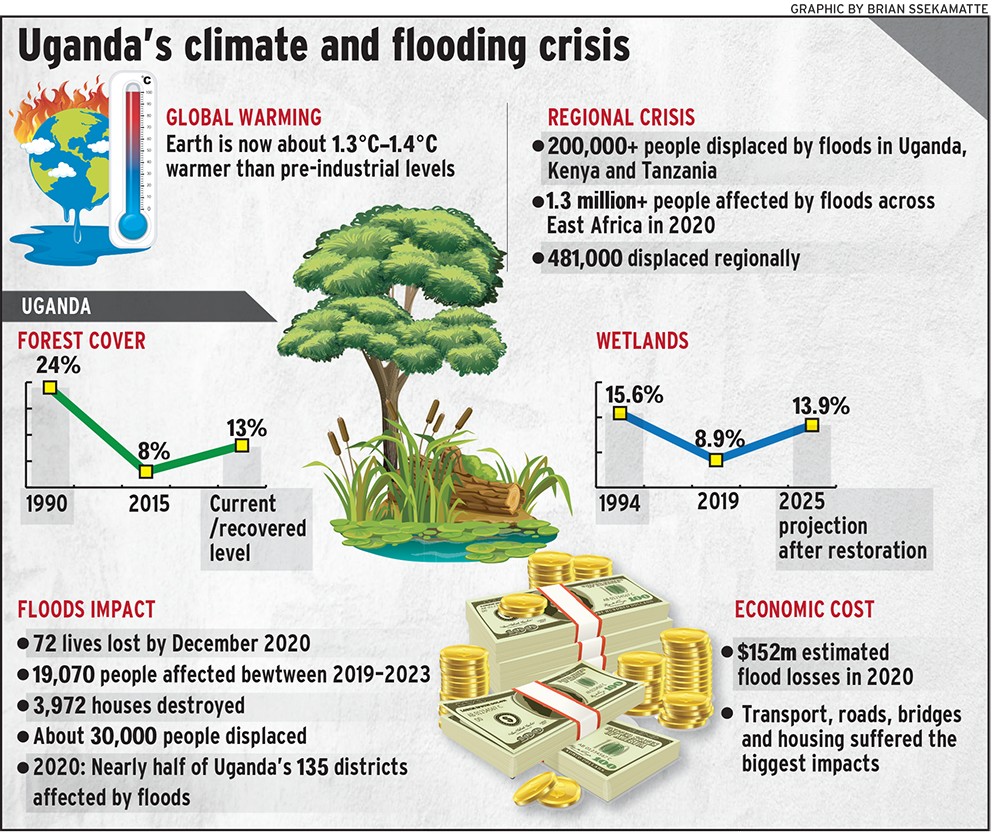
Though Lake Victoria has displaced thousands, fishermen still depend on it. “We survive on fishing, but rising waters are unforgiving. Sturdy boats remain beyond many people’s reach,” says displaced fisherman Moses Kayemba. “This is beyond the reach of most of us,” he says.
Caught between peril and survival, many turn to illegal fishing, quietly undermining the future on which fishermen and the economy depend, according to Kayemba.
As the waters rage and hope fades, some displaced people have sought refuge in Kampala’s sprawling slums. But the city’s promise is fading, pushing others back to the quiet soils of Luwero and Masaka in central Uganda, where they search for a new beginning.
Musa Ayire, a fisherman for decades on Lakes Victoria, Kyoga, and Albert, sees fishing as a way of life he cannot abandon, though his options are shrinking.
“We used to catch plenty, but now the lake is hostile, forcing us to burn more fuel for fewer fish,” he said. “We have lost some fishermen to prison because they cannot afford the regulated fishing nets.”
Established in 2018, Mayanzi Camp has suffered two fires. “We received three kilogrammes of beans and five kilogrammes of posho from the government," Kayemba said. Displaced residents pay Shs40,000 to rent land for a one-room home.
The fishermen, including Kayemba, said waterborne diseases and malaria were the most common illnesses in the camp, but routine visits by Health Centre IV workers have helped contain them.
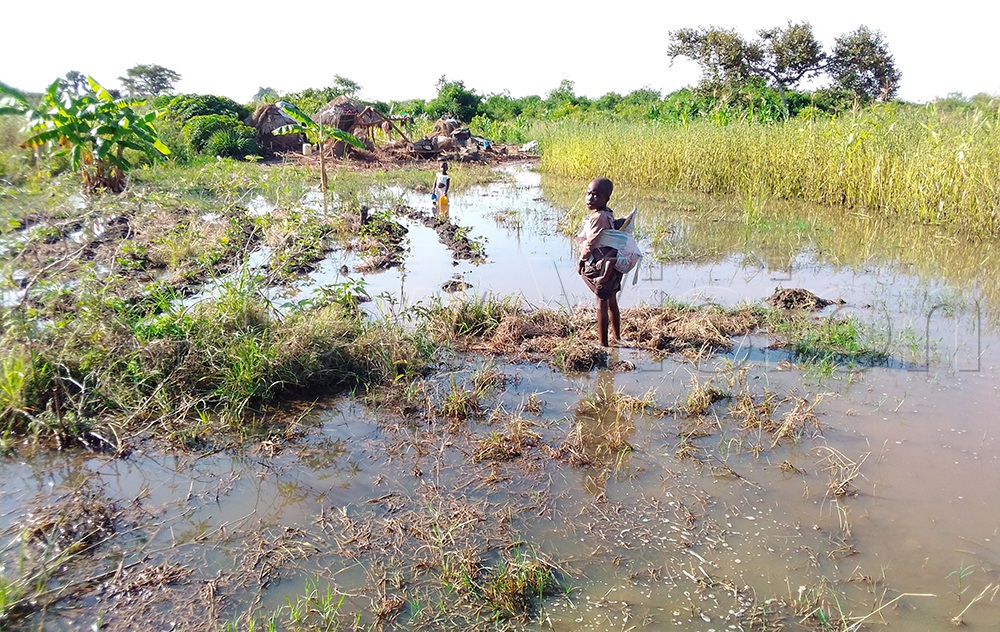
Children looking at their flooded garden.
Amolatar’s forgotten displaced thousands
As the River Nile flows from Lake Victoria, flooding has caused Lake Kyoga to expand. In the past four years, the lake has been expanding, according to Anthony Otungo, Amolatar district fisheries officer.
Muchora Parish, once separated from the mainland by a swamp, has flooded, cutting residents off from services, including a health centre, school, and sub-county offices.
He named Muchora, Muchora B, Nalugoyo, and Buruburu as the affected landing sites, with connecting and feeder roads flooded.
Residents now travel by boat and boda boda to access services. “People have had to adapt, but it is inconvenient and costly,” he said, adding that some of the fishermen living near the lake have relocated to better landing sites.
Otungo said flooding, which began in 2018, has affected about 42,000 people across the landing sites and settlements in Amolatar.
The rising water has not spared the fish-handling infrastructure, crippling the fisheries sector. “We have been thrown back to the days when we had nothing,” he said.
The lake has become deeper, leading to drowning incidents. “We have lost 30 people in the past three years, including five this year,” Otungo said.
Fish catches have increased with rising water levels, but illegal fishing has also surged as many fishermen cannot afford recommended boats, according to a NARO-MAAIF assessment. “It is not easy to monitor them as they now walk to the lake,” said Otungo.
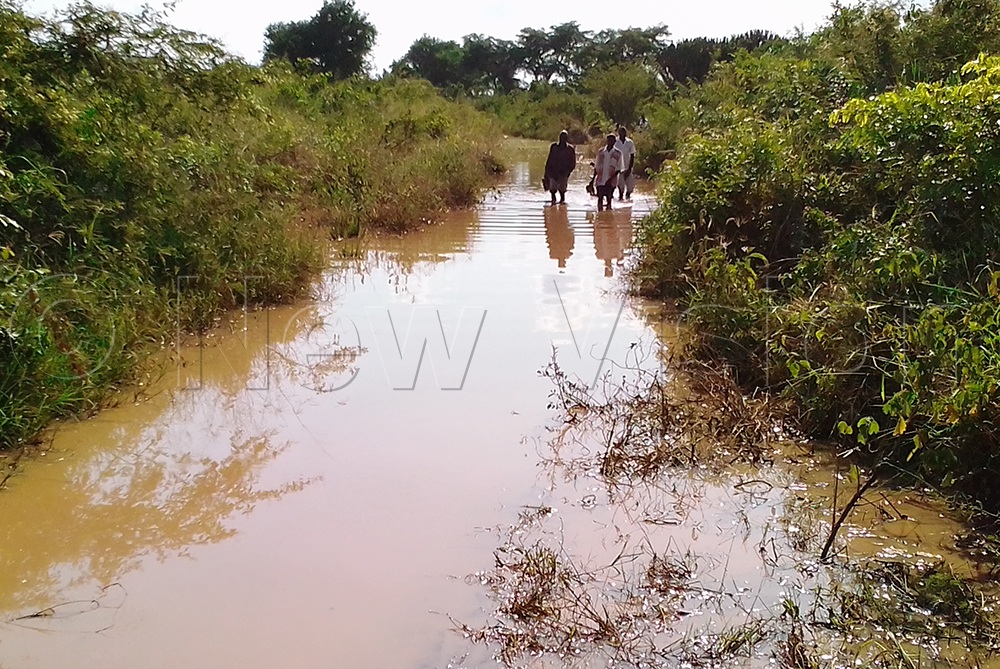
Residents walk through their flooded feeder road.
Ancient wonder under threat
Like the Victoria Nile through Lake Kyoga, the Semliki River flows along the Uganda–DR Congo border, crosses Lake Albert, and feeds the Albert Nile.
Rising Lake Albert waters have disrupted Kibiro’s historic salt mining, submerging parts of the mines and threatening women whose livelihoods depend on this traditional practice.
One thing is clear from Kigungu, Amolatar, to Kibiro: Uganda is facing a water crisis as three of its largest lakes, which contribute water to the Nile, turn hostile to neighbouring communities. What is driving the floods? How are people coping? And what is the government doing?
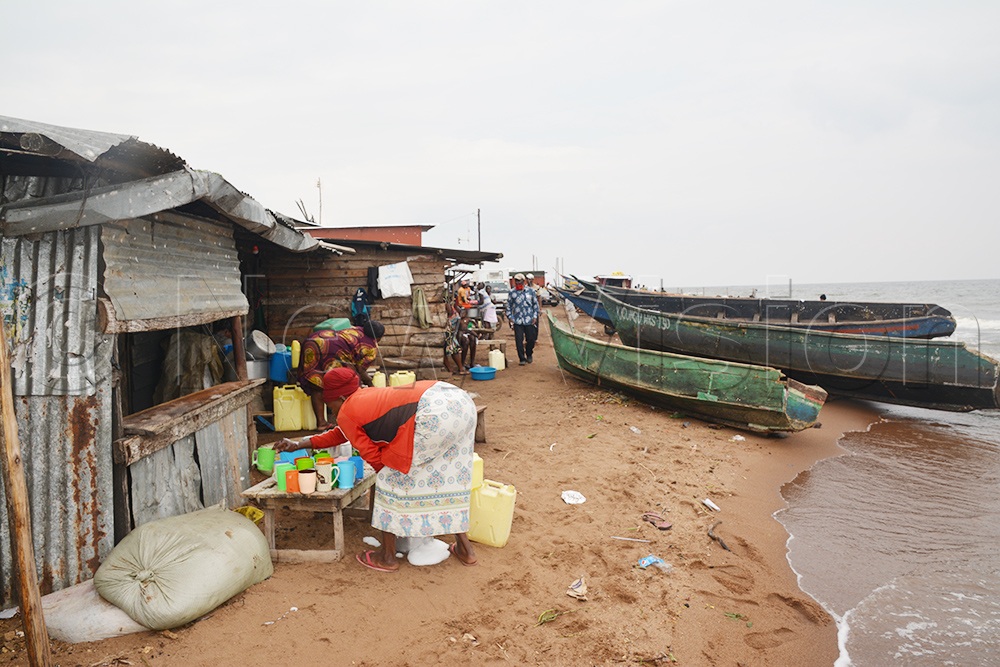
Flooding Lake Victoria threatens Kigungu landing site.
Climate change blamed
Government experts have attributed rising water levels in lakes across the Nile Basin to climate change, noting that environmental degradation is accelerating the problem.
“We believe climate change is bringing disasters to us through water,” says Richard Musota, Assistant Commissioner in the Water Ministry. “We also know that environmental degradation is accelerating the impacts of climate change.”
The average temperature in Uganda has risen by approximately 1.3°C since the 1960s, according to the International Organisation for Migration.
Reports from the Uganda National Meteorological Authority show western and southern Uganda have recorded the highest warming rates since 1950. The Notre Dame Global Adaptation Initiative (2021) ranks Uganda as the world’s 13th-most climate-vulnerable country and 160th in readiness.
Uganda lacks resources and infrastructure to withstand disasters, while countries with stronger economies and governance are better equipped to build resilience.
Sowedi Sewagudde, acting commissioner for international and transboundary water, says wetland and forest degradation is accelerating flooding across Uganda’s vulnerable landscapes.
Over the years, vast forests have been cleared for agriculture to feed a growing population. Uganda’s forest cover declined from an estimated 24% in 1990 to just 8% by 2015. Although it has since recovered slightly to 13%, it remains far below 1990 levels.
Uganda’s wetland cover is projected to rise from 8.9% in 2019 to 13.9% in 2025 through restoration efforts by the National Environment Management Authority. However, this remains below the 15.6% recorded in 1994.
Climate change, coupled with the loss of wetlands and forest cover, poses a growing threat to the world’s longest river, the Nile.
The Nile’s variability is projected to rise by 50%, causing more frequent and severe droughts and floods across Basin countries, according to the Massachusetts Institute of Technology.
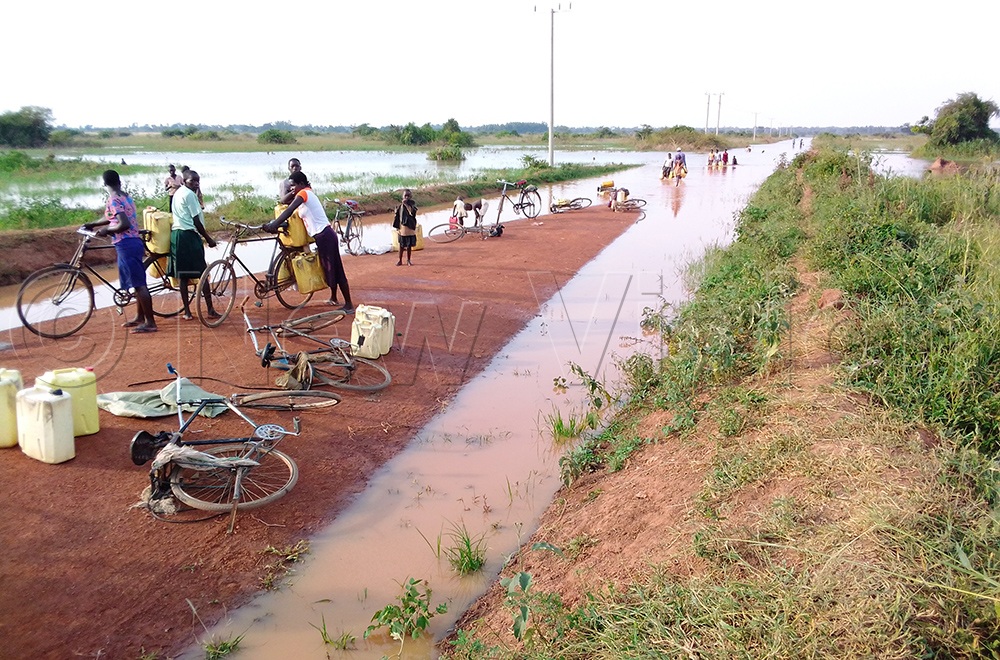
Sometimes a curse can turn into a blessing: Flooded roads become water sources for residents of Amolatar.
Global temperature rise
The Earth’s average surface temperature is now about 1.3°C–1.4°C above pre-industrial levels, with some recent years reaching even higher temperatures.
Extremes in the last two decades
Water levels within Lake Victoria have been varying over the years and remained above average for more than 40 years between 1961 and 2005.
The lake experienced the lowest level in 2005 (10.89 meters), with media reports at the time reporting lack of electricity and ships on the lake not being able to dock at the right place. In June 2020, the water level reached the highest mark of 14.3 meters.
Impact
According to Uganda’s Annual State of Disaster Report 2021–2022, floods had claimed 72 lives by December 2020. This was released by the Office of the Prime Minister.
In addition, water-related disasters affected 19,070 people between 2019 and 2023, destroying 3,972 houses and displacing about 30,000 people. Nearly half of Uganda’s 135 districts were affected in 2020, according to the Annual State of Disaster Report 2021–2022.
The floods have displaced over 200,000 people in Uganda, Kenya, and Tanzania, according to the International Organisation for Migration (IOM).
In terms of economic losses, Uganda lost about $152 million, equivalent to 0.42% of its national GDP, in 2020. The main impacts were recorded in transport, roads, bridges, and housing, according to the Annual State of Disaster Report 2021–2022.
Floods destroyed homes, crops, schools, and health facilities, while damaged roads and bridges disrupted livelihoods for over 95% of affected people.
Regionally, more than 1.3 million people were affected by floods in East Africa in 2020, with 481,000 displaced, according to a report by the Global Initiative for Cities.
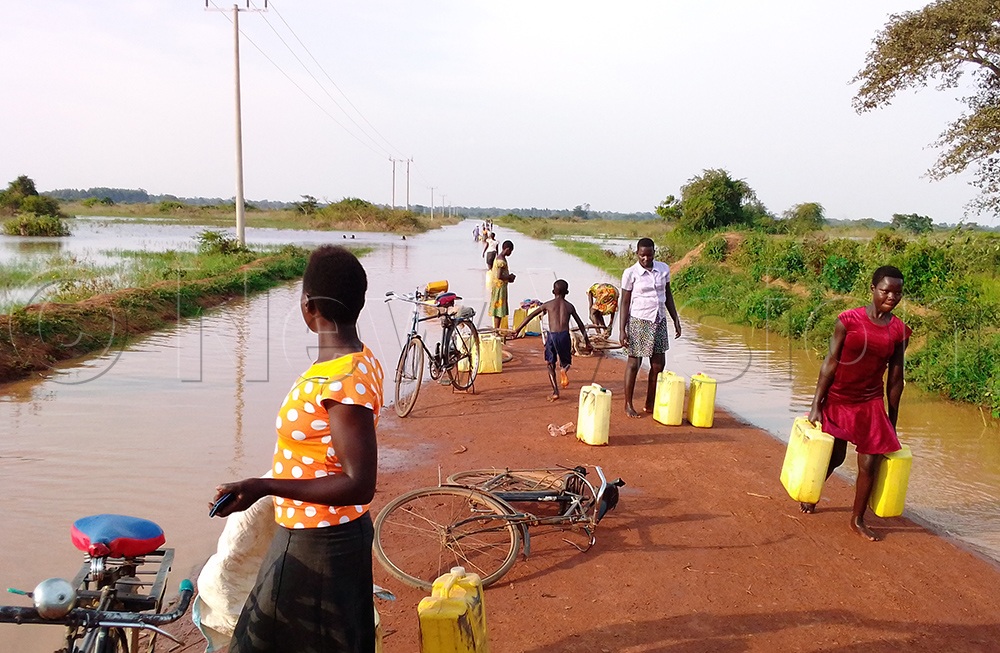
Sometimes a curse can turn into a blessing: Flooded roads become water sources for residents of Amolatar.
Strong El Niño returns
East Africa is experiencing drought and is forecast to face El Niño conditions from October to December, according to the World Meteorological Organisation (WMO). El Niño, a periodic Pacific Ocean warming occurring every two to seven years, is linked to heavy rainfall in eastern Africa, including Uganda.
Water storage is needed
To begin with, Sewagudde says regulations protect lake buffer zones extending 200 meters from the shores of large lakes such as Victoria.
Also, Uganda is developing an early warning system that uses forecasts and artificial intelligence (AI) to predict water inflows and flooding around Victoria, Kyoga, and Albert, which are key reservoirs.
"We are developing a tool that uses the latest forecasts and integrates AI with expected water inflows to accurately predict what may happen in the lakes, which serve as reservoirs.”
He added, “We are developing the tool together with South Sudan because water flowing through the River Nile has contributed to flooding in the country.”
Sewagudde said Uganda is working with Burundi, Kenya, and Tanzania and plans to involve South Sudan to manage Lake Victoria.
The programme seeks to restore wetlands, improve water storage, and promote ecotourism. The government has committed resources, with implementation expected in 2028.
Richard Musota, Assistant Commissioner for Water Resources in Uganda’s Ministry of Water and Environment, says there is a need for proactive measures.
“While we have disaster preparedness plans, some impacts can be avoided,” he says. “What we saw in 2020–2021 is that floods can recur.”
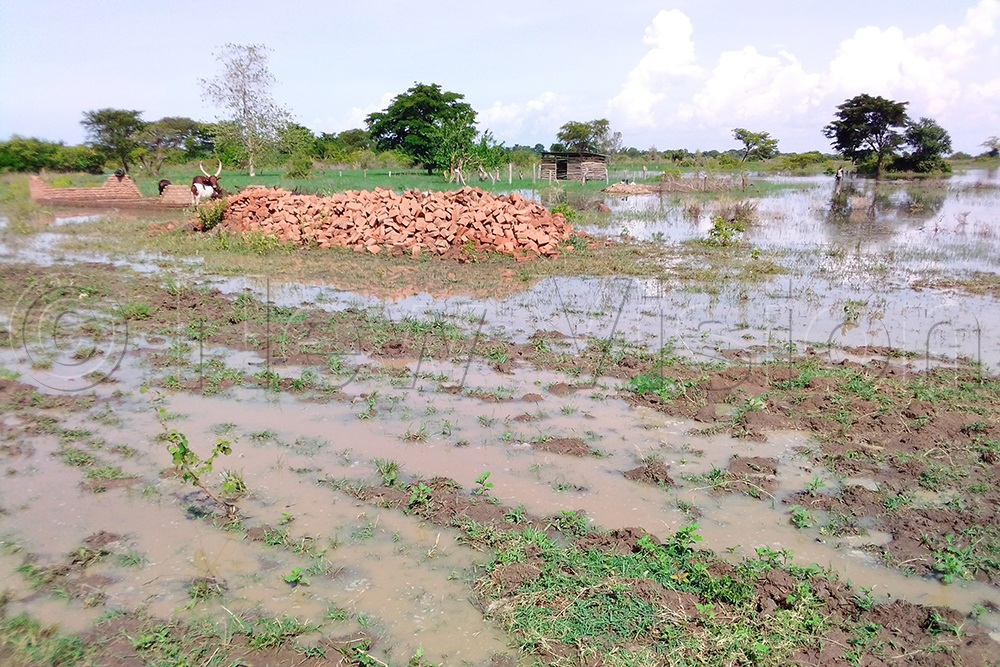
Collapsed homes in Amolatar near Namasale landing site.
Civil society calls for action
Asked what should be done for people affected by flooding, civil society organisations argue that the government has a responsibility to protect and support its citizens.
Richard Kimbowa, Executive Director of the Sustainable Coalition for Sustainable Development, says many issues are often swept under the carpet.
“The lake’s buffer zone is one of the most misunderstood areas,” he explains. “Where exactly does the 200-meter boundary begin and end?”
Onesmus Mugyenyi, Deputy Director at Advocates Coalition for Development and Environment, said people living within the 200-meter lake protection zone may not qualify for compensation.
“When people occupy an area for a long time and disaster strikes, communities need support. The government has a responsibility to care for its citizens and educate them about the risks of living in vulnerable areas to prevent future harm,” he said.
The government needs to be reminded that land belongs to the people and that those living within 200 meters of the lake boundary should be compensated. “When water reaches people’s land, it is clear that it is encroaching on their property,” says Mugyenyi.
He noted that there is an international debate on loss and damage caused by climate change.
“When loss and damage occur, countries responsible should compensate for the losses suffered. The damage we are experiencing is not purely natural; it is linked to human activities. This is why addressing climate change is critical—we must recognise these connections,” he explains.
He added, “Where are these emissions coming from? We know they largely originate from industries in the US, EU, and China. We are saying that emissions from these regions are driving climate change, while African countries are suffering the consequences, including devastating floods.”
Africa is highly vulnerable to climate change despite contributing only about four percent to global greenhouse gas emissions. The eastern and Horn of Africa areas have particularly been impacted by repeated extremes, drought, and floods over the last decade, according to IOM.
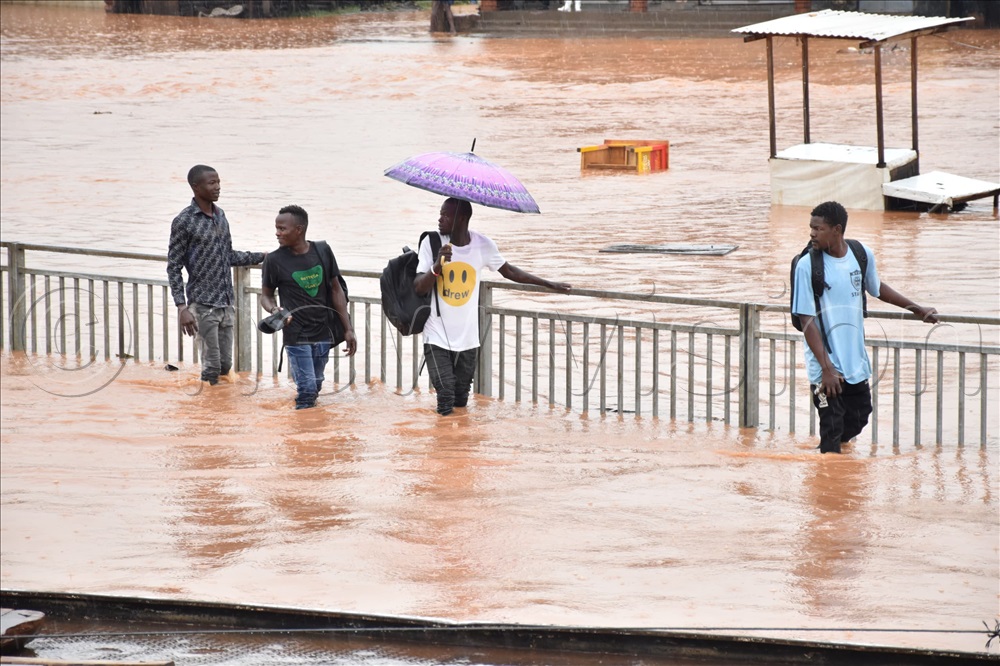
Given the challenges posed by climate change, Uganda must effectively manage its key reservoirs, including Lakes Victoria, Kyoga, and Albert, to reduce the risks of flooding.
Disaster preparedness
“A stitch in time saves nine” captures the unfolding Nile water crisis. “We expected water levels to return to normal, but that has not happened,” said a source in the Ministry of Disaster Preparedness.
On the government’s slow response, the source says, "We rarely receive resources for preparedness because funding comes after disasters occur. The budget is inadequate, leaving us unable to prepare.”
At the district level, disaster committees conduct assessments, but available responses are largely limited to relief items such as tents and food. On the ground, experts have observed coping measures including migration, movement to urban centers, school dropouts, early marriages, and the sale of livestock due to foot rot.
Preventing disasters or investing in disaster risk reduction saves roughly $4 (Ush15,000) to $15 (Ush60,000) for every dollar (Ush3,700) spent, according to Climate and Development Knowledge Network.
Restoration
“Water reflects the land” highlights water quality and quantity. Dr. Callist Tindimugaya says turbulent waters demand urgent restoration efforts. He says integrated water resources management enables communities to coordinate the management of water, land, forests, and wetlands.
Mohammad Semambo, Assistant Commissioner for Climate Change, said it is difficult to stop rising waters, but communities can reduce their impacts. “The water can spread and sink in the soil as opposed to rushing and depositing silt into water bodies,” he said.
As a way of promoting natural solutions, Uganda’s 10-year environment restoration plan, which was set up five years ago, is taking shape but with mixed results, according to UNDP.
The initiative is part of the UN Decade on Ecosystem Restoration (2021–2030), aimed at preventing, halting, and reversing ecological degradation. Restoration efforts are lagging behind ongoing forest and wetland degradation, with the UNDP report citing political interference and funding shortages as key challenges.
The gap between global efforts, government action, and citizens remains. “I escaped death and do not want more floods,” says Musoke, calling for collective climate action.