
How Saudi Arabia is involved in Red Sea conflict
Saudi Arabia continues to host talks, call for dialogue and present itself as a force for stability. But from Port Sudan to Mogadishu, the capital that sponsors truces faces accusations of backing armies that are helping to destabilize the Red Sea.
How Saudi Arabia is involved in Red Sea conflict
__________________________
CONFLICT
Just days after fighting erupted in Sudan between the Sudanese Armed Forces and the Rapid Support Forces (RSF) on April 15, 2023, Saudi Arabia emerged as key diplomatic actor.
Riyadh positioned itself as a mediator, pledging to help end the conflict and prevent its escalation while presenting itself as neutral and equidistant from the two rival factions.
But as the war dragged on and shifted course, Saudi Arabia soon found itself drawn into the conflict. According to several reports and analyses, it sided with the Sudanese army and gradually became one of its most prominent financiers.
The major shift in Saudi Arabia’s position, from trying to extinguish the Sudanese war to stoking it, has raised several questions about its declared strategy and what that strategy has actually produced on the ground. When Sudan is linked to Riyadh’s involvement in other Red Sea files, those questions multiply.
As this report will show, Saudi intervention has helped prolong the Sudanese war. The Yemeni case offers another example of positions that tend to aggravate Red Sea problems rather than resolve them, with escalation continuing there for years.
The same pattern extends to Riyadh’s relationship with, and support for, the Tigray People’s Liberation Front (TPLF) in its conflict with Ethiopia’s federal government, as well as to Eritrea, which is locked in its own rivalry with Ethiopia.
The net result is that Saudi Arabia appears to be a principal driver of tension in the Red Sea region, by backing the parties that inflame these crises and undermine the security of the Red Sea.
Jeddah: From mediation to a test of influence
The Jeddah platform was among the most prominent diplomatic tracks launched after the war began. The Declaration of Commitments issued by the Sudanese Armed Forces and the RSF on May 11 of that year focused on protecting civilians, refraining from targeting them, and facilitating humanitarian access.
However, the agreements and truces did not withstand mutual violations, subsequent rounds of negotiations faltered, and the mediation failed to turn pledges into a lasting end to the war.
Over time, the question shifted from Riyadh’s ability to bring the two sides together to the nature of its influence and its role in prolonging the war by backing the Sudanese army, which has since refused to enter any truce amid continued Saudi support.
Air bridge to Port Sudan and heavy military support
In July 2026, the Global Institute for Strategic Studies (GISS) published a report on an air bridge between Riyadh and Port Sudan, involving executive jets operated by Alpha Star Aviation and Sky Prime Aviation.
The information also points to allegations that weapons reached groups fighting alongside the army that the United States has designated as terrorist organizations and sanctioned, including the Al-Baraa Bin Malik Brigade, raising issues related to sanctions and restrictions on arms transfers.
Did Saudi support embolden al-Burhan’s intransigence?
The United Nations has warned of the dangers of the war and the humanitarian crisis it has caused. According to the UN Office for the Coordination of Humanitarian Affairs, 33.7 million people will need humanitarian assistance in 2026. Yet the Sudanese army chief, Gen. Abdel Fattah al-Burhan (pictured below), has consistently rejected proposals to end the war, or even to enter a humanitarian truce to get aid to those affected.
That happened in September 2026, when al-Burhan raised objections to a US proposal for a 90-day ceasefire to be followed by negotiations to end the war. It happened again on October 7, 2026, when he refused to negotiate a halt to military operations and demanded the recapture of territory held by the RSF.
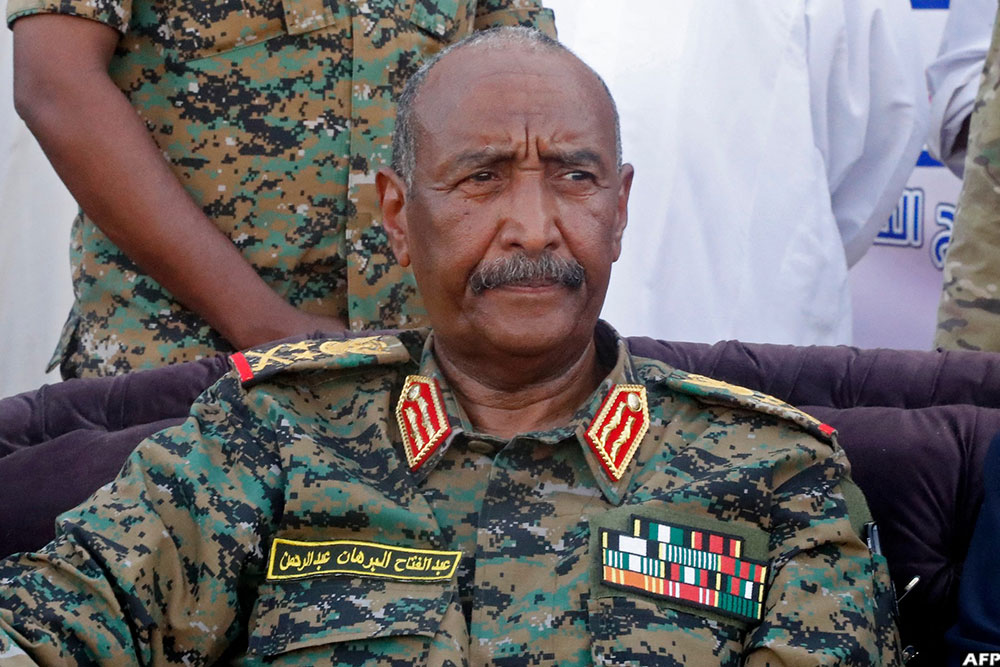
Abdel Fattah al-Burhan
These positions raise the question of the relationship between the battlefield and the negotiating table. Reports suggested that Saudi support was the direct cause of the army’s hardened stance on negotiations.
At the same time, the Pakistani arms deal indicates that Saudi policy cannot be reduced to uninterrupted military support, free of review or of U.S. and Western pressure.
On April 20, 2026, Reuters, citing two Pakistani security sources and a diplomatic source, reported that Islamabad had suspended a $1.5 billion deal to supply Sudan with weapons and aircraft. The sources said Saudi Arabia had asked for the agreement to be terminated and had told the parties it would not finance the purchase.
Yemen: Military intervention and shifting alliances
The test of Saudi Arabia’s “wavering” policy in managing regional conflicts is not confined to Sudan. In Yemen, the kingdom has waged a broad military intervention since March 2015 as part of an Arab coalition. It said the goal was to support the internationally recognized Yemeni government after the Houthis seized Sanaa and advanced toward other parts of the country.
As the war dragged on, Yemen became a clear example of the overlap of military, political and security objectives, and of the difficulty of separating the role of a state leading a military intervention from its later role as mediator and negotiator.
In this context, the Yemeni Congregation for Reform (Islah) emerged as one of the political actors whose interests converged with Riyadh’s in confronting the Houthis. The party, which includes currents and figures of diverse Islamist, tribal and political backgrounds, has historical ties to Saudi Arabia, and those ties strengthened after the war began.
Saudi contradiction revives questions on 'terrorism'
Saudi Arabia’s understandings and coordination with Islah, with its Islamist background, along with its support for a Sudanese army allied with Islamists, reveal clear contradictions with the kingdom’s declared opposition to the Muslim Brotherhood.
This brings the issue of terrorism back to the fore, through cooperation between Saudi Arabia and the Brotherhood’s branches in Sudan and Yemen. The reference here is to the long-running controversy over the financing of extremist groups by Saudi donors and institutions.
US diplomatic cables published by WikiLeaks in 2010 revealed Washington’s concerns about financial flows from Saudi donors to extremist groups. The U.N. Security Council also placed branches of the Al-Haramain Foundation on sanctions lists linked to al-Qaida, while Saudi Arabia and the United States took part in measures targeting specific institutions and financiers.
Eritrea and Ethiopia: Calculations extend to Horn of Africa
The picture grows more complicated when turning to Eritrea and Ethiopia. Eritrea overlooks the Red Sea and has strategic ports, most notably Assab and Massawa. Ethiopia became landlocked after Eritrea’s independence and relies on maritime outlets in neighboring countries, chiefly Djibouti.
This geography intersects with political and security disputes in the Horn of Africa, competition for influence in the Red Sea, and the Egyptian-Ethiopian dispute over the Grand Ethiopian Renaissance Dam and the waters of the Nile.
In this context, any Saudi rapprochement with Eritrea, or security coordination with it, could carry significance beyond bilateral relations, particularly if tied to developments in Sudan or to arrangements to protect shipping.
These factors raise the possibility that the interests of Saudi Arabia, Egypt and Eritrea converge on some files related to security in the Red Sea and the Horn of Africa.
It is also worth noting that Eritrea was not among the 14 countries that signed the founding declaration of the maritime defense alliance hosted by Saudi Arabia in July 2026. That does not, however, rule out bilateral rapprochement or other arrangements.
Riyadh and Mogadishu: Points of convergence
Accusations against Saudi Arabia over regional expansion and interference have multiplied recently. Riyadh has also been accused of overseeing the training of more than 5,000 Somali fighters in GhuriJabal, in Somalia’s Galgaduud region, using foreign mercenaries allegedly brought in from Romania, Ukraine, South Africa and Colombia.
According to military and media reports, the nine-month training program includes 5,107 Somali recruits, about 2,000 of them from the country’s northeast. The allegations point to direct funding from Saudi Arabia following a visit by a Saudi military delegation in late June.
The controversy follows the signing of a joint military and defense cooperation agreement between Somalia’s defense minister and his Saudi counterpart in Riyadh. Some parties opposed to the alliance believe the program could pave the way for transferring fighters, or using them in other conflict arenas such as Sudan.
Saudi Arabia continues to host talks, call for dialogue and present itself as a force for stability. But from Port Sudan to Mogadishu, the capital that sponsors truces faces accusations of backing armies that are helping to destabilize the Red Sea.
Those accusations cast Riyadh as a feeder of the conflicts now raging across the region, with its allies in Sudan, Yemen and the Horn of Africa appearing to be among the influential parties in the escalation.
The charges remain disputed and unresolved. Even so, a question lingers: can a state be both referee and player? And if it cannot, who decides which role it will choose?