
Who qualifies to contest for an MP seat?: NCHE discourses judges on certificates of equivalency
“A qualification is generally considered equivalent of A-level if it has taken you (applicant) two years after O-level. For example, a primary teacher course is equivalent to A-level,” Ssebugenyi said.
Seated (l-r):H/W Ayebare Tumwebaze, Registrar Supreme Court, Hon.Justice Prof. Andrew Khaukha.Executive Director ITI, Hon.Lady Justice Jane Frances Abodo, the Principal Judge and H/W Simon Kintu Zirintusa, Registrar, Civil Division in a group photo with other registrars who participated in the training on case management for election petitions at the Judiciary headquarters in Kampala on Monday, December 22, 2025. (Photos by Mpalanyi Ssentongo)
________________
Under the Parliamentary Elections Act, cap 177, a person qualifies to stand as a Member of Parliament (MP) if they have completed a minimum formal education of advanced level standard (A-level, which is Senior Six) or its equivalent.
However, section 4(5) of the Parliamentary Elections Act provides that a person seeking to have their qualification accepted as equivalent of advanced level standard of education or claims to have advanced level qualifications from outside Uganda or claiming to have academic degrees, which were obtained outside Uganda and wishing to stand for election as a member of Parliament shall establish his or her qualification with the Electoral Commission (EC).
This is done by presenting a certificate of equivalence from the National Council for Higher Education (NCHE), which it must issue in consultation with the Uganda National Examinations Board (UNEB) upon equating the academic documents presented to them.
Despite the issuance of the certificate of equivalence by the NCHE as required under the law to aspiring candidates with A-level corresponding academic documents, these disputes end up in the courts of judicature for adjudication.
Speaking to the judges over the subject matter during a two-day training at the Judiciary headquarters in Kampala on December 19, 2025, the Rev. Cyrus Ssebugenyi, the head of the department responsible for standards, recognition and equivalence of qualification at NCHE, espoused on the qualifications which they consider corresponding to A-level qualification if acquired.
“A qualification is generally considered equivalent of A-level if it has taken you (applicant) two years after O-level. For example, a primary teacher course is equivalent to A-level,” Ssebugenyi said.
Ssebugenyi explained that O-level also has its equivalency. He noted that a grade II teacher certificate is equivalent to O-level, while a grade III teacher certificate is equivalent to A-level.
Ssebugenyi added that even a person without two principal passes but who was issued with an A-level pass slip meets the minimum formal education of A-level standard.
“We also know that a person qualifies to join a university if they scored two principal passes. However, even if someone got only one ‘O’, such a person qualifies to stand as an MP. This is because such a person qualifies to get a UNEB certificate,” Ssebugenyi said.
Certificate, not a pass slip
He, however, emphasised that a qualification is evidenced by a certificate and not a pass slip.
Citing an example of a person who registered for only six subjects out of eight and proceeded to A-level and University, whereupon verification, they cancelled his awards, Ssebugenyi implored the judges to carry out an inquiry from competent authorities on such persons’ academic credentials.
“In this case, we found that he only registered for six subjects, and although he excelled in them, he never qualified to get an O-level certificate. You should, therefore, know that qualification is evidenced by a certificate. Without a certificate, you need to inquire from a competent authority,” Ssebugenyi said.
Ssebugenyi noted that if a person has a qualification higher than A-level, such as a diploma, bachelor’s degree or a post-graduate certificate, there is no need for equating their academic credentials.
“If someone has an A-level certificate from Canada and does a bachelor’s degree in Uganda, they don’t have to present their certificates to us for equating,” Ssebugenyi said.
In the same vein, Ssebugenyi said someone having a diploma in Uganda without having an A-level does not need to have their certificates to be equated to stand for an MP because a diploma is higher than A-level.
“For example, clinical officers come from O-level and do the diploma. Therefore, such persons do not have to present their awards to us for equating,” Ssebugenyi said.
Some of the Registrars who participated in the training on case management for election petitions at the Judiciary headquarters in Kampala on Monday, December 22, 2025.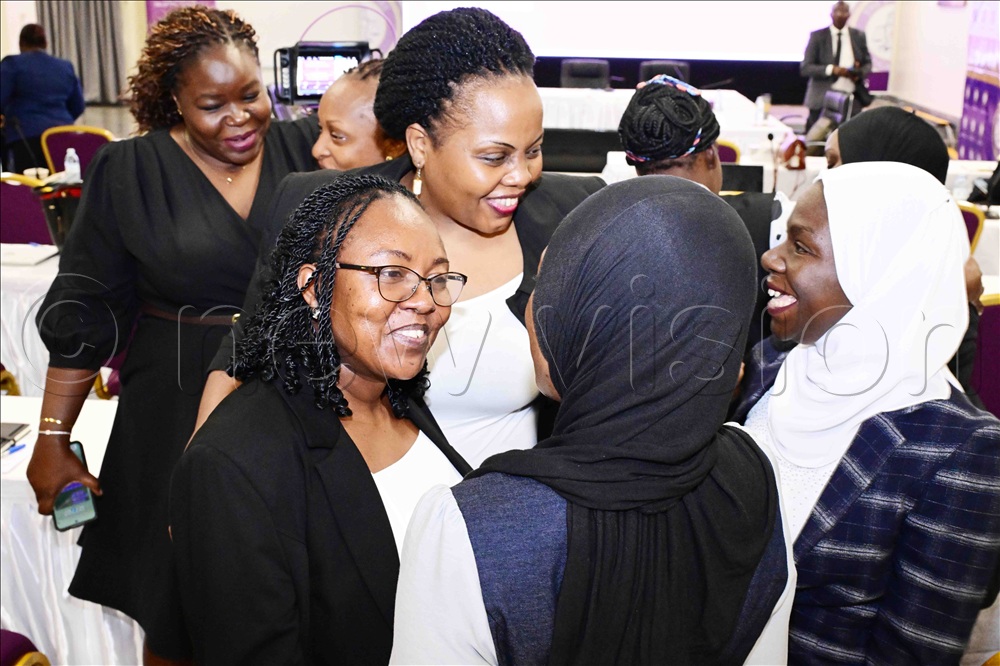
Ssebugenyi also explained that a person with a diploma from 2001 backwards, even if they were admitted based on a primary certificate, they qualify to stand as an MP because there was no regulation forbidding them from acquiring the diploma straightaway upon completion of the primary level.
Concerning the higher diplomas that are based on a first diploma that were majorly awarded by Kyambogo University in engineering, Ssebugenyi said they are also equivalent of A-level.
Mature age entry question
In regard to mature age entry, Ssebugenyi explained the certificate of a mature age entry is to a person at least 22 years and above.
“The idea behind the mature age entry is that people learn over time because they were left by the boat. This was intended to bring them back on board,” Ssebugenyi said.
On why the mature age entry certificates expire after two years, Ssebugenyi said it is because people had started adducing those awarded by institutions that had closed making it difficult for them to verify them.
“Suppose it expires and somebody is an MP, should that person be disqualified. If someone used it to enrol for law and it expires, should that person be discontinued? I leave this to you,” Ssebugenyi said.
Currently, Ssebugenyi said there are only five universities licensed to award certificates of mature age entry.
These include Makerere University, Islamic University in Uganda (IUIU), Mbarara University of Science and Technology, Gulu University and Bugema University.
In regard to certificates awarded by Uganda People’s Defence Forces (UPDF), Police and the Prisons Authority, Ssebugenyi said someone must have both a certificate of basic training and a specialised one from a course running nine months to be considered equivalent of A-level.
“The certificates stand together. Therefore, one is not enough,” Ssebugenyi explained.
For those who, upon completion of O-level, joined technical schools like industrial training in Nakawa, Ssebugenyi said a certificate awarded to them after two years of study is equivalent of A-level.
In adjudication on the matters of academic qualification, Ssebugenyi implored the judges to focus more on the authenticity as against certification because currently there are a lot of well-crafted forgeries.
Underscoring the importance of NCHE in equating academic awards, Ssebugenyi noted that many academic awards from other countries may not necessarily meet the Uganda standards of similar awards.
“There is a gentleman who had been given a job based on a degree which he had obtained from Rwanda, but when we equated it, we found that it was an equivalent of a diploma in Uganda,” Ssebugenyi noted.
Ssebugenyi, however, called for judicial activism in regard to the legal requirement of equating academic documents for candidates in each electoral cycle.
“If we equated someone’s academic documents in the previous elections, why should we do it again? I think this requires judicial activism,” Ssebugenyi said.
Asked by Justice Isabirye Kaweesa on whether they have a list of institutions outside Uganda whose awards qualify as A-level, Ssebugenyi said it remains a challenge to them because several people who go abroad do it on their own without consulting them.
Closing the workshop, Principal Judge Jane Frances Abodo thanked the Judicial Training Institute (JTI) for organising the training on electoral dispute resolution, saying it was timely and enriching.
“During this two-day training, we have explored the constitutional and statutory framework governing elections in Uganda. We have examined the in-depth requirements for filing, evidential standards, case management techniques, among others. We believe this will enable us to adjudicate the disputes with more ease and clarity,” Abodo said.
Save for a vote recount, disputes arising out of the Parliamentary elections are lodged with the High Court for adjudication as a court of first instance.
Abodo said they anticipate an influx in the number of election petitions as compared to the previous electoral cycle.
This is because an unprecedented 40 pre-election matters have already been filed in court for adjudication. In the previous electoral cycle, 179 election petitions were filed in court.