
‘PLU will protect investments, investors and stability’
“I welcome Dr Nelson Tugume to the mighty PLU. He can feel confident that the people’s movement will protect him and his investments,” Muhoozi said.
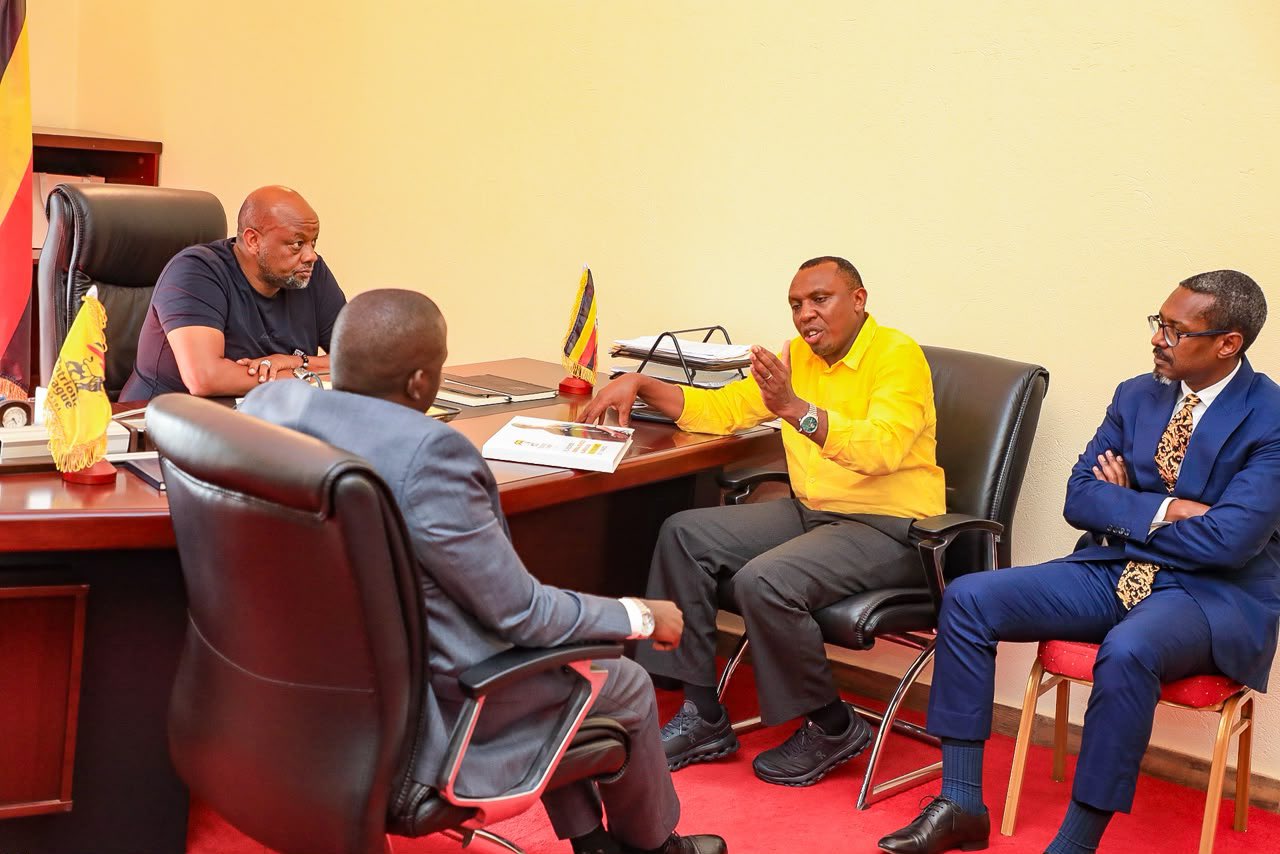
The meeting took place at the PLU offices in Naguru on Monday, September 14, where Tugume signed the PLU endorsement book in support of Muhoozi’s bid for the presidency in 2031.
KAMPALA - Chief of Defence Forces Gen Muhoozi Kainerugaba has told Inspire Africa Coffee Park chief executive officer Nelson Tugume that the Patriotic League of Uganda (PLU) will protect him and his investments, as the businessman endorsed Muhoozi’s political ambitions.
The meeting took place at the PLU offices in Naguru on Monday, September 14, where Tugume signed the PLU endorsement book in support of Muhoozi’s bid for the presidency in 2031.
“I welcome Dr Nelson Tugume to the mighty PLU. He can feel confident that the people’s movement will protect him and his investments,” Muhoozi said.
Tugume, who heads Inspire Africa Coffee Park, said his decision was linked to what he described as the need for stability and an environment in which businesses and investors can operate with confidence.
“Investment follows confidence,” Tugume said, arguing that peace, stability, good governance, and predictability matter to investors looking to commit capital for the long term.
Tugume’s business interests give the investment argument a practical dimension.
Through Inspire Africa, he is investing in Uganda’s coffee value chain, with the company focused on processing, branding and taking Ugandan coffee products to new markets.
The company has previously showcased Ugandan coffee at the China International Import Expo, where it engaged potential investors, distributors and buyers as part of efforts to expand the market for Ugandan coffee.
Tugume said such international engagement could create opportunities for greater value addition and improved livelihoods for farmers.
That model sits within the broader Made-in-Uganda agenda, which is increasingly shifting from simply encouraging Ugandans to buy local products to creating the market systems needed for local businesses to grow.
This is where the private sector is already providing examples of what greater market access can mean.
Entrepreneur Amos Wekesa’s Rwenzori Marathon, for example, has developed from a sporting event into a tourism and business platform for western Uganda.
The marathon has grown from about 800 runners from four countries in 2022 to 8,000 runners from 43 countries this year, according to recent reporting.
Government has also positioned the event as a platform for tourism, investment and enterprise in the Rwenzori region.
The effect goes beyond the race itself.
More visitors create demand for hotels, lodges, restaurants, transport, tour operators and other businesses in the surrounding area. The Ministry of Foreign Affairs has similarly described the marathon as a vehicle for promoting tourism, investment and Uganda’s international profile.
Wekesa has also used his Friday Market Day initiative to allow businesses to put their products and services in front of potential customers, another example of how market access can support private enterprise.
The examples point to a broader question now emerging around Uganda’s economic ambitions: how can the country create the conditions for more private businesses to invest, grow and find markets?
For entrepreneurs, a favourable business environment means more than attracting foreign capital. It includes the ability to operate predictably, access markets, move goods, secure investment and build businesses over the long term.
It is against this backdrop that the idea of greater engagement between political movements and the private sector is gaining attention.
A possible economic forum bringing together entrepreneurs, manufacturers, investors and other private-sector players could provide a platform for businesses to raise practical concerns around market access, regulation, financing, infrastructure and investment.
Such a platform would also allow businesses to demonstrate what is already being built in Uganda rather than making the economic conversation entirely about targets and projections.
For Inspire Africa, that story is being told through coffee.
For Wekesa, it is being demonstrated through tourism and the Rwenzori Marathon.
For businesses participating in Made-in-Uganda initiatives, it is about turning locally produced goods into commercially viable brands.
The common thread is market access.
Uganda can produce more coffee, manufacture more products and attract more tourists, but businesses need customers and markets to convert that production into jobs, investment and economic growth.
Tugume’s meeting with Muhoozi has therefore brought the business environment into a political conversation, with the Inspire Africa CEO arguing that confidence, stability and investor protection are central to the decisions businesses make about committing capital.
The challenge now is how that confidence can translate into more investment, stronger local businesses and greater access to markets for Ugandan products.