
AG Kiwanuka challenges Judiciary on adjudication of electoral disputes
"You are required to deliver judgments within six months, and you should observe this so that you don’t keep the electorate in uncertainty for a long period of time,” Kiryowa said.
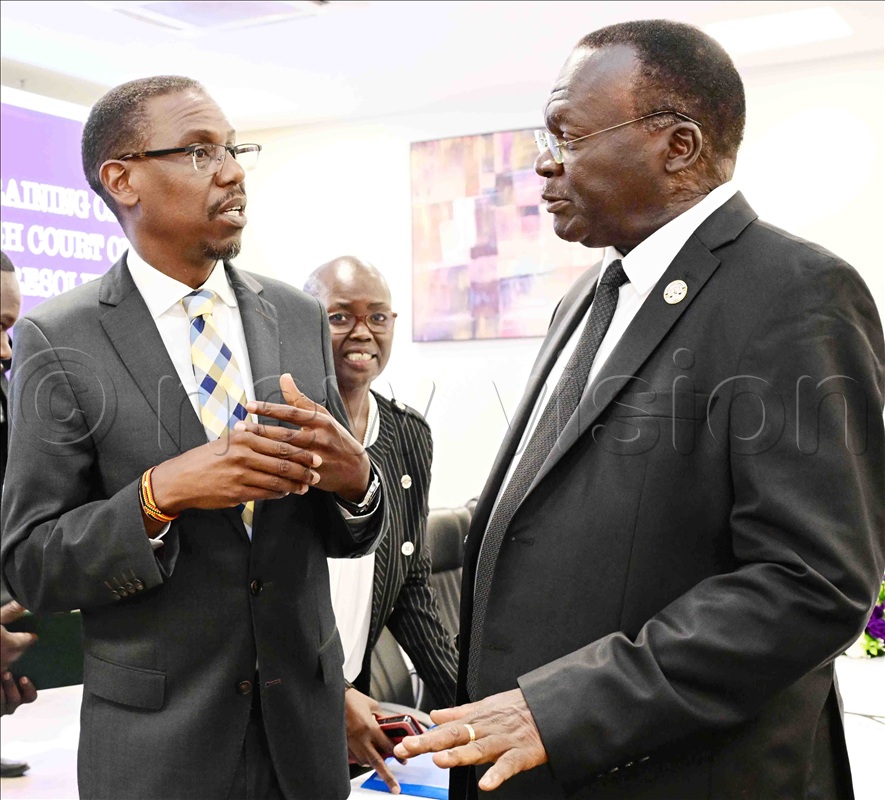
Attorney General Kiryowa Kiwanuka speaking during the training organised by the Judicial Training Institute (JTI) to equip High Court judges with the best skills of handling electoral disputes at the Judiciary headquarters in Kampala on December 18, 2025. (Photos by Mpalanyi Ssentongo)
________________
Attorney General Kiryowa Kiwanuka has asked the Judiciary to ensure uniformity and timely adjudication of electoral disputes, which he says are inevitable in the forthcoming general elections.
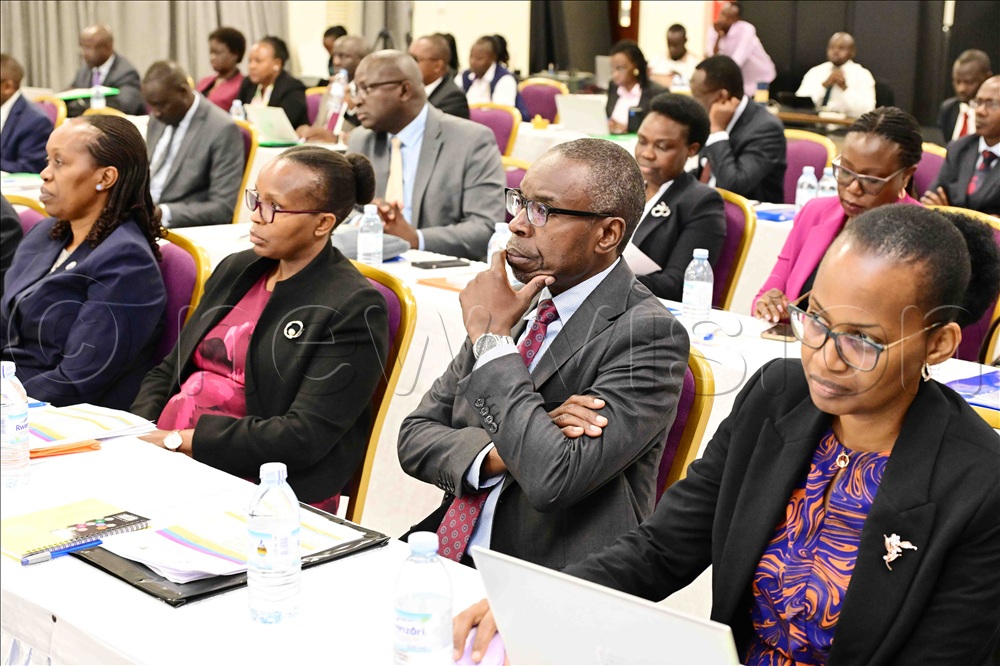
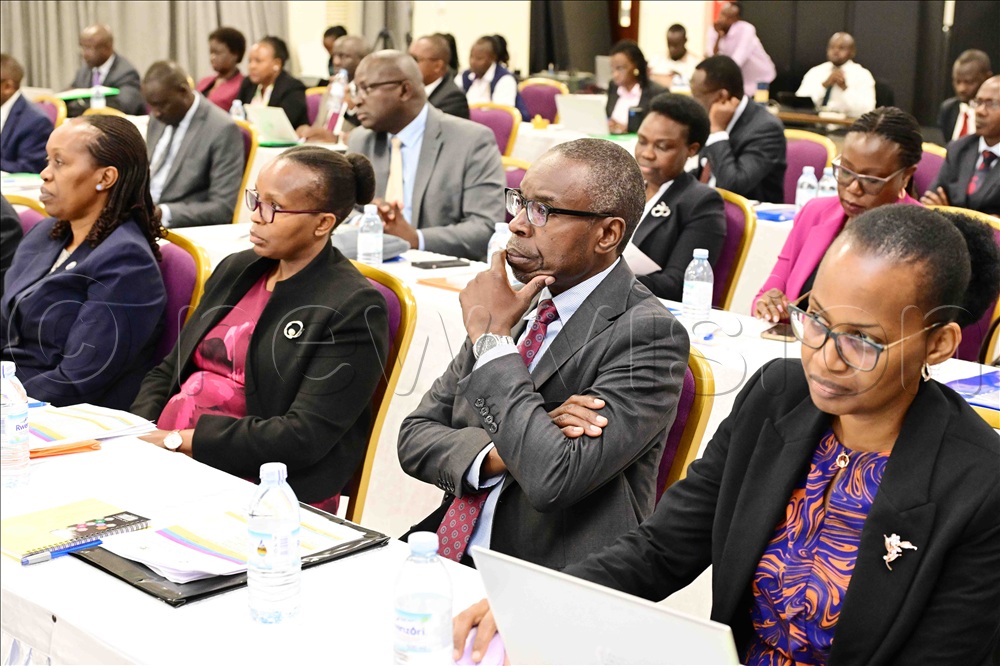
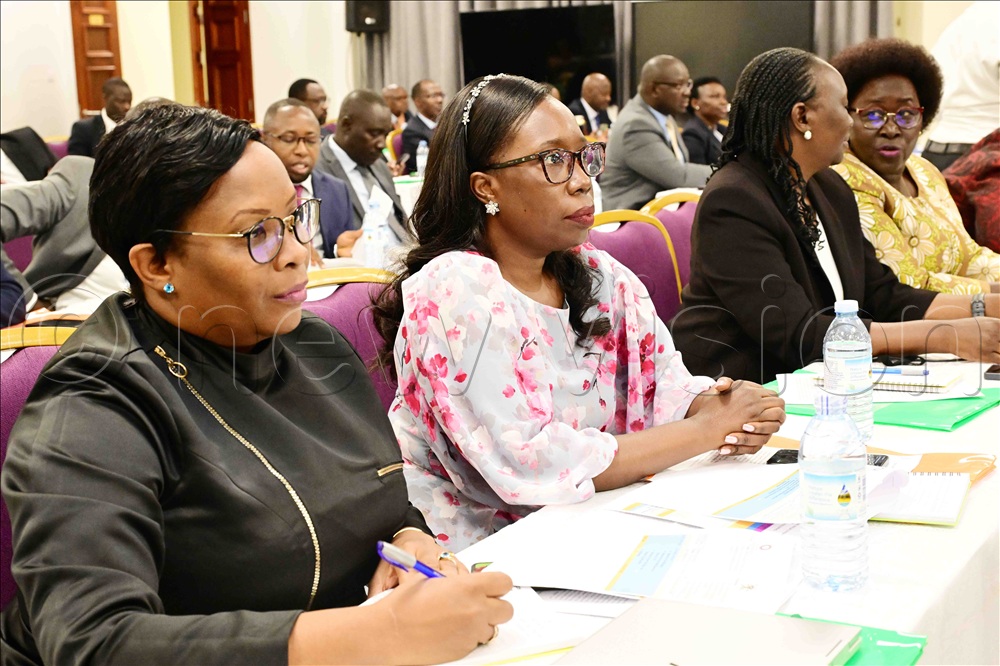
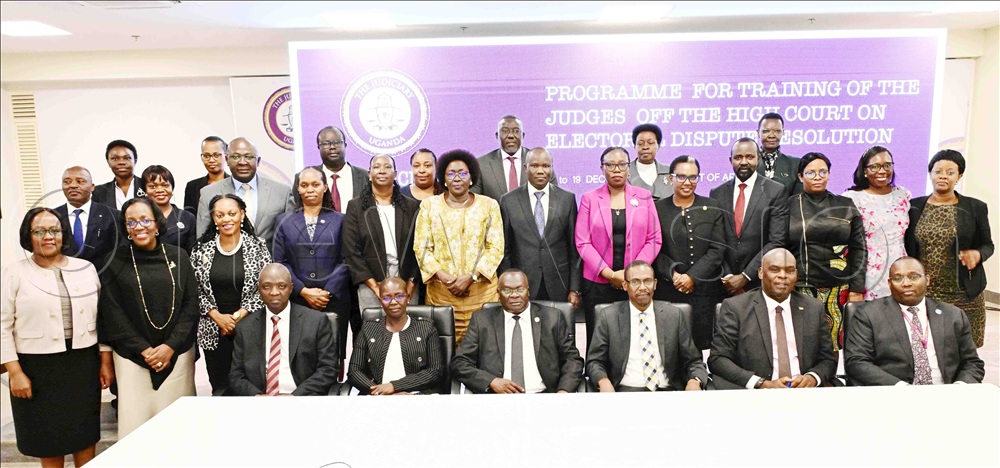
Kiryowa made the call during the training organised by the Judicial Training Institute (JTI) to equip High Court judges with the best skills of handling electoral disputes at the Judiciary headquarters in Kampala on December 18, 2025.
Chief Justice Alfonse Owiny Dollo speaking during the training.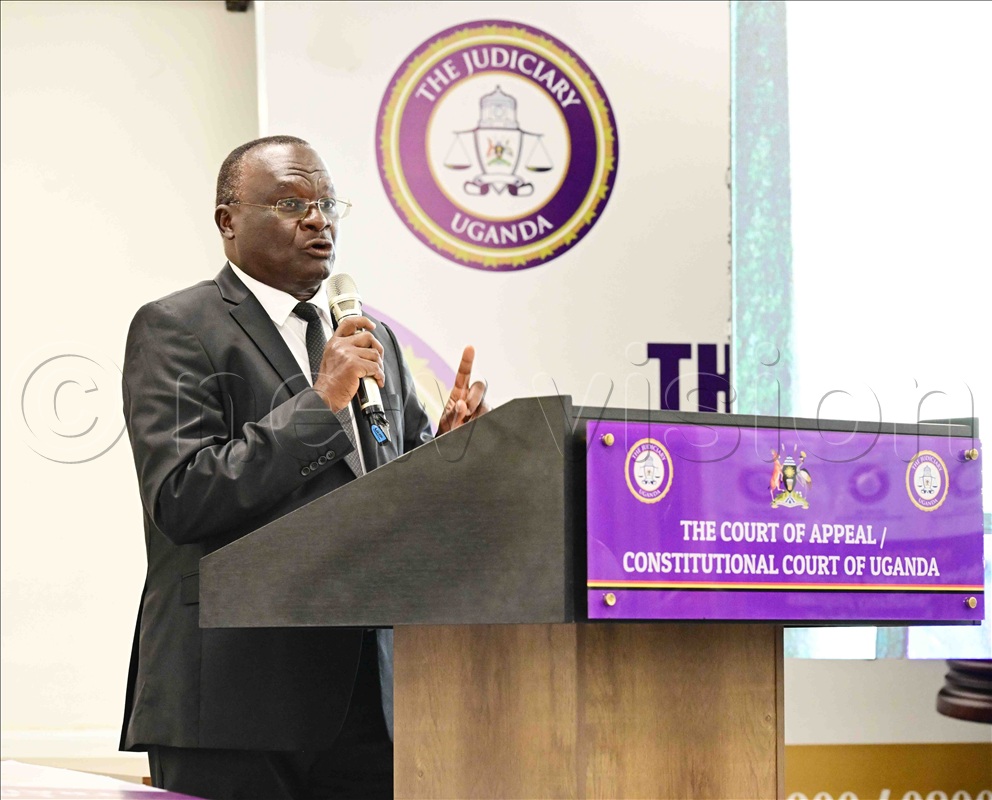
“I know that as High Court judges, you are bound by the decisions of the Court of Appeal and Supreme Court. However, we have varying decisions on some matters. Therefore, you should sit down and come up with a harmonised position to ensure uniformity and timely adjudication of the electoral-related disputes,” Kiryowa said.
Underscoring the importance of the judges studying the previous court decisions and coming up with an agreed position, Kiryowa noted that lawyers will always choose a position that suits their respective circumstances.
“We cannot have the High Court say different things on the same matter. We need consistency, and this means that you should sit down and take a position on each aspect in an election petition,” Kiryowa said.
Kiryowa also appealed to the judges to uphold the doctrine of precedent and clearly justify departure where necessary.
He said the judges should ensure strict compliance with the statutory timeframe in regard to electoral disputes.
“If the law say an election petition must be filed within 30 days after publishing the name of the winner in the gazette, let us uphold this,” Kiryowa said.
Kiryowa also appealed to the judges to ensure the timely delivery of decisions in electoral disputes.
"You are required to deliver judgments within six months, and you should observe this so that you don’t keep the electorate in uncertainty for a long period of time,” Kiryowa said.
Do not fear
Speaking at the event, Chief Justice Alfonse Owiny-Dollo implored the judges to determine the matters without fear, favour or ill-will.
“Have no fear in the adjudication of these cases. Even if a person you voted for committed an offence, declare so. The oath you took mandates you not to fear. Don’t favour anybody,” Owiny-Dollo said.
Using an example of when some people approached him claiming that the President was interested in one of the election petitions he was handling in Masaka, Owiny-Dollo implored the judges to treat them as trash.
“Don’t accept those narratives. The oath you took mandates you to administer justice in accordance with the law,” Owiny-Dollo said.
Owiny-Dollo urged the judges to use the remaining time to study the electoral offences and appreciate them because this will make their work easier.
Owiny-Dollo also encouraged them to consult each other instead of rendering a wrong decision.
“There is no harm in consulting each other because you cannot know everything,” Owiny-Dollo said.
Underscoring the importance of the fair and timely adjudication of electoral offences, Owiny-Dollo said it restores sanity.
Principal Judge Jane Frances Abodo said they anticipate more election petitions compared to the previous years.
“In 2021, we received 179 parliamentary election petitions, and we anticipate a surge this time. This is because we already have 39 pre-election matters filed in court,” Abodo noted.
Sensitive issues
Justice Mike Chibita, the chairperson of the Judicial Training Institute governing council, urged the judges to ensure that justice is not only done but also seen to be done because electoral disputes are very sensitive.
Using an example of when he branched off to buy cement for his construction site in the pendency of an election petition before him, Chibita implored the judges to trade carefully during the hearing of the election petitions to avoid being branded corrupt.
Seasoned lawyer John Mary Mugisha implored fellow advocates to also prepare for the electoral disputes for expeditious disposal.
“We thank the judiciary for this training. It is very timely. I implore fellow advocates to assemble their team and also train them for expeditious disposal of the election petitions,” Mugisha said.
During the training, a team from the Electoral Commission, led by Ahmed Abdallah Ochama, experimented with the judges on biometric voting.
Pressed by justices Olive Kazaarwe, Philip Odoki, Thomas Ocaya and Abodo on whether the voting exercise is going to be electronic or manual and how the results will be transmitted, Ochama said voting will be manual, but the results from the district will be transmitted electronically to the national tally centre.
Asked about Internet challenges, Ochama said it will be an offline voting. In circumstances where a voter has been issued with two ballot papers and accordingly ticks all of them, Ochama said only one will be considered valid.
Delayed disposal of electoral disputes and varying decisions in cases with similar facts remain a key challenge for the judiciary.