Youth propose trade pass, innovation fund under Museveni's ATMS strategy
Ayereza said young people were ready to contribute to this ambition but needed help overcoming barriers to trade, financing and access to government contracts.
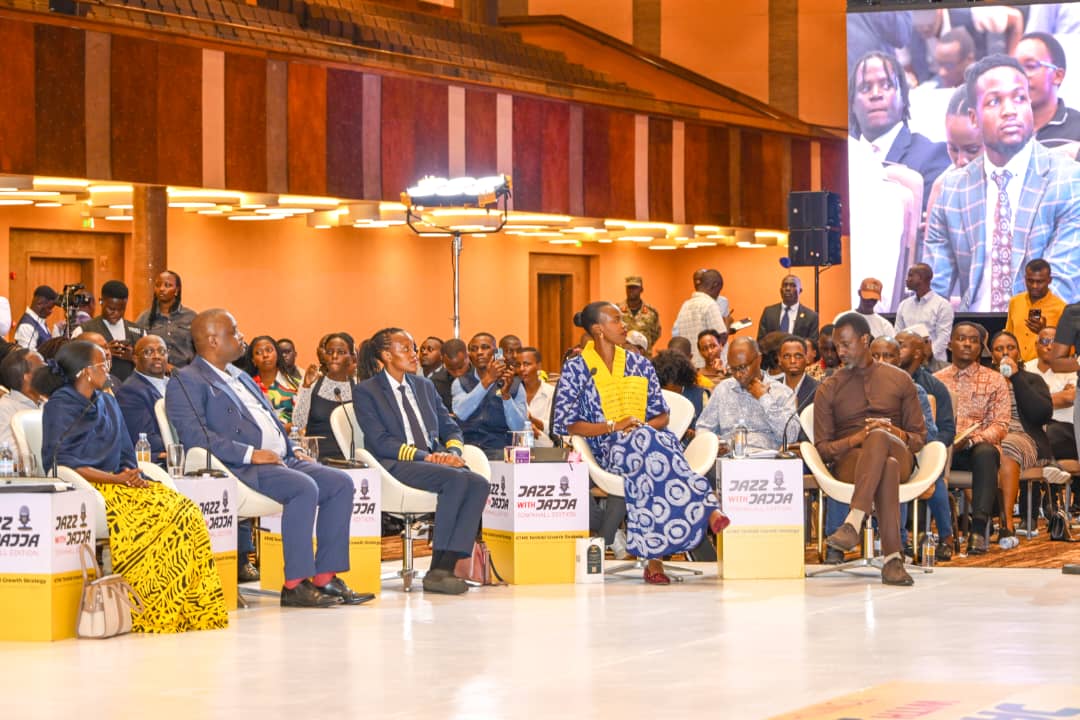
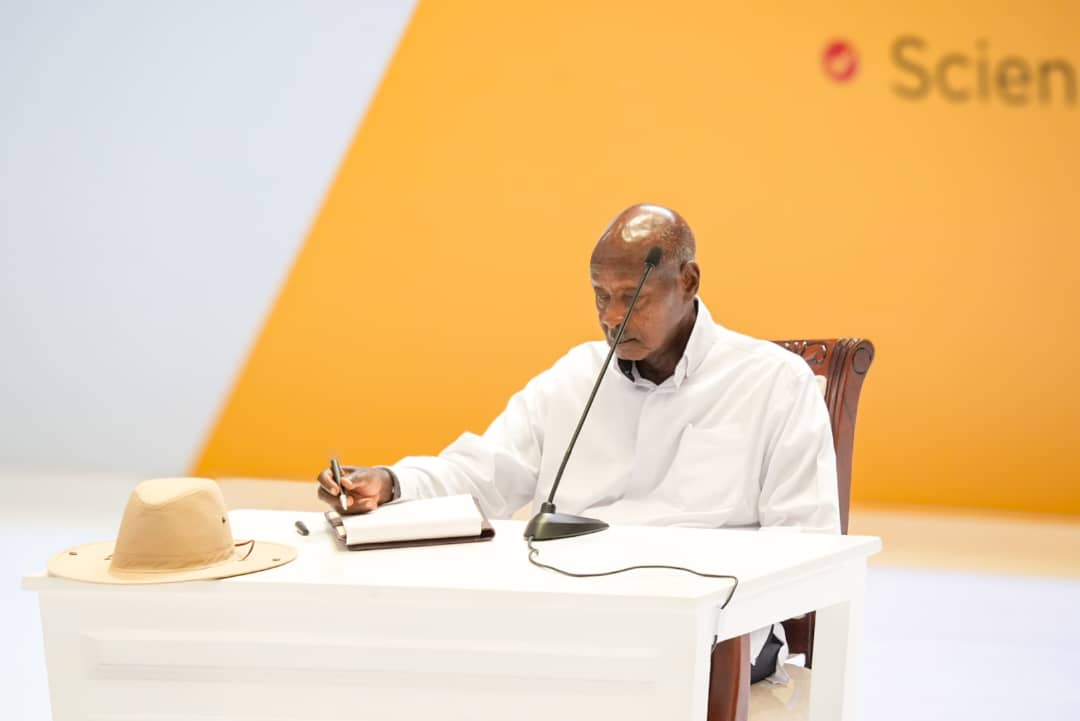
President Yoweri Museveni listens as one of the attendees speaks during the session held at Spoke Resort Hotel in Munyonyo. (PPU photos)
________________
Young Ugandans have asked the government to ease cross-border trade, open up public technology contracts to local innovators and allow creatives to use intellectual property to secure loans, as they seek a bigger role in implementing the country's Tenfold Growth Strategy.
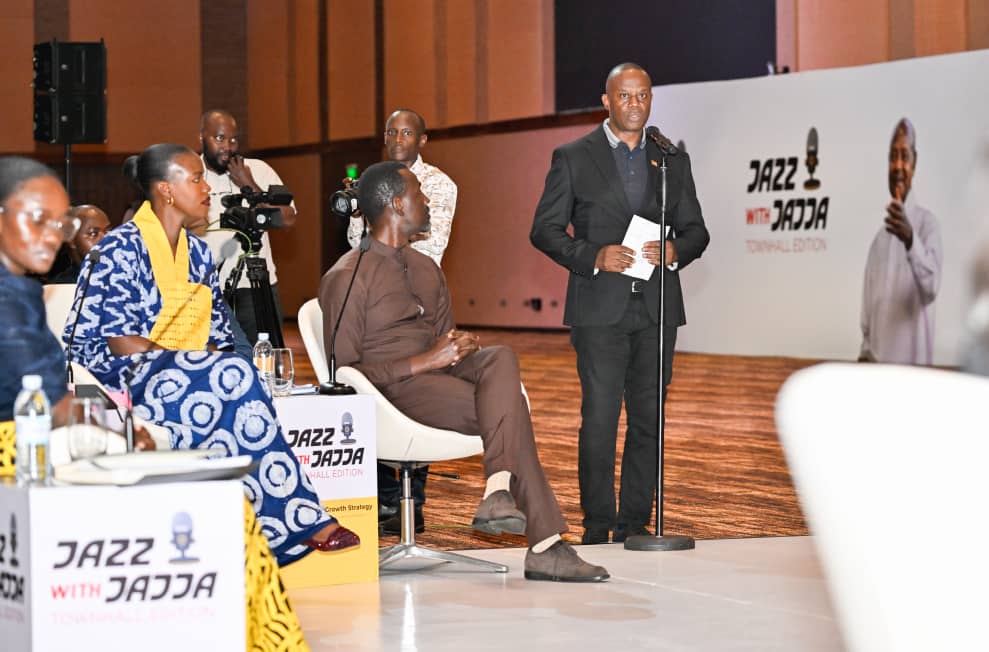
The proposals were presented to President Yoweri Museveni by Natasha Ayereza, the national general secretary of the NRM Youth League, during the third edition of Jazz with Jajja at Speke Resort Hotel in Munyonyo on Sunday (November 29).
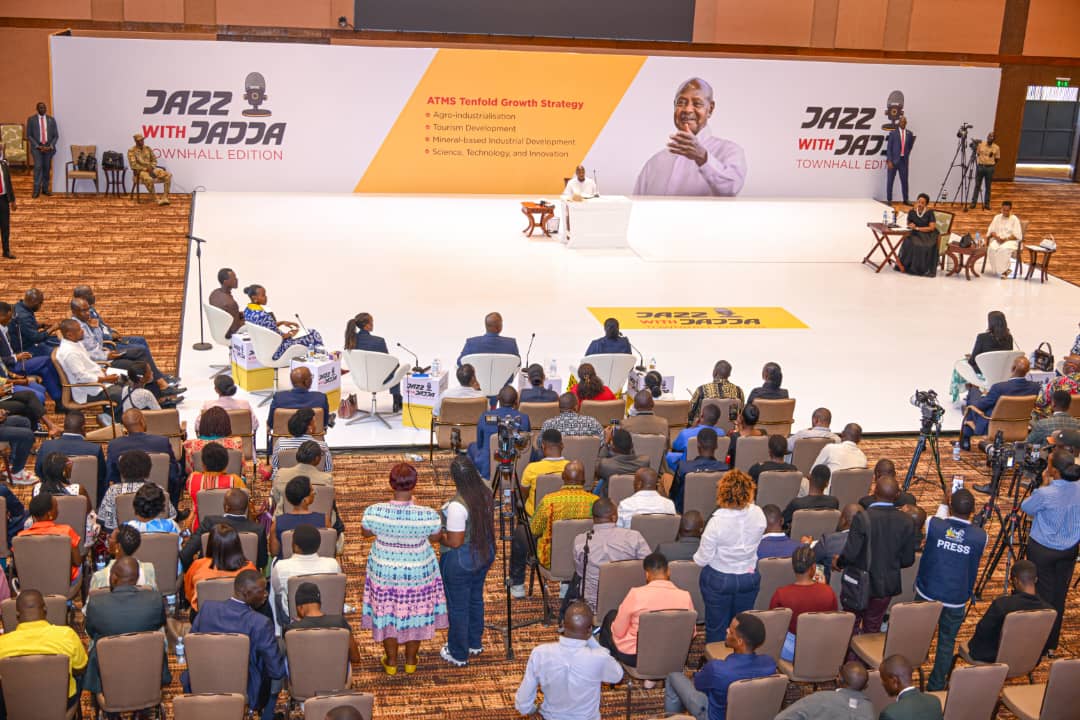
The town hall focused on how young people from different economic sectors could participate in wealth creation and the implementation of the Government's ATMS strategy, which identifies agriculture, tourism, minerals, oil and gas, and science, technology and innovation as key drivers of economic growth.
The government aims to grow Uganda's economy from about $50b in the 2023/24 financial year to $500b by 2040, while raising per capita income to $7,000 (about sh30 million).
Ayereza said young people were ready to contribute to this ambition but needed help overcoming barriers to trade, financing and access to government contracts.
She proposed a digital East Africa Youth Trade Pass to ease the movement of goods belonging to youth-owned micro and small businesses, particularly those trading in products such as fruits, cosmetics and other locally manufactured goods.
The proposed pass would be integrated with the Uganda Revenue Authority, the Ministry of Trade and regional border agencies to facilitate faster clearance, lower handling charges and access to standardised regional quality certificates.
Ayereza said young traders were being frustrated by complicated certification requirements, rules of origin paperwork, expensive cross-border transactions and delays at border posts such as Busia and Malaba.
She argued that the obstacles were undermining small businesses, including those started with money from the Parish Development Model (PDM).
The proposed trade pass would help small traders access regional markets under the East African Community and African Continental Free Trade Area arrangements.
Ayereza also proposed the establishment of a National Strategic Innovation and Defence Research and Development Fund to support young innovators developing technology for national security and public infrastructure.
She said Uganda produces graduates in software engineering, data analysis and hardware innovation, but many struggle to turn their ideas into commercial products because of limited funding, research support and access to public procurement.
She asked the government to direct the Ministries of Defence and Veteran Affairs, ICT and National Guidance, and Internal Affairs to reserve between 15% and 20% of their software, technology and cybersecurity contracts for young Ugandan innovators.
The proposal, she said, would create jobs while reducing reliance on foreign technology providers and building local capacity in cybersecurity, database management, software development and digital infrastructure.
Ayereza said Uganda's security needs increasingly extend beyond conventional military capabilities to include cyber technology, satellite data, artificial intelligence and autonomous systems.
Her third proposal targeted young people in music, film, fashion, athletics and digital content creation, many of whom struggle to secure bank loans because financial institutions demand physical collateral.
She asked the government, through the Bank of Uganda and Uganda Registration Services Bureau (URSB), to develop guidelines for intellectual property-backed lending.
Under the proposal, financial institutions would be encouraged to assess the value of intellectual property when considering loan applications, allowing creatives and technology entrepreneurs to borrow against their work.
She said the arrangement would help young people expand their businesses and earn sustainable incomes from their creative work.
The fourth proposal centred on regional and continental integration, with Ayereza asking Museveni to give young people opportunities to participate in trade and business initiatives across East Africa and Africa.
She said young entrepreneurs were already using digital platforms, e-commerce and cross-border networks to connect with markets but needed government support to overcome regulatory and administrative obstacles.
The Minister of State for Youth and Children, Dr Mercy Faith Lakisa, said young people needed practical skills and the right attitude to take advantage of available opportunities.
She cited an estimated 5.3 million young people who are not in education, employment or training, saying the Government needed to strengthen interventions aimed at helping them become economically productive.
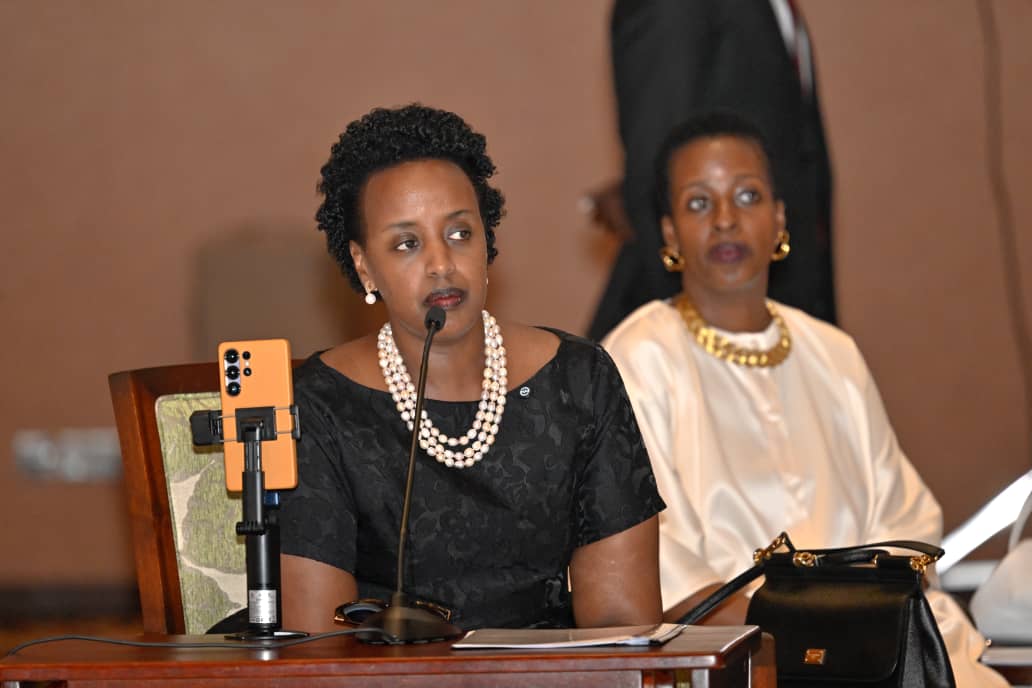
Lakisa also appealed for the Youth Graduate Fund to be implemented to enable young people to participate in industrialisation and other productive activities.
She urged participants to be open-minded and focus on finding practical solutions to the challenges affecting them.
The session, moderated by Natasha Karugire, brought together young people from different sectors, youth organisations, political formations and government institutions.
Karugire said the meeting was an opportunity for young people to share their experiences and ask the President questions.
“We have brought young people from other sectors to give testimony on how they are doing and ask questions. Thank you for giving us this time,” she said.
Museveni arrived at the venue at 12:23 pm, accompanied by his daughter, Karugire. He was dressed in his trademark white shirt, brown hat and black trousers.
The meeting was also attended by Ramathan Ggoobi, the Permanent Secretary and Secretary to the Treasury.
Jazz with Jajja is a platform through which Museveni engages young people on leadership, entrepreneurship, wealth creation and national development. The Sunday meeting was the third edition, following engagements in January and March.
Unlike the earlier meetings, which were held at State House, Nakasero, and Kisozi Ranch in Gomba, the latest engagement was organised in a town hall format at Spoke Resort Hotel in Munyonyo.