
Women's Council credits Museveni for expanding support to women programmes
She said government support to the Women’s Council has grown significantly over the years, enabling the council to extend support to district and sub-county structures while enhancing mobilisation for government programmes.
Faridah Kimbowa (3rd from right seated), the Chairperson of the National Women Council Uganda and Grace Kanyike (2nd from right seated), former Deputy Resident District Commissioner (RDC) for Kampala Central Division, pose for a photo with district women chairpersons after a meeting in Kampala, June 18, 2026. (Photos by Wilfred Sanya)
________________
The national chairperson of the Women’s Council Uganda, Faridah Kibowa, has credited President Yoweri Kaguta Museveni for championing women’s empowerment, saying increased government funding has strengthened the council’s operations and expanded services to women across the country.
Kibowa made the remarks on June 18, 2026, during a review meeting of the Institutional Support Fund (ISF) held at Imperial Royale Hotel in Kampala. The meeting brought together more than 70 Women’s Council leaders and district community development officers from across the country, mainly from the central region.
She said government support to the Women’s Council has grown significantly over the years, enabling the council to extend support to district and sub-county structures while enhancing mobilisation for government programmes.
"When we came into office in 2018, we found a budget of about sh800 million that was mainly used to pay salaries, utilities and administrative expenses. Today, the council has a budget of about sh7 billion, which has enabled us to support district structures and implement programmes that directly benefit women," Kibowa said.
According to Kibowa, the increased funding has facilitated the Institutional Support Fund, supported Women’s Day celebrations and strengthened operations under the National Secretariat for Special Interest Groups (SIG).
She said the support has also enabled women leaders to mobilise communities to participate in government programmes such as the Uganda Women Entrepreneurship Programme (UWEP), while promoting awareness of social issues affecting women and families.
"We are grateful to the Government of Uganda and President Museveni for consistently supporting the women's agenda. Although he is not a woman, he has always stood out as a champion of women's empowerment and inclusion," she said.
Emmanuel Munene, Planner at the Ministry of Gender, Labour and Social Development, while addressing the district women's council chairperson.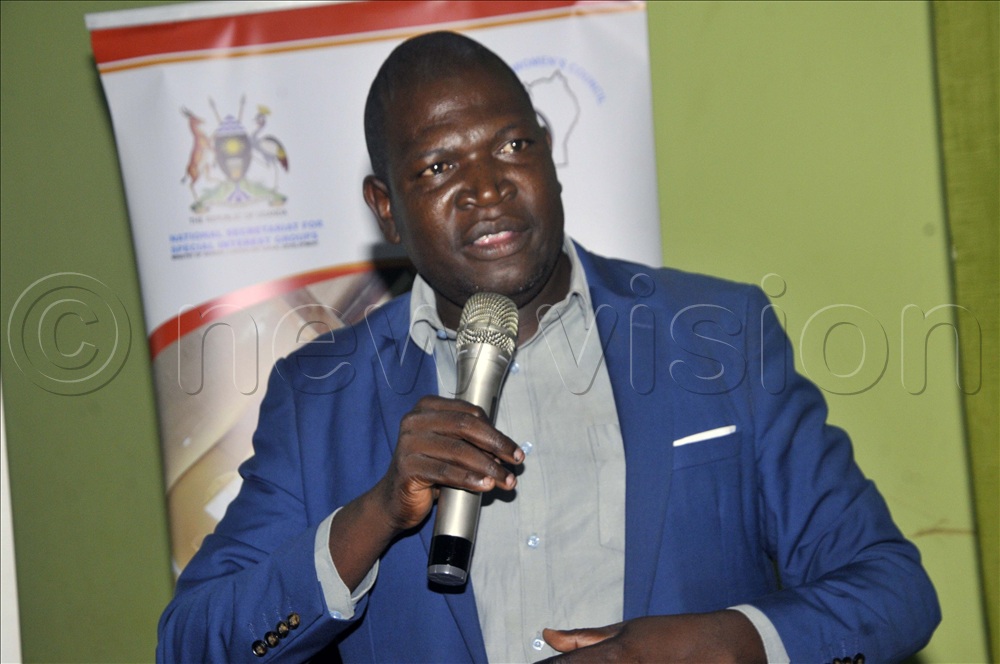
She said Women’s Council leaders play an important role in mobilising communities, promoting government programmes, combating gender-based violence, addressing teenage pregnancies and supporting efforts to keep children in school.
Kibowa added that the council intends to continue advocating for increased funding in the next term of office to strengthen women’s participation in development programmes and improve service delivery.
"For purposes of continuity, we have encouraged ourselves to contest again so that we can continue building on the progress we have made and lobby for more resources for the women we serve," she said.
Assessing impact of support fund
The executive secretary of the National Secretariat for Special Interest Groups, Osborne Turyasingura, said the review meetings are intended to assess the effectiveness of the Institutional Support Fund, which has been disbursed to Women’s Councils in 146 local governments across Uganda.
"We want to assess whether women have benefited from this fund, whether it has helped local structures perform their roles, and how it can be improved to better serve its intended purpose," Turyasingura said.
He explained that one of the reasons the fund was introduced was to facilitate Women’s Council structures and encourage women to participate in government programmes such as the Parish Development Model (PDM), UWEP and other development initiatives.
Turyasingura said the consultations bring together both technical officers and political leaders to provide feedback on the management and utilisation of the fund.
"We want an honest discussion on what has worked, what has not worked and how best we can make this fund serve all women in Uganda," he said.
The Women’s Council operates under the Ministry of Gender, Labour and Social Development.
Emily Akullu, Programme Manager at the National Women’s Council, said the review exercise is being conducted nationwide to evaluate the performance of funds sent to local governments.
"We are moving around the country to assess the performance of the Institutional Support Fund that we have been sending to districts. Every year, we disburse a total of sh1.6 billion to local governments, translating to an average of about sh8 million per district annually across Uganda's 146 districts and cities," Akullu said.
She noted that the team had completed consultations in the eastern region (Mbale) and was proceeding to western Uganda in Mbarara for similar engagements.
Delayed funds affecting service delivery
Evelyne Kyalimpa, a community development officer from Nakaseke district representing district community development officer Denis Batalingaya, said delayed disbursement of funds remains one of the major challenges affecting implementation.
Kyalimpa said she works with 15 Women’s Council chairpersons from 10 subcounties and five town councils, including Ngoma, Kiwoko, Semuto and Kapeeka.
"We receive about sh1.8 million per quarter, but the money often arrives in the last month of the quarter instead of at the beginning, which affects planning and implementation," she said.
According to Kyalimpa, delayed releases reduce the effectiveness of activities and service delivery at the community level.
However, she highlighted several achievements, including improved recovery of UWEP funds.
"We have managed to recover about 45% of UWEP funds through regular engagement with beneficiary groups and support from district leaders, resident district commissioners and the police," she said.
The review meeting assessed achievements, challenges and opportunities under the Institutional Support Fund, with participants discussing ways to improve accountability, transparency and service delivery to women across Uganda.