
Women leaders, UN laud Kadaga for exceptional leadership
Prof. Josephine Ahikire, vice-board chairperson of the Forum for Women in Democracy (FOWODE), said Kadaga’s legacy continued to inspire women leaders across the country. “Your legacy is remarkable, and it continues to inspire us. We count on your office and your goodness to support the women of Uganda,” Ahikire said.
Kadaga also credited the women’s parliamentary caucus with pushing for laws aimed at protecting women and children. (Courtesy Photo)
Women leaders and UN Women have commended former Speaker of Parliament Rebecca Kadaga for her contribution to women’s leadership and gender equality in Uganda.
Kadaga, Uganda’s first female Speaker of Parliament and the first female First Deputy Prime Minister, was praised for her leadership and efforts to advance women’s participation in decision-making.
Prof. Josephine Ahikire, vice-board chairperson of the Forum for Women in Democracy (FOWODE), said Kadaga’s legacy continued to inspire women leaders across the country.
“Your legacy is remarkable, and it continues to inspire us. We count on your office and your goodness to support the women of Uganda,” Ahikire said.
She made the remarks on September 25, 2026, at Golden Tulip Hotel in Kampala during the National Women Leaders Conference organised by FOWODE under the theme, ‘Beyond the ballot: Charting a collective women’s agenda.’
The conference brought together women leaders to reflect on the 2026 elections, share their experiences, strengthen solidarity and chart a collective agenda for women’s leadership beyond the electoral period.
The conference also marked 30 years of FOWODE’s existence since its formation in 1995.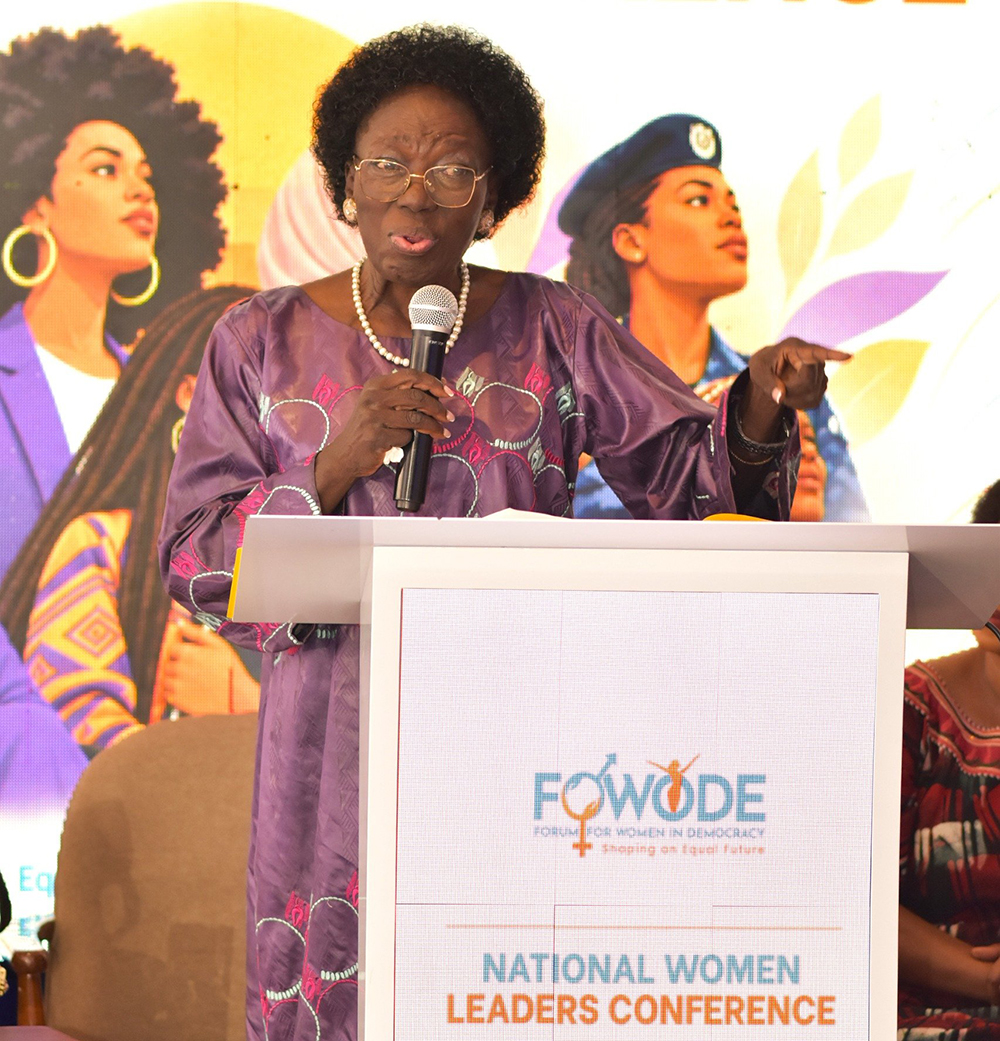
Speaking at the event, Kadaga highlighted some of the achievements of women leaders in influencing Government policies, legislation and public resource allocation. (Courtesy Photo)
FOWODE is a non-partisan feminist civil society organisation that advocates for women’s participation in leadership and decision-making.
Kadaga was the chief guest at the conference, representing Prime Minister Robinah Nabbanja.
The conference was attended by female Members of Parliament, including Shamim Malembe of Kampala and Mary Kuteesa Kamuli, Minister of State for Gender and Culture, as well as district and local government leaders from across the country.
Speaking at the event, Kadaga highlighted some of the achievements of women leaders in influencing Government policies, legislation and public resource allocation.
“It took us 11 years to establish the Certificate of Gender and Equity because people did not understand it. We persisted, and today government budgets are subjected to gender and equity scrutiny. It is one of the tools we use to assess whether government is actually performing,” she said.
Kadaga also credited the women’s parliamentary caucus with pushing for laws aimed at protecting women and children.
“Some of the laws that protect women and children came from the Women’s Caucus. We used our position to push legislation forward because if government was not bringing the laws, we had to take action ourselves,” she said.
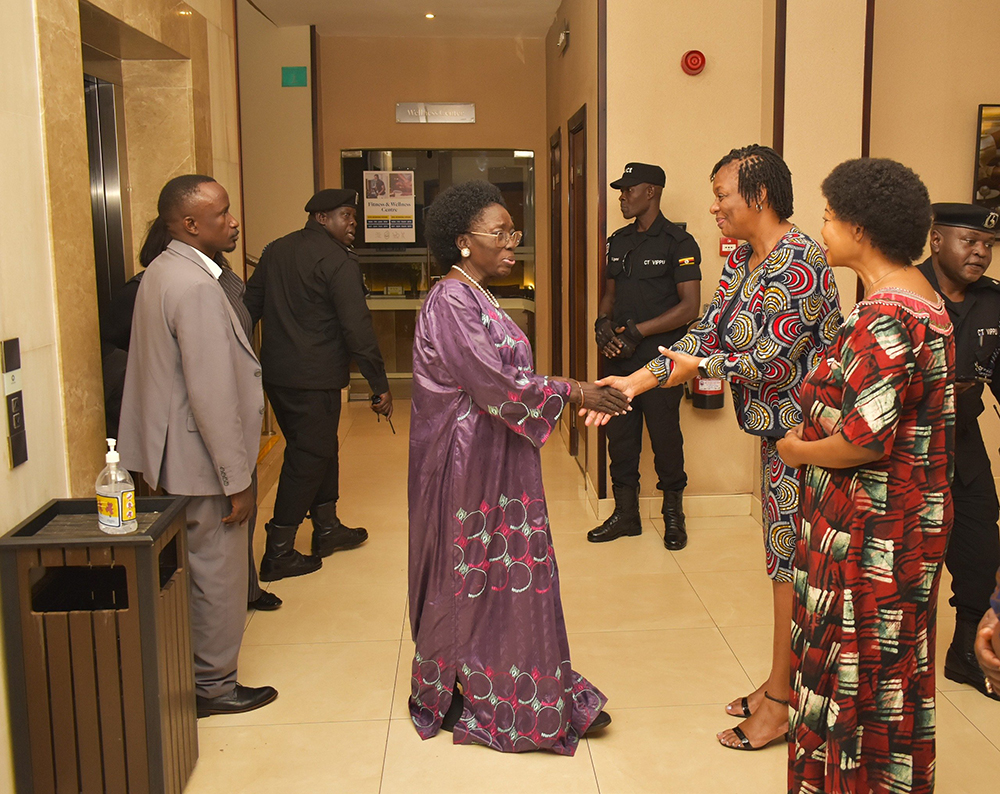
Kadaga greets UN Women country director at Golden Tulip Hotel during the FOWODE conference.
Kamuli said programmes that put financial resources directly in the hands of women could help them overcome economic barriers and begin building assets.
“We may not change culture overnight or put land in women’s hands, but economic empowerment can give women the means to build and acquire assets,” she said.
Ahikire said the conference was an opportunity to recognise women who had demonstrated courage and resilience by seeking leadership positions despite the challenges associated with political participation.
The UN Women representative urged women leaders to embrace emerging technologies, particularly artificial intelligence, to remain relevant in a rapidly changing world.
“We are living in a period of profound change. Technology is reshaping economies and labour markets, while AI is transforming our societies. As women leaders, how much are we educating ourselves about AI? We cannot afford to be left behind,” the representative said.
FOWODE said women’s leadership should not begin and end at the ballot box, but should extend to Parliament, local governments, laws, policies and budgets.
The organisation said women must also strengthen their collective ability to organise, influence institutions and hold them accountable.
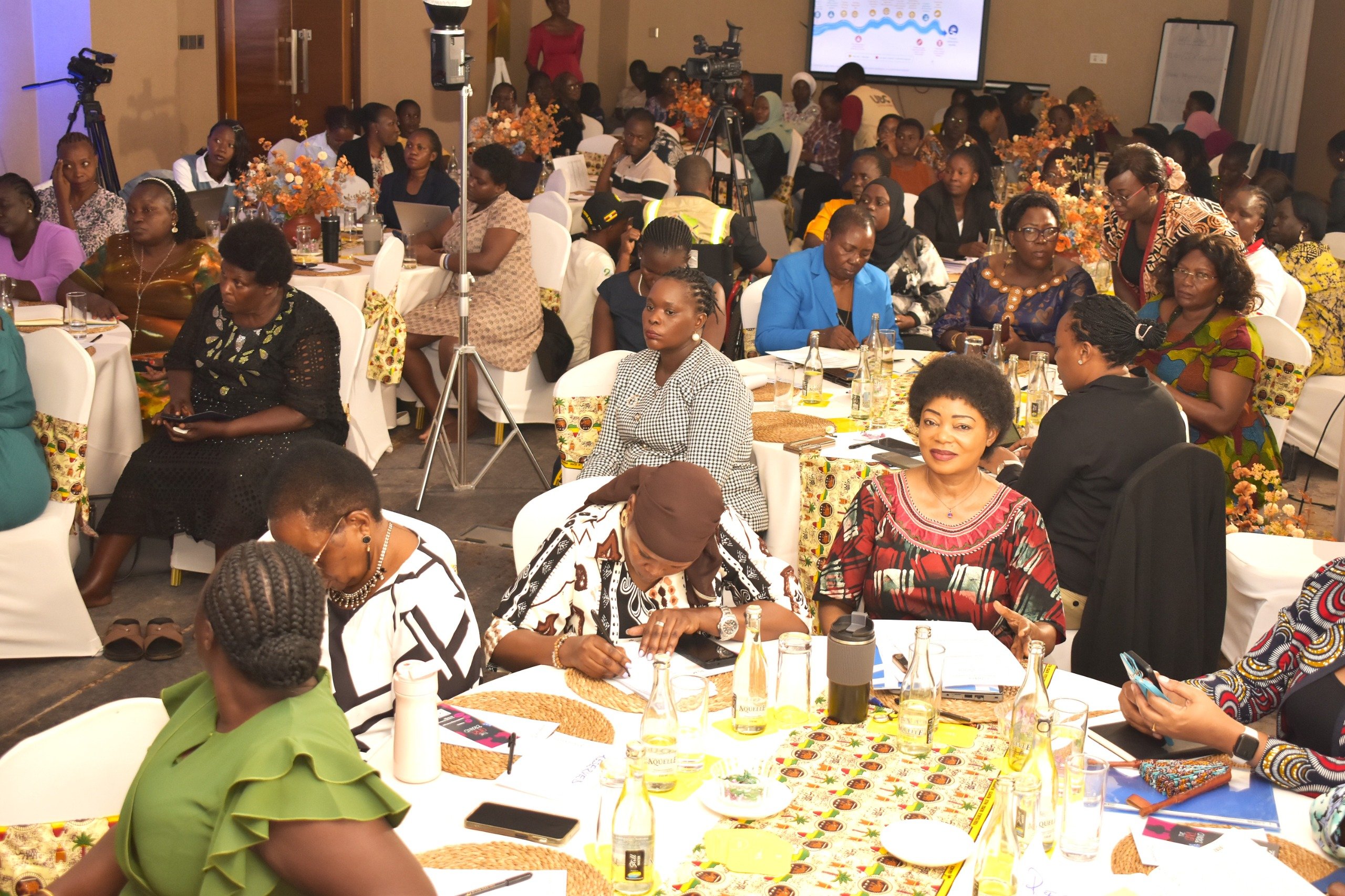
Women leaders attending the FOWODE National Women's conference at Golden Tulip Hotel on Friday.
Patricia Munabi-Babiiha, FOWODE executive director, said women’s participation in leadership was a democratic right rather than a favour.
“Women’s leadership is not a favour, a concession or a reward for women who manage to overcome extraordinary barriers. It is a democratic right, a matter of justice and the right thing to do,” she said.
Munabi-Babiiha said FOWODE recognised every woman who contested in the 2026 elections, regardless of the electoral outcome.
“We honour the courage it took to step forward and recognise that every woman who contested has a valuable contribution to make beyond the electoral outcome,” she said.
She added that an election result should not determine the value of a woman’s leadership.
“For many women, the 2026 electoral journey came with financial strain, emotional exhaustion, violence and enormous personal sacrifice. But losing an election should not mean losing the opportunity to lead,” she said.