
Why Uganda stopped Ethiopia, Eritrea refugee registration as it mulls more countries
The move, according to Office of the Prime Minister senior settlement commandant Godfrey Mugabi, aims to reduce pressure on the country’s already stretched humanitarian system.
Geoffrey Mugabe, the Senior Settlement Commandant for Refugees, Office of the Prime Minister (OPM), addressing participants. This was during the launch of 2025–2028 Strategy to Strengthen Refugee Resilience. (Photo by Nancy Nanyonga)
_________________
The Government of Uganda says it is considering suspending the registration of refugees from countries no longer affected by civil or political conflicts. The Government cites resource constraints and concerns over the authenticity of some asylum seekers.
The move, according to Office of the Prime Minister senior settlement commandant Godfrey Mugabi, aims to reduce pressure on the country’s already stretched humanitarian system.
“We have already closed registration of refugees from countries like Ethiopia and Eritrea. By doing so, we have cut down the excess numbers we were receiving by about 5,000,” Mugabi said.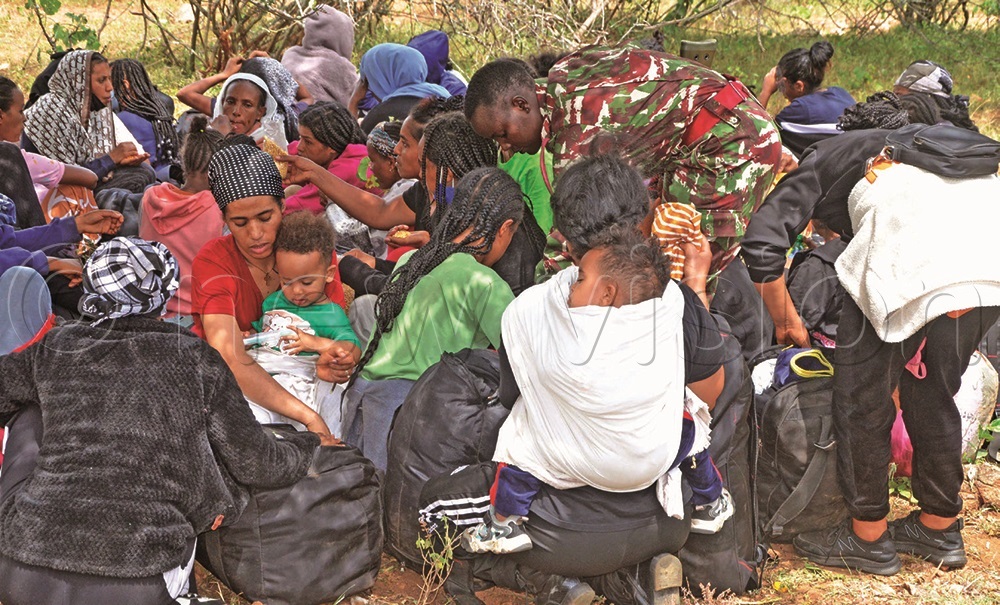
A Kenyan female soldier inspecting the luggage of Eritrean immigrant women who were abandoned in the wilderness at the Uganda-Kenya border. (Credit: File/Olandason Wanyama)
Currently, Uganda is host to nearly two million refugees, making it the largest refugee-hosting country in Africa. These refugees hail from countries, including South Sudan, DR Congo and Burundi. Globally, Uganda is the second-largest refugee host country after Turkey. Turkey hosts over 4.5 million refugees.
Mugabi made the revelation during the launch of the 2025-2026 strategy developed by IsraAID to strengthen refugee resilience at Hotel Africana in Kampala city on October 14, 2025.
Founded in 2001, IsraAID is an international non-governmental humanitarian aid organisation based in Israel. It works in emergency and long-term development settings in over 60 countries globally.
Declining international aid
Mugabi revealed that the Government decision is partly informed by declining international funding and the increasing burden on local communities hosting refugees.
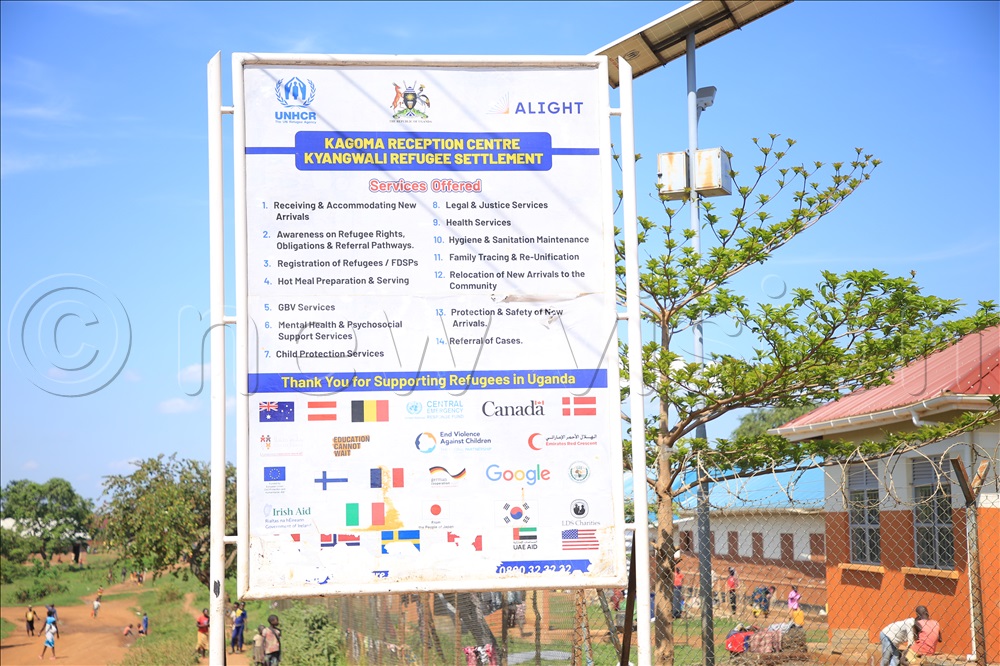
Uganda’s decision to close registration of new refugees is partly informed by declining international funding and the increasing burden on local communities hosting refugees. (File photo)
While Uganda has been globally praised for its refugee open-door policy, Mugabi said the cost of sustaining these asylum seekers is becoming unbearable.
“Uganda contributes heavily to the refugee response, especially through land allocation. Yet when you compare the funding we receive to other countries with fewer refugees, it is not proportionate. Kenya and Ethiopia have fewer refugees, but get more funding,” he stated.
Mugabi said the Government has availed vast tracts of land for refugee settlements, a contribution that rarely reflects in aid considerations. Uganda’s Refugee Act of 2006 grants refugees the right to settle, work, and access public services.
Security threats
On security concerns, Mugabi elaborated that some asylum seekers from countries like Eritrea and Ethiopia are nationals escaping from compulsory military service.
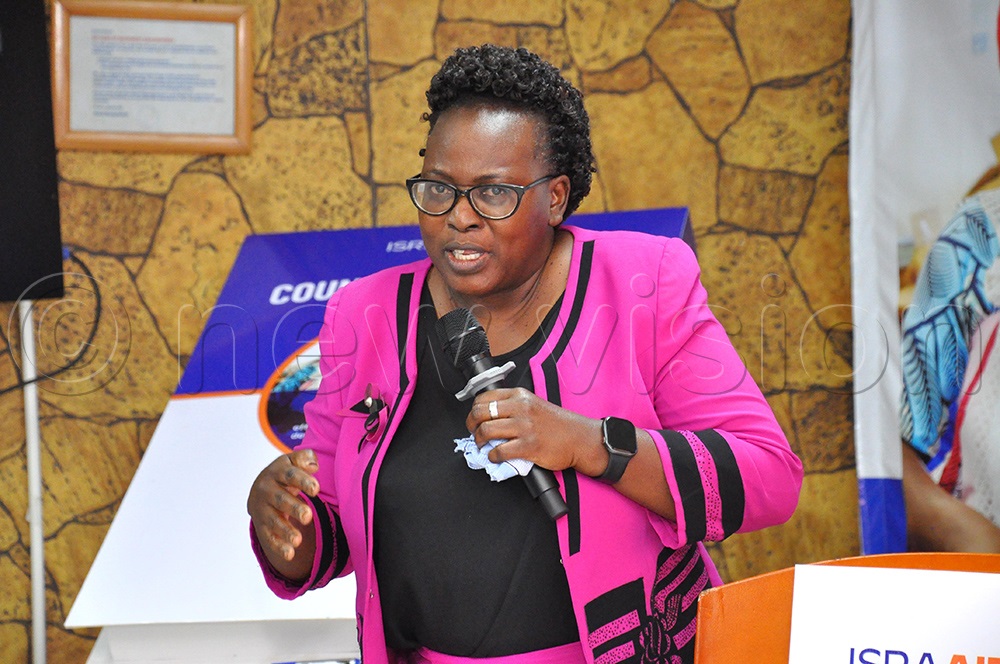
Mary Harriet Ajilong, the Commissioner Guidance and Counselling at the Ministry of Education, addressing participants during the launch of 2025–2028 Strategy to Strengthen Refugee Resilience. (Photo by Nancy Nanyonga)
“Many of them are running away from their national service programmes. If you come here having undergone military training and you do not declare that, we have reason to believe you are still a combatant. That poses a security risk,” he said.
Social tension
Beyond security, Mugabi raised concerns over the failure of some refugee communities to properly integrate with host populations.
“In areas like Kansanga and Kabalagala, some nationalities live in isolation, running their own businesses, speaking their own languages, and even introducing their social services. There have been complaints of social tension, sometimes escalating into conflict,” he argued.
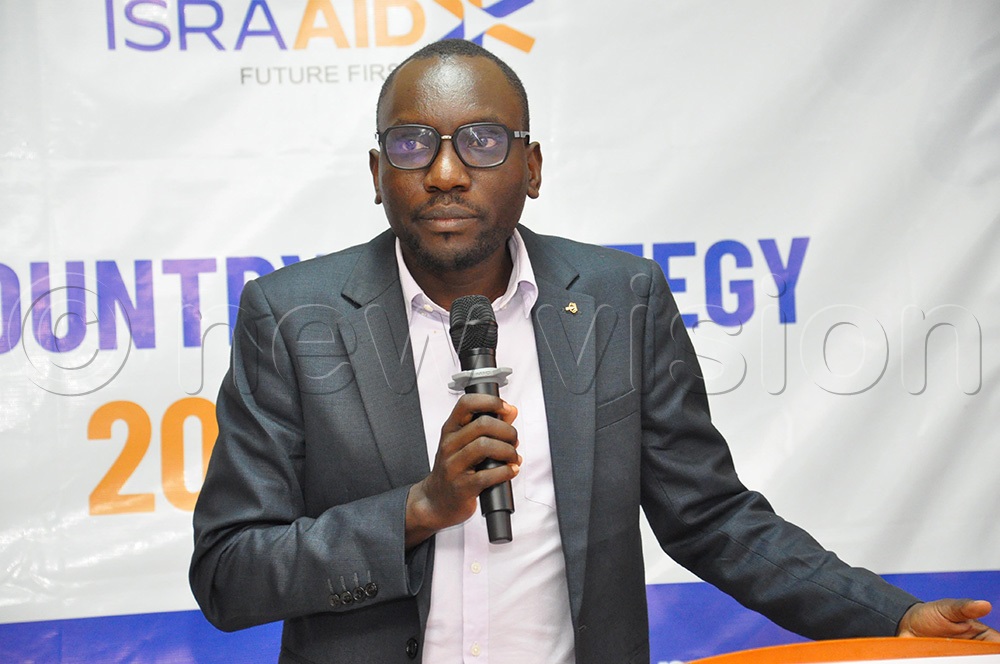
Richard Duuki from UNHCR addressing participants during the launch of 2025–2028 Strategy to Strengthen Refugee Resilience. (Photo by Nancy Nanyonga)
Delphine Mugisha, the country director of IsraAID, however, noted that some of the refugees in Uganda are highly skilled, and asked the Government to think of employing them. “This will promote more self-reliance than it is today.”
Richard Duuki, interagency coordinator for the United Nations High Commissioner for Refugees, revealed that by 2030, the number of refugees in Uganda will have clocked 3 million.
He challenged the government to consider granting citizenship to refugees who have been in Uganda for a long time.