
'We will produce many Ugandan pilots' — Uganda Airlines boss Girma Wake
"I am working with Soroti Flying School to get more new students and I will directly take all the graduates and train them," says Uganda Airlines chief executive officer Girma Wake.
Uganda Airlines CEO Girma Wake in an engagement with Ugandan media in Accra on October 29, 2026, following the successful launch of the Entebbe-Accra air service two days prior. (Credit: Joseph Kizza)
_________________________
AVIATION ✈️🇺🇬
To the untrained eye, Ugandan pilot Rita Nasirumbi's striped epaulet may seem nothing more than just any other insignia won by the uniformed occupants of an airplane's cockpit.
But look more closely. Those are four stripes on her shoulder.
This is a captain we are talking about. The pilot in command. A leading role in ensuring the safety of everyone on board — all the way to their final destination.
So, it's a big deal. Even more so because Nasirumbi made history in October this year by becoming Uganda Airlines' first female captain, having diligently worked with the national carrier since its revival in 2019.
She is now the pilot in command, or PIC if you prefer, of the airline's CRJ900 regional aircraft.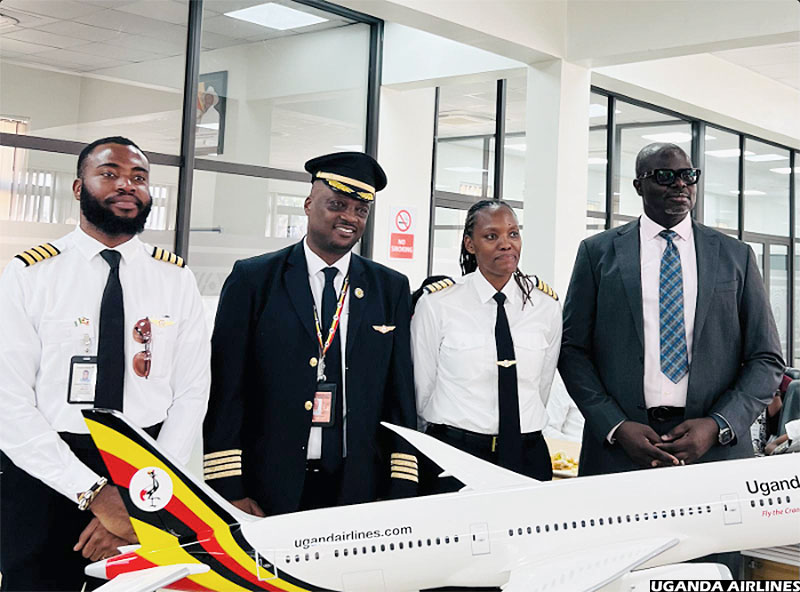
'We will train graduates'
Nasirumbi's elevation to a captain, which saw her switch to the left seat of the cockpit, was a hugely celebrated achievement that undoubtedly provided much-needed inspiration to especially aspiring female aviators.
Indeed, her promotion will not be the last.
"Pretty soon we will have another captain," revealed Uganda Airlines chief executive officer Girma Wake last Thursday (October 29) in an engagement with Ugandan media in Ghana's capital Accra, following the successful launch of the flag carrier's Entebbe-Accra service.
"We will produce a lot of Ugandan pilots.
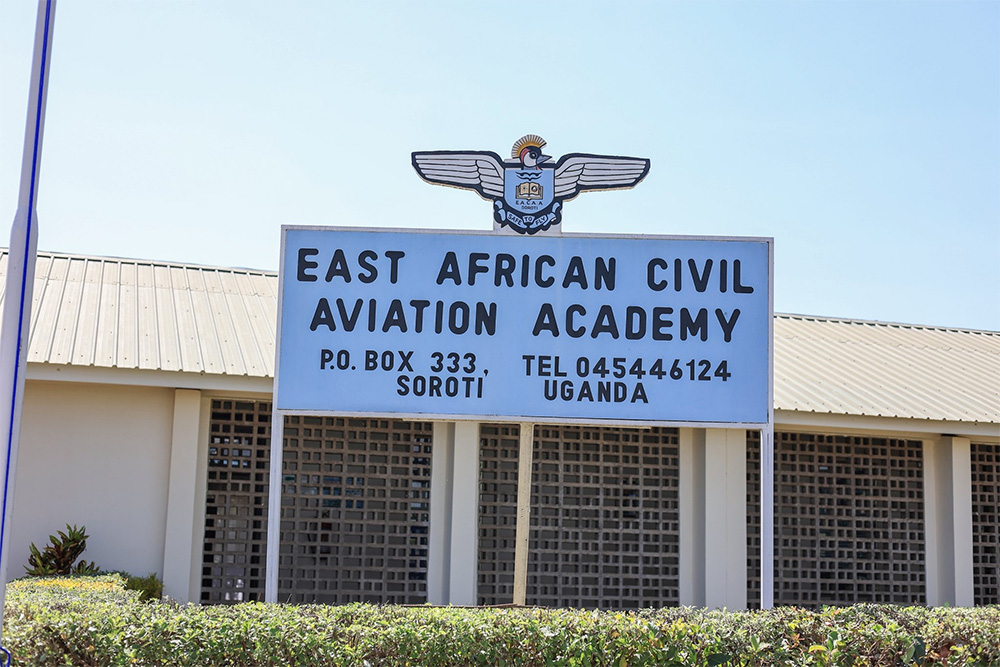
"I am working with Soroti [East African Civil Aviation Academy] also to get more new students and I will directly take all the graduates and train them."
'Good to develop your own people'
With this, Ethiopian Girma, who, in his own words, "has spent a lifetime in aviation", is aiming for self-sufficiency.
"We cannot be depending on others. As an African, I know one thing for sure. Things are not always going to be good for any country," said the spry octogenarian.
"There are times when things go against you. When that happens, if you are depending on outsiders, outsiders go, they leave you with an empty hand. It is good to develop your own people as much as possible."
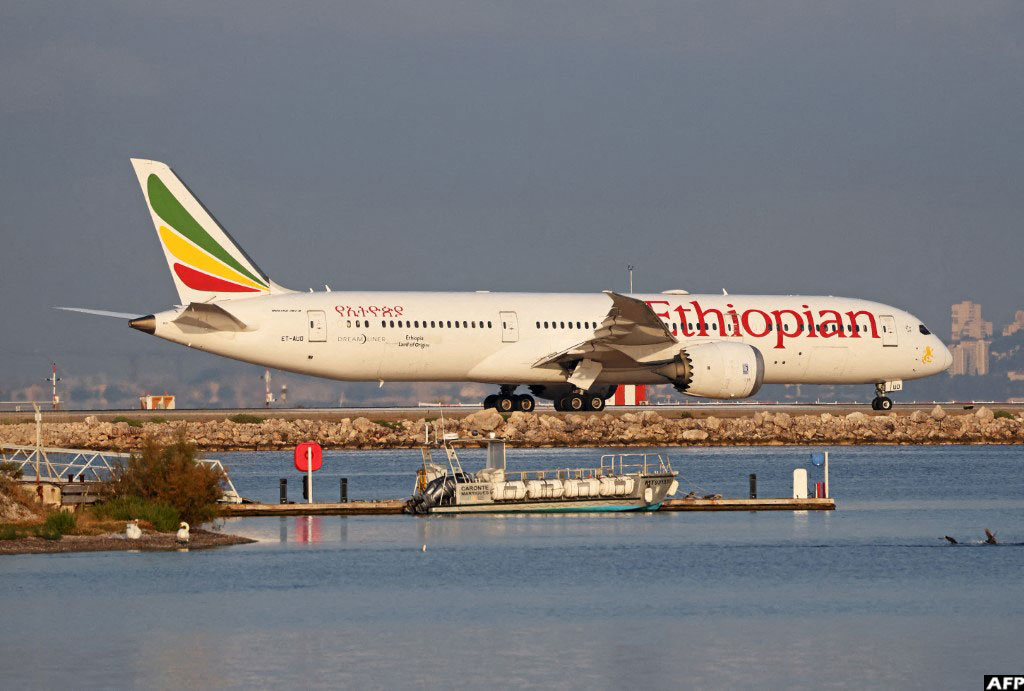
It is the same philosophy that he applied to Ethiopian Airlines during his seven-year stint as CEO from 2004 until 2011, which saw an incredible transformation of Ethiopia's flag carrier into one of Africa's most successful and respected airlines.
Thanks to Girma's Vision 2010 plan at the time, Ethiopian Airlines grew exponentially in passenger and fleet numbers, and over 1,000 new jobs were created, with the profits made crucially increasing employees' incomes.
Fast-forward to present day.
Now at the helm of Uganda Airlines since February this year, Girma's focus is on working to build a firm foundation for the airline's future from all fronts.
"When we need more people, we will employ from outside. But we will do everything possible to make our people ready."
The CEO sees Uganda Airlines as "a strategic national asset" that must be protected and even more so during this sensitive formative stage since it climbed back to the skies seven years ago.
He accepted President Yoweri Museveni's appointment with an intention to help rebuild a national institution, believing that Uganda deserves an airline that reflects its ambition, discipline, hospitality and confidence.
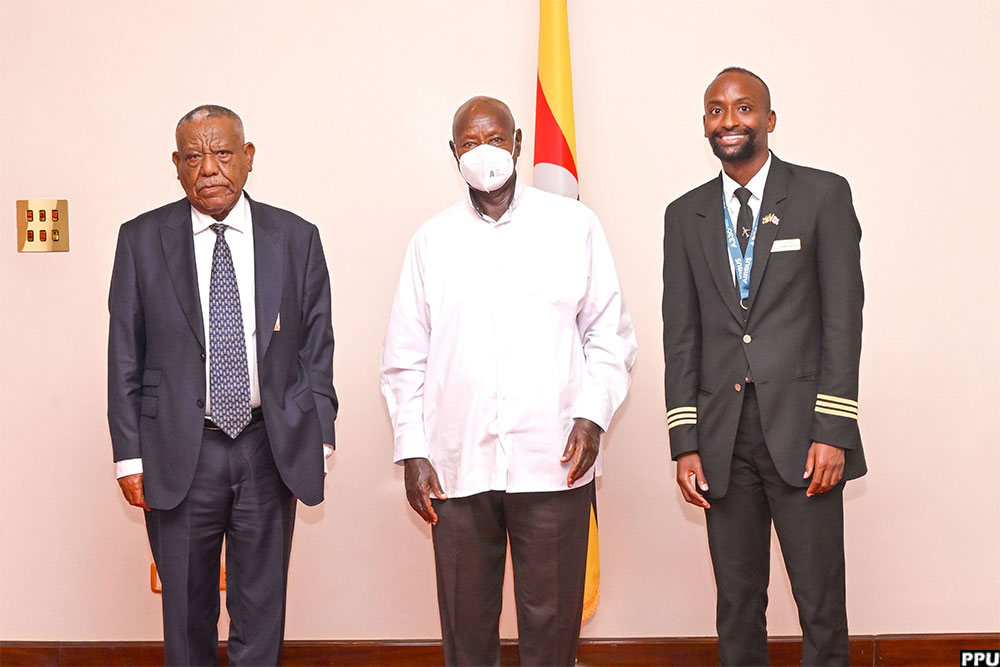
In Accra, Girma told the media that the support the government, different institutions and the people of Uganda are giving to the airline is "good".
"But we have to show improvement for people to continue to believe us, for people to continue to support us. You can't do the wrong thing and ask people to support you," he said in a characteristic candid tone.
Under his watch, Uganda Airlines is working to reach its break-even point by 2031.
Part of the strategy to achieve this is to increase air traffic to between 12% and 15% every year. The airline is also looking at improving its revenue performance, including carrying more cargo.
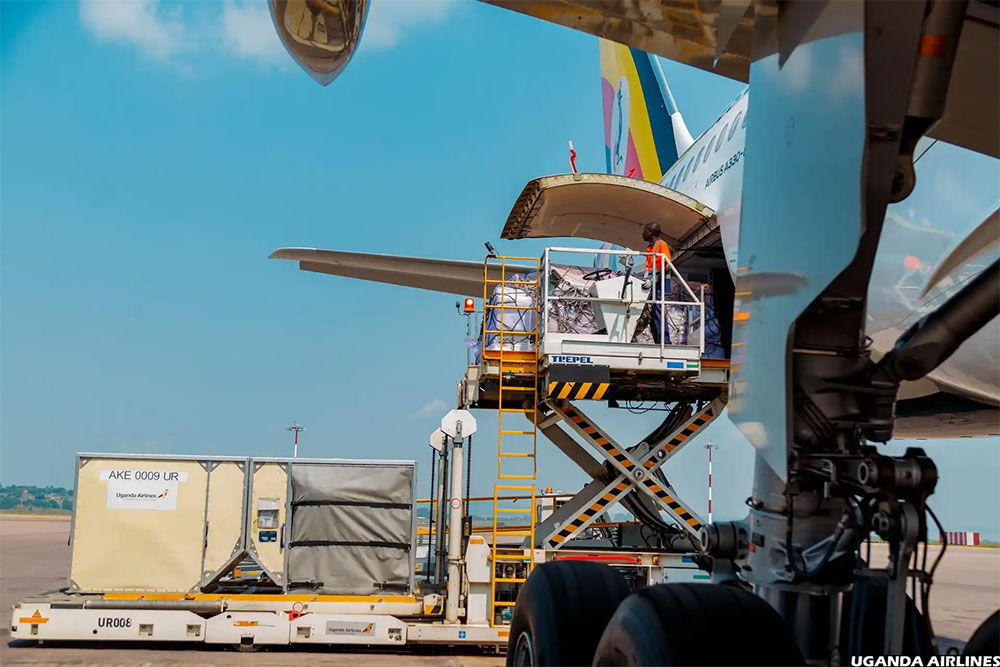
"Today we are a national carrier of Uganda. But we don't even have our own lounge. We are depending on somebody else's lounge. We don't even have our own catering. We have to buy food from other people to put on our airplane," said Girma.
"We don't even have to do a complete handling of our flight. We have no hangar maintenance. We are going to build this in the next two, three years."
Once this is done, it will not only reduce the airline's costs, but it could also sell that service to others as a key revenue stream.
By increasing traffic and diversifying revenue sources, the CEO believes the airline he is currently overseeing will be able to break even by 2031, before turning its attention to profitability.
For now, Girma's in-tray remains full, including figuring out how to get the rest of Uganda's planes off the ground and back in the air.
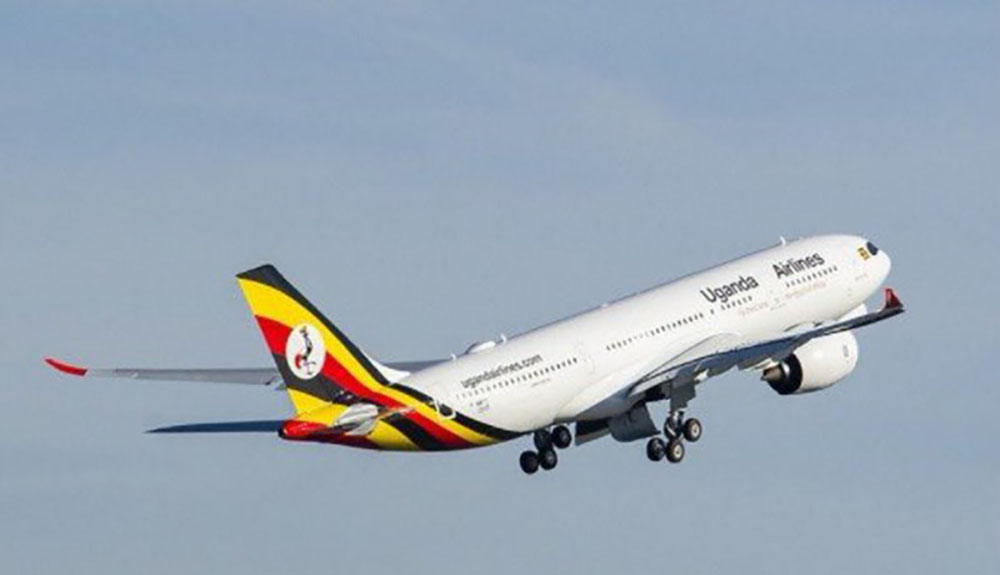
Uganda Airlines owns six airplanes — four CRJ900s and two A330s — but two of them are grounded.
To cover this capacity gap, the national carrier wet-leased a Boeing 737-800 plane from Ethiopian Airlines in March this year, with which the new Entebbe-Accra service would months later be launched.
The lease was initially intended to last until November 10 this year, but Girma said it was extended until next March to allow Uganda's full fleet to be back in operation.
"In fact we will be leasing another aircraft from Europe in November. By March, we should be able to have the second A330 flying. When that happens, we will see how to expand to more points."
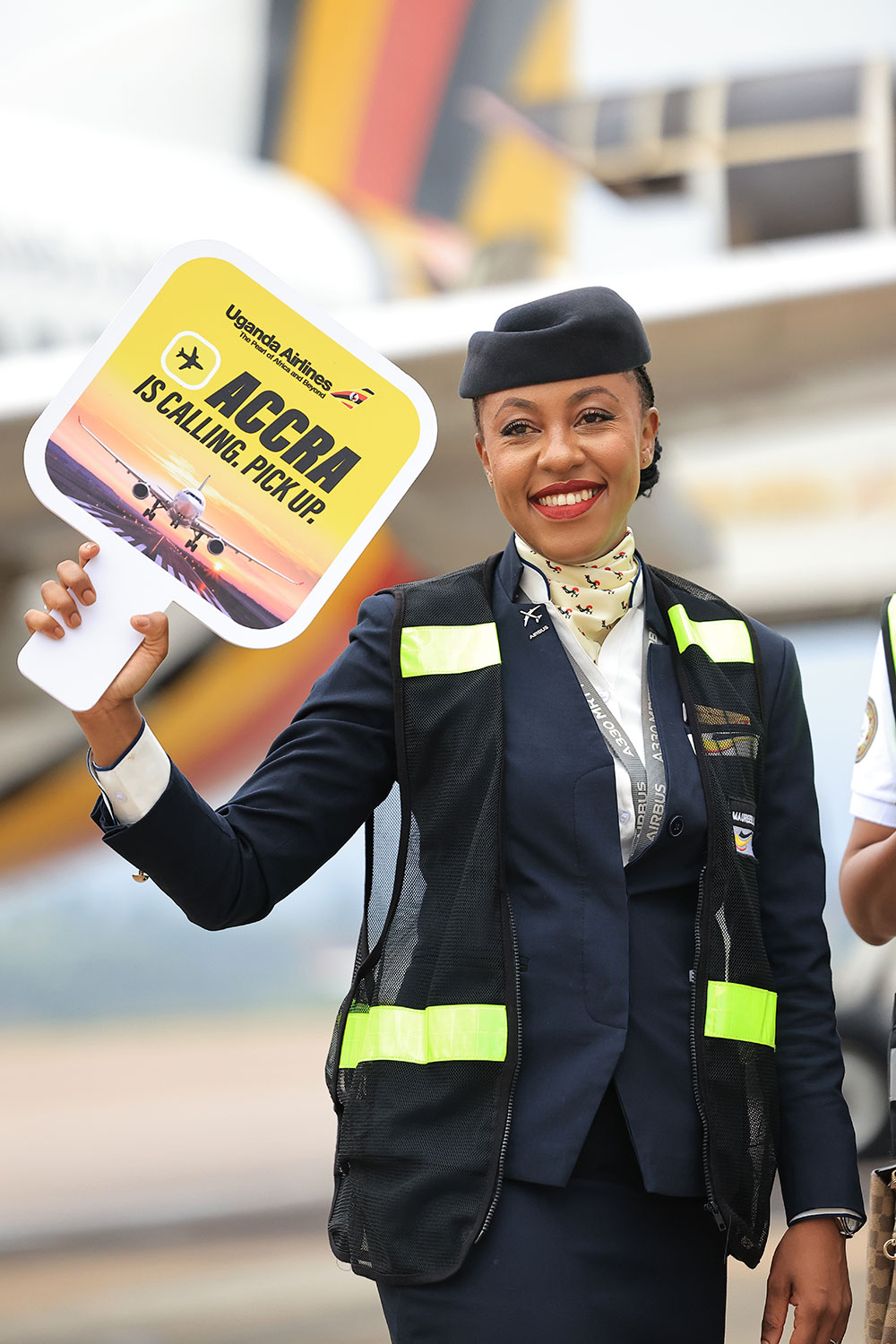
Following the October 27 launch of the four-times-weekly Entebbe-Accra (via Lagos) route, Uganda Airlines is next set to launch its daily Entebbe-Kigali service this November 18.
The four flights a week on the Entebbe-Accra service will continue for no more than one-and-a-half years, according to the airline boss. The aim is to split the Accra and Lagos routes thereafter.

'Frequency key for saleability'
While operating Entebbe-Lagos service, the route took a while to pick up, so Uganda Airlines saw the need to connect it with Accra, thus the latest launch.
The flight from Entebbe goes to Lagos and then Accra and then back to Entebbe in reverse order.
"The two stations together can contribute enough traffic to make the route viable. And we started with four flights. Frequency is very important for airlines' saleability. The more opportunity you give to people, the more choice you give to people, you'll be able to sell more," said Girma.
"These four flights a week will only continue, we hope, for a year, a year and a half, not more. By then, we should be able to split. We separate Lagos from Accra. Each one will support itself. Gradually, we will make it daily.
"That way, we give more convenience to our passengers. But before we do that, we also have to build our network so that they will have more destinations to go to. Like we are starting Kigali [this] month."
In June this year, Uganda signed a multi-billion-dollar (sh3.7 trillion) deal with Boeing to acquire 10 new planes, including two for specifically cargo.
The expansion of its fleet will enable Uganda Airlines to open more destinations like China, which requires a minimum of three wide-body airplanes to go to.
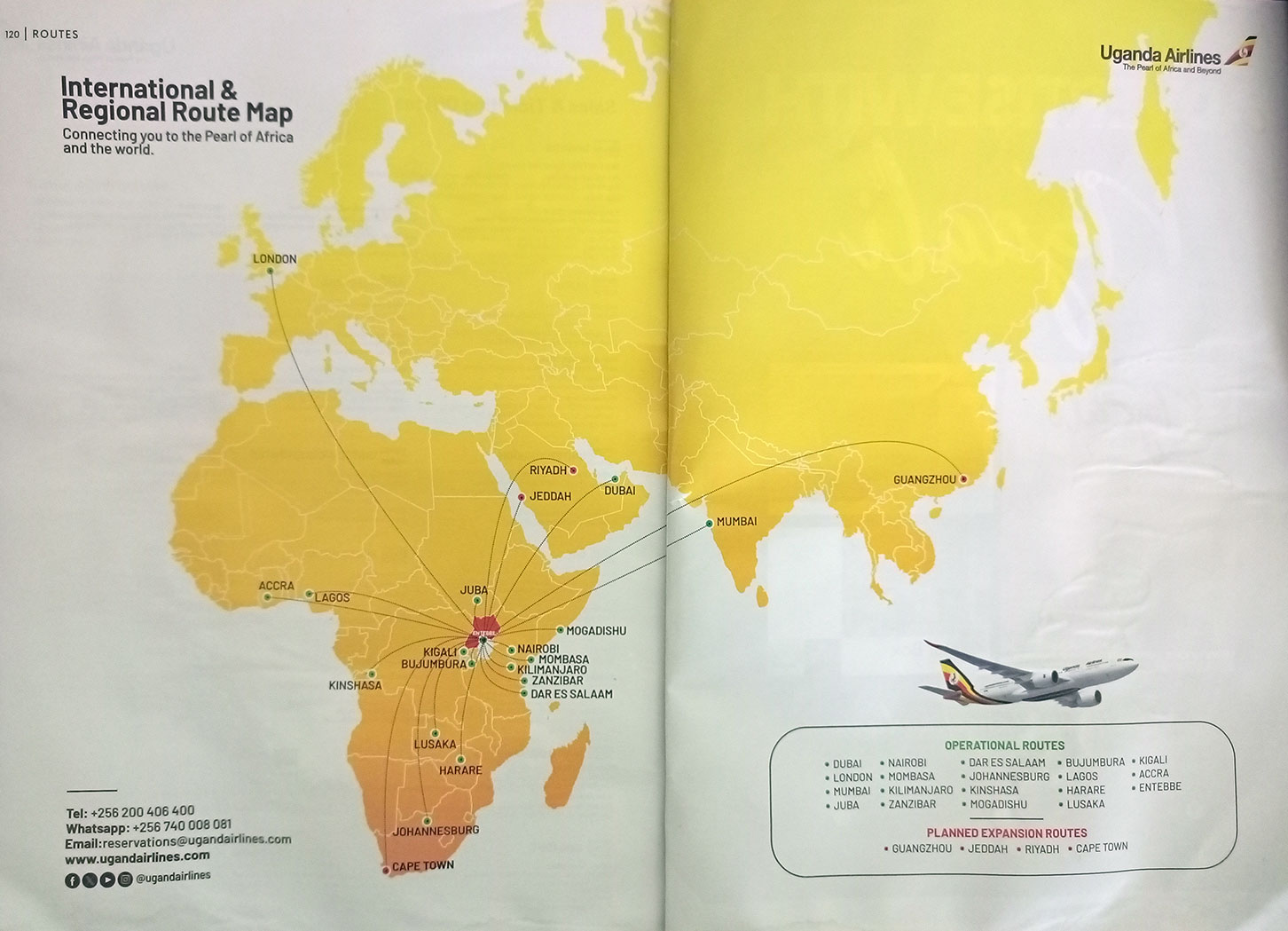
The hope is that in a year or two, the national carrier will have built enough volume from different parts of Africa into Entebbe to be able to open Guangzhou, a popular destination for many Ugandan traders.
Targeting more destinations
"We have enough from Uganda, but we will add a lot from West Africa going to Guangzhou. We plan that. When we open three stations in Africa, we open one station outside because these are close, narrow-body, less expensive," said Girma.
"Those ones [long-haul destinations] are very expensive, very long distance. So if you don't make the critical mass [in Africa] here, you will not be able to serve there. That's what we are trying to do.
"Like London, for exampale. It was weak. We connected Harare and Lusaka to London, Johannesburg to London. You see, the route completely changed."
As all this is worked out, the critical question of how Uganda stands to benefit is very important.
For example, if it is about attracting tourists, besides London, other European destinations like France and Germany should also be targeted.
"Gradually we will also go to these stations to bring tourists into Uganda. We are working with the tourism organization to build airports at these wildlife and historical areas," said the Uganda Airlines CEO.
"That way, we bring them [the tourists] to Entebbe and directly take them to those airports. Tourism will pick. Then the country benefits, the airline benefits. That is the type of thing that we do. And it will be built."

Its non-participation, he said, is the reason Nigeria has not yet granted Uganda Airlines fifth freedom traffic rights to carry passengers between Accra and Lagos.
Although Ghana granted the airline permission, Nigeria refused.
"Now we are negotiating with Nigerians. The moment Nigerians say yes, between Accra and Lagos, we shall carry passengers," said the CEO.
It is the same reason South Africa refused Uganda from carrying passengers from Harare and Lusaka to Johannesburg.
Under SAATM, all participants agree to lift market access restrictions for airlines, grant each other extended air traffic rights, including fifth freedom, as well as liberalise flight frequency and capacity restrictions.
"I am sure Uganda will sign, but we have to explain it properly," said Girma.
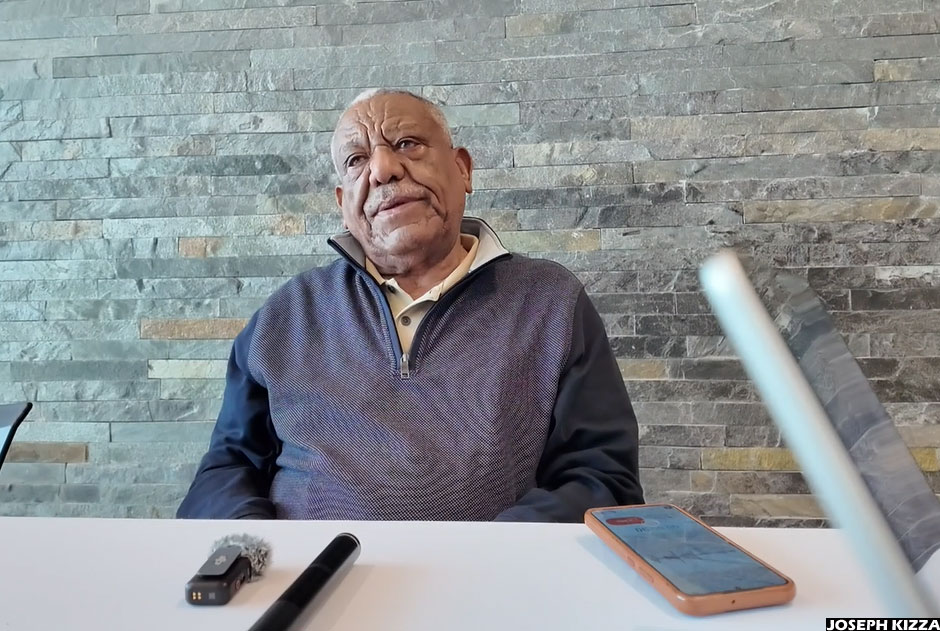
Debt down
When he took the top job at Uganda Airlines in February, a sizeable debt was one of the problems that Girma inherited.
"We did not pay our fuel money properly on time. We did not pay for aircraft spares. We did not pay for the engine. That is why we have three engines in Singapore now for maintenance. And we had to struggle," he explained.
It took a lot of negotiation and engagements to clear some of the debt, thanks to the government's intervention.
"Now we are okay. We have not finished, we still have something like $30 million (about sh123 billion) to pay. But the debt we had was much more. Close to $70 million (sh287 billion), $80 million (sh328 billion)."
"Now we are bringing it down. Now at least when we talk to people, people listen to us. When we say, 'look, I will pay. Send me', they will send it to us."
WATCH 'They now listen to us' 👇🏽
Revenue projections
In terms of revenue projections, Girma, off the cuff, hopes that Uganda Airlines will be earning at least 12% more per year, in the region of $160 million (sh657 billion) to $170 million (sh698 billion).
And by 2030, the figure should be even bigger: in the range of $400 million (sh1.64 trillion) to $500 million (sh2.1 trillion).
At the moment, the national carrier is generating around $84 million (sh345 billion) to $90 million (sh369 billion) per year. The CEO projects that this year, the figure will have grown to $116 million (sh476 billion) and to $160 million in the next.
"It is improving. The signs are there."
Making it right
For a man with a rich CV like his that features an illustrious history of working at other airlines in various leadership capacities, most notably Ethiopian Airlines, Girma has been working around the clock to improve Uganda Airlines.
To begin with, he said he has tried to get people on his side, more importantly their commitment to perform better.
He also created a sort of a 'nerve centre' called the Integrated Operations Control Centre to manage and control things like flight delays, schedule disruptions and other day-to-day operational obstacles.
"I also made sure we keep spare parts instead of ordering parts after an aircraft is grounded.
"And gradually I am also getting government to approve the procurement system because the current procurement system of the government is not suitable for an airline operation," added Girma.
He also prides in reorganizing the airline.
"You know, we never had a customer service organization. An airline that does not have a customer service organization. What do you sell? The only thing you sell is service. And you don't have a customer service department. Why? How can it work?
"So we are reorganizing that to make sure that every responsibility is delegated to the division that has to do it. And we will give those divisions the authority to also make decisions."
In Uganda Airlines, Girma sees a great opportunity before Uganda. But to get to its desirable position, the national carrier's journey, on and off the tarmac, requires patience, seriousness, and collective responsibility.
And with a promise to train more aspiring pilots that could one day sit in the cockpits of Uganda's flag-carrying fleet, inspired by dedicated people like flight captain Nasirumbi, things are looking up.
________________________