
Watchdog unveils five-year strategic plan to combat corruption
“This strategic plan is designed to make a significant contribution to addressing corruption and is fully aligned with the Uganda Vision 2024 and the 10-fold growth strategy, National Development Plan IV and the National Resistance Movement (NRM) manifesto of 2026/20230,” Naluzze said.
Speaking at the launch of the plan at Hotel Africana on February 17, 2026, Inspector General of Government (IGG) Justice Aisha Naluzze Batala said the strategic plan provides IG’s visionary roadmap for a corruption-free country. (Courtesy Photo)
KAMPALA - The Inspectorate of Government (IG) has unveiled a five-year strategic plan for the financial years 2025/26-2029/30 to re-engineer and reposition itself to respond more effectively to the growing incidence and prevalence of syndicated corruption in the public service.
The plan introduces decisive shifts in how the IG is currently operating, from reactive, complaint-driven to investigations-led and risk-based investigations and from isolated handling of ombudsman complaints to systematic interventions and establishment of a sector ombudsman for basic data screening and purposes.
The objectives in the plan include strengthening anti-money laundering mechanisms, enhancing public demand for accountability, strengthening the prevention and detection of corruption, strengthening the monitoring of government programmes and asset recovery framework.
Speaking at the launch of the plan at Hotel Africana on February 17, 2026, Inspector General of Government (IGG) Justice Aisha Naluzze Batala said the strategic plan provides IG’s visionary roadmap for a corruption-free country.
“This strategic plan is designed to make a significant contribution to addressing corruption and is fully aligned with the Uganda Vision 2024 and the 10-fold growth strategy, National Development Plan IV and the National Resistance Movement (NRM) manifesto of 2026/20230,” Naluzze said.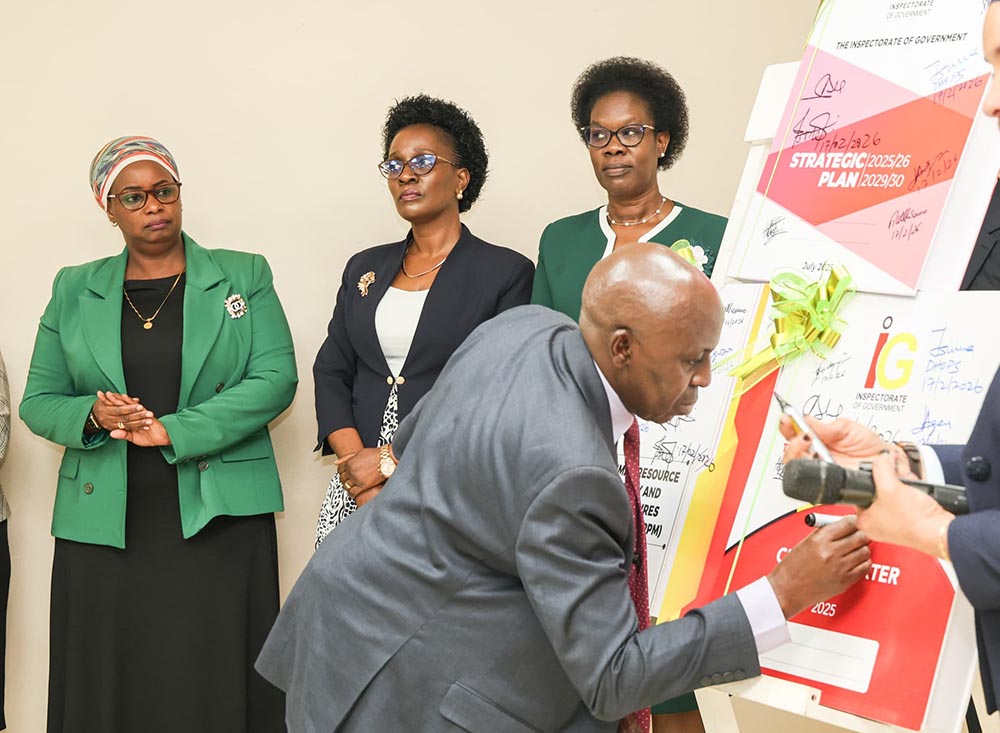
Bold declaration of intent
She added that the strategic plan is not merely a policy document but a bold declaration of intent and the firm institutional commitment to act with courage, independence and precision in the fight against corruption and maladministration.
“This plan sets a clear and uncompromising direction to strengthen institutional resilience, enforce accountability without fear or favour, restore and sustain public trust in government systems and deliver measurable anti-corruption outcomes,” Naluzze said.
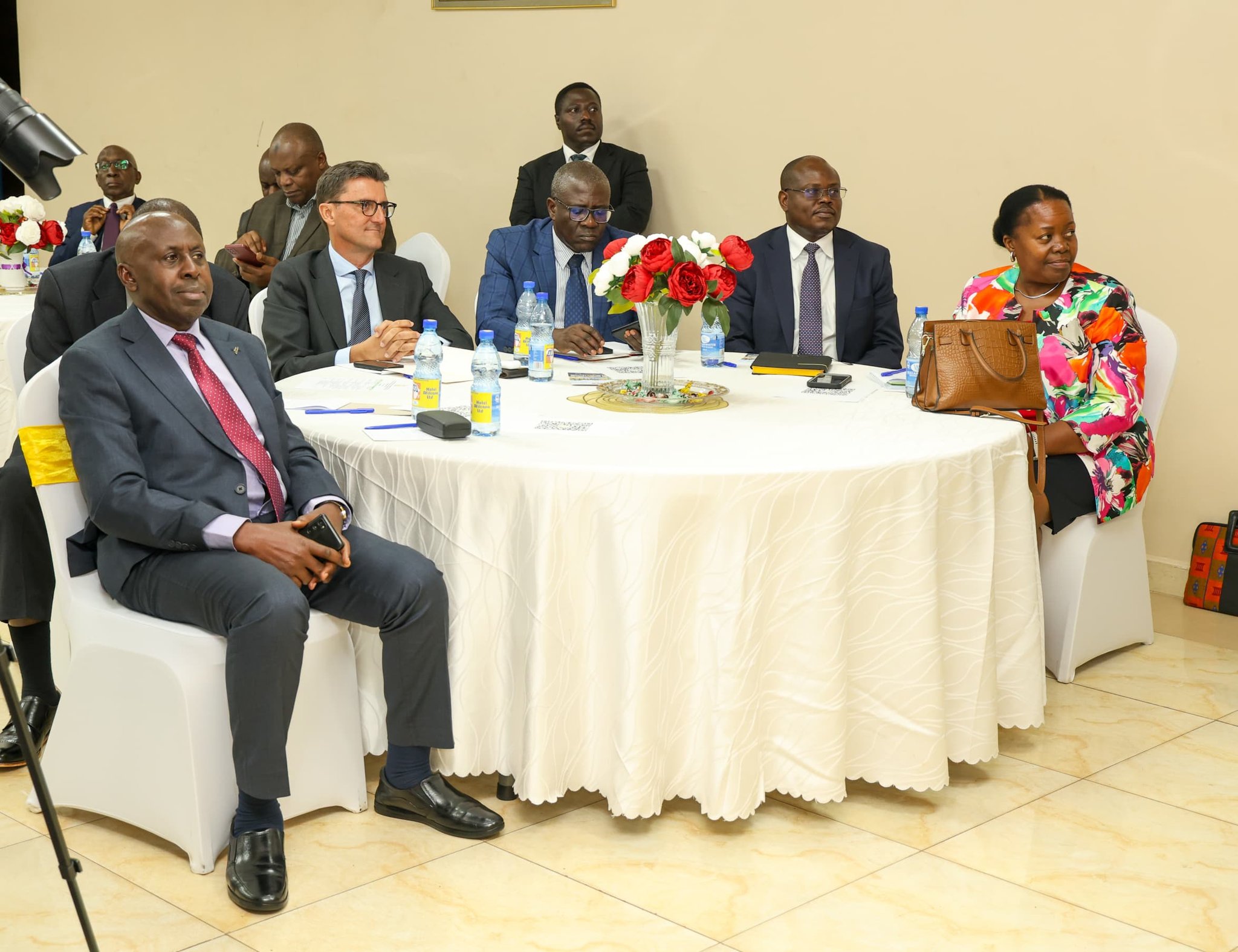
Presiding over the event, Jane Kyarisiima Mwesiga, the deputy head of the public service, commended the IG for coming up with a new strategic plan, saying it marks an important milestone in strengthening integrity, accountability and good governance.
“I am encouraged that the strategic plan prioritises key results areas including prevention and detection of corruption, enforcement of leadership and prosecution of corruption-related cases,” Mwesiga said.
Mwesiga underscored the importance of IG in national development, saying it holds a unique and critical mandate to combat corruption, enforce ethical standards, promote accountability and protect citizens against maladministration.
He, however, called for a simplified handbook on disciplinary procedure in the public service to restore integrity and r public confidence in the public service.
“How can we have people who stay on interdiction for more than five years? These people continue to receive salaries without doing anything. I think we need a whole government approach on this. How do I take administrative action? We need a whole government approach,” Mwesiga said.
Recoveries
Robert Lugolobi, the chairperson of the IG strategic plan formulation committee, revealed that the IG only recovered shillings 54.88 billion of the 69.37 billion, which it had targeted to recover in the previous strategic plan.
Lugolobi, however, said they have increased public trust and access to the Inspectorate of Government. He noted that public reporting doubled with complaints rising from 1,529 to 2,942. He revealed that 10,968 cases were sanctioned, of which 4,112 have been concluded.
“Corruption remains a major barrier to the country’s development agenda. We believe by the end of the five years, we shall have improved our performance,” Lugolobi said.
Lugolobi also revealed that case resolution at the local government level increased steadily, reaching 689 cases resulting in shillings 22.95 billion recommended for payments to public officials.
Under the new strategic plan, Lugolobi said they commit to increasing the conviction rate to 90% and improving asset recovery from 13% to at least 50%.
“We also promise to improve declaration of assets from 81% to 100% in 2030,” Lugolobi said.
Reviewed policy manual
Unpacking the reviewed Inspectorate of Government human resource policy and procedures manual, Paul Okello, the manager of human resources at IG, revealed that the maternity leave for its workers has been enhanced to 60 days, while paternity leave is now seven days.
He said study leave has also been improved to 12 months on condition that the employee has previously worked with IG for four years standing.
“In the event we lose a staff member, we shall now provide shillings 10 million while those exiting after less than one year in service must give a two-week notice,” Okello said.
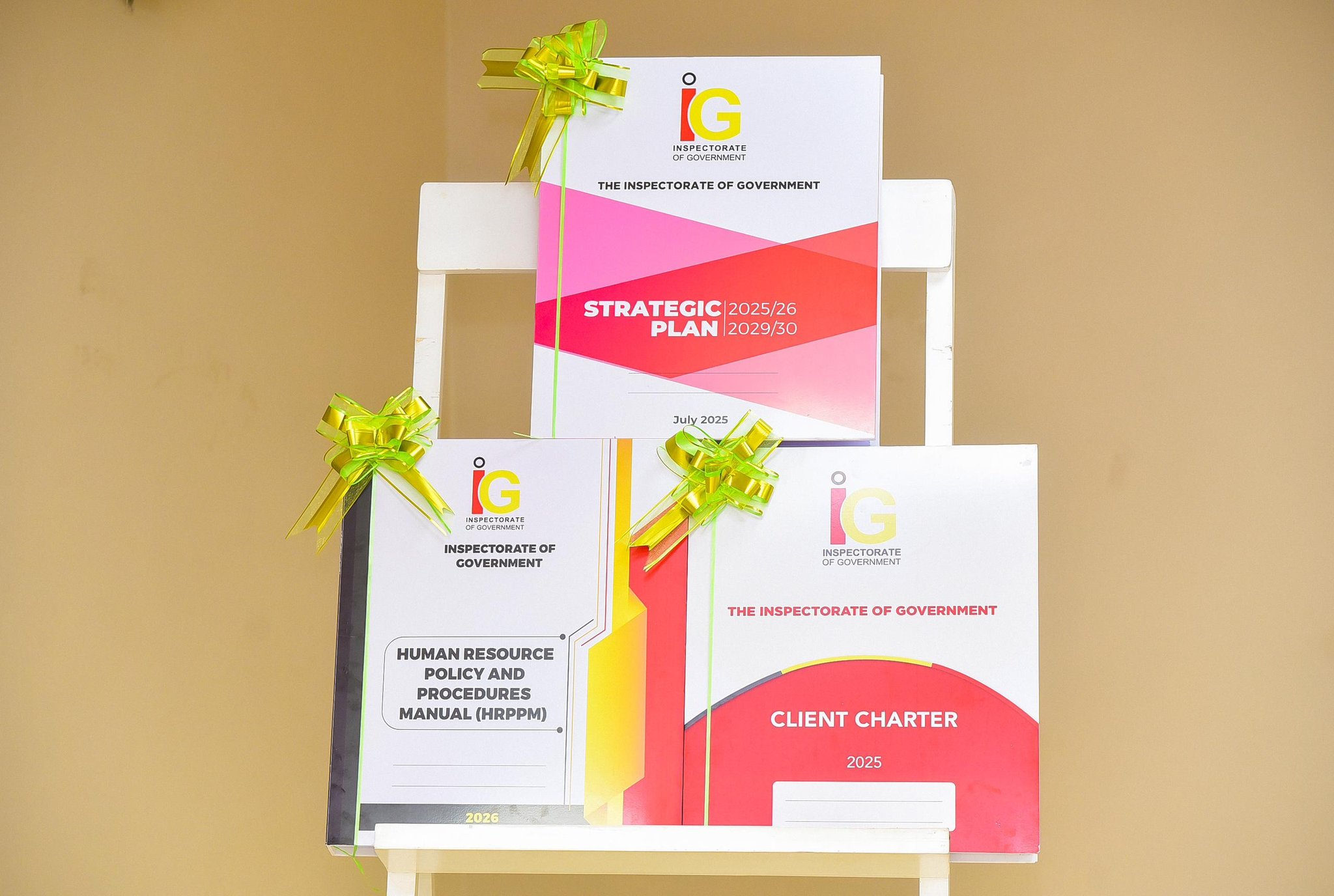
Rose Kafeero, the IG permanent secretary, said the launch of the strategic plan, human resource manual and client charter marks the renewed institutional commitment to strengthening transparency and accountability.
“The strategic plan is anchored on a bold and forward-looking vision, which is a just and corruption-free country. This reflects a collective aspiration to build public institutions that are responsive, transparent and trusted by the citizens,” Kafeero said.
Kafeero said the client charter is a promise by the IGG to the stakeholders for better services as it outlines services it offers.
Concerning the human resource and procedures manual, Kafeero said, while it is not entirely a new document, the new version manifests management commitment to improve the welfare and motivation of Inspectorate of Government staff in order to ensure that they are committed to tackling corruption.
“After realising that the environment within which we operate has greatly changed, the management deemed it fit to review the current manual, which had been designed in 2017,” Kafeero said.
“Effectively, the development of these documents was undertaken through a comprehensive, consultative and physical approach to ensure inclusiveness, ownership and alignment with institutional priorities, and a national agenda for combating corruption,” Kafeero said.
Giving a highlight of the IG client charter, Farouk Kayondo said it outlines the standards and service quality which the IG offers.
“In our service standards, we will still be courteous with high moral standing and integrity. We shall treat all clients fairly and professionally. We shall ensure that you are attended to within 15 minutes upon arrival at our premises,” Kayondo said.