📸 VP Alupo launches National Migration Policy
The comprehensive framework seeks to secure the rights of Ugandans abroad while maximising the economic impact of the diaspora, which now contributes more to the economy than foreign direct investment.
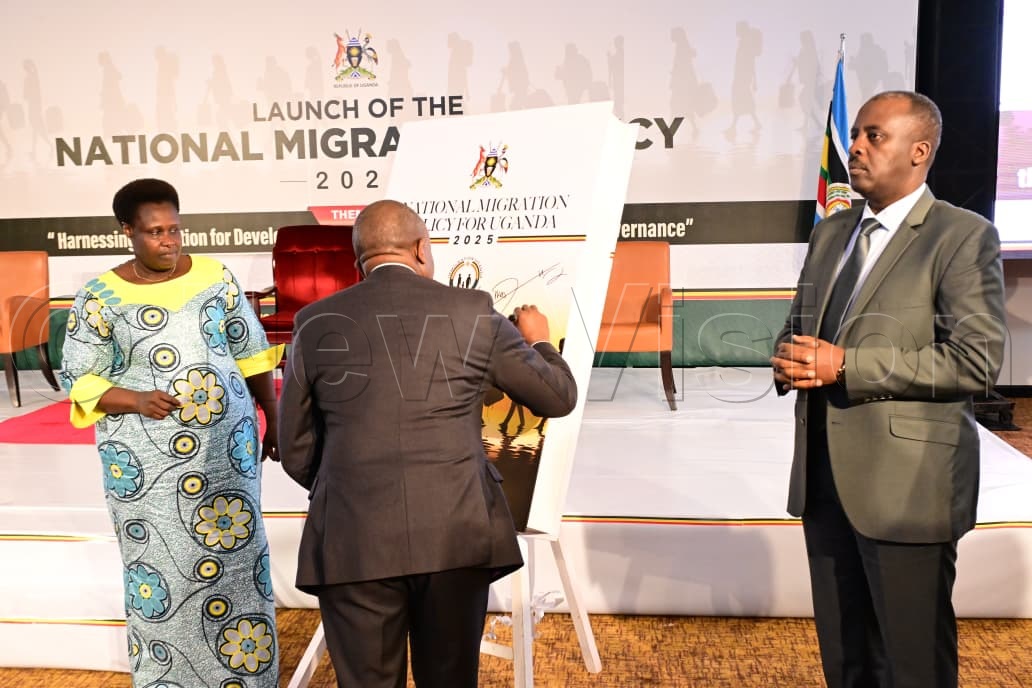
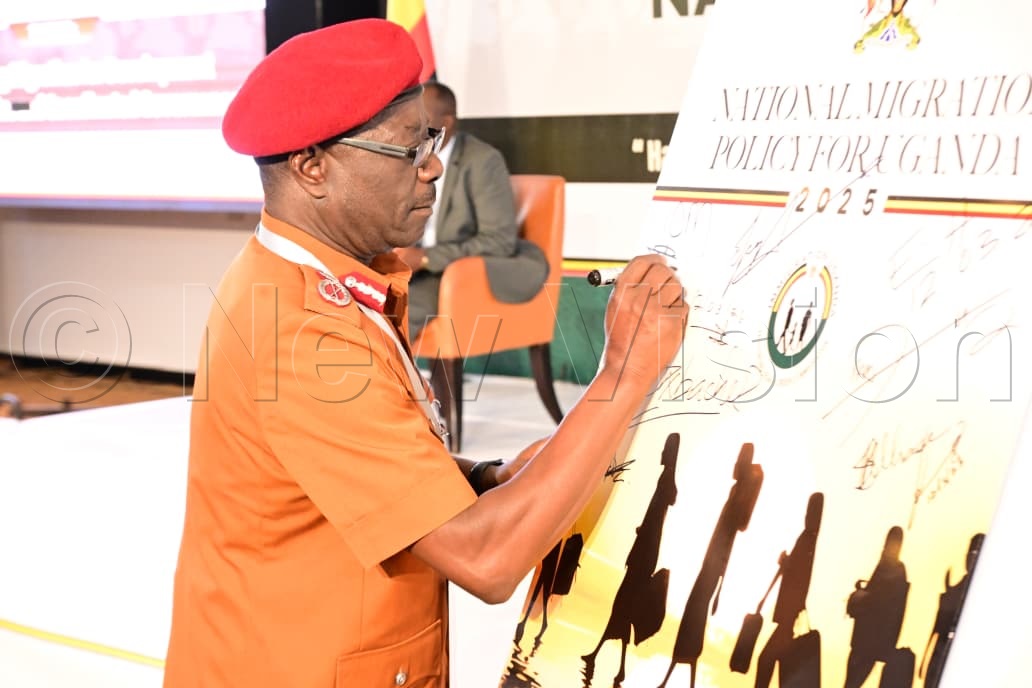
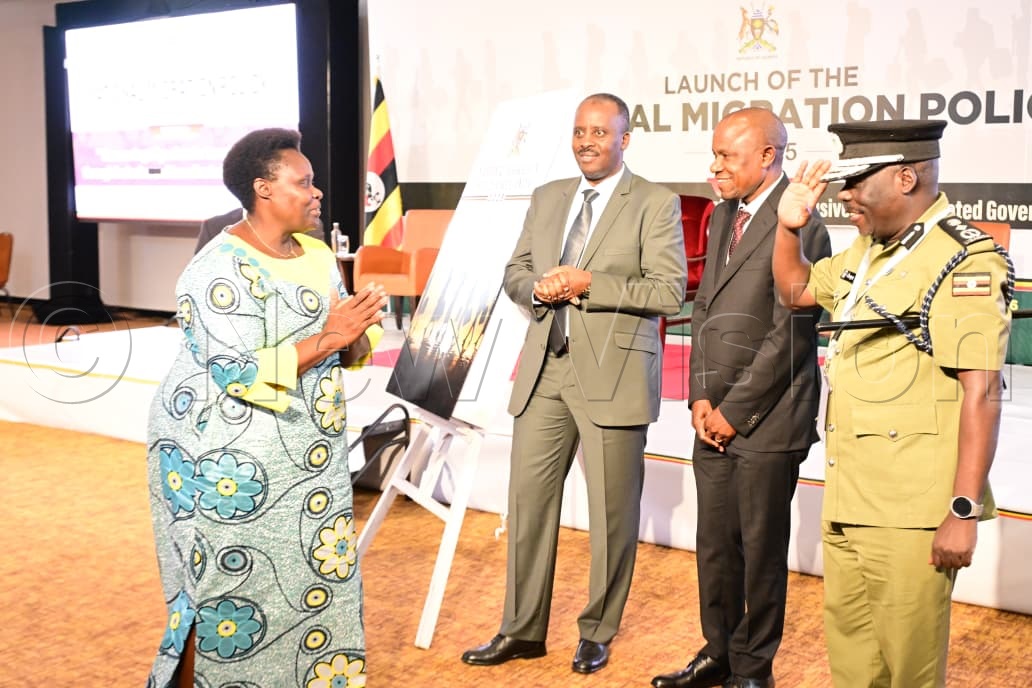
Vice President Jessica Alupo appending her signature on the dummy during the launch. (Credit: Mpalanyi Ssentongo)
________________
Vice President Maj. (Rtd) Jessica Alupo on Thursday launched the National Migration Policy (NMP) 2025, designed to transform migration from a challenge into a cornerstone of national development.
The comprehensive framework seeks to secure the rights of Ugandans abroad while maximising the economic impact of the diaspora, which now contributes more to the economy than foreign direct investment.
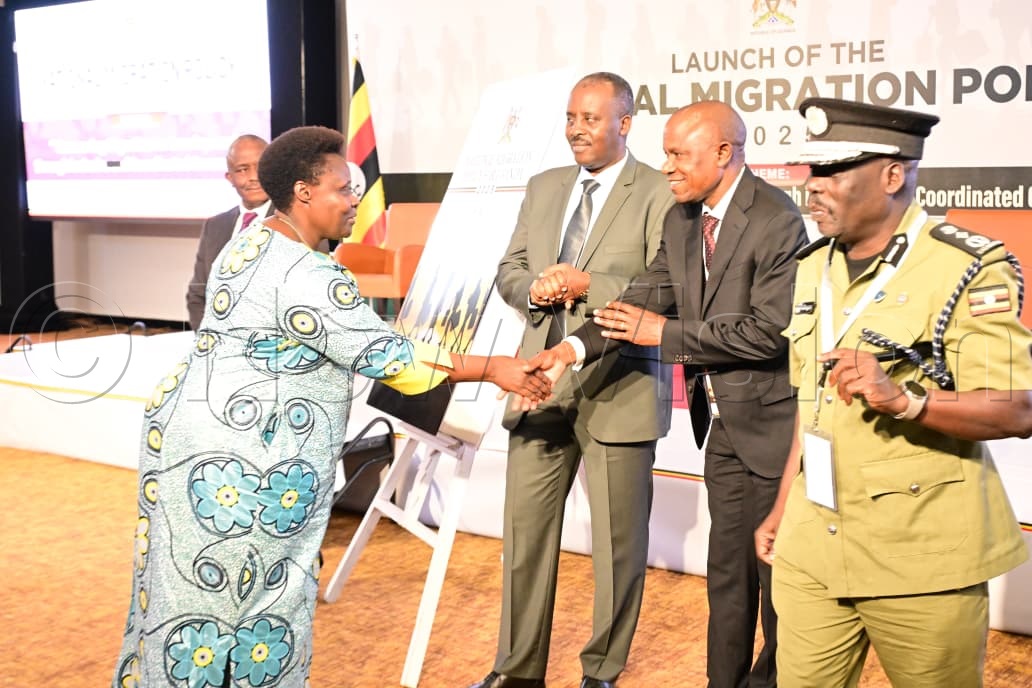
VP Alupo greeting Gen. David Muhoozi.
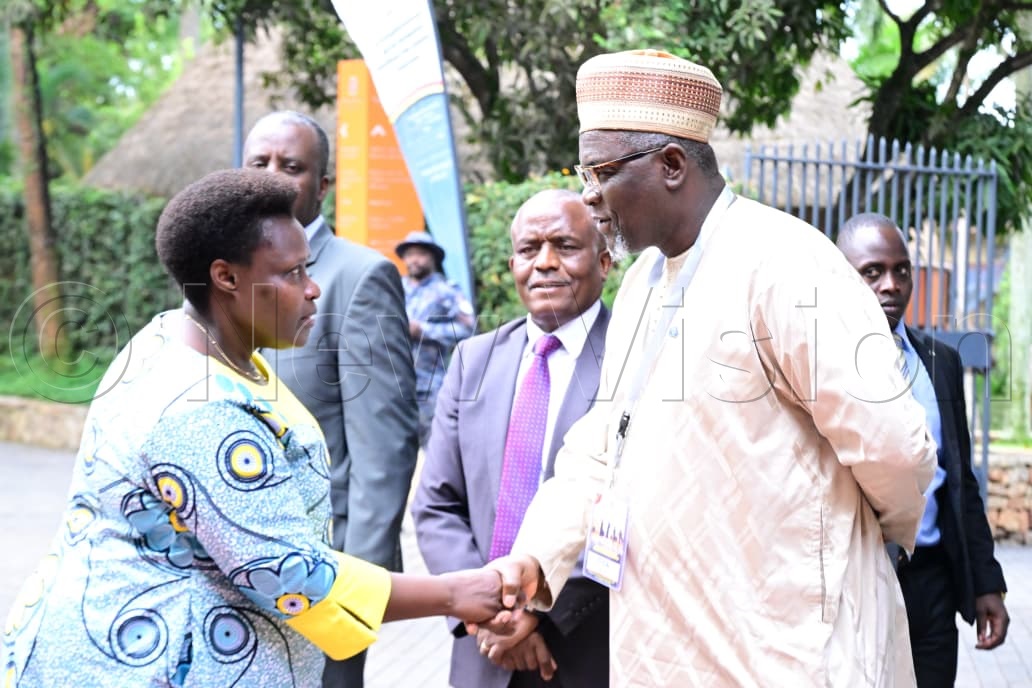
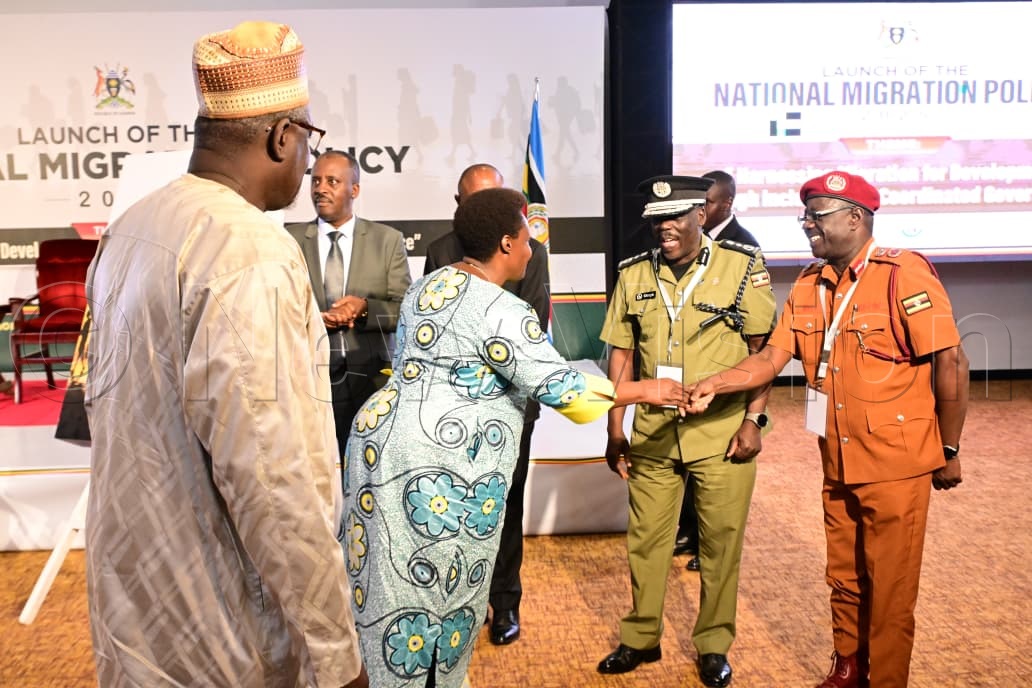
VP Alupo greeting Sanusi Tejan Savage, Chief of Mission IOM Uganda.

According to the Ministry of Internal Affairs, Uganda is now ranked among the top 10 recipients of remittances in Sub-Saharan Africa.
In 2023 alone, Ugandan migrant workers sent home $1.4 billion (approximately sh5.2 trillion). The ministry notes that these inflows are steadily increasing and now surpass Foreign Direct Investment (FDI) in scale, offering a new channel for sustainable development and poverty reduction.
Speaking at the event taking place at Speke Resort Muyonyo, on Thursday, Dr Ali Ekwang Josephine Apili, the head of department, legal & compliance, immigration at the ministry, said that the NMP 2025 introduces strategies to enhance financial inclusion and create targeted investment opportunities for households receiving these funds.
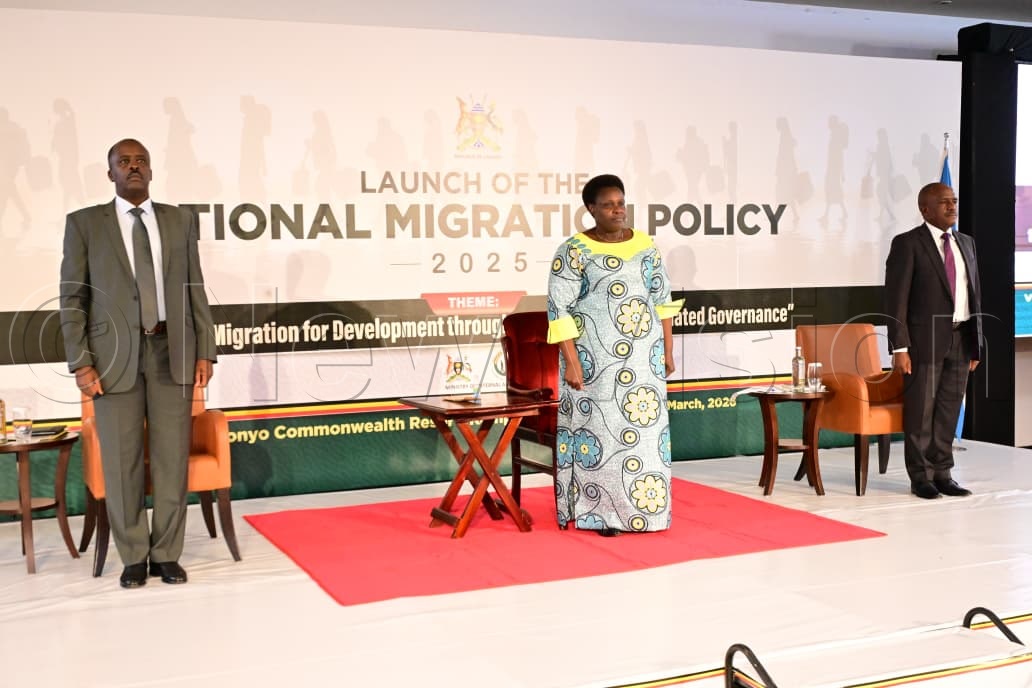
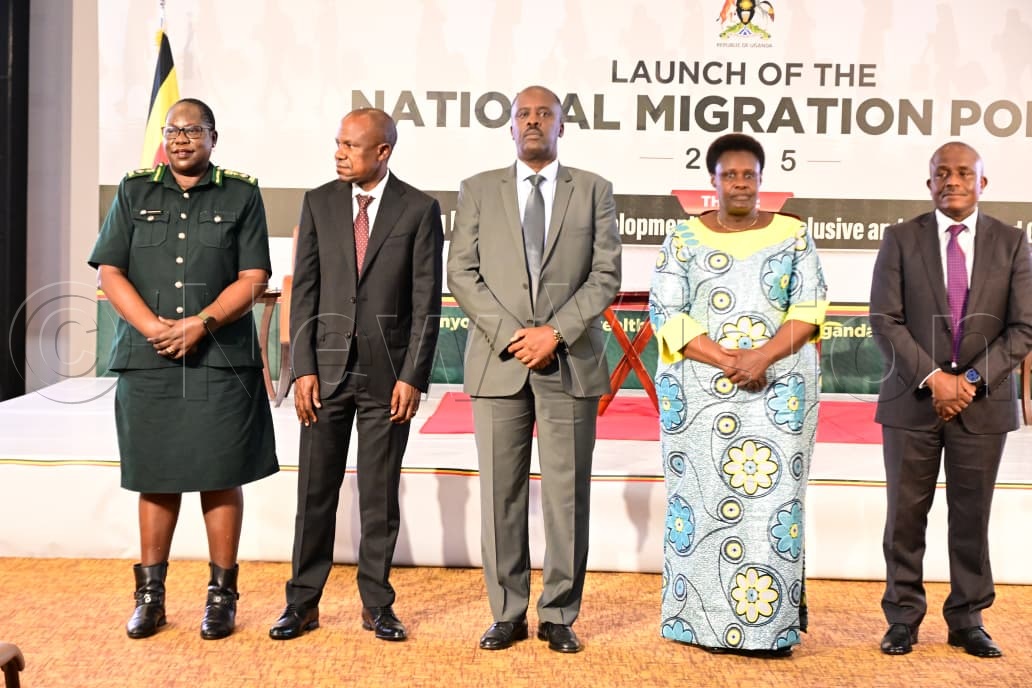
(L-R) Minister of State for Internal Affairs, Gen. David Muhoozi, VP Alupo and PS Ministry of Internal Affairs, Lt Gen. Joseph Musanyufu.
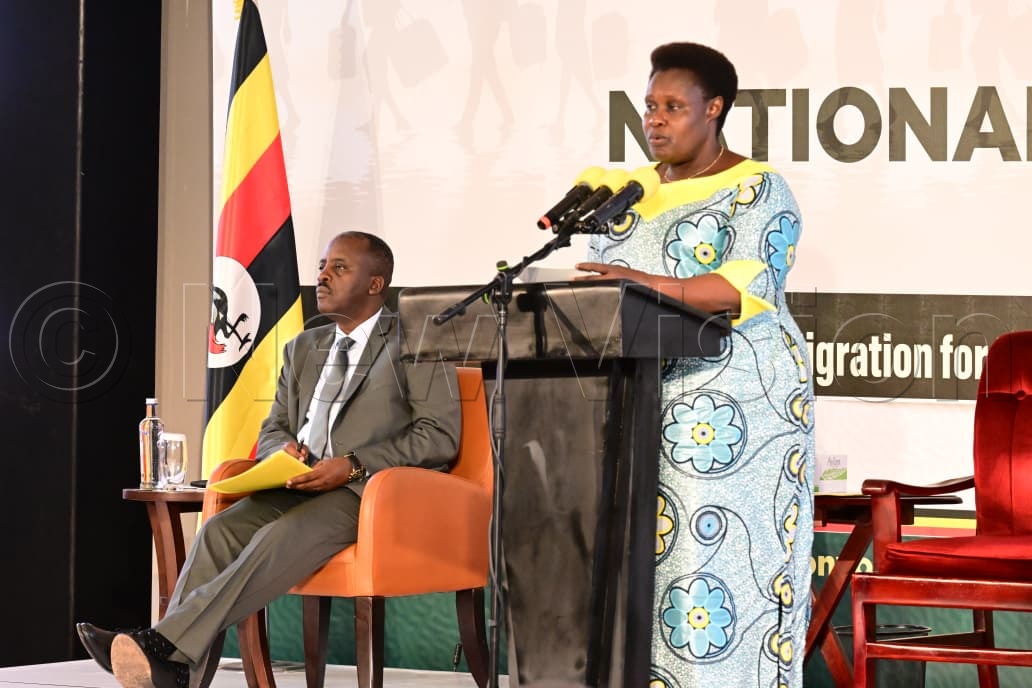
VP Alupo speaking.
According to Dr Ekwang, the policy highlights the scale of Uganda’s global workforce, particularly in the Middle East.
Data from the Ministry of Gender, Labour, and Social Development (2024) indicates there are currently 293,973 registered Ugandan workers in the Gulf region alone.
The policy is expected to address long-standing public concerns over the safety of workers, including streamlining the licensing of recruitment companies and publishing updated lists quarterly to weed out rogue actors.
The policy also hopes to enhance monitoring by implementing an e-labour monitoring system and station immigration attachés at all Ugandan embassies to provide direct consular support.
In addition, the policy, according to the ministry, will tackle the rising incidence of human trafficking, which saw registered cases jump from 421 in 2021 to over 1,000 in 2023.
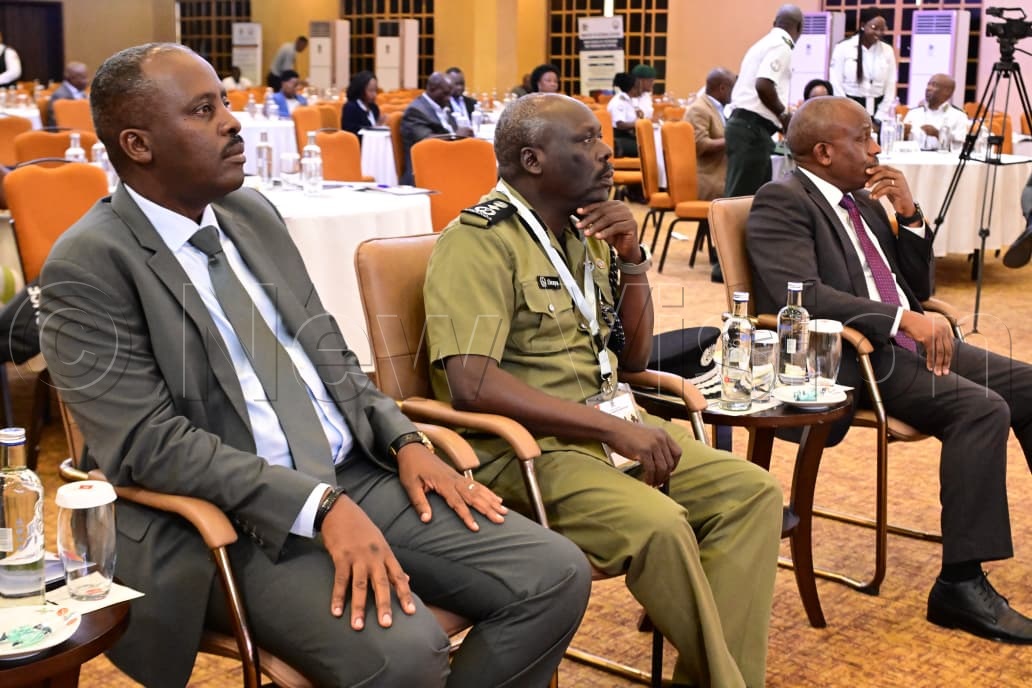
Gen. David Muhoozi at the meeting.

Police officers at the launch.
Policy targets
According to Dr Ekwang, the implementation of the NMP over the next five years will also focus on achieving a number of targets, including increasing Non-Tax Revenue (NTR) collection from migration services administered by the Ministry of Internal Affairs from passports, visas, permits, citizenship applications by 50%, from sh336 billion (FY2023/24) to at least sh504 billion by FY2027/28, through improved automation, enforcement, and service delivery reforms.
In addition, she said the policy also targets increasing NTR from labour externalisation services from licensing of recruitment agencies, clearance of job orders, training and certification under the Ministry of Gender, Labour and Social Development by 40%, from sh30 billion (2024 estimate) to at least sh42 billion by FY2027/28, through enhanced regulation, compliance monitoring, and digital systems.
He said the policy also targets to increase diaspora remittances by 20% from $1.42 billion to $1.70 billion by 2029 through improved investment platforms and incentives.
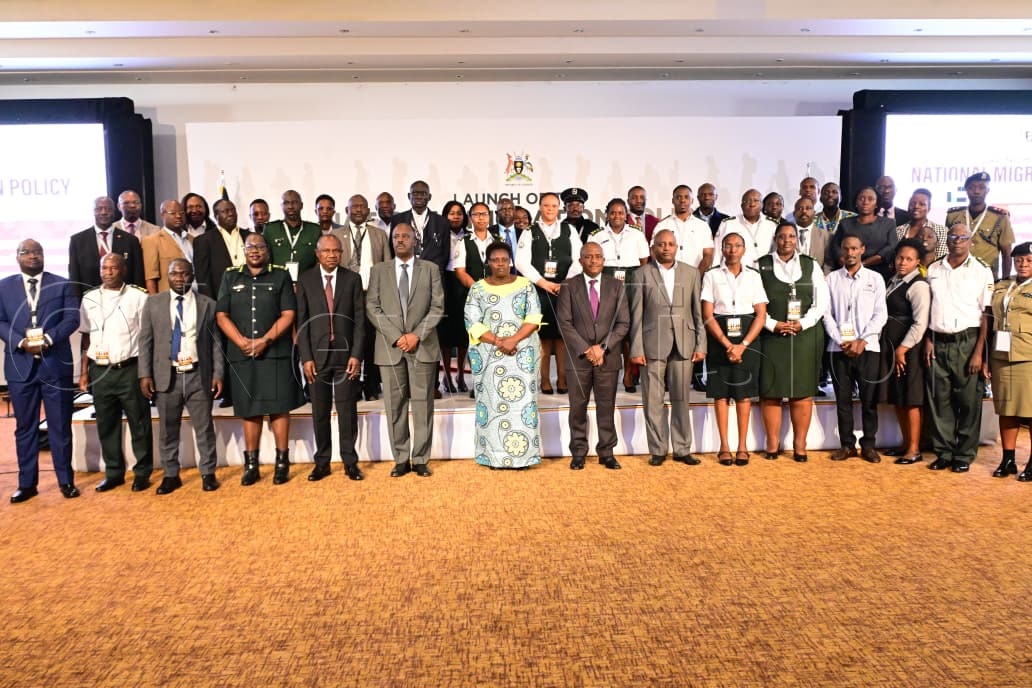
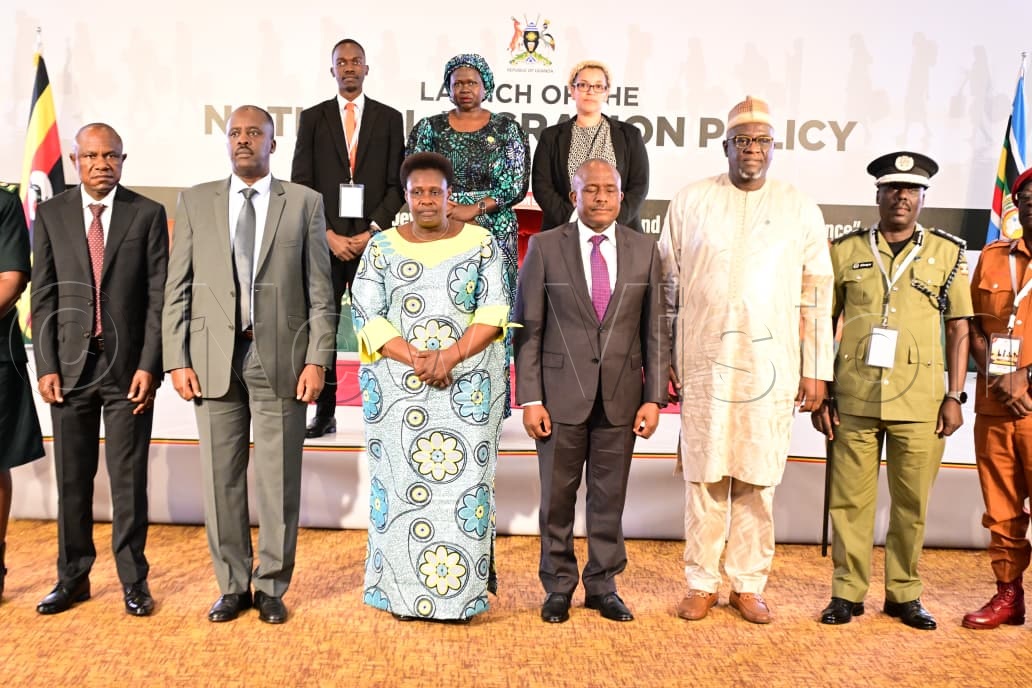
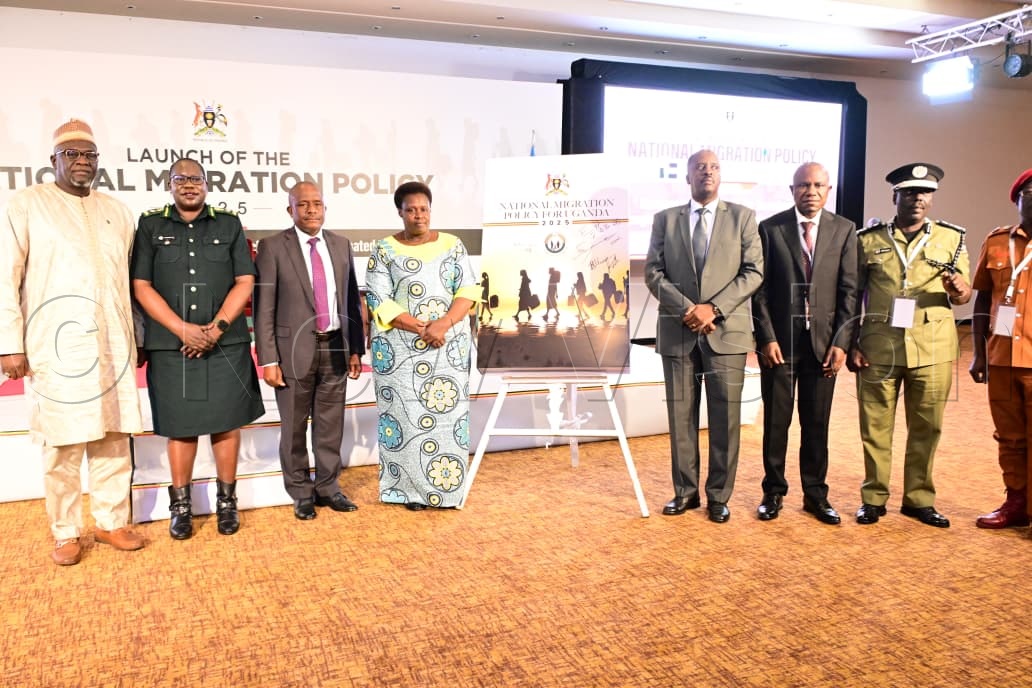
VP Alupo in a group photo with development partners.