
UK commits sh11.7b to combat malnutrition in Karamoja, refugee settlements
The UK has pledged £2m (approximately sh11.7b) to Uganda to fund life-saving nutrition services for vulnerable children and communities in Karamoja and refugee settlements.
Prime Minister Robinah Nabbanja presiding of the event at the Office of the President's auditorium in Kampala on Monday (October 26). (Credit: Juliet Waiswa)
_________________
The United Kingdom (UK) has pledged £2m (approximately sh11.7b) to Uganda to fund life-saving nutrition services for vulnerable children and communities in Karamoja and refugee settlements.
Rachel Mayer, a representative of the UK’s Foreign, Commonwealth and Development Office in Uganda, announced the funding during the meeting to launch the Integrated Food Security Phase Classification held at the Office of the President's auditorium in Kampala on Monday (October 26).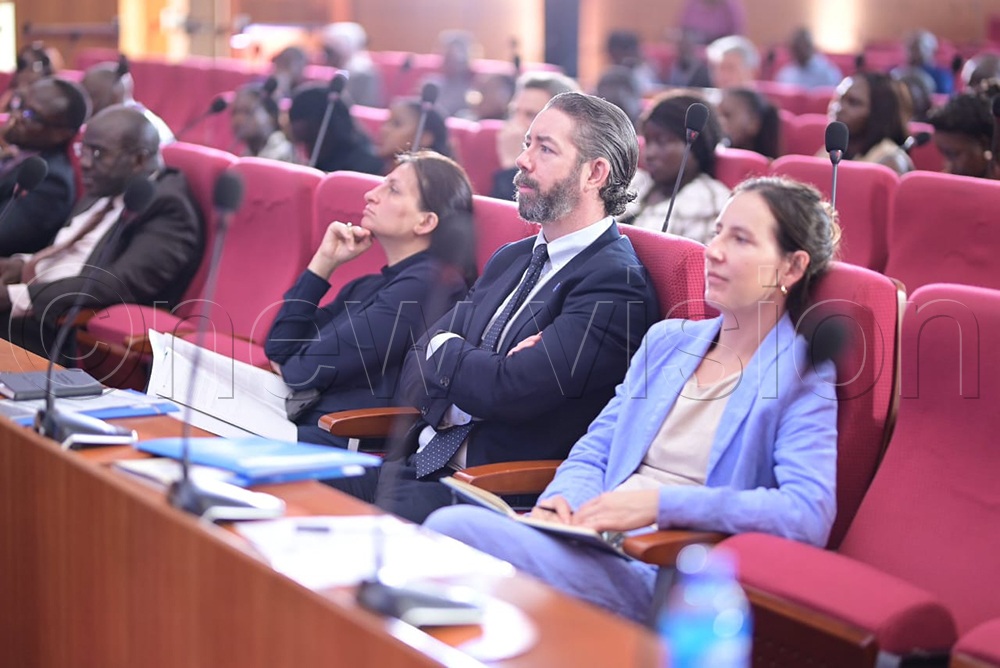
The event was attended by Prime Minister Robinah Nabbanja, cabinet ministers, representatives of UN agencies, and other development partners.
Mayer noted that the funds, channeled through the United Nations Children’s Fund (UNICEF), will address critical nutrition gaps over the next 10 months.
“The UK welcomes this analysis, which allows us to track year-on-year whether the situation is improving or deteriorating,” Mayer said, emphasising that the assessment must translate into tangible action to protect children.
She added; “When a child becomes acutely malnourished, the consequences can last a lifetime. It affects their health, their ability to learn, their development, and their future opportunities.”
According to the Integrated Food Security Phase Classification forecast, approximately 3.6 million people in Uganda —representing 17% of the population would face acute food insecurity between July 2026 and January 2027.
The forecast indicated that from April 2026 to March 2027, a total of 529,000 children aged 6 to 59 months would be acutely malnourished, comprising 103,800 cases of Severe Acute Malnutrition (SAM) and 425,200 cases of Moderate Acute Malnutrition (MAM).
Additionally, 327,700 pregnant or breastfeeding women were predicted to be acutely malnourished and, therefore, require urgent treatment.
The Integrated Food Security Phase Classification scale is structured so that the higher the phase, the more severe the food insecurity.
The scale ranges from Phase 1 (Minimal) to Phase 5 (Catastrophe/Famine).
Beyond emergency treatment
She noted that the UK funding builds on ongoing efforts by the Ugandan government, the United States, the European Union, and other bilateral partners.
Drawing from a recent visit to Karamoja, Mayer praised the integration of nutrition services into Uganda’s health system, noting its rapid response to surging caseloads.
However, she warned that treatment alone cannot break the cycle of malnutrition, citing underlying drivers such as food insecurity, poverty, climate shocks, disease, and inadequate water and sanitation.
“While treatment, particularly for severe acute malnutrition, must be a priority, it is both a life-saving response and an investment in the child and their future,” she said.
Mayer called for a coordinated, multi-sectoral response bringing together relevant government ministries and development partners.
She urged that interventions be better targeted to ensure vulnerable households receive complementary assistance, helping children recover while protecting their livelihoods and livestock.
Commending Uganda’s leadership in navigating complex humanitarian challenges, Mayer emphasised that sustained political commitment and increased domestic financing are critical to tackling the crisis.
She called for greater investment through national systems and improved coordination among ministries.