
Uganda’s population is not a burden, says President Museveni
Today, Uganda has a population of 48 million people, and, important to note, one half of this population is below the age of 18 years. This means that Uganda possesses one of the youngest populations in the world.
Vice President Jessica Alupo delivering the President's speech during the virtual press briefing. (Courtesy)
__________________
President of Uganda Yoweri Kaguta Museveni has said the issue of population is one of those subjects that has been poorly diagnosed, as some people consider the rise in population a burden.
President Museveni, however, said the National Resistance Movement (NRM) does not consider the population as a burden. Rather, the NRM's concern is how you transform the population into wealth creators, innovators, and defenders of the national interests. “The population is not a problem,” he said in a speech delivered by the Vice President, Jessica Alupo.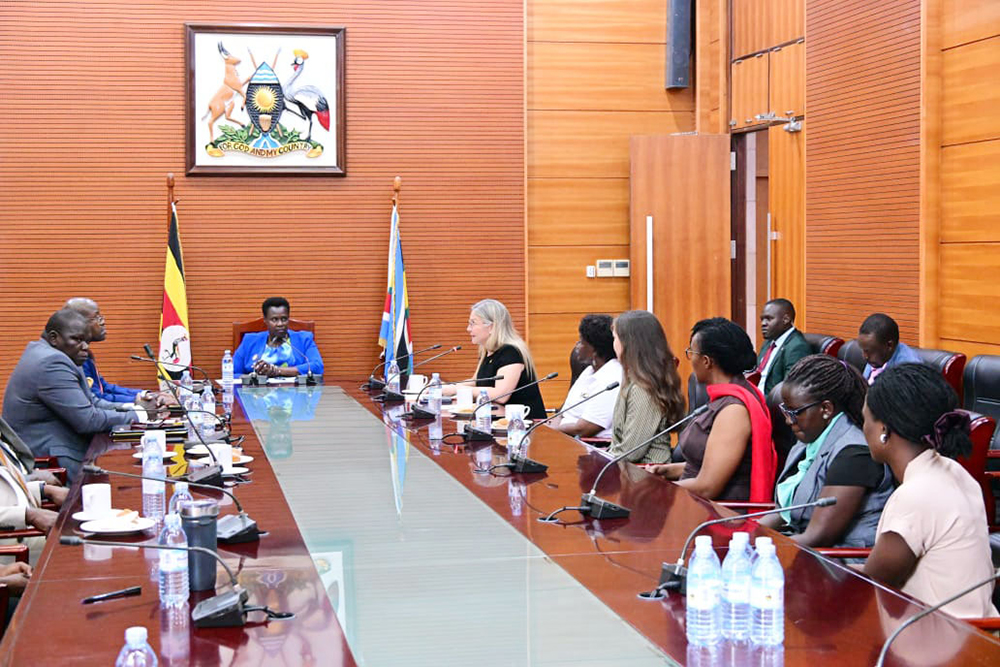
Vice President Jessica Alupo delivering the President's speech during the virtual press briefing. (Courtesy)
He further noted that the population becomes a problem only if it is not empowered. Today, Uganda has a population of 48 million people, and, important to note, one half of this population is below the age of 18 years. This means that Uganda possesses one of the youngest populations in the world.
“The question, therefore, is whether these young people are empowered to become wealth creators. A population becomes an asset when it is empowered through health, education, skills, productivity, and the ability to use science and technology to create wealth,” Museveni noted and quickly added that the NRM recognises human beings as the primary factor of production. Land, capital, infrastructure, and natural resources are important.
He, however, said that without the human beings who use knowledge and skills to organise and utilise those resources, there will be stagnation.
President Museveni said the government will continue to invest in the people of Uganda in order to unlock the full potential of Uganda's population and build a modern, prosperous, and self-reliant nation.
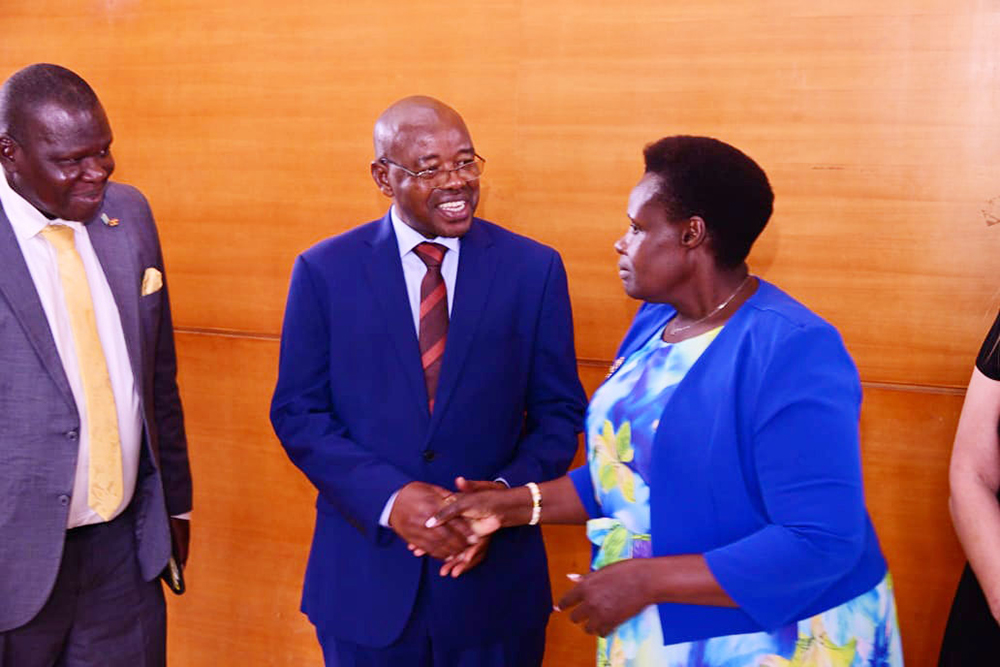
Vice President Jessica Alupo greeting Hon. Amos Lugolobi after the virtual press briefing. (Courtesy)
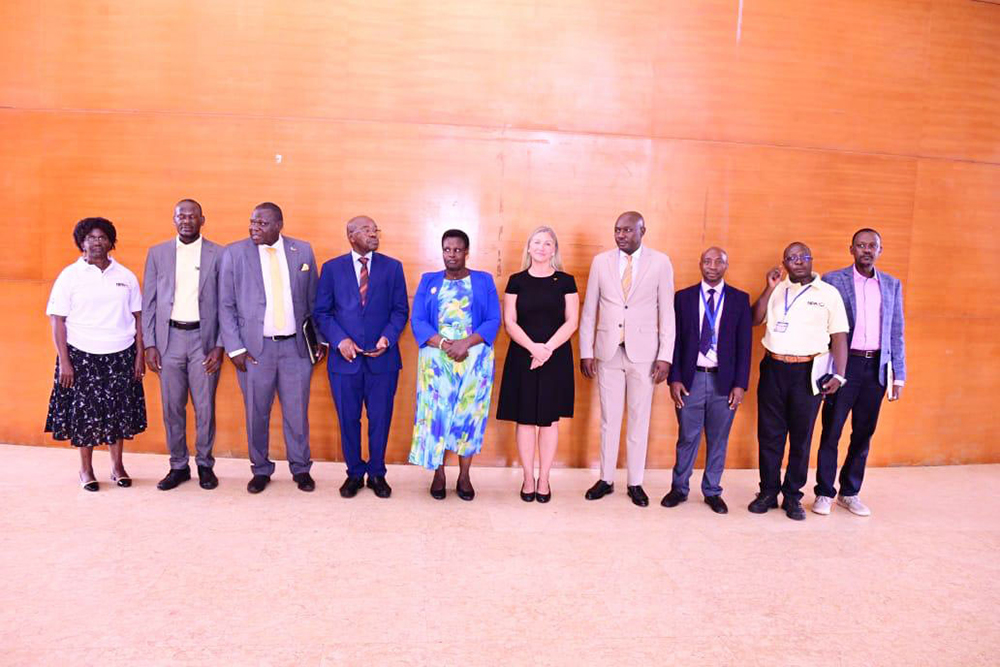
Vice President Jessica Alupo poses for a group photo with officials from UNFPA and the National Planning Authority after the virtual press briefing. (Courtesy)
In attendance were Minister of Finance, Planning and Economic Development, Hon. Amos Lugolobi; the representative of the chair of the National Planning Authority, Hon. Stephen Birahwa Mukitale; and the UNFPA representative in Uganda, Kristine Blokhums, among others.
The UNFPA representative in Uganda, Kristine Blokhums, said Uganda is in the middle of a truly fascinating demographic moment.
“We have a very youthful population. Nearly three-quarters of the citizens are under the age of 30. This is a moment that comes along only once in a nation's history. It's a rare window of opportunity that can be a very significant engine of growth that propels the country forward, but only if we treat it with the seriousness that it deserves,” Blokhums noted while commending the government of Uganda for the concrete progress made along this journey.
Blokhum further noted that Uganda is celebrating real and measurable results where maternal mortality dropped significantly by 44% in less than a decade. “It is far, far safer to be a woman giving birth in Uganda today,” she said
Additionally, mothers are attending antenatal care, and more families are choosing to deliver their babies in health facilities where they have access to skilled professionals. “These are not just numbers on a page. They are lives saved, and they are a testament to what dedicated policy and strategic budgeting and planning can achieve,” said Blokhum.
"This true sustainable development requires more than concrete and steel. It requires deep and consistent investment in human capital. It requires us to invest in the people who will run those factories, innovate, build businesses, and support the next generation,” Blokhum said.
It is one more reason why this year's theme, Unlocking the Potential of Uganda's Population through Technology and Research to Drive Sustainable Development, is so timely. Technology and research are tools. They are bridges. They allow us to solve the challenges that our youth face today, whether that's accessing quality health care, getting the right skills for the labour market, or starting a business.
Technology on its own is not a goal. The end goal is a healthy, educated, and skilled population that can take these tools and use them to catapult this nation into a new era of prosperity.
About World Population Day
The World Population Day was designated by the UNDP in 1989 to be celebrated each year on July 11th.
The day was inspired by the interest that was generated when the total world population was projected to have reached 5 billion on July 11th, 1987.
In this regard, the day is commemorated to raise awareness of population and development issues because population is the most important resource that a country could ever have. Therefore, this same population is responsible for all our resources, said the Minister of Finance, Planning, and Economic Development, Hon. Amos Lugolobi.
The national event emphasizes capitalizing on the country's youthful demographic—where 73% of citizens are under 30 years old—while boosting youth innovation and employment.