
Uganda’s civil society push for full disclosure of oil, gas and mining contracts
Contract transparency involves publishing agreements between the government and companies, including terms on revenues, production, environmental obligations and beneficial ownership.
Nansubuga, legal project officer at Greenwatch discussing during a stakeholders meeting on extractives at Protea Hotel, Kampala. (Photo by John Odyek)
_______________
Uganda’s civil society organisations have renewed calls for stronger contract transparency in the country’s extractive sector, saying full disclosure of oil, gas and mining agreements is critical to accountability and sustainable development.
While acknowledging recent progress, the groups argue that more deliberate action is needed to guarantee public access to extractive contracts.
Contract transparency involves publishing agreements between the government and companies, including terms on revenues, production, environmental obligations and beneficial ownership.
Advocates say openness helps curb corruption, correct power imbalances, and ensure natural resources are managed in the public interest.
Globally, the Extractive Industries Transparency Initiative (EITI) promotes disclosure of contracts and revenues among member countries. Uganda joined the initiative in 2020, improving public reporting on sector revenues and beneficial ownership. Reforms under the Mining and Minerals Act, including the introduction of the Mining Cadastre System, have expanded public access to licensing information.
However, civil society groups note that Production Sharing Agreements signed with oil and gas companies remain undisclosed. Only model PSAs, not the actual contracts in force, have been made public.
They are now urging government to enact a substantive law to anchor EITI implementation, make reporting mandatory and institutionalise contract disclosure.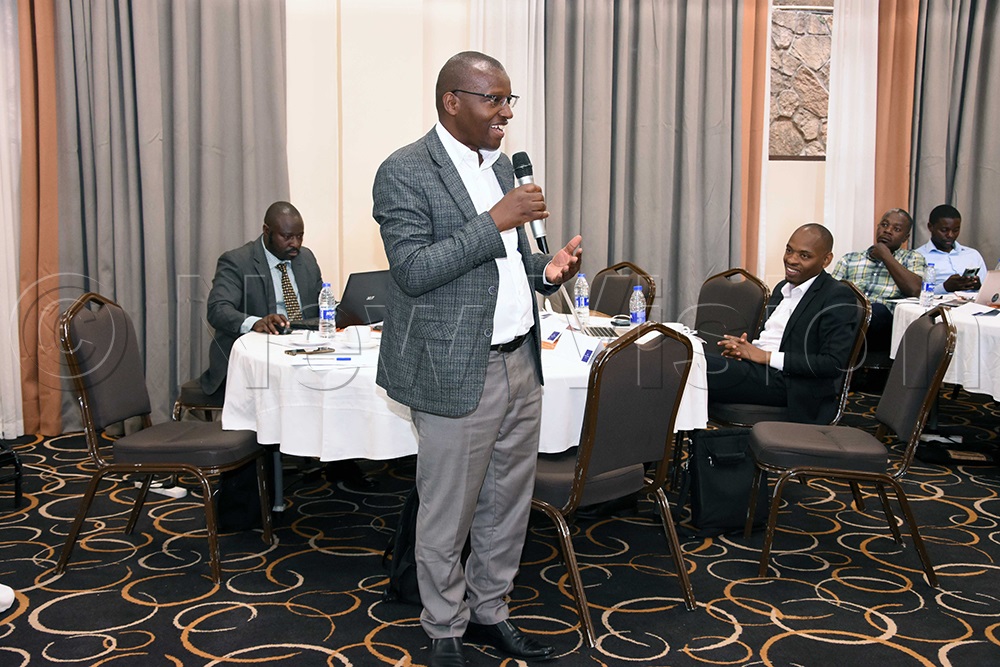
Mugyenyi, deputy executive director of the Advocates Coalition for Development and Environment (ACODE) addressing participants during a stakeholders meeting at Protea Hotel, Kampala. (Photo by John Odyek)
Onesmus Mugyenyi, deputy executive director of the Advocates Coalition for Development and Environment and a research fellow at ACODE, said the latest Uganda EITI report reiterates longstanding recommendations for full contract disclosure.
“The report reinforces civil society’s call for transparency and repeats recommendations that have appeared in previous reports,” Mugyenyi said.
Mugyenyi said the Ministry of Energy and Mineral Development has indicated government clearance for disclosure of extractive contracts, but added that further clarification is needed on the scope and timelines.
Ali Ssekatawa, director for legal and corporate affairs at the Petroleum Authority of Uganda, said government has performed strongly on transparency, estimating compliance at about 85 per cent. Ssekatawa noted that sector conferences and exhibitions regularly share information and opportunities, and that Production Sharing Agreements have been presented to Parliament.
Ssekatawa argued that contract disclosure is largely a policy and commercial matter rather than a legal barrier. “It is a contract between two parties. Government has no objection to disclosure, but the other party must agree,” he said, adding that many countries advocating transparency have not disclosed their own contracts.
He maintained that key PSA terms, including taxation and revenue frameworks, are widely known, and highlighted progress on local content in the oil and gas industry.
Judith Nansubuga, legal project officer at Greenwatch, called for stronger legal safeguards to guarantee full transparency. She said all extractive contracts, including annexes, amendments and revenue-sharing terms, should be proactively published, easily accessible and enforceable, with active citizen participation and independent oversight.
“Meaningful transparency must shift disclosure from discretion to a legal obligation grounded in constitutional accountability,” she said. She noted that natural resources are held by the State on behalf of citizens under the Constitution.
Nansubuga said public access to contracts promotes accountability on both government and developers, enabling citizens to assess whether agreements protect national interests, ensure fair revenue sharing and safeguard environmental and community rights. While acknowledging progress in the oil and gas sector, she pointed to persistent gaps in mining, where disclosure is often reactive and dependent on formal requests.
She cited limited publication of annexes and stabilisation clauses, weak enforcement of transparency requirements and low public awareness as key shortcomings that undermine oversight and community trust. Confidentiality clauses in some agreements, she added, further restrict proactive disclosure.
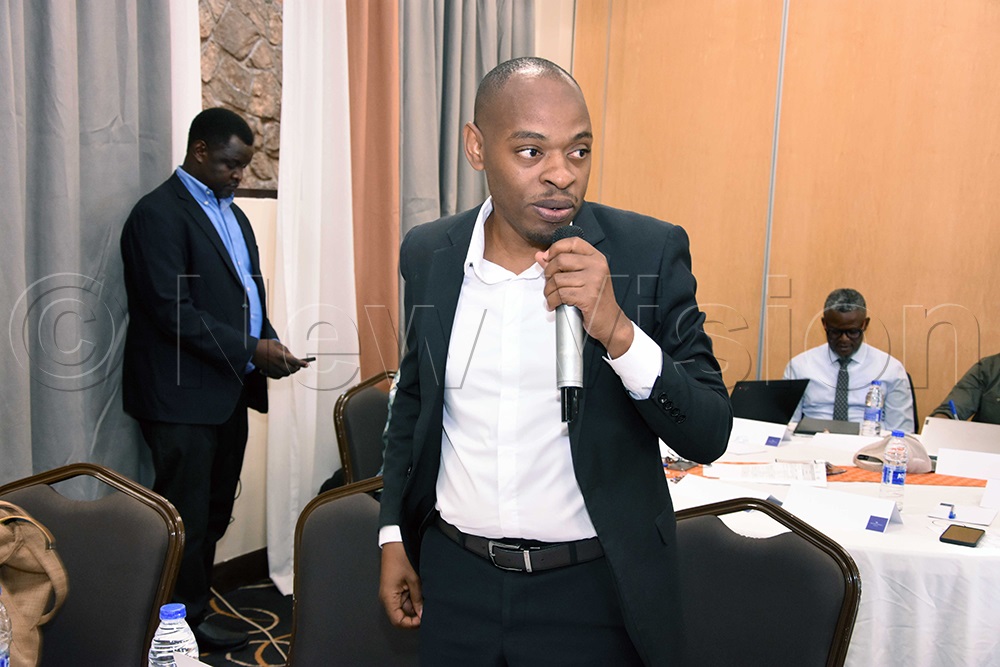
Gideon Nsambire Atukwase, chairperson of Publish What You Pay Uganda, discussing at the meeting on extractives at Protea Hotel, Kampala. (Photo by John Odyek)
Gideon Nsambire Atukwase, chairperson of Publish What You Pay Uganda, said contract transparency is essential for informed citizen engagement and government accountability. Although Uganda has established robust legal and policy frameworks, he argued that non-compliance remains a major obstacle.
“Without disclosure, effective oversight is impossible. Transparency enables scrutiny of policies and actions to ensure value for money, ethical conduct and legal compliance,” Atukwase said.
He cited confidentiality clauses in PSAs and institutional barriers as constraints to full disclosure, and warned that a weakened civic space limits civil society’s ability to demand accountability.
Atukwase stressed that transparency benefits governments, investors and communities alike, helping to build trust, improve contract negotiation and reduce conflict.
He urged civil society groups to provide data-driven recommendations to strengthen procurement laws and integrity systems, and called for greater citizen engagement under the EITI framework.
“When contracts remain confidential, risks such as resource abuse and corruption increase. Citizens must be empowered to understand their rights and participate meaningfully in accountability processes,” he said.
Attorney General Kiryowa Kiwanuka has stated that there is no legal impediment to full disclosure of extractive contracts.
Gloria Mugambe, head of the Uganda EITI Secretariat, said the Multi-Stakeholder Group must agree on clear modalities for contract disclosure and implement them without delay.
Philippe Groueix, general manager of TotalEnergies EP Uganda, said the company supports full contract disclosure in the extractive sector.
“We have always provided full disclosure of contracts and are working closely with government and the Extractive Industries Transparency Initiative on this agenda. Significant progress has been made,” Groueix said. He added that while important steps have been taken, further improvements are possible.