
Uganda urged to invest in peace beyond absence of war
Uganda may have relative peace and stability, but still faces a gap before it can claim to be fully at peace with itself.
R-L, third from right, Hon. Miria Matembe, George Oringa, Director of External Affairs of the Bahá’í Community in Uganda, Rev. Canon Aaron Mwesigye and other believers after prayers at the Bahá’í House of Worship on September 22, 2026. (Photo by David Lukiiza.)
_______________
Uganda has been urged to invest in peace beyond preventing war, with religious and government leaders calling for greater attention to divisions within families, communities, institutions and online spaces.
The call was made on September 21, 2026, during an International Day of Peace commemoration organised by the Bahá’í Faith at the Bahá’í House of Worship grounds on Kikaaya Hill, Kampala, under the theme, “Invest in Peace For Everyone, Everywhere, Every Day”.
Canon Aaron Mwesigye, director of ethics and religious affairs in the Office of the President, said Uganda may have relative peace and stability, but still faces a gap before it can claim to be fully at peace with itself.
Rev. Canon Aaron Mwesigye addresses believers during the International Day of Peace celebrations in Kyebando on September 21, 2026. (Photo by David Lukiiza)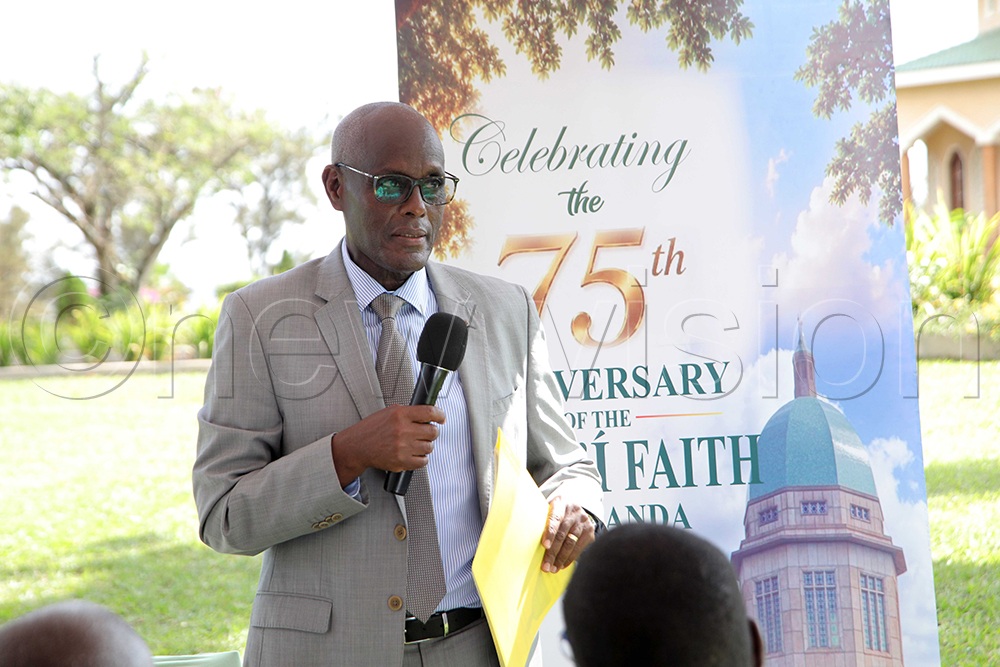
“Uganda may have a reason to appreciate the relative peace and stability, but there is still a huge gap as a country for us to finally say we are at peace with one another,” Mwesigye said.
He said peace should not be understood only as the absence of war or armed conflict, but as something that must be deliberately built through everyday relationships and institutions.
“Peace requires deliberate and continuous effort. It does not simply maintain itself,” he said.
He said this includes teaching children respect, promoting dialogue when people disagree, strengthening families and creating communities where differences can be addressed without turning into conflict.
“Every conversation that builds understanding is an investment in peace. Every effort to resolve disagreement peacefully is an investment in peace. Every act of service to another person is an investment in peace,” he said.
He also challenged religious institutions to use their influence to strengthen social cohesion, saying faith communities were part of Uganda’s social fabric and could not remain observers when communities face divisions.
He said religious institutions can contribute to peace by nurturing moral values, strengthening families, creating spaces for dialogue and reconciliation, and encouraging service to others.
“Religious leaders have a great opportunity and responsibility to cultivate respect before differences become conflict,” Mwesigye said.
He warned that differences in religion, gender and other aspects of society should not automatically become sources of conflict. Uganda’s religious diversity, he said, should instead be treated as a source of strength that requires genuine engagement between communities.
Mwesigye also extended the call to political institutions, workplaces and the media, saying peace must be built wherever people interact.
He said Government should invest in ethical, inclusive and accountable institutions, while young people should use their energy and creativity to build bridges rather than divisions.
“We build peace when we refuse to spread information that divides communities,” he said.
Mwesigye said Uganda’s contribution to regional peace should be accompanied by efforts to strengthen peace within the country. He said peace should therefore be treated as an everyday responsibility rather than something reserved for international conferences or agreements between governments.
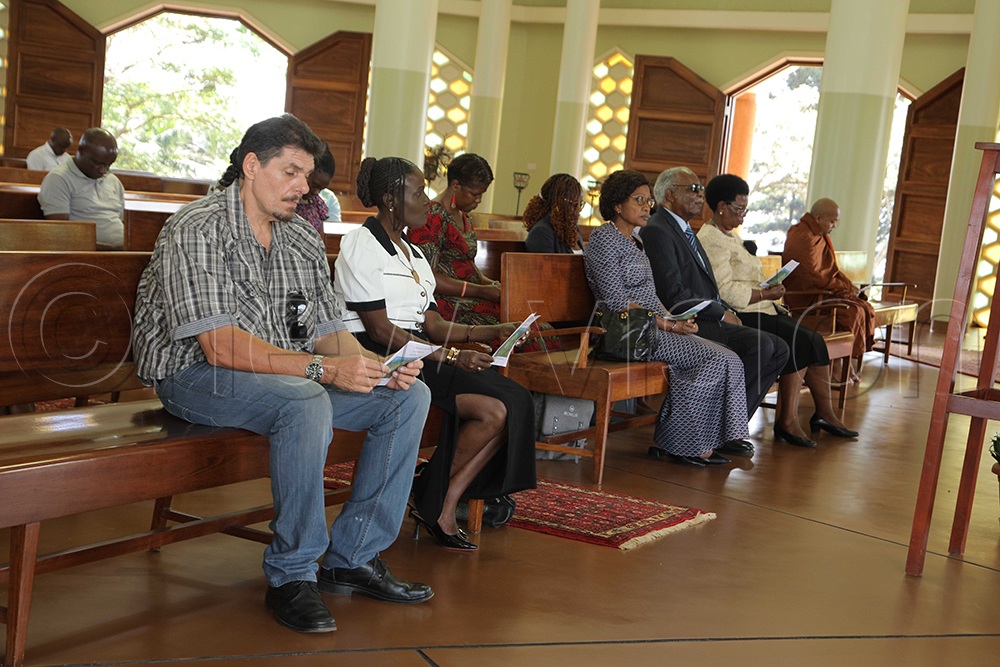
Believers attend prayers at the Bahá’í House of Worship in Kyebando during the International Day of Peace celebrations. (Photo by David Lukiiza)
Joshua Kitakule, secretary general of the Inter-Religious Council of Uganda, said peace concerns every section of society and requires individuals, religious leaders and political actors to examine what they can contribute within their own spaces.
“What small contributions can I make to a small space where I am, for the peace of our country?” Kitakule asked.
He commended the Bahá’í community for working with the Inter-Religious Council of Uganda for nearly a decade through interfaith initiatives and joint platforms aimed at promoting peace.
John Robarts Okiror, a member of the National Spiritual Assembly of the Bahá’ís of Uganda, said the Bahá’í community considers peace essential to achieving the unity of humanity.
He said peace should begin with individuals before extending to neighbours, communities and the wider world.
“For us to have unity, there should be a peaceful environment,” Okiror said.
The International Day of Peace is observed annually on September 21, with this year’s theme calling for investment in peace at all levels of society.