
Uganda to unveil sh15.6b disability assistance programme
An official from the Ministry of Gender, Labour and Social Development (MGLSD) disclosed that under the programme, caregivers of 7,600 Ugandan disabled children (aged 0-17 years) will receive a monthly grant of sh100,000.
Anthony Oleja Enyogu of the Ministry of Gender, Labour and Social Development orients MPs on the National Severe Disability Assistance Programme (NSDAP). (Photo courtesy).
__________________
Government is set to launch the National Severe Disability Assistance Programme (NSDAP) next month. The undertaking seeks to deliver both comprehensive rehabilitative care and monthly financial relief.
Anthony Oleja Enyogu, an official from the Ministry of Gender, Labour and Social Development (MGLSD), on Friday, November 13, disclosed that under the programme, caregivers of 7,600 Ugandan disabled children (aged 0-17 years) will receive a monthly grant of sh100,000.
She made the revelation after an orientation meeting with lawmakers at the Parliamentary Forum for Persons with Disabilities (PWDs) chaired by Alex Ndeezi (PWD MP, Central region). Oleja explained that the programme launch is slated for December 3, 2026, on the commemoration of the International Day for Persons with Disabilities.
Beneficiaries should be minders of Ugandan children with disabilities including: severe blindness, deafness, multiple impairments and those with high support needs. The programme intends to cushion families against financial burdens in such a situation. The money will be channelled through registered mobile money numbers and bank accounts of caregivers.
Conditions:
As a requirement, both caregivers must be Ugandan citizens.
The children's disabilities must be assessed and verified by a Health Centre III health worker and the Sub-County Community Development Officer (CDO).
The information must be backed by supporting documentation, including the child's birth certificate and a National Identification Number (NIN).
The programme, which received an initial allocation of Shs15.6 billion in the 2026/2027 Financial Year (FY) budget, is scheduled to be piloted in 25 districts with a high prevalence of childhood disabilities, multidimensional child poverty, under-five malnutrition and geographical challenges.
The selected districts are:
Buvuma, Kalangala, Kassanda, Luwero and Lwengo in the Central Region.
Kaliro, Kamuli, Kapchorwa, Katakwi, Amuria, Pallisa and Tororo in Eastern Region.
Gulu, Karenga, Lamwo, Maracha, Napak, Otuke and Oyam in Northern Region.
While those in Western Uganda comprise; Kasese, Kikuube, Mitooma, Rubanda, Rukungiri and Sheema.
The National Severe Disability Assistance Programme (NSDAP) will also provide healthcare and rehabilitation services. Eligible children will be connected with necessary physical aids and assistive technologies.
Long-term financial burden
MPs react
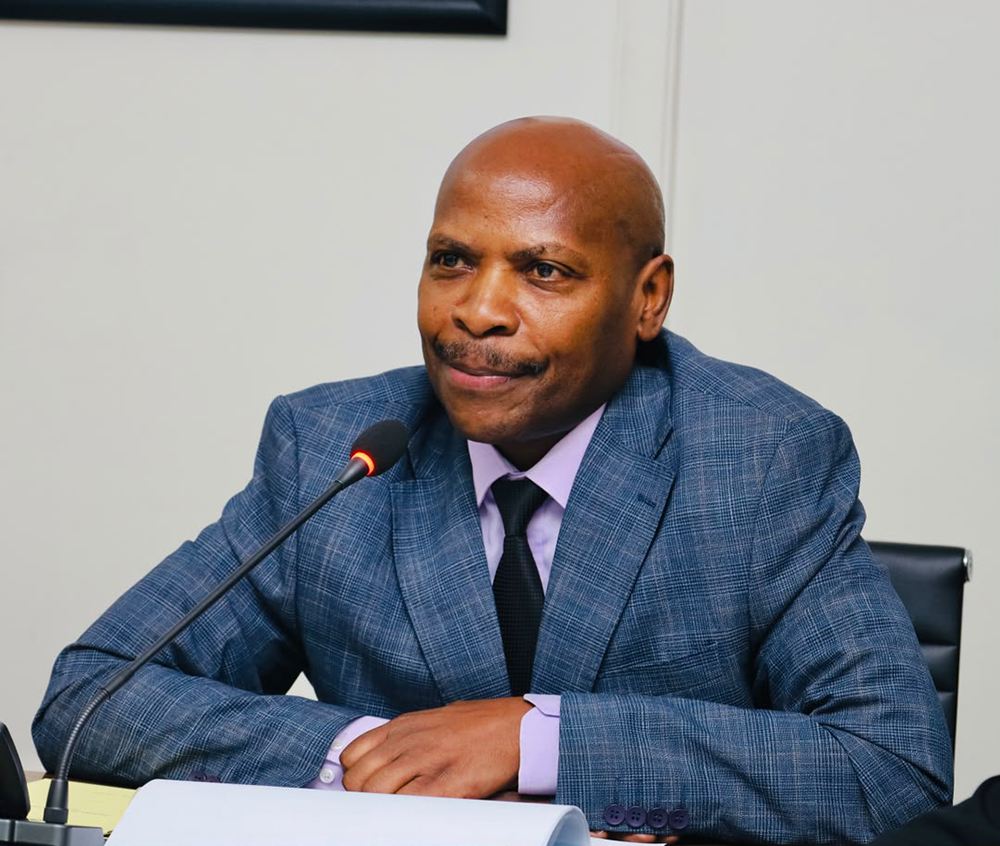
Alex Ndeezi, Chairperson of the Parliamentary Forum for Persons with Disabilities, chairs the engagement. (Courtesy photo).
Alex Ndeezi the Chairperson of the Parliamentary Forum for Persons with Disabilities (PWD’s) Alex Ndeezi said that it was important that all children with disabilities across the country are onboarded.
“I know this sh15 billion was originally not budgeted for by the Government. We got this money as a result of our interactions with the Minister of Finance and the Speaker at the last hour of the budgeting process,” Ndeezi alluded.
“You are covering only 25 districts. But colleagues have been asking, ‘why is my district not there?’ Someone from Amudat will say, ' Why is it not in my district. Kibuku will say the same,” he retorted.
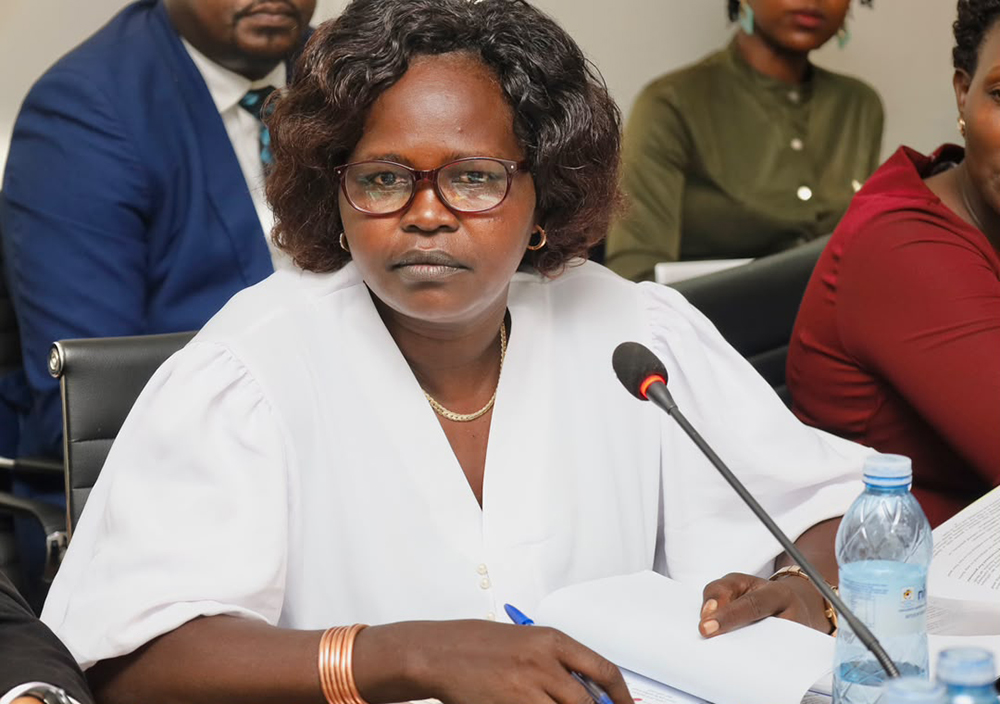
Amudat District Woman MP Rufina Cheutich raises concerns over the increasing prevalence of disabilities in her constituency. (Courtesy photo)
Making a case for Amudat District's inclusion in the next phase of the programme, Rufina Cheutich (Amudat District Woman MP, NRM) raised concerns about the increasing prevalence of disabilities in her constituency.
“It is also my prayer that in the next coming phase, you consider Amudat. In my community, disability in my community is seen as a curse and the burden is only left to the woman", Cheutich said.
“When a child with a disability is born into some families, they are hidden away. Some are denied food and die like that. Others fall sick but receive no medical intervention or assessment. They are simply left to die slowly. It is important that this programme also reaches people. So that the community can realise that disability is not inability. We have seen children with disabilities go to school and grow into important members of society,” she argued.