
Uganda, South Sudan speed up border demarcation for security, trade
The talks were co-chaired by Uganda’s Ambassador to South Sudan, Brig. Gen. (Rtd) Ronnie Balya, and Central Equatoria State Governor Emmanuel Adil Anthony Wani. The next joint border meeting will be hosted by South Sudan.
Uganda and South Sudan have agreed to accelerate the process of reaffirming and re-marking their shared 470-kilometre border by 2027. (Courtesy photo)
_________________
Uganda and South Sudan have agreed to accelerate the process of reaffirming and re-marking their shared 470-kilometre border by 2027, as part of efforts to improve security, boost cross-border trade and strengthen relations between the two countries.
The commitment was reached during the sixth Uganda–South Sudan Joint Border Meeting on Economic and Security Cooperation held in Arua from July 23 to 24, 2026.
The meeting brought together Ugandan and South Sudanese officials to discuss border management, security cooperation, trade facilitation, migration and social services.
The talks were co-chaired by Uganda’s Ambassador to South Sudan, Brig. Gen. (Rtd) Ronnie Balya, and Central Equatoria State Governor Emmanuel Adil Anthony Wani. The next joint border meeting will be hosted by South Sudan.
The engagement comes a week after deadly clashes in mid-July, where four people were killed in a clash between the Uganda People's Defence Forces (UPDF) and the South Sudan People's Defence Forces (SSPDF) in Yumbe.
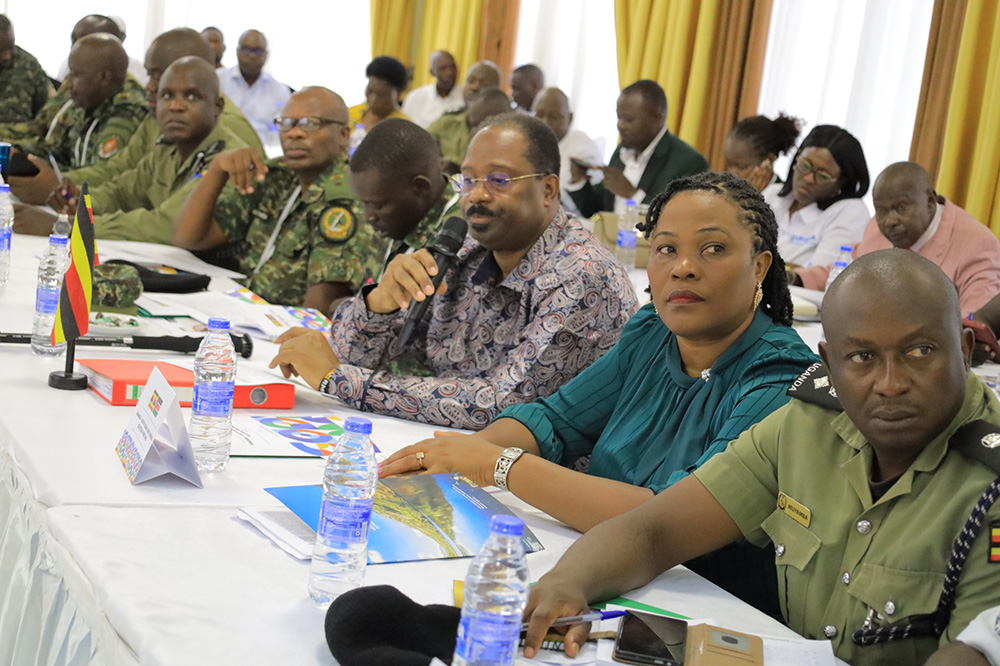
The meeting brought together Ugandan and South Sudanese officials to discuss border management, security cooperation, trade facilitation, migration and social services. (Courtesy photo)
The first confrontation occurred on July 14th in Centre Muruli, Keriwa sub-county, when the UPDF moved to engage the SSPDF regarding an army detachment they had established at Adrejo, located about 9 km deep inside Uganda.
Moses Abajo, the LC 3 chairperson for Keriwa sub-county, reported that when approached, the Sudanese instead opened fire at the UPDF.
The serious fire exchange lasted for over two hours.
Whereas the Uganda soldiers withdrew to the UPDF detachment in Ujipaku trading centre in Keriwa sub-county, the SSPDF returned on July 15 in an attack on Mijikita trading centre.
This week, the two countries agreed to urgently revive the Joint Technical Committee responsible for border issues to pave the way for the demarcation exercise.
In Kampala, the Ministry of Foreign Affairs on Friday, July 24 revealed that a "clearer border management structure will help reduce disputes, improve movement of people and goods, and support economic activity along the West Nile and Central transport corridors".
The release from Stilson Muhwezi, the Acting Head, Public Diplomacy Department, states that on security, the two sides agreed to strengthen cooperation between their defence and security agencies to address cross-border threats, including terrorism and violent extremism.
The meeting also resolved to reduce barriers affecting traders by improving customs and immigration procedures and addressing challenges faced by the private sector operating across the border.
“In the spirit of enhancing regional integration, the meeting resolved to progressively eliminate tariff and non-tariff barriers, address challenges affecting the private sector, and harmonise customs and immigration procedures. These measures are intended to facilitate the efficient movement of goods and persons and to reduce transit times along the Central and West Nile transport corridors,” the statement reads.
The delegations adopted an implementation plan requiring government agencies, local authorities and security institutions to follow up on agreed actions.