
Uganda sets up fourth Ebola treatment centre in DR Congo
The latest facility, located in Bulongo, North Kivu Province, was commissioned with support from the Ugandan government, represented by Dr Ronnie Bahatungire, the commissioner for clinical services, on behalf of the Ministry of Health.
Uganda has established a fourth Ebola treatment centre in the Democratic Republic of Congo (DRC) to strengthen cross-border efforts to contain the outbreak. (Courtesy photo)
________________
Uganda has established a fourth Ebola treatment centre in the Democratic Republic of Congo (DRC) to strengthen cross-border efforts to contain the outbreak and prevent the deadly virus from spreading into the country.
The latest facility, located in Bulongo, North Kivu Province, was commissioned with support from the Ugandan government, represented by Dr Ronnie Bahatungire, the commissioner for clinical services, on behalf of the Ministry of Health.
The intervention brings to four the number of Ebola treatment centres Uganda has supported in eastern DRC, as the neighbouring country continues to battle an outbreak caused by the Bundibugyo virus.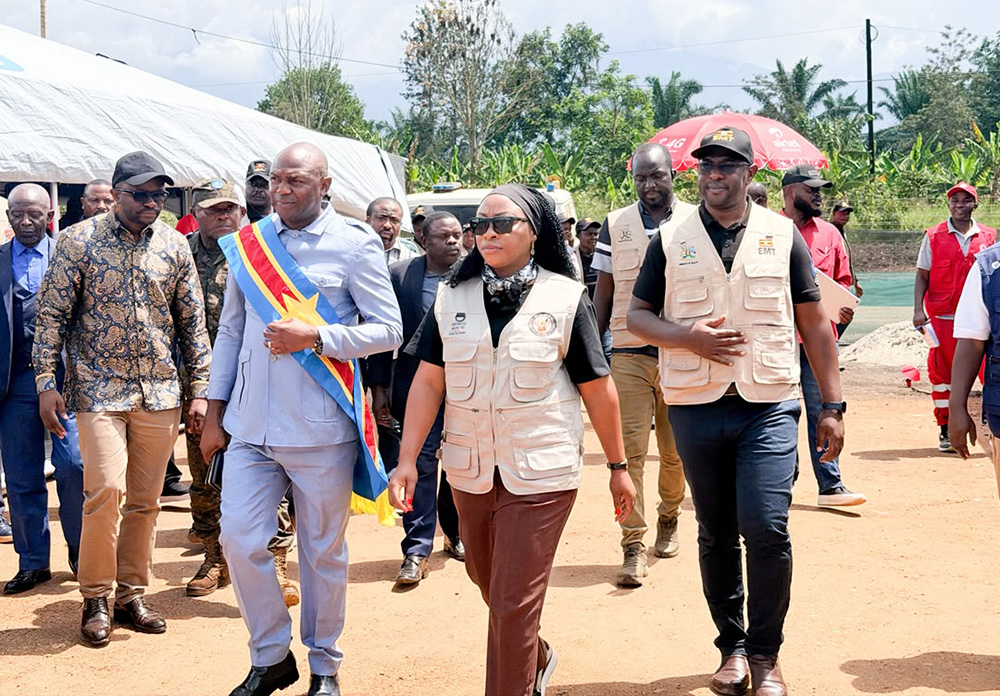
The latest facility, located in Bulongo, North Kivu Province, was commissioned with support from the Ugandan government, represented by Dr Ronnie Bahatungire. (Courtesy photo)
Speaking at the commissioning ceremony on November 21, 2026, in the DRC, Bahatungire said Uganda's support was part of a broader collaboration between the two countries to strengthen cross-border surveillance, case management and emergency response.
"An Ebola treatment centre is more than a physical structure. It is a critical component of an effective outbreak response, providing a safe environment for the identification, isolation, assessment and treatment of patients while protecting communities," Bahatungire said.
The intervention comes as Uganda steps up measures to prevent the outbreak from crossing into its territory, particularly through its porous border with the DRC.
Health minister Dr Chris Baryomunsi recently said the government had introduced restrictions on movement along border areas, including limiting cross-border travel to essential journeys and restricting mass gatherings. He said the measures would not be relaxed during the festive season.
He also said markets along the border had been closed as part of efforts to reduce contact between communities in the two countries.
"We urge our people not to go to DRC and DRC people not to come to Uganda. For now, we have closed the markets along the border lines," Baryomunsi said.
Uganda's support for treatment facilities in the DRC is part of a strategy to contain the outbreak closer to its source, rather than wait for cases to emerge within its borders. In July 2026, the first team of 48 Ugandan doctors crossed into Ituri Province via Kasenyi on Lake Albert to reinforce response teams, alongside mobile laboratories.
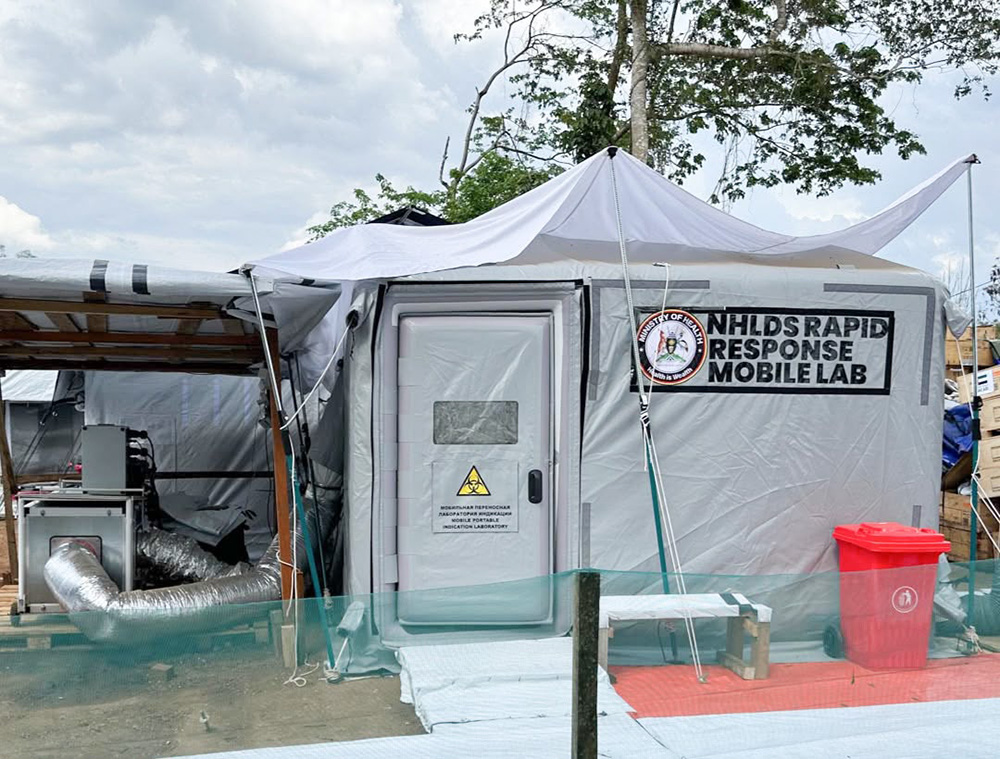
Uganda has established a fourth Ebola treatment centre in the Democratic Republic of Congo (DRC) to strengthen cross-border efforts to contain the outbreak. (Courtesy photo)
The treatment centres are expected to provide facilities for the safe isolation, clinical assessment and management of suspected and confirmed Ebola patients, while reducing the risk of infections in health facilities.
The Bundibugyo virus, which causes a form of Ebola, can spread through direct contact with the blood and other body fluids of infected people or contaminated materials.
Uganda has previous experience responding to outbreaks of the disease, including the Bundibugyo Ebola outbreak in 2007 and the Sudan virus outbreak in 2022.
As of November 16, 2026, the Democratic Republic of Congo (DRC) had recorded 11,432 confirmed cases and 5,593 confirmed deaths since the Bundibugyo Ebola outbreak was declared in May 2026, representing a case fatality rate of 48.9%.