
Uganda Parliament passes Forensic and Scientific Analytical Services Bill 2025
The law establishes the Government Analytical Laboratory (GAL) as the national referral centre for forensic and analytical services, and designates the Department of Inspection and Legal Services in the Ministry of Internal Affairs as the sector regulator.
Parliament has passed the Forensic and Scientific Analytical Services Bill, 2025, paving the way for the regulation of forensic and scientific analytical services in Uganda. (Credit: Miriam Namutebi)
KAMPALA - Parliament has passed the Forensic and Scientific Analytical Services Bill, 2025, paving the way for the regulation of forensic and scientific analytical services in Uganda.
The law establishes the Government Analytical Laboratory (GAL) as the national referral centre for forensic and analytical services, and designates the Department of Inspection and Legal Services in the Ministry of Internal Affairs as the sector regulator.
It outlines procedures for the collection, handling and use of bodily samples for investigative purposes, and designates the laboratory as the National Poison Information Centre.
On Wednesday, April 1, the Minister of State for Defence and Internal Affairs, Gen. David Muhoozi, presented to Parliament the Bill for its second and third readings.
Addressing gaps in the law
The legislation seeks to close longstanding gaps in the regulation of forensic services. Uganda has operated without a comprehensive legal framework, limiting oversight, standard-setting, quality control, and coordinated development of the sector.
Although the Government Analytical Laboratory has been the primary provider of forensic services, it has not been formally recognised as the national referral centre. The country has lacked a national poison information centre to analyse and disseminate information on poisoning incidents.
Prime Minister Robinah Nabbanja (Credit: Miriam Namutebi)
New regulatory framework
The law introduces a structured system to regulate forensic and scientific analytical services. It formalises the role of the Government Analytical Laboratory, assigns regulatory oversight to the Ministry of Internal Affairs, and sets clear procedures for the use of forensic samples in investigations.
These measures are expected to improve the delivery of scientific, forensic and advisory services, strengthen environmental health and safety, and enhance the country’s capacity to respond to poisoning cases.
Impact on justice and public safety
The reforms are expected to strengthen the administration of justice by improving the reliability and credibility of forensic evidence used in legal proceedings.
The Chairperson of Parliament’s Committee on Defence and Internal Affairs, Wilson Kajwengye, presented the committee report that guided debate and adoption of the Bill. The report says the law is aimed at strengthening regulation, safeguarding rights, and improving clarity in Uganda’s forensic system.
Committee findings and concerns
The committee noted that the absence of a dedicated law has constrained oversight and the systematic development of forensic services.
However, it raised concerns about the institutional arrangement under the law, where both the regulator and service provider fall under the same ministry. Stakeholders warned that this could affect impartiality, operational efficiency, and public confidence.
The committee highlighted ambiguity in the dual role of the Government Analytical Laboratory as both service provider and referral centre, calling for clearer definitions.
Data protection and technology gaps
The Bill provides for the establishment of a national forensic database, including DNA records, to support investigations. However, concerns were raised about weak privacy safeguards, including unclear timelines for data retention.
The Uganda Law Society noted that the law does not adequately address integration with modern biometric systems such as fingerprint and facial recognition technologies.
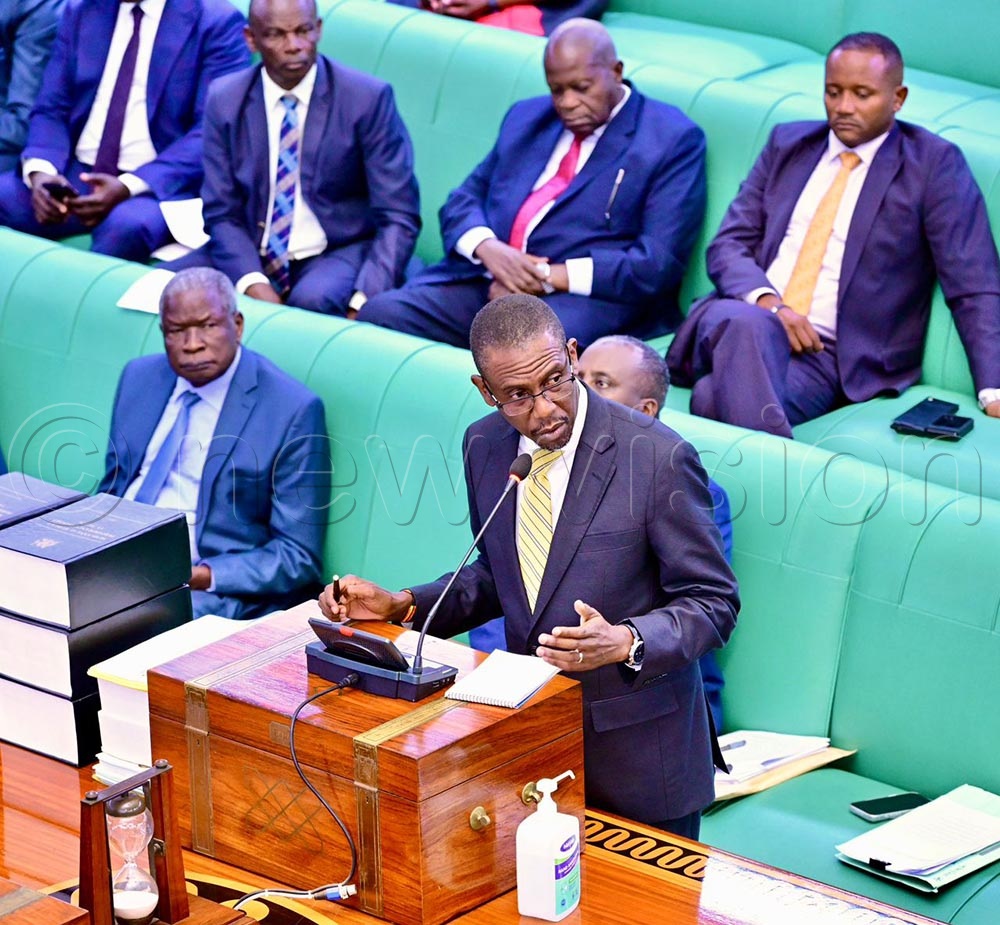
AG Kirwowa Kiwanuka (Credit: Miriam Namutebi)
Key amendments adopted
To address these concerns, the committee recommended several amendments, including clear definitions for terms such as “forensic practitioner” and “forensic science”, clarification of the scope of the law to avoid overlap with existing legislation, and stronger provisions on data protection and forensic database management.
Others are: removal of vague grounds for licence revocation, replacing “certificate of analysis” with “laboratory analytical report”, ensuring the operational independence of analytical laboratories, and a transitional clause was proposed to ensure that forensic reports issued before the law comes into force remain valid in court.
Poison information centre role
Under the law, the Government Analytical Laboratory will serve as the National Poison Information Centre, primarily as a coordination and information hub rather than a full emergency response unit.
Expanding its role to include 24-hour clinical services would require additional resources beyond the scope of the legislation, the Attorney General advised.
Passage of the Bill
Despite the concerns, the committee concluded that the law is necessary to strengthen Uganda’s forensic capacity and improve the administration of justice.
“The Bill strengthens forensic and scientific analytical services, but certain provisions require clarification for consistency and alignment with current laws,” the report states.