
Tumukunde faults educated Ugandans for abandoning their communities
Tumukunde observed that some young women in disadvantaged communities were already raising children, a situation he partly attributed to the social and economic effects of the COVID-19 pandemic. He called for more research into the pandemic's long-term social effects to inform interventions targeting vulnerable young people.
(L-R) Sarah Ntolo from UBC, Paul Kiberu, Daphine Akampurira, coordinator of the Social Protection Platform Uganda, Jonah Nambale, a journalist and Jane Nafula from Daily Monitor display plaques after media awards on social protection reporting during the national social protection dialogue at Kampala Serena Hotel on Friday, October 30, 2026. (Credit: Francis Emorut)
KAMPALA - The Minister of Gender, Labour and Social Development, Lt. Gen. (rtd) Henry Tumukunde, has criticised educated Ugandans for abandoning their communities after attaining success, saying their failure to return and help others is undermining efforts to fight poverty and promote social inclusion.
Tumukunde said many people who overcome poverty through education and other opportunities tend to distance themselves from their backgrounds instead of using their achievements to uplift disadvantaged members of their respective societies.
He challenged educated Ugandans, particularly leaders and professionals, to reconnect with their communities, understand the challenges facing ordinary people and help identify practical solutions to improve their livelihoods.
“If I could simplify what we are doing here today, we are fighting a war called inclusion,” Tumukunde said, adding, “The most disappointing part about our people, as most of you are, is that when you get liberated from this crisis, and you get included, you tend to detach yourself and cut off and become a tie-wielding human being and a sophisticated person.”
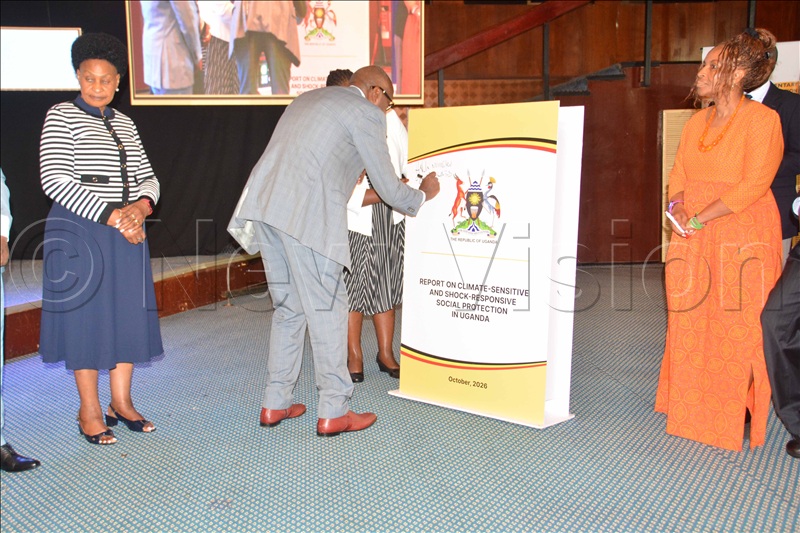
Tumukunde made the remarks on Friday (October 30) during the Fourth National Social Protection Dialogue at Kampala Serena Hotel, where he represented Prime Minister Robinah Nabbanja as chief guest
The dialogue, hosted by the Ministry of Gender, Labour and Social Development, was held under the theme: “From Vulnerability to Resilience: The Contribution of Social Protection Towards Attainment of the 10-Fold Growth Strategy.”
The event was organised in partnership with the United Nations Children's Fund, the World Food Programme and the Embassy of Ireland, among other development partners.
Tumukunde said some educated people become more concerned about their appearance, language and presentation, forgetting the communities and families that sacrificed to ensure they receive education
He challenged them to find time to return to their villages and establish whether the opportunities that transformed their lives could also help others escape poverty
The minister also criticised people who build expensive homes behind strong security gates but rarely interact with their neighbours to understand their living conditions.
He said the failure by leaders and educated citizens to maintain contact with ordinary people limits the country's ability to identify poverty-related challenges and develop interventions that respond to their actual needs
Tumukunde questioned the effectiveness of existing social protection interventions, arguing that some government programmes might not be reaching their intended beneficiaries or were being delivered in ways that inconvenience vulnerable households
He cited the estimated 5.5 million Ugandans aged between 18 and 30 who are neither in employment, education, nor training, saying the Government needed to understand their circumstances beyond the statistics.
On women's economic empowerment, Tumukunde questioned why financial institutions were reluctant to extend affordable credit to low-income women with small businesses, forcing some to depend on moneylenders. (Credit: Francis Emorut)
Tumukunde observed that some young women in disadvantaged communities were already raising children, a situation he partly attributed to the social and economic effects of the COVID-19 pandemic. He called for more research into the pandemic's long-term social effects to inform interventions targeting vulnerable young people.
The minister also raised concerns that free education and other government-supported services could have weakened parental responsibility, with some parents increasingly leaving the upbringing and welfare of their children to government.
"While free education and healthcare are important interventions, families should remain responsible for supporting their children," he said.
Tumukunde questioned whether beneficiaries received the full value of government assistance, noting that some people spend a considerable amount of money travelling to local government offices to access relatively small benefits.
On women's economic empowerment, Tumukunde questioned why financial institutions were reluctant to extend affordable credit to low-income women with small businesses, forcing some to depend on moneylenders.
He said programmes such as the Generating Growth Opportunities and Productivity for Women(GROW) project should enable women to expand their enterprises and contribute to national wealth.
Tumukunde also urged government to give greater attention to the creative and digital economy, including fashion, entertainment, film and information technology, saying these sectors could generate employment and support economic transformation.
He challenged economic planners to think beyond conventional investments in roads and electricity and consider whether ordinary Ugandans had the capacity to use such infrastructure productively.
“Who are you enabling? Do they have capacity, for example, to absorb this electricity?” he wondered
The Prime Minister, in a speech that Tumukunde read, emphasised the importance of strengthening social protection systems to help households withstand climate change shocks, displacement, food insecurity and other emergencies
Nabbanja highlighted the Government's allocation of sh62b in October 2026 to resettle more than 13,000 households living in landslide-prone areas of Mt. Elgon, with each household expected to receive sh18m to purchase safer land.
The Prime Minister also called for stronger coordination, reliable beneficiary registration systems and predictable financing to ensure that assistance reaches vulnerable households during emergencies.
She urged government institutions and development partners to move beyond speeches and demonstrate measurable improvements in people's lives.
Also present was Jackline Mbabazi, the State Minister for Elderly Affairs.