
Tayebwa addresses parliamentarians in Brussels
Tayebwa said such collective strength will determine their influence on international trade, investment, climate finance and development.
Thomas Tayebwa, the deputy speaker of the parliament of Uganda who is also the President of the Organisation of African, Caribbean and Pacific States (OACPS) Parliamentary Assembly chairing his first sitting in Brussels, Belgium on Sunday, November 8, 2026. On the left is the Secretary General of the OACPS, HE Moussa Batraki. (Courtesy photos)
________________
Uganda's Deputy Speaker Thomas Tayebwa has urged African, Caribbean and Pacific legislators to close ranks and negotiate with the European Union (EU) as a united bloc.
Tayebwa said such collective strength will determine their influence on international trade, investment, climate finance and development.
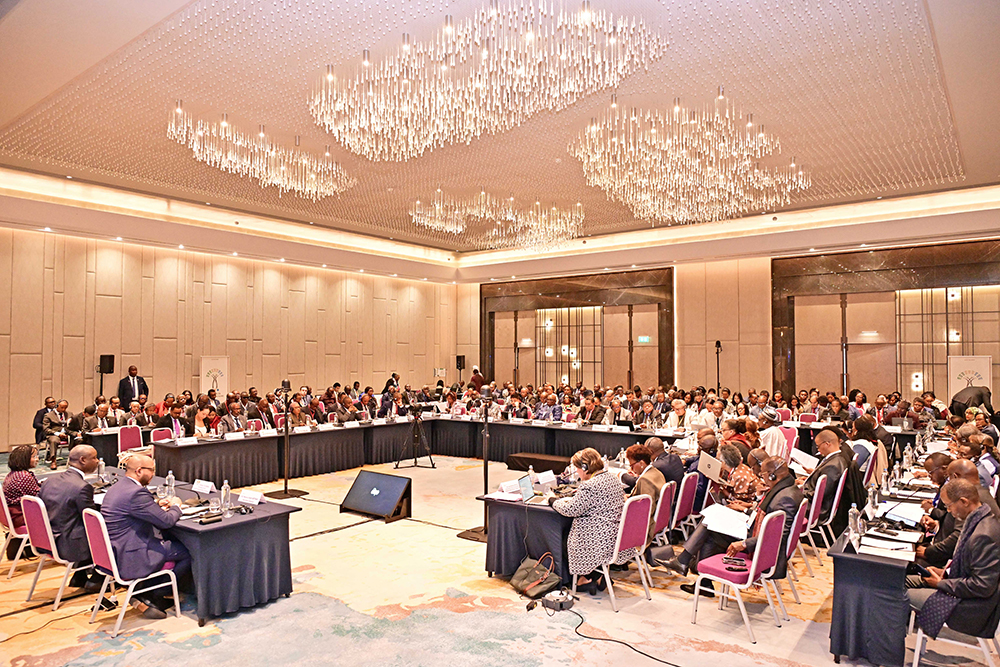
The deputy speaker of the parliament of Uganda who is also the President of the Organisation of African, Caribbean and Pacific States (OACPS) Parliamentary Assembly, Thomas Tayebwa (seated centre on the left) chairing the 65th session of the OACPS Parliamentary Assembly (this was his first session as the Assembly's president) in Brussels on Sunday, November 8, 2026.
Tayebwa made the call as he chaired the 65th session of the Organisation of African, Caribbean and Pacific States (OACPS) Parliamentary Assembly in Brussels on Sunday. It was his first session as the Assembly's president. He said the three regions must develop coordinated positions on issues affecting their nearly two billion people.
He argued that Europe's ability to negotiate as a regional bloc gives it considerable influence in international engagements, a position he believes the OACPS must emulate to advance the interests of its 79 member states.
“When we are engaging with our European countries, our partners, you will not hear them talking about their country. They will be talking about Europe as a region. We want in our engagement tomorrow with our European counterparts to be guided by unity.
“When you are speaking, you are speaking for Africa, you are speaking for the Caribbean, you are speaking for the Pacific, not just for your country. That's the only way we shall be able to match these people,” Tayebwa told delegates
The 65th session brings together 46 heads of delegation and more than 220 participants from the three regions to discuss common priorities and prepare for engagement with European counterparts through the Joint Parliamentary Assembly starting today until Friday.
Tayebwa urged delegations to participate actively, coordinate with colleagues across the three regions and support their negotiators.
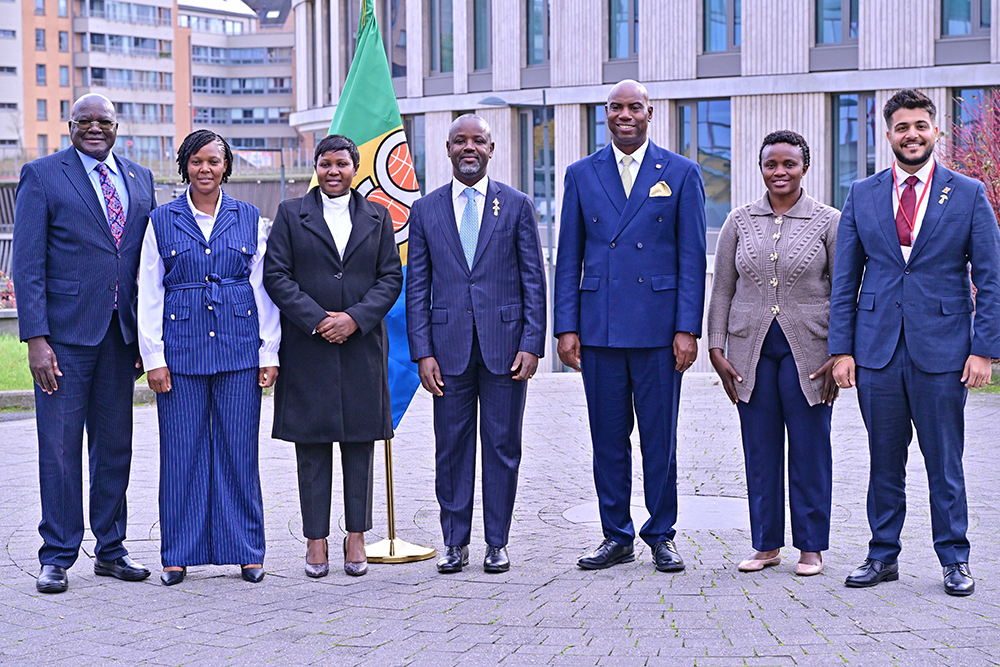
The deputy speaker of the parliament of Uganda who is also the President of the Organisation of African, Caribbean and Pacific States (OACPS) Parliamentary Assembly, Thomas Tayebwa (centre) with Ugandan parliamentarians after chairing the 65th session of the OACPS Parliamentary Assembly in Brussels on Sunday, November 8, 2026.
The agreement covers areas of mutual interest, including trade, investment, sustainable development, climate change, governance, peace and security. Its implementation is expected to provide a framework through which member states can advance their development priorities in partnership with the EU. The effectiveness of this cooperation will depend partly on the ability of OACPS countries to agree on common positions and articulate them consistently when dealing with international partners.
The OACPS secretary-general, Moussa Batraki, also appealed to delegates to make the organisation's diversity a source of strength rather than a barrier to collective action.
“Our collective force resides precisely in this ability to combine the diversity of our priorities and the solidarity that unites our 79 Member States,” he said.
He noted that the new parliamentary architecture emerging under the Samoa Agreement places an additional responsibility on the organisation to preserve its unity while allowing each region to articulate its particular interests.
Batraki said the three regional parliamentary engagements held under the new framework represented an important development in cooperation between the OACPS and the EU.
He cited the Caribbean-EU parliamentary meeting held in Antigua and Barbuda in February 2026, the Africa-EU parliamentary meeting held in Eswatini in May 2026, and preparations for the Pacific region's parliamentary engagement, scheduled to take place in Brussels this week.
Samoa Agreement ratification
He said the delay could deny member countries opportunities under the agreement and urged legislators to push their governments to fast-track ratification.
OACPS Secretary-General Moussa Batraki said full implementation required ratification by at least 53 member states, noting that progress remained slow despite provisional application since January 2024.
Push for financial independence
Tayebwa also called for sustainable financing to reduce the Assembly's dependence on EU support, saying adequate resources were essential for implementing institutional reforms and carrying out its activities.
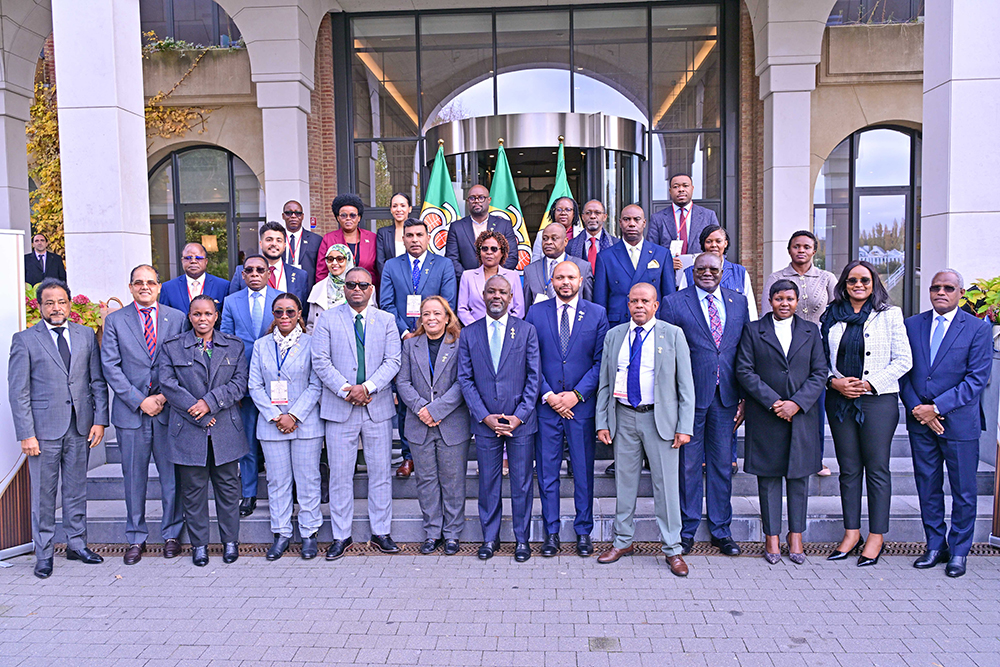
Front row; The deputy speaker of the parliament of Uganda who is also the President of the Organisation of African, Caribbean and Pacific States (OACPS) Parliamentary Assembly, Thomas Tayebwa (7th left), the Secretary General of the OACPS, Moussa Batraki (8th left) with other members in a group photo after Tayebwa chairing his first sitting in Brussels, Belgium on Sunday, November 8, 2026.
Pacific Regional Parliamentary Group president Renata Tamapua supported the proposal, saying member contributions should reflect their financial capacities, geographical challenges and travel costs.
Climate finance, debt and digital development
The Assembly also discussed climate finance, debt, trade, investment and digital learning. Tayebwa called for climate financing solutions that would not increase the debt burden of developing countries, while emphasising the importance of strengthening digital skills and institutions.
Batraki urged parliaments to influence international discussions and ensure that commitments on climate change, trade, investment and food security translate into practical national policies.