
Stakeholders push for improved working conditions in hospitality sector
“The initiative seeks to strengthen human rights due diligence in the hospitality sector by addressing concerns surrounding fair recruitment, workers' rights and decent working conditions,” Nasri said.
Nasri commended government for adoption of the apprenticeship model, calling for an expansion of the programme, which places refugees and host community members in hospitality jobs, creating opportunities for formal employment. (Credit: Ronnie Kijjambu)
KAMPALA - The International Labour Organisation (ILO), in conjunction with the Uganda Hotel Owners Association (UHOA) have developed a Human Rights Due Diligence Toolkit (HRDD), which aims to promote fair recruitment and decent jobs for workers, including refugees in the hospitality sector.
The move was revealed during a three-day workshop, which was attended by government and private sector players at Four Points by Sheraton in Kampala, starting on November 12.
According to Alix Nasri, a Labour Migration Officer at ILO, the toolkit responds to growing expectations concerning responsible business conduct and human rights due diligence in global tourism markets.
“The initiative seeks to strengthen human rights due diligence in the hospitality sector by addressing concerns surrounding fair recruitment, workers' rights and decent working conditions,” Nasri said.
Nasri commended government for adoption of the apprenticeship model, calling for an expansion of the programme, which places refugees and host community members in hospitality jobs, creating opportunities for formal employment.
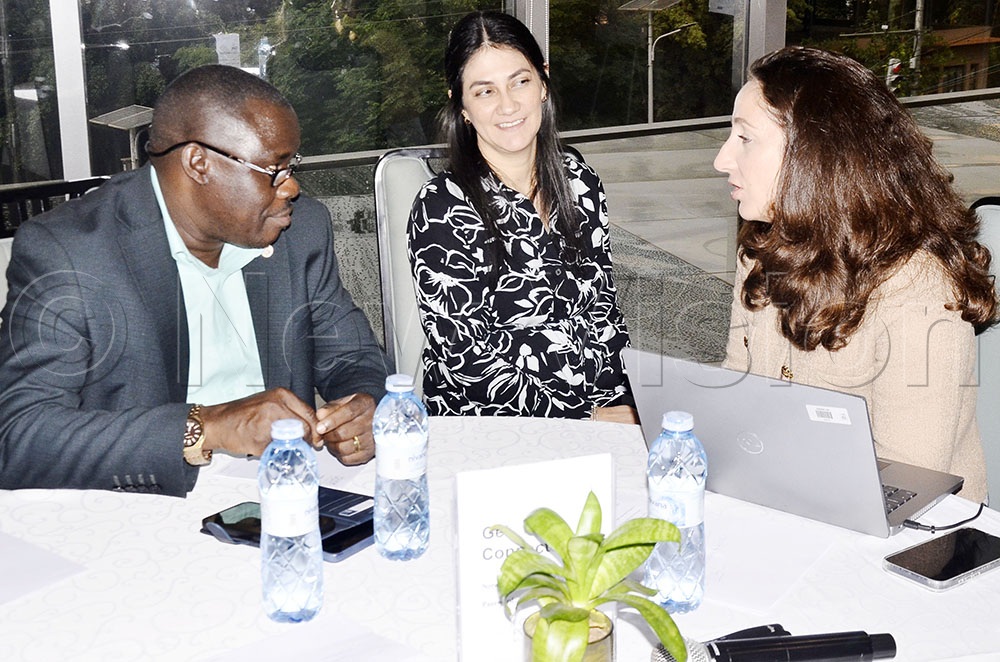
The General Secretary of Uganda Hotels, Food, Tourism, Supermarket and Allied Workers Union, Richard Moses Mauku (left) chats with the Labour Migration Officer, International Labour Organisation (ILO), Alix Nasri (right) during a workshop for hotel owners’ workers in Uganda’s hospitality sector at Point Four Hotel Kampala on November 12, 2026. Centre is the RBC program International Training Centre of ILO, Maria Fernanda Perez. (Credit: Ronnie Kijjambu)
Govt position
Isaac Rubagumya, the Head Skills Development, Technology Uptake and Innovation at the Gender Ministry, said the initiative complements government efforts to promote decent work, strengthen labour administration and expand employment opportunities.
He stated that government is strengthening labour laws and regulations by developing guidelines on non-discrimination and inclusion in the field of work.
Rubagumya re-affirmed government’s commitment to partnering with ILO, UHOA and other stakeholders in the hospitality sector to ensure that workers’ conditions are improved.
Susan Muhwezi, the Chairperson of UHOA, said the hospitality sector must strengthen human rights protection in the workplace.
“Hotels must ensure fair recruitment, non-discrimination, equal treatment and decent working conditions for all employees. Managers and supervisors need to understand how to prevent human rights violations and respond appropriately when workers raise complaints,” she said.
She pledged to incorporate the Human Rights Due Diligence toolkit into the human resource manuals of UHOA member hotels once finalised.