
South Africa, Uganda deepen bilateral ties at joint commission meeting
The meeting brought together South Africa’s Minister of International Relations and Co-operation, Ronald Lamola, and Uganda’s foreign affairs minister, Adonia Ayebare, to consider and adopt recommendations from the Senior Officials Meeting aimed at deepening co-operation between the two countries.
South Africa and Uganda have reaffirmed their commitment to strengthening bilateral relations through enhanced political consultation, trade, investment and cooperation in key sectors. (Courtesy photo)
________________
South Africa and Uganda have reaffirmed their commitment to strengthening bilateral relations through enhanced political consultation, trade, investment and cooperation in key sectors, during the Ministerial Meeting of the Third Session of the Joint Commission of Cooperation (JCC) held in Pretoria, South Africa, on October 20, 2026.
The meeting brought together South Africa’s Minister of International Relations and Co-operation, Ronald Lamola, and Uganda’s foreign affairs minister, Adonia Ayebare, to consider and adopt recommendations from the Senior Officials Meeting aimed at deepening co-operation between the two countries.
Lamola welcomed the opportunity to advance bilateral relations and promote shared interests within the African Union (AU), the East African Community (EAC) and other multilateral platforms. He described the Joint Commission of Cooperation as a vital mechanism for advancing relations established during the previous JCC in Kampala in 2022, followed by a Mid-Term Review in Pretoria in 2023 and the State Visit by President Yoweri Museveni to South Africa in the same year.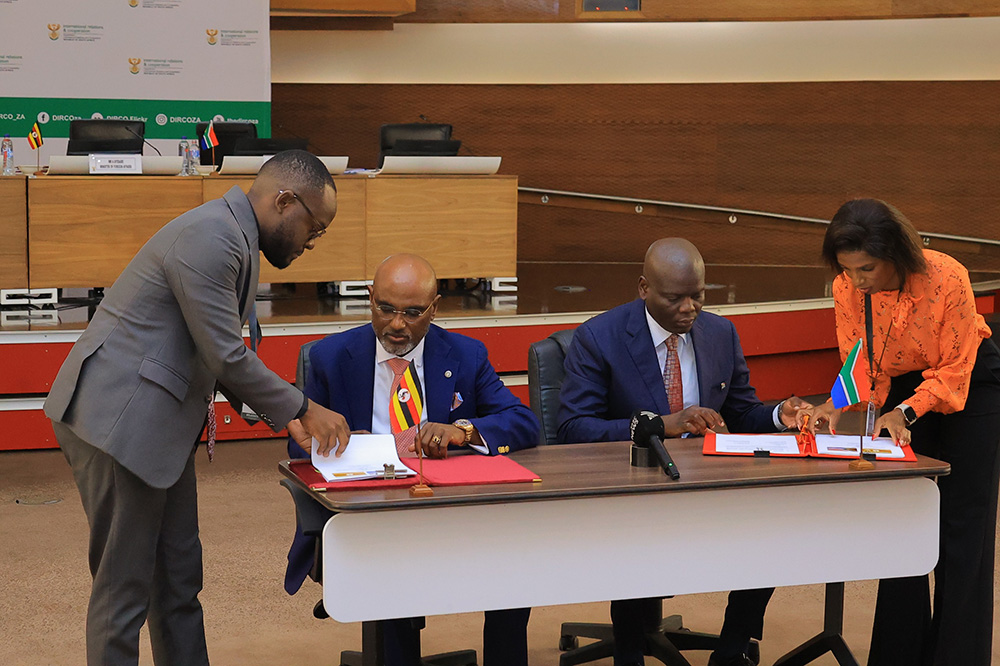
South Africa and Uganda have reaffirmed their commitment to strengthening bilateral relations through enhanced political consultation, trade, investment and cooperation in key sectors. (Courtesy photo)
He also cited investments by major South African companies, including MTN, Standard Bank (through Stanbic Bank Uganda), and ABSA, as examples of successful commercial engagement and opportunities for further economic cooperation.
Importance of sustained consultations
Ayebare underscored the importance of sustained political and diplomatic consultations at bilateral, regional and continental levels. He welcomed the shared commitment of both countries to advancing African integration, promoting peaceful conflict resolution and championing African interests within the AU and the United Nations.
The minister emphasised that economic cooperation remains central to relations between Uganda and South Africa. He highlighted opportunities in manufacturing, agro-processing, mining, energy infrastructure, information and communication technology (ICT), and financial services.
He further called for concerted efforts to address barriers to trade, including non-tariff barriers, high logistics costs and regulatory challenges. In tourism, he proposed collaboration in destination marketing, hospitality training, skills development and conservation to promote tourism flows and improve the competitiveness of both destinations.
On immigration, Ayebare stressed the need to prioritise cooperation that facilitates legitimate travel for business, education and other economic engagements. He welcomed South Africa’s Electronic Travel Authorisation (ETA) system, noting its positive results for Ugandan businesspeople and students.
Both ministers called for the effective implementation of agreed commitments, regular bilateral engagements and the removal of trade barriers to unlock the full potential of cooperation between the two countries.
The Third Session of the Joint Commission of Cooperation represents an important opportunity for South Africa and Uganda to consolidate their longstanding diplomatic relations, expand commercial partnerships and advance shared development priorities within the African Union and the East African Community.