
Refugee women seek markets to turn skills into livelihoods
“With our limited skills, we are making a living out of the products that we make, but many Africans do not understand our art pieces that are made. We produce a lot of products of African culture, but we do not have a sustainable market,” Iranga said.
Gracia Iranga, a refugee from Democratic Republic of Congo organising her crochets during the trade fair. (Credit: Simon Peter Tumwine)
Refugee women entrepreneurs in Uganda, under the banner of the Association of Refugee Women in Uganda, have called for increased support from the Ugandan government and key partners for their handmade products.
The call was made on July 21, 2026, during the second day of a trade fair organised by the organisation at City Square in Kampala, where the refugee women are showcasing their business ideas and handmade products, including crafts, clothing and other items.
Gracia Iranga, a refugee from the Democratic Republic of Congo who deals in crochet products, commended the Ugandan government and Ugandans for the hospitality they have received since they arrived in Uganda. However, she appealed to the government and refugee partners for more support.
She appealed to the Ugandan government and other refugee partners to create markets for their products and designate workspaces for them as they seek to build sustainable livelihoods through business.
The two-day exhibition has brought together refugee women engaged in different micro-enterprises, with organisers seeking to highlight their contribution to Uganda’s economy and create opportunities for them to connect with potential customers, partners and investors.
Roger Keghah Nuah, technical adviser of the association, revealed that the trade show initiative is aimed at changing the perception that refugees are only recipients of humanitarian support.
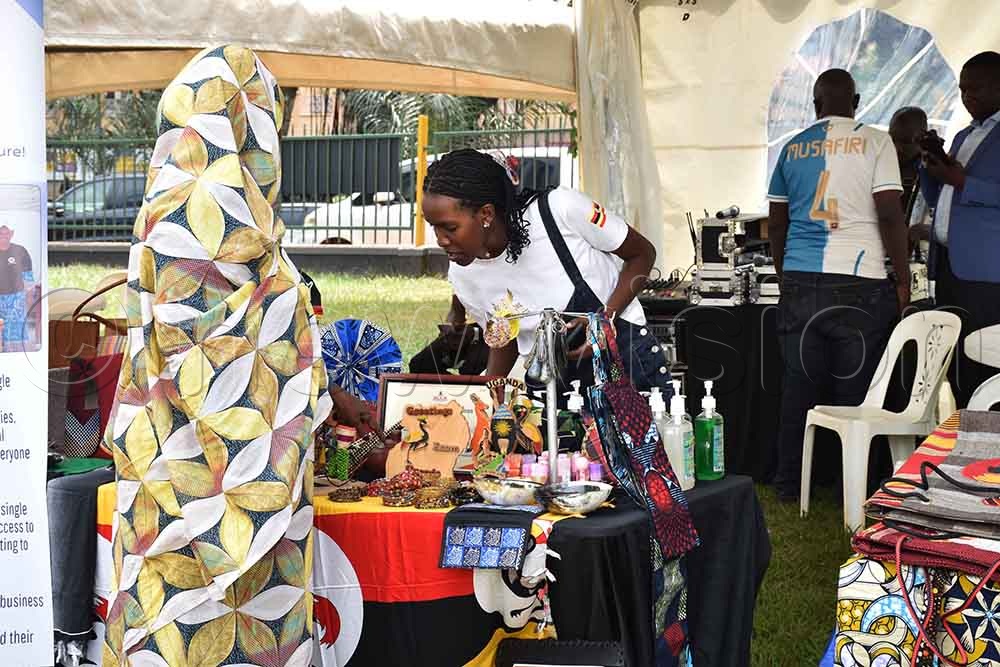
Some of the revealers attending the trade show city square. (Credit: Simon Peter Tumwine)
“The previous method of giving aid and food support is not enough. With the global financial crisis and funding cuts affecting many organisations, the way forward is to empower refugee women with skills so they can earn an income and become self-sustaining,” he said.
Uganda currently hosts more than 2 million refugees and asylum seekers, making it the largest refugee-hosting country in Africa and one of the largest globally.
The majority of refugees originate from South Sudan, representing 55%, while those from the Democratic Republic of Congo represent 31%.
The rest of the refugees and asylum seekers come from other African countries.