
Public service holds pre-retirement dialogue for judicial officers
Leku advised individuals planning for retirement to assess their lifestyles, adopt healthier habits, build personal value, and cultivate a consistent saving culture.
Judicial officers pose for a group photo after attending a pre-retirement training aimed at equipping them with the knowledge, skills and mindset necessary for a smooth and productive transition into retirement at the Judicial Training Institute in Nakawa on Wednesday, July 1, 2026. (Credit: Mpalanyi Ssentongo)
________________
Retired Deputy Director of Public Prosecutions (DPP) Amos Ngolobe has appealed to the judicial officers to reduce their expenditure by 50% on retirement.
“Even if you have a very good pension, you have to reduce your expenditure for you to live a good life,” Ngolobe said.
Using his life experience, Ngolobe urged the judicial officers to invest in real estate and agriculture.
“I had no money to buy land in Kampala. So, I bought in the village and I planted eucalyptus trees on it, but I am earning a lot of money out of it. However, I am transitioning into coffee and cocoa farming. So, this is what you should do,” Ngolobe said during a pre-retirement dialogue for over 27 judicial officers that are set to retire from service at the Judicial Training Institute in Nakawa on Wednesday, July 1.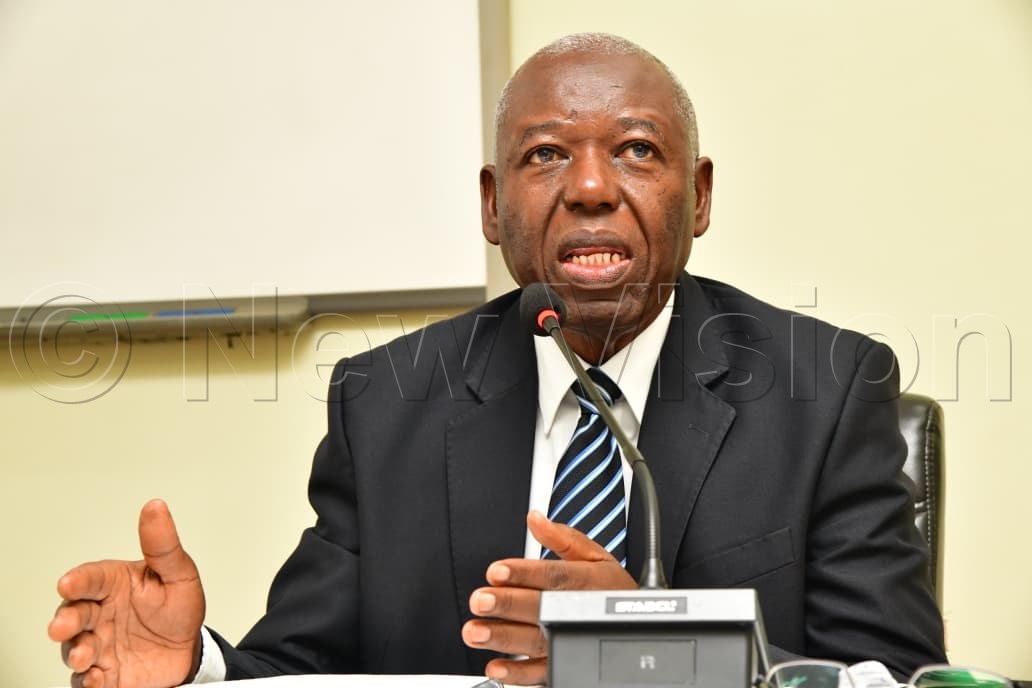
Amos Ngolobe, Senior Presidential Advisor on Corruption and former Deputy Director of Public Prosecutions (DPP), shares his experience. (Credit: Mpalanyi Ssentongo)
Ngolobe also appealed to the judicial officers to invest in their children saying it is very vital because they are the ones to help them in retirement.
“However, you shouldn’t dictate for them the courses and the business they should do,” Ngolobe warned.
Relatedly, Victor Bua Leku, a commissioner at the ministry of Public Service, urged the judicial officers to plan for their retirement by investing early.
“As you plan for retirement, carry out lifestyle audits and also change personal habits that are detrimental to your health, relationships, and finances. Build a market value and save from every income,” Leku said.
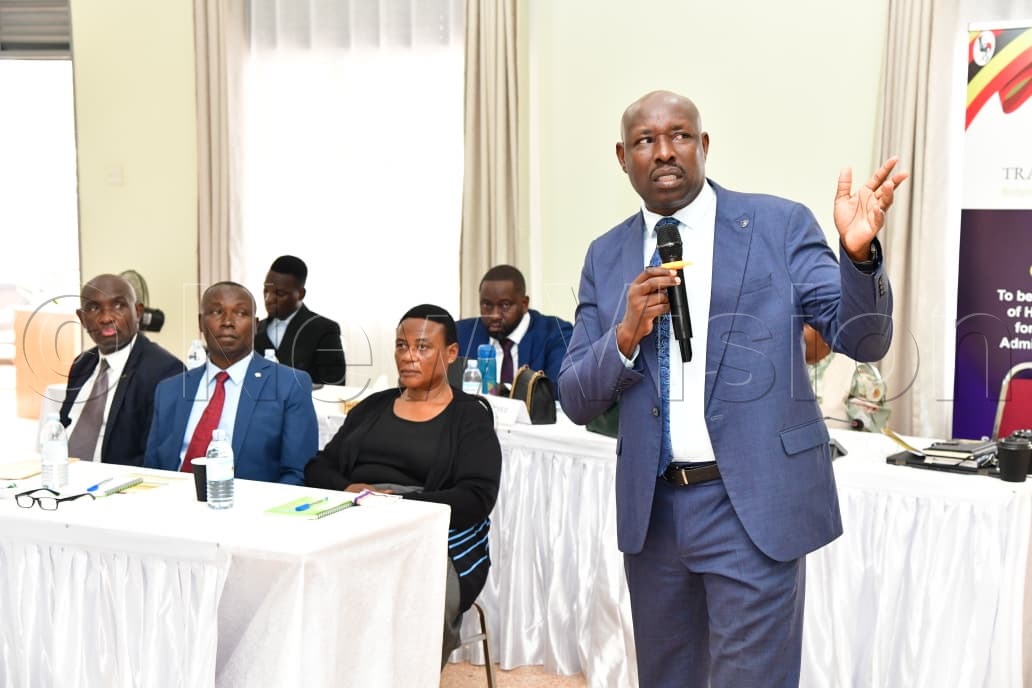
Victor Bua Leku, Commissioner for Compensation at the Ministry of Public Service, delivers a lecture. (Credit: Mpalanyi Ssentongo)
Leku said that Leku urged the officers to hire experts in order to avoid losing their money and also identify suitable investment opportunities where they live and invest in them.
“Investing in assets like apartments is good, but you also need cash. Otherwise, if you want school fees for your children or you want to clear medical bills, will you sell the apartment?” Leku said.
“Do the mathematics, an apartment is very expensive to build, but I am telling you that getting money out of it is not easy because most of the people that would be renting them are poor. So, build low cost houses which the people can afford so that your money is not wasted.”
“Most of you are used to writing judgements. So, it would be good to hire experts to help you identify and manage your businesses otherwise you may lose your money. I would advise you to invest in unit trust or lend the money to the Government so that you are assured of a monthly return,” Leku said.
Leku also appealed to the judicial officers to write wills, saying most of them do not, something which has led to conflicts among their family members.
“The Administration of the Judiciary Act says your retirement benefits can be transferred to the surviving spouse. However, it does talk about the children. So, imagine if you are not survived by a spouse but children, what happens? So, you need to make wills so that you don’t leave with this burden,” Leku said.
In his remarks read by Supreme Court justice Mike Chibita, also the chairperson of the judicial training institute, the chief justice Dr Flavian Zeija appealed to the retired judicial officers to help the parties resolve disputes by embracing Alternative Dispute Resolution (ADR) mechanisms such as mediation, arbitration, among others, that aimed at helping parties resolve their disputes without having recourse to the courts.
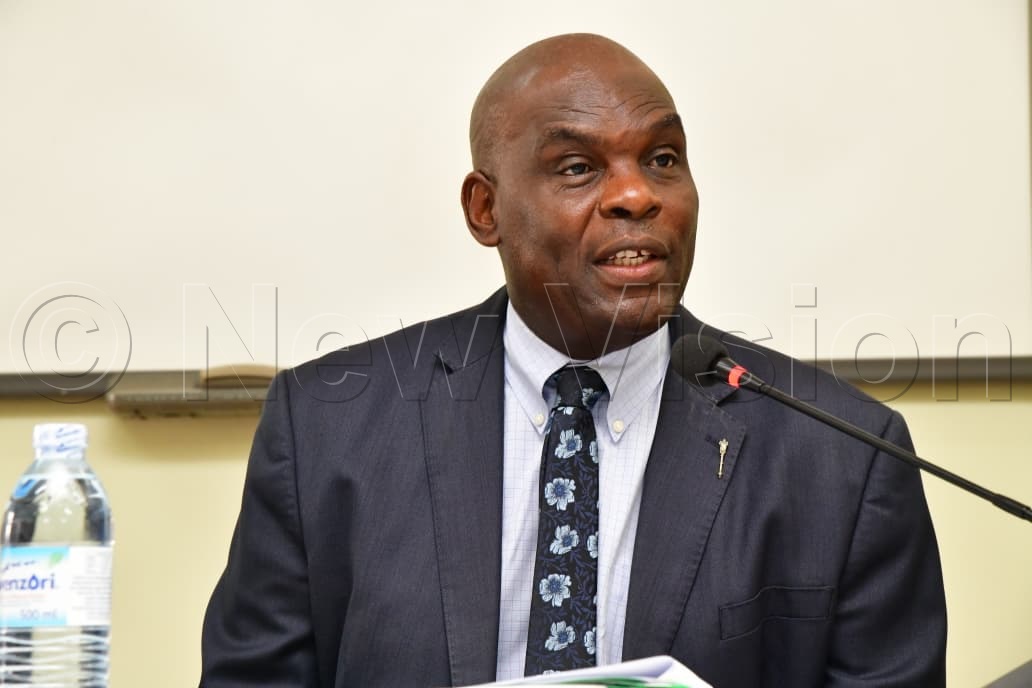
Supreme Court justice Mike Chibita. (Credit: Mpalanyi Ssentongo)
“ADR mechanisms such as mediation and arbitration offer you a good pathway for continued contribution even in your retirement because your experience makes you better mediators,” Zeija noted.
Zeija observed that the demand for experienced and neutral arbiters in the country is growing.
The chief justice commended the judicial training institute for the institutional courage to organise the dialogue, which he said is very important to help the judicial officers to prepare for their retirement.
“I would like to thank JTI for organising this retreat because in other places they come to you and say you are retiring tomorrow, please handover the office,” Zeija said.
Zeija remarked that preparing people for retirement is good so that they are not sent into shock.
“When we serve with dignity, we deserve to leave with the same dignity. So, this training is a recognition that the judiciary believes that how you leave the bench matters just like how you entered,” Zeija said.
“The day will come when you have no cause list, no parties waiting at the door. So, transition if not cautiously prepared for can be very disorienting. These are not embarrassing conversations, and I commend the JTI for placing them on the agenda,” Zeija said.
High Court judge Prof. Andrew Khauka, also the executive director of the judicial training institute, urged the judicial officers to embrace retirement, saying their retirement does not necessarily cause the cutting of the umbilical cord.
“We still remain closely together because the framers of the Administration of the Judiciary Act looked at the life of judicial officers after retirement,” Khaukha noted.
Khaukha said people that have served need special recognition.
“Part of the reason we are here today is to appreciate the retiring judicial officers for the work they have done,” Khaukha said.
Lillian Bucyana, the registrar of the Judicial Training Institute, said the dialogue on retirement is on the institution’s routine exercise because they believe it is important as the induction they receive when entering service.