
Prime Minister Nabbanja woos Italian investors to Uganda
“We want our people from Italy to take coffee made in Uganda. Not grown in Uganda,” Nabbanja told Ugandan officials and Italian business leaders. She said roasting and packing coffee would create jobs for Uganda’s young population.
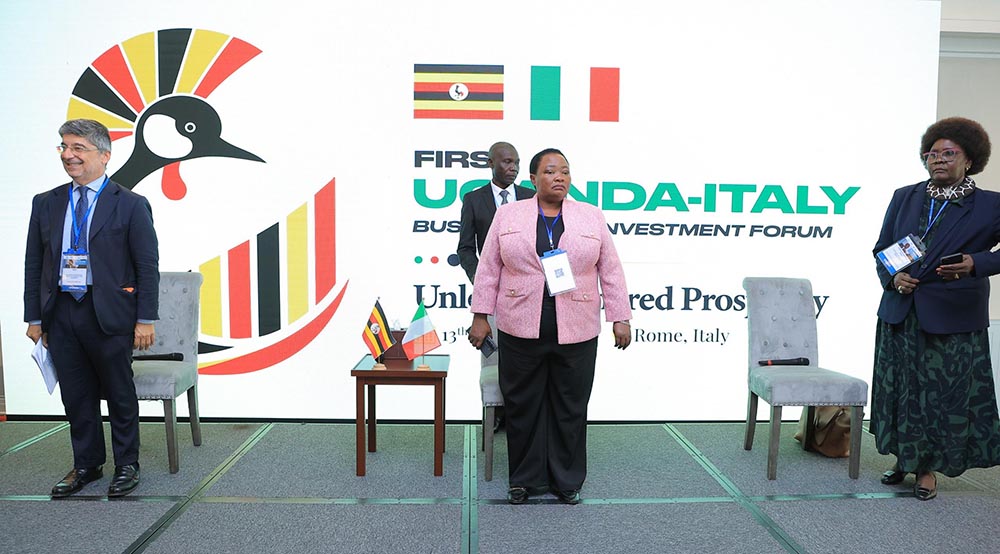
Nabbanja made the remarks at the opening of the first Uganda–Italy Business and Investment Forum at Rome Cavalieri, a Waldorf Astoria hotel in Italy on Tuesday, October 13.
The Prime Minister, Robinah Nabbanja, has asked Italian companies to process Ugandan coffee, milk and minerals inside Uganda instead of importing them as raw materials.
Nabbanja made the remarks at the opening of the first Uganda–Italy Business and Investment Forum at Rome Cavalieri, a Waldorf Astoria hotel in Italy on Tuesday, October 13.
“We want our people from Italy to take coffee made in Uganda. Not grown in Uganda,” Nabbanja told Ugandan officials and Italian business leaders. She said roasting and packing coffee would create jobs for Uganda’s young population.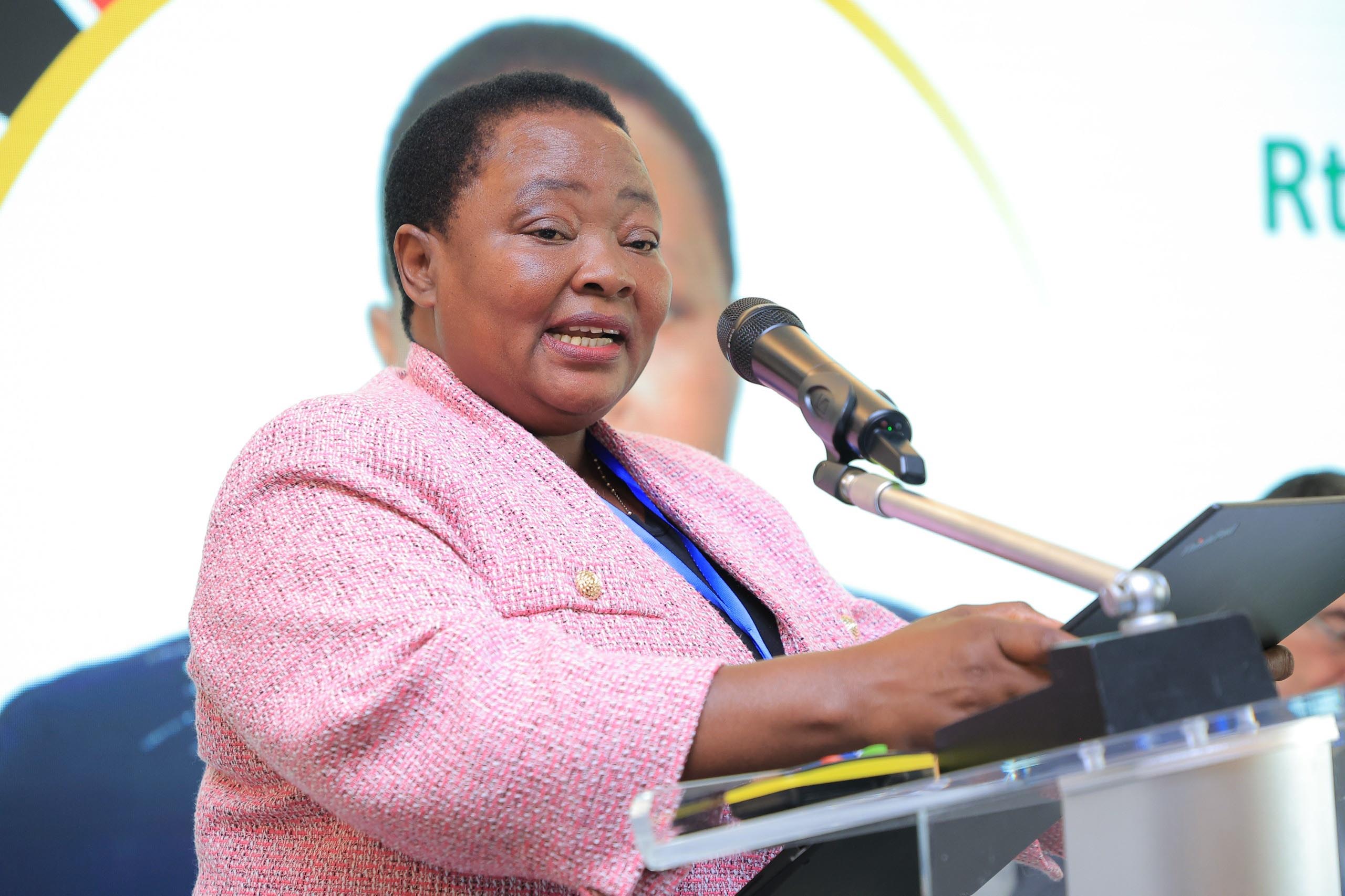
Nabbanja said Ugandan farmers who grow and harvest coffee earn very little from raw beans, while a kilogramme of finished coffee goes for sh231,550 (about 50 Euros) in Italy. (Courtesy photos)
Nabbanja's remarks were contained in a statement issued by Uganda Media Centre on October 13, 2026.
Currently, Italy is the biggest buyer of Ugandan coffee, with 8.8 million 60kg bags of coffee exported annually, earning $2.4b (about sh10b), according to the agriculture ministry reports.
Nabbanja said Ugandan farmers who grow and harvest coffee earn very little from raw beans, while a kilogramme of finished coffee goes for sh231,550 (about 50 Euros) in Italy.
“That is where I want partnerships so that we can help Ugandans to make sure you have a cup of coffee on the table," she said.
She tied each of the four Agro-Industrialisation, Tourism, Minerals and Science, Technology and Innovation (ATMS) pillars to openings for Italian firms, citing agro-processing, machinery and cold chains to hotels, mineral value addition and pharmaceuticals.
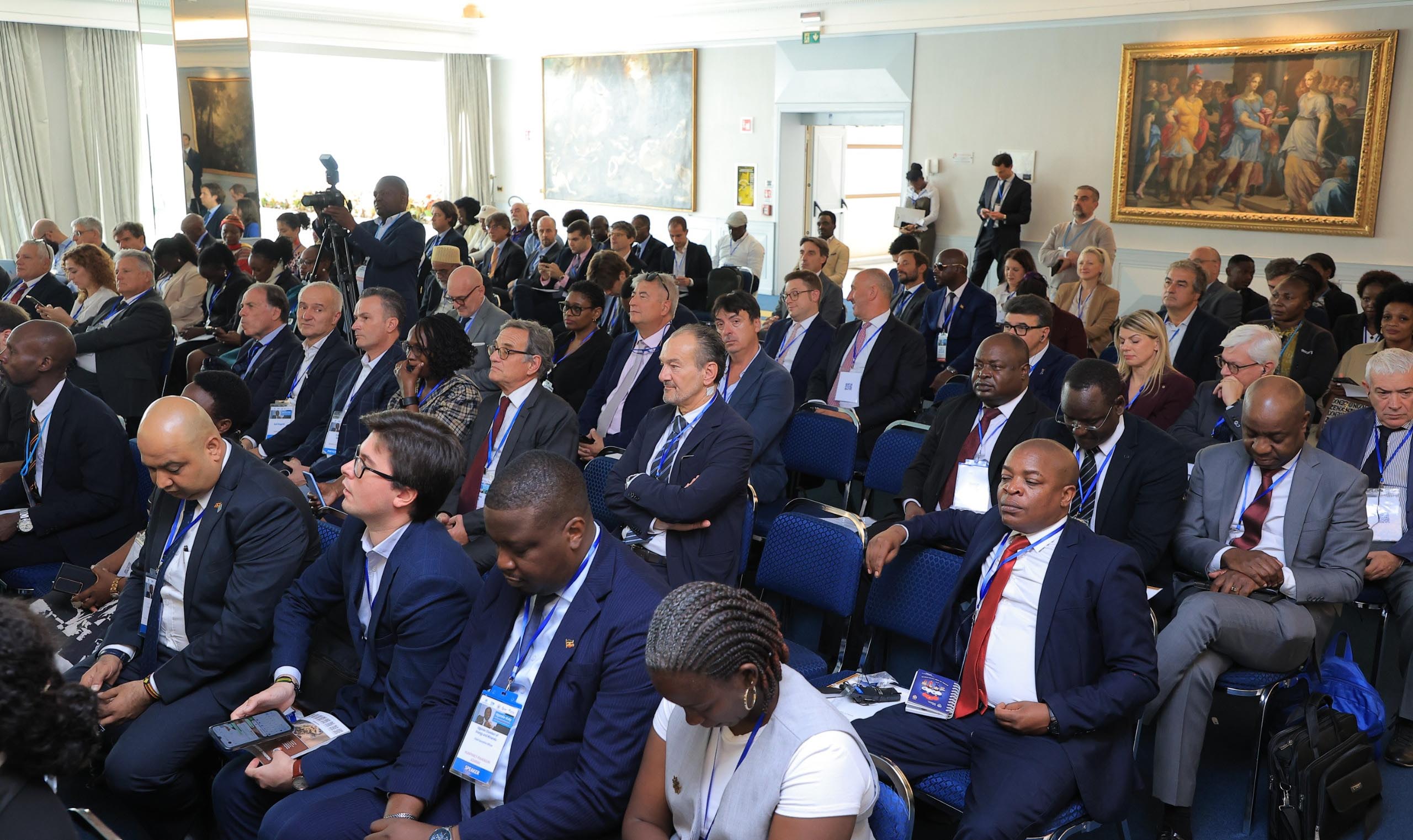
She said the Government planned to generate 52,000 megawatts of electricity by 2040, saying industrialisation was impossible without power.
Dr Gerald Kyalo, Commissioner for Coffee at the Ministry of Agriculture, Animal Industry and Fisheries, said Uganda is Africa’s biggest producer of robusta coffee that accounts for 89% of the country’s coffee, while arabica accounts for 11%.
Over 1.5 million farmers are registered, while 1.6 million coffee gardens are mapped, according to Kyalo. "We expect the number to reach 2.6 million farmers by the end of the year," he said.
Kyalo said Uganda consumes only about 7% of the coffee it produces, and invited Italian firms to set up soluble coffee plants. He said Ugandan coffee exports would carry a national “Ugandan Coffee” brand and logo starting next financial year.
He said the Tenfold Growth Strategy seeks to expand the economy from $50b to $500 billion by 2040 through agro-industrialisation, tourism, mineral development, and science, technology and innovation that will attract investment to $50b by 2040.
Dr Robert Mukiza, Director General of the Uganda Investment Authority (UIA), said investors can earn up to a 14% return on investment, which is rare anywhere in the world.
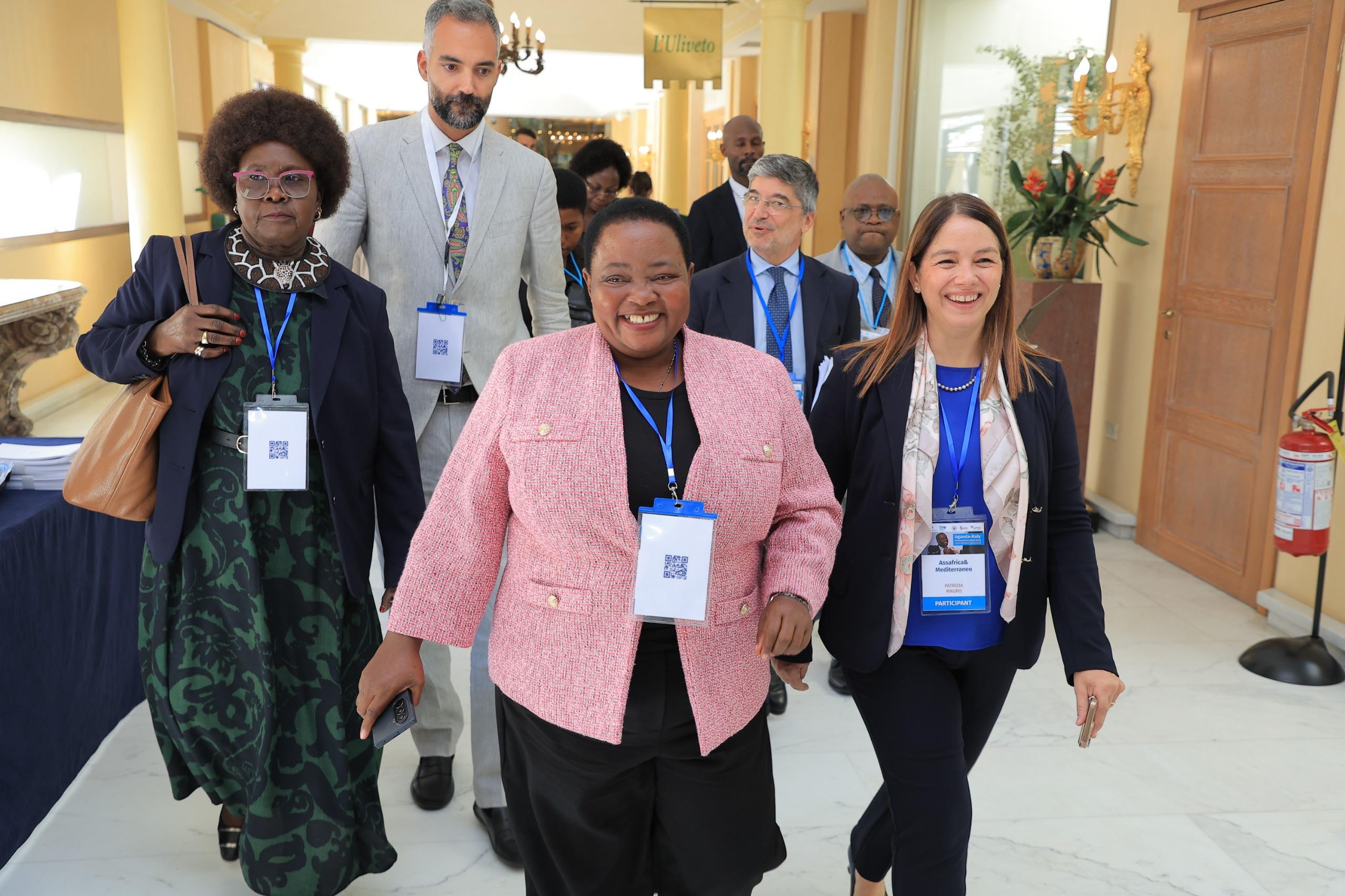
He said Africa’s population is expected to reach 2.5 billion by 2050, with 1.1 billion people in the middle class. He, therefore, urged Italian companies to serve the continent by basing in Uganda through the East African Community, the Common Market for Eastern and Southern Africa (COMESA) and the African Continental Free Trade Area.
Hez Kimoomi Alinda, the executive director of the Uganda Free Zones and Export Promotion Authority, said investors in Uganda’s special economic zones would find incentives comparable to those in Italy.
Alinda explained that fish accounts for only 2% of Italy’s fish imports. He said Italy imports Ugandan cocoa unroasted, and urged Italian firms to set up plants in Uganda to make cocoa butter, cocoa liquor and chocolate products.
He listed fresh fruits and vegetables, vanilla, tea, spices, dairy, aquaculture, cold chains, packaging, Information Technology-enabled services and tourism as other areas open to Italian investors.
Alinda said the European Union (EU) was a leading importer of Ugandan fresh produce, but noted that Uganda lacked enough testing laboratories to meet EU standards. He invited Italian firms to build them.
He also offered Italian investors a free 1,031-square-metre production facility at Entebbe for value addition aimed at feeding Italian and EU markets.
Humphrey Asiimwe, the chief executive officer of the Uganda Chamber of Energy and Minerals, also invited Italian firms to invest in energy, oil and gas, and mining.
He said Uganda has 58 known minerals, 23 of them commercially viable, including graphite, tin, tungsten and rare earths needed for the energy transition.
He said a British firm was already mining graphite at Orom in Northern Uganda, and an Australian firm was developing heavy rare earths in Eastern Uganda.
Last month, President Yoweri Museveni launched Pearl Sweet as the name for Uganda’s crude oil on the international market that opened opportunities in refining, petrochemicals, fertiliser production and pipeline services.