
Pre-trial detention taking heavy toll on families — study
According to the report, households with children are the most affected, with 91% of them reporting stigma, interrupted education and child labour.
The Deputy Chief Justice Moses Kazibwe Kawumi (left) launching the Socio-economic study report on the impact of pre-trial detention in Uganda as the Head of Austrian Embassy/Development cooperation Dr. Katja Kerschbaumer (2nd right) and the Executive of Director of Avocats Sans Frontieres (ASF) look on. This was at Sheraton Hotel, Kampala on Wednesday 28th October 2026. (Photos by Mpalanyi Ssentongo)
________________
A study on the socio-economic costs of pre-trial detention has found that it is taking a heavy toll on families, with 98% of detainees’ households losing income as more than a quarter of them sell assets to survive while others borrow money to cope.
Records from the prisons service show that 46.2% of the over 79,000 prisoners across the country are on pre-trial detention. This implies that 36,498 prisoners are on pre-trial detention.
The report titled Beyond the Cell: The Hidden Socio-Economic Costs of Pre-Trial Detention in Uganda, was released by Avocats Sans Frontières (ASF) at Sheraton Hotel in Kampala on October 29. ASF, also known as lawyers without borders, is a Belgium-based international non-governmental organisation that engages in access to justice, rule of law and capacity building.
The survey done in Ugandan prisons, shows that the consequences of prolonged pre-trial detention extend beyond the accused to affect household livelihoods, children’s welfare, family relationships and prospects of economic recovery after release.
ASF carried out the research in partnership with the Legal Aid Service Providers Network (LASPNET) with support from the Australian Development Agency under the Rights Behind Bars project.
Report details
The report also indicates that about 65% of the detainees interviewed had spent more than six months on remand without trial.
According to the report, households with children are the most affected, with 91% of them reporting stigma, interrupted education and child labour.
“These realities demonstrate that access to justice is not only a rights issue, but also a development and socio-economic concern,” said Richard Muganzi, the lead researcher.
Muganzi stressed the importance of pre-release support to avert a crisis for families once detainees return home.
The report shows that before arrest, most of the detainees interviewed earned a living through work that depends on daily personal effort.
According to the report, the majority of the interviewed prisoners before arrest were engaged in farming (23%), self-employment or business (21.3%), casual labour (13.8%) and boda-boda riding (10.3%).
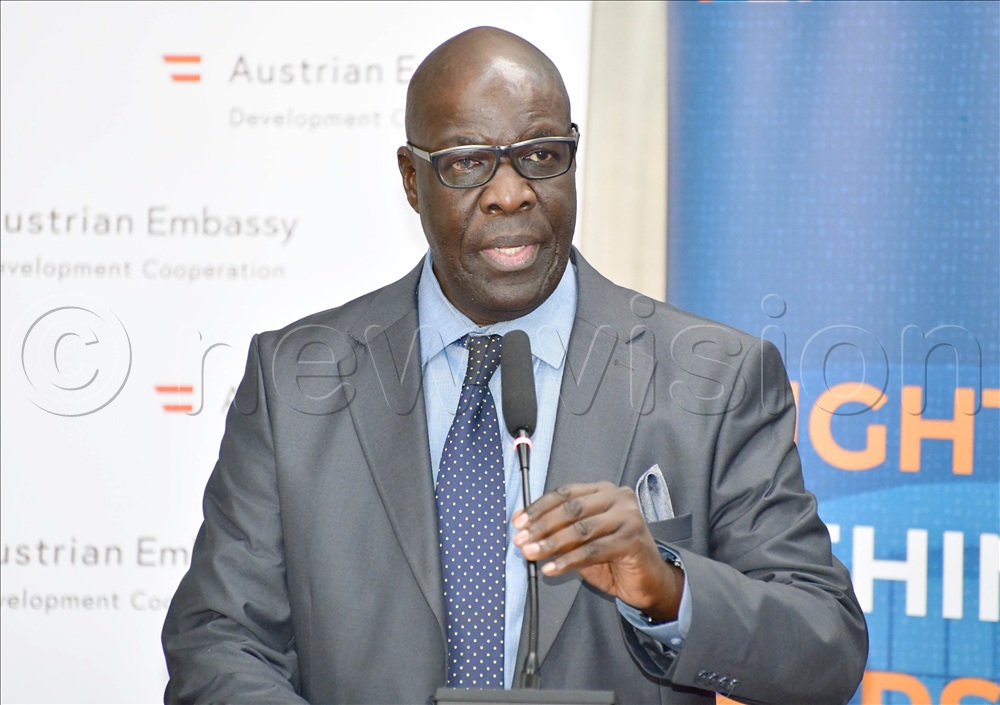
The Deputy Chief Justice Moses Kazibwe Kawumi (1)
“Prolonged detention therefore interrupts production, business operations, daily earnings and education almost immediately,” Muganzi said.
The report also shows that many detainees lack information about police bond, bail and other legal remedies.
Although two-thirds of those interviewed inmates were aware of bail, the report shows that only 7% had applied for it.
“This suggests that many may not have understood the procedures, lacked sureties, could not meet bail conditions or struggled to navigate court processes,” Muganzi noted.
He added; “None of us should become complacent regarding the constitutional requirement that individuals be brought before court within 48 hours. Every day and every hour in violation of this safeguard affects families.”
Some stakeholders, however, argue that pre-trial detention is an important component of the administration of criminal justice, permitting the temporary deprivation of liberty while investigations and proceedings are ongoing.
But some participants such as Kira Municipality Member of Parliament George Musisi, argued that prolonged or unnecessary detention raises significant concerns about the right to personal liberty, procedural fairness and socio-economic well-being.
DCJ launches report
Launching the report, Deputy Chief Justice Moses Kazibwe Kawumi commended ASF for the study, which he said produces good information with practical recommendations to overcome the challenge.
Drawing on the findings, Justice Kawumi underscored the importance of fast-tracking the legal aid Bill to address the situation.
“We need an engagement as justice actors to discuss this report and chart a way forward,” he said.
Dr Katja Kerschbaumer, the head of the Australian Development Agency, said the report offers several recommendations to close the gap.
“I encourage all of us to view this report not merely as a research publication, but also as a practical tool for reform,” Kerschbaumer said.
She said the report provides an important starting point for understanding the challenge of pre-trial detention and identifying evidence-based solutions.
“Our objective should not be the elimination of pre-trial detention, which remains a legitimate tool of criminal justice, but rather to ensure that whenever it is used, it is lawful, necessary, proportionate and fully consistent with the Constitution of Uganda,” she said.
Stakeholders speak out
The Deputy Director of Public Prosecutions (D/DPP), George William Byansi, acknowledged the challenge, but said courts are sometimes reluctant to release prisoners on bail because many of them jump bail, thereby frustrating justice. “We also need more state attorneys to speed up trials,” Byansi said.
Senior Superintendent of Prisons Hassan Walangalira commended ASF for the study, saying it clearly brings out the realities faced by the prisons service.
Dr Paul Mukiibi, a lecturer at the Law Development Centre (LDC), said the judiciary should consider releasing some detainees on mandatory bail to avert the crisis.
Key recommendations
It was recommended that the judiciary gives convicts of petty offences non-custodial sentences and that the DPP should make timely prosecutorial decisions.
It was also recommended that case tracking is improved, as well as strengthening coordination among justice actors.