
Parliament drops tax on diaspora remittances, personal asset sales
During the Thursday, April 23, 2026, sitting presided over by Speaker Anita Among, legislators removed the contentious provision, citing the burden it would place on migrant workers who support families back home.
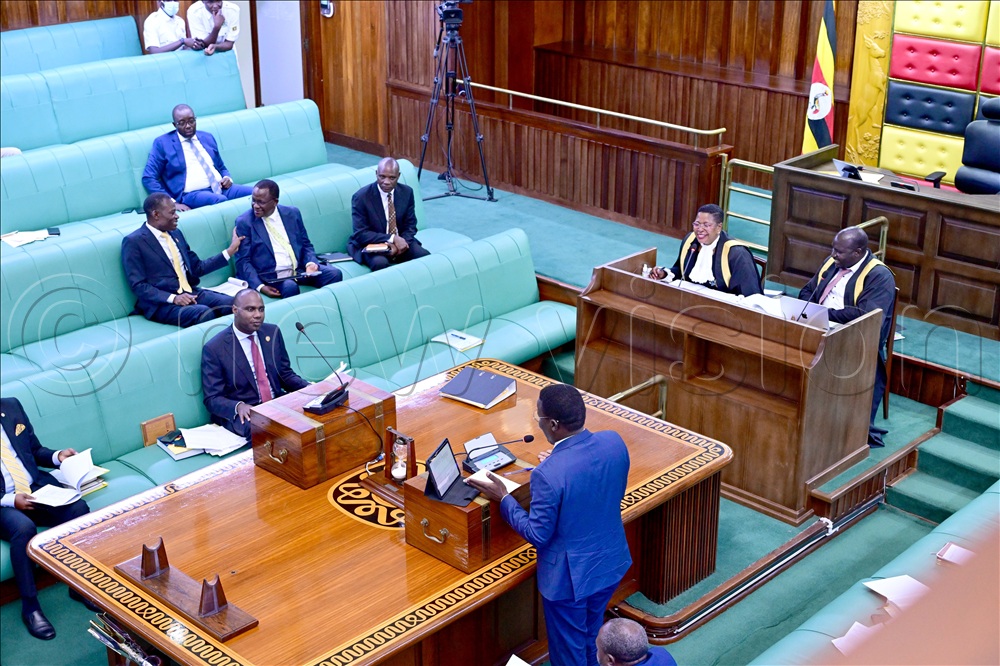
Erute South lawmaker Jonathan Odur(left) presents during plenary. This was on April 23, 2026. (Photos by Miriam Namutebi.)
________________
Parliament has passed the Income Tax (Amendment) Bill, 2026, rejecting a government proposal to tax income earned abroad and remitted to Uganda by citizens living and working overseas.
Remittances to Uganda have surged, with Ugandans abroad sending home $2.5 billion (sh9.5 trillion) in 2025, according to the Bank of Uganda.
During the Thursday, April 23, 2026, sitting presided over by Speaker Anita Among, legislators removed the contentious provision, citing the burden it would place on migrant workers who support families back home.
Lawmakers raised concern that many Ugandans employed in the Middle East and other regions earn modest wages under difficult conditions, and that taxing their remittances would be unfair without adequate safeguards.
The two decisions came as the House considered and passed both the Income Tax (Amendment) Bill, 2026 and the Lotteries and Gaming (Amendment) Bill, 2026, key pieces of legislation aimed at strengthening domestic revenue mobilisation to finance the 2026/2027 national budget.
Presenting the committee report, Chairperson of the Committee on Finance, Amos Kankunda, said the proposals were guided by the need to balance revenue generation with economic growth and taxpayer protection.
He noted that the committee supported expansion of the tax base but removed provisions deemed impractical or punitive.
“Non-business assets are usually disposed of for personal reasons, for instance, to meet medical expenses, and should not constitute a tax base,” Kankunda said.
Karim Masaba (Industrial Division, Mbale City, Independent) warned that the proposed tax on personal assets was overly broad and risked capturing routine household transactions.
“If I sell my Television at home and I earn a profit, you want to tax that,” Masaba said.
State Minister for Finance, Planning and Economic Development (General Duties), Henry Musasizi, defended the proposal, saying it was intended to target individuals disguising business activities as personal transactions.
Musasizi acknowledged the difficulty of enforcement, particularly in distinguishing personal from commercial sales, prompting Parliament to drop the clause.
In a related decision, Parliament unanimously approved a six-year extension of the tax exemption for the Bujagali Hydropower Project to 2032, warning that removing the incentive would likely increase electricity tariffs.
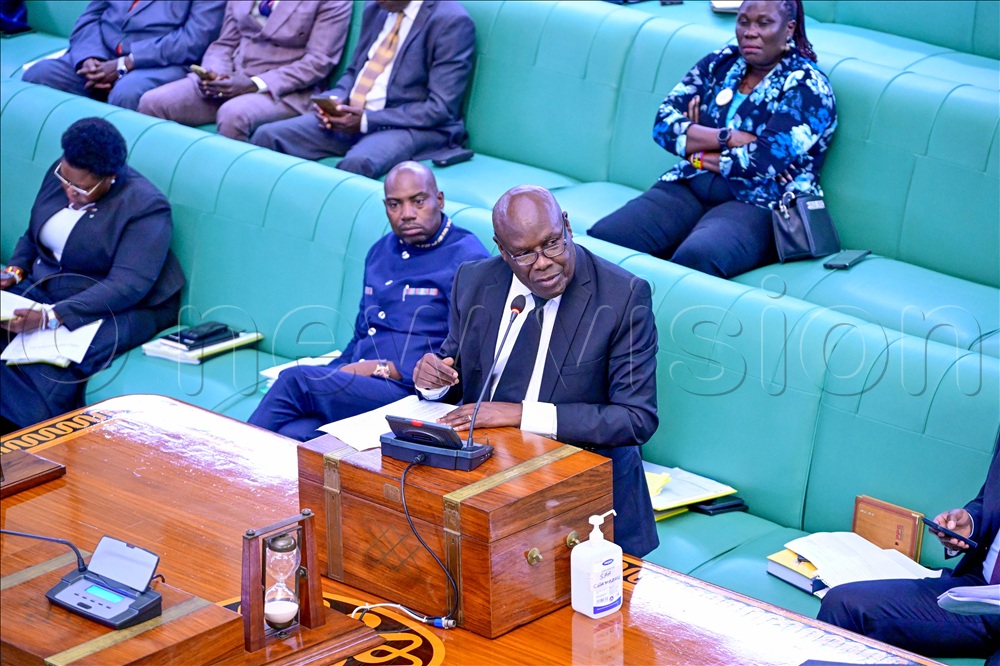
Nandala Mafabi (Budadiri West, FDC) urged clarity on the matter, noting that the exemption does not draw directly from the Consolidated Fund but relates to charges borne by electricity consumers.
Among the approved reforms is the inclusion of software within the definition of royalties, bringing digital services into the tax framework in line with developments in the digital economy.
The law exempts employees earning up to sh335,000 per month from Pay As You Earn (PAYE), a move expected to ease the tax burden on low-income earners. It further reduces the minimum investment threshold for Ugandan hotel developers from $5 million (sh18.6b) to $1.5 million (sh5.5b), a measure aimed at attracting investment into the tourism sector.
Parliament also passed the Lotteries and Gaming (Amendment) Bill, 2026, which harmonises tax rates across the gaming industry and standardises the treatment of gambling activities, as part of efforts to streamline regulation and improve compliance.