
Museveni backs regional refineries, says Uganda project on track
Museveni said the development of refining capacity should form part of a broader push for industrialisation and economic integration in East Africa.
President Yoweri Museveni speaking at the groundbreaking ceremony for the refinery in Lamu on invitation by Kenyan President William Ruto. (Courtesy)
________________ President Yoweri Museveni. (Courtesy)
President Yoweri Museveni has backed plans for a new oil refinery in Kenya, saying East Africa needs more refineries, value addition and bigger integrated markets to reduce dependence on exporting raw materials.
Museveni said Uganda would proceed with its own refinery plans while maintaining cooperation with Tanzania on the Tanga refinery project.
“I am happy to see Africa waking up and moving away from the 70-year betrayal of exporting raw materials,” Museveni said in a post on X after travelling to Lamu County, Kenya, for the groundbreaking ceremony of the Dangote East Africa Petroleum Refinery.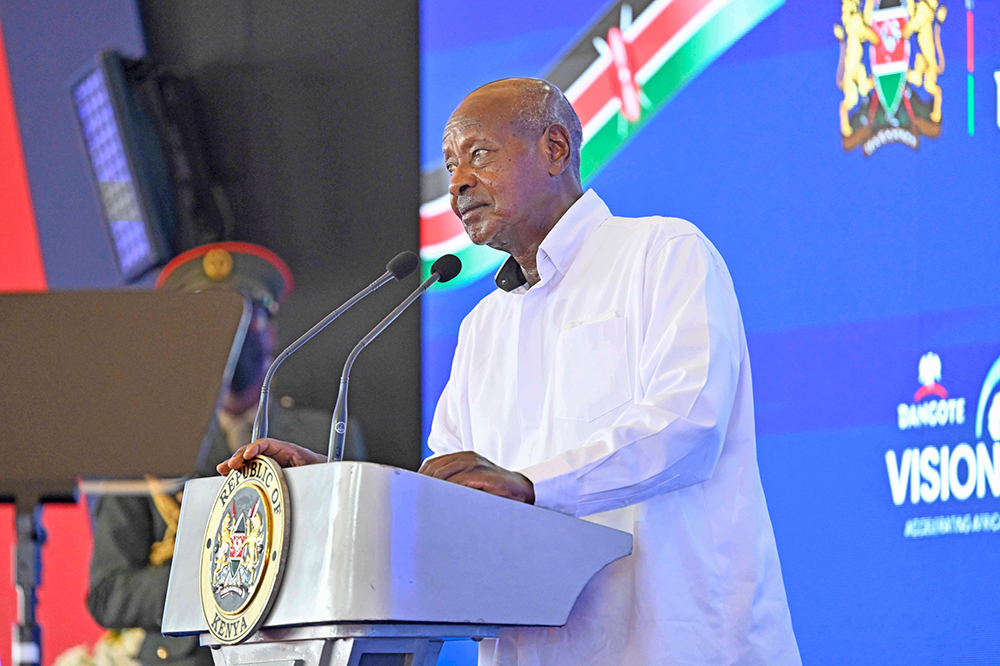
“Uganda’s refinery will be built, and our cooperation with Tanzania on Tanga stands. There is no harm in having more refineries in the region.”
Uganda's planned Uganda Oil Refinery--a 60,000-barrel-per-day facility-- will be located at the Kabalega Industrial Park in Kabaale, Hoima District. It will cost Uganda an estimated $4b to build.
Museveni said the development of refining capacity should form part of a broader push for industrialisation and economic integration in East Africa.
“What Africa needs is value addition, industrialisation and bigger integrated markets. East African political integration must ultimately be treated as a matter of strategic survival,” he said.
Museveni was invited by Kenyan President William Ruto to attend the groundbreaking ceremony for the refinery in Lamu.
“Mr Dangote, who started as an importer and has become a national and continental asset, is a good example of the transformation we need,” Museveni said.
Dangote, Africa’s richest man, said the planned refinery would help the continent move towards self-sufficiency in refined petroleum products.
The $16b refinery, planned for Lamu on Kenya’s Indian Ocean coast, is expected to have a processing capacity of 700,000 barrels of crude oil per day and take about 30 months to construct.
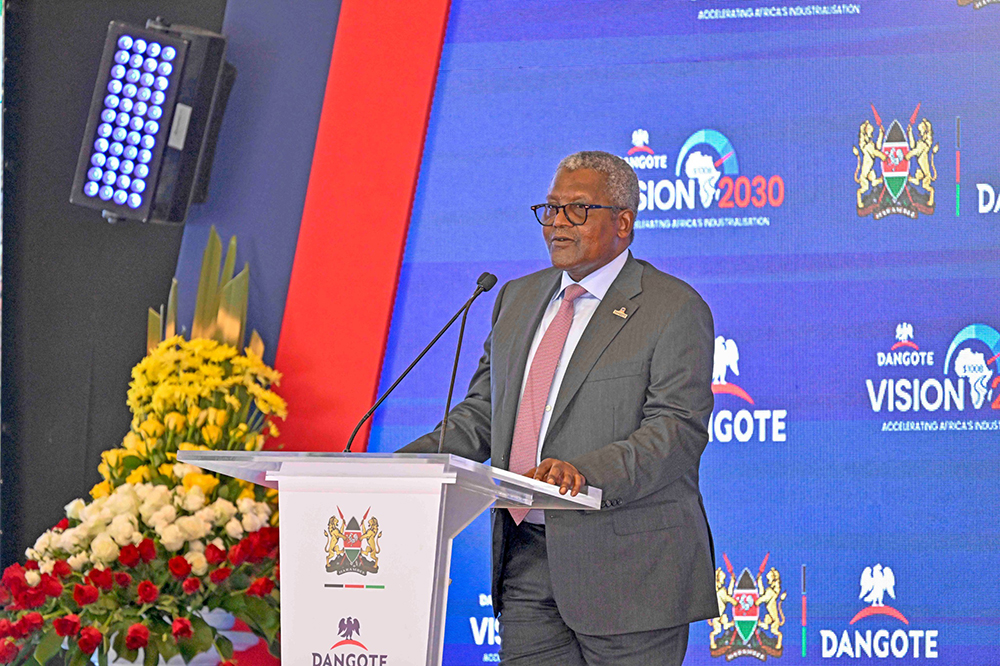
Nigerian businessman Aliko Dangote. (Courtesy)
Speaking to journalists in Nairobi on Tuesday, Dangote said he expected most African countries to become self-sufficient in refined fuel by 2030.
“By 2030, the majority of African countries will be self-sufficient. It does not matter where it is refined, but it should be in the African continent, on the soil of Africa,” he said.
Dangote said the refinery would initially source crude oil from several markets, including the Middle East and the United States, while remaining positioned to process crude from East African producers as their production increases.
Kenya, Tanzania and Mozambique are among countries in the region developing oil and gas resources.
“When you talk about 700,000 barrels per day, it's actually small. For the region, it's a big refinery, it's a big investment, but it is a start-up,” he said.
“This refinery is not all we are going to do there. It's just the start. You will see the number of industries that will come around the refinery.”
He said Africa's continued dependence on exporting raw materials and importing finished products was costing the continent jobs and economic value.
“The biggest problem is that we export raw materials at maybe 5 to 10 percent of its value, and then we end up buying at 100 percent of its value,” Dangote said.
“We are exporting jobs, because when we keep exporting raw materials, you are creating jobs out there. And when you buy finished products from them... you are importing poverty, because you are not actually creating any jobs here.”
The Lamu project comes amid debate over land rights and environmental concerns, with opposition from environmental groups including Greenpeace.
Dangote dismissed the concerns, saying such challenges should not stop Africa from pursuing industrial development.
The Kenyan refinery would add to the region’s existing and planned petroleum-processing capacity, including Uganda’s planned refinery and Tanzania’s proposed cooperation on the Tanga project.
For Uganda, Museveni’s remarks reaffirm the Government’s position that the country intends to develop domestic refining capacity alongside regional petroleum infrastructure and export arrangements.
Uganda is developing its oil resources in the Albertine Graben, with crude production expected to support both domestic energy needs and exports