
MPs warn govt against abusing amnesty law
Members of Parliament (MPs) made the call on September 23, 2026, during an interaction between the Public Accounts Committee (Central), chaired by Patrick Guma-Oshabe Nsamba, and officials from the Ministry of Internal Affairs led by undersecretary Dorothy Nsereko.
Public Accounts Committee (Central) Chairperson and MP Kassnda North MP Patrick Ndsamba Oshabe, chairing the meeting with officials from the Ministry of Internal Affairs. (Photo by Maria Wamala)
________________
Government has been warned against abusing the Amnesty law.
Members of Parliament (MPs) made the call on September 23, 2026, during an interaction between the Public Accounts Committee (Central), chaired by Patrick Guma-Oshabe Nsamba, and officials from the Ministry of Internal Affairs led by undersecretary Dorothy Nsereko.
Also present was Jabel Bwowe, the secretary of the Amnesty Commission.
Speaking during the meeting, Nsamba said the tenets of the law clearly stipulate that it was meant for armed combatants who agree to lay down their arms in exchange for exoneration from criminal liability.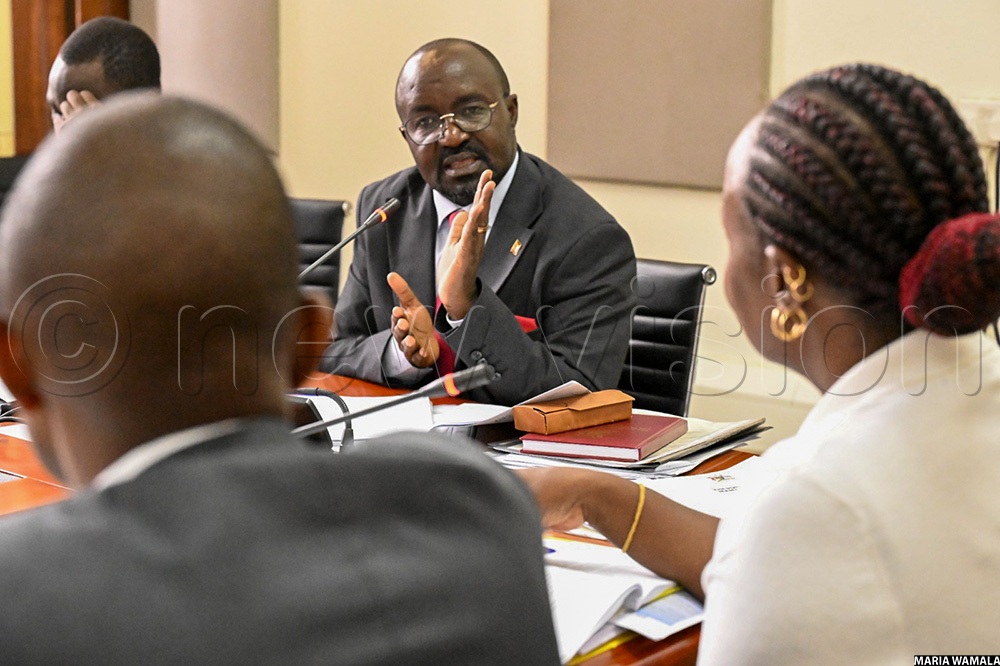
Public Accounts Committee (Central) Chairperson and MP Kassnda North MP Patrick Ndsamba Oshabe, chairing the meeting with officials from the Ministry of Internal Affairs. (Photo by Maria Wamala)
However, he observed that some politicians, particularly those from his party, had recently been pushed into seeking amnesty despite what he described as its far-reaching consequences.
Govt responds
However, Jabel Bwowe, the secretary of the Amnesty Commission, clarified that the law also applies to collaborators.
He added that under this arrangement, the commission provides amnesty application forms to prisoners, allowing those who wish to apply to do so freely. The commission then follows up on their cases from their places of detention or from where they were convicted.
“After filling them, those who apply for amnesty, like the ones you have said, politicians, for us we follow that they have applied for amnesty individually and voluntarily. Then we go to the judge. So that they know that they have accepted to fill amnesty forms and also apply for amnesty,” Bwowe explained.
MPs react
However, Bwowe's hesitancy to commit on whether the provision had been applied to active politicians prompted MPs, including Capt. (Rtd) John Bosco Bamuturaki (Kashari South, NRM), to seek clarification.
“Do you think those young people you are giving the amnesty certificate are ex-combatants?” Nsamba inquired.
He further asked, “Would you like to amend the law to cater for that group of people?”
“The gentleman has told you that for him he gives a form and willing people fill them. Now the question would be what about a person who robbed a bank. If he applied, would he get amnesty?” inquired Allan Atugonza (Buliisa County, NRM).
Unrelenting, Bwowe maintained that an applicant's eligibility depends on their choice to apply and whether they meet the criteria set out on the application form.
“Those who qualify for amnesty are ex-combatants 13 years and above who stayed in the bush for over three years. Then coordinators of rebels or collaborators also qualify for amnesty. Children who are below twelve years don’t qualify,” he clarified.
Atugonza further pressed Bwowe on whether politicians arrested in the course of activism and later granted amnesty had been categorised as rebels or collaborators.
But Bwowe responded that he would need to check the forms to establish which category some of those who had regained their freedom had applied under.