
Minister Byamukama blames high road costs on direct procurement
The Bugangaizi West Member of Parliament (MP) made the remarks on July 20, 2026, while appearing before Parliament's Physical Infrastructure Committee chaired by Mwine Mpaka Rwamirama (Mbarara City South Division, NRM).
Works and transport state minister Fred Byamukama (left) makes his remarks on July 20, 2026, while appearing before Parliament's Physical Infrastructure Committee. (Credit: Maria Wamala)
________________
Works and transport minister Fred Byamukama has attributed the high cost of road construction projects to direct procurement, arguing that, unlike competitive bidding, where contractors are rigorously assessed, direct procurement gives the Government limited room for price negotiation.
The Bugangaizi West Member of Parliament (MP) made the remarks on July 20, 2026, while appearing before Parliament's Physical Infrastructure Committee chaired by Mwine Mpaka Rwamirama (Mbarara City South Division, NRM).
“You find like the contractor is the one who brings the funder, and which means the contractor names the price. If he goes to Finance through direct procurement, they negotiate and accept. Some of them (works officials) have not told you; they have no powers over these negotiated contracts. These people even will accept,” Byamukama admitted.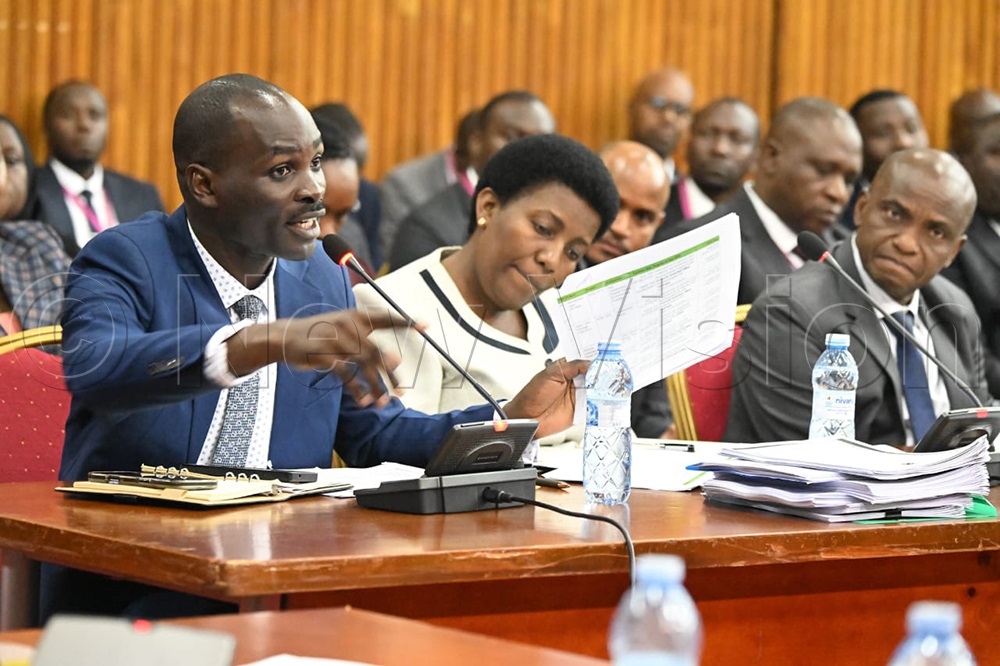
Works and transport state minister Fred Byamukama (left) makes his remarks on July 20, 2026, while appearing before Parliament's Physical Infrastructure Committee. (Credit: Maria Wamala)
“The same contractor brought a funder; they are invited to Finance to sit in meetings with a price. By the time they know, it has gone to Cabinet, goes to Parliament, and it goes off. And they cannot have control over it,” he emphasised.
MPs astonished
The minister's remarks stunned several MPs, including committee chairperson Mwine Mpaka.
“From what the Minister has told us, it is very clear, and I think he has been open that in Uganda, cost per kilometre is susceptible to corruption. Because the contractor normally lobbies a financier. When they bring this money, they have already determined who will do the job and the cost of that job. I wonder why we even have contracts committees, bidding processes,” Mpaka wondered.
Rwenkunye-Apac road design review
The debate was sparked by design alterations on the Rwenkunye-Apac (190.9km) road.
The project, which has been under construction for six years, is being undertaken by SAK Construction General Trading and Contracting Company at a contract sum of sh337.526b and is now expected to be completed by February next year.
The concerns arose from an explanation by Ministry of Works contract manager Isaac Ssekubunga, who said that shortly after construction began, a supervision consultant identified aspects of the project design that required rectification.
One of the issues was the need to improve drainage, as flood levels within the project area had significantly changed due to the effects of climate change. Another issue that had not been factored in was the construction of the bridge.
“The consideration was that the ferry, which is at Masindi port, was going to continue serving the corridor without the bridge,” said Ssekubunga.
Adding that “The contract sum hasn’t been changed, but the consultant recommended an increase in the scope from sh337b to sh405b. The bridge is now being considered as a separate project. The bridge is across the Nile at Masindi port.”
Design time lapse
Commenting on the matter, commissioner for national roads Eng. Isaac Wani attributed the changes to a time lapse.
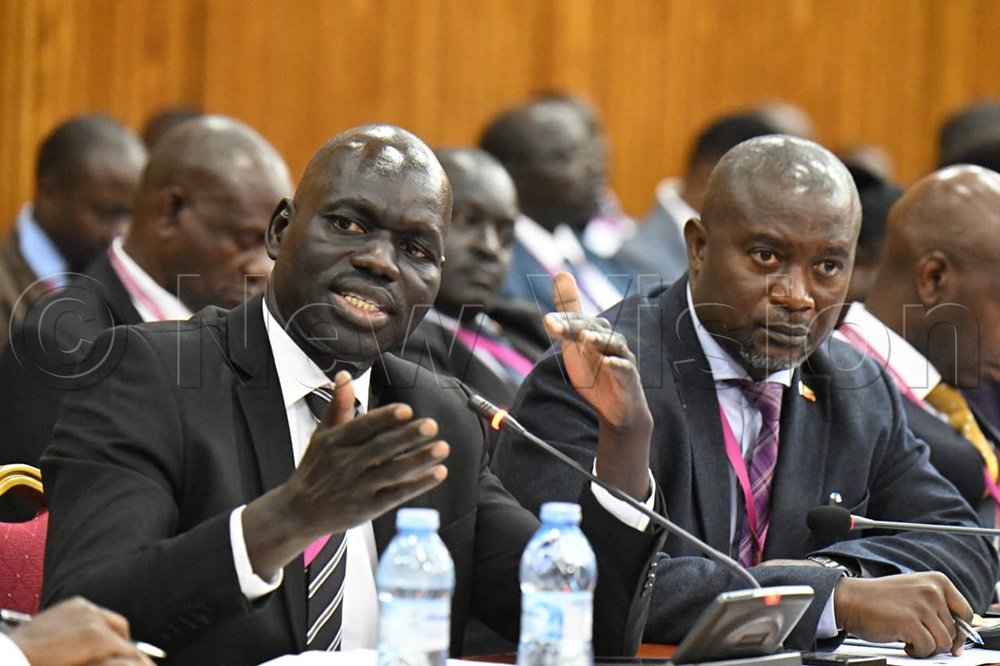
Commissioner for national roads Eng. Isaac Wani attributed the changes to a time lapse. (Credit: Maria Wamala)
“The design was prepared around 2010, and Government took a very long-time to secure financing to finance this project. The contract was signed in 2020, and that’s when the design review consultant had to look at the design. Unfortunately, at that time, climate change issues, the flooding, which was across the country, the River Nile and so on, exposed that design. Even Lake Victoria waters rose to the maximum peak. So, the design review was actually done at that very time,” Wani quipped.
He added that the pavement, which had been designed a decade earlier, was found insufficient for the increased volume of traffic resulting from growing cross-border trade in the area, especially after the Musingo road through Kitgum was constructed.
“What that meant was that the traffic which was estimated to use the ferry, to cross few vehicles, the pavement was thinner. But when the bridge comes in, it means heavy goods traffic would be crossing going across the country,” he explained.
Backlash
However, Bufumbira South MP Alex Niyonsaba Seruganda (NRM) and Eng. James Waluswaka (Bunyole West, NRM) disagreed with him.
“I would like to ask him, what are the design considerations. Even at the very start, they must take into account these changes. Because the floodings in Uganda are well known, from the lowest to the highest levels for even a period exceeding 50 years. Even Lake Victoria is known for the levels it achieves and the lowest peak. From the onset, a design must have all those things,” Niyonsaba argued.
“In the 10th Parliament, Honourable Jonathan Odur, the UPC man, when we went there, he said Obote’s people cannot rely on the ferry, and he came. He wrote letters, we agreed as a committee that time that Obote was a statesman, let us give a bridge,” Waluswaka alluded.
What others say
Dr Opio Acuti (Kole North, NRM): When you say, 90% of these roads are direct procurements but when you look at them they are actually competitive bidding it makes me begin to think that the price is actually fixed through collusion, the bidding process is done when the contractor is already known. So, you are just participating in it as a formality.