
Lent season: Gulu Archbishop Wokorach calls for spiritual renewal
Addressing a capacity congregation, the archbishop highlighted the three spiritual pillars of the season: sincere repentance, dedicated fasting, and the courage to offer forgiveness.
Raphael P’Mony Wokorach, Archbishop of Gulu Archdiocese during the Ash Wednesday Mass at St. Joseph's Cathederal in Gulu city. (Photo by Claude Omona)
________________
The Lenten season began with a powerful call for transformation at St Joseph’s Cathedral in Gulu city on February 18, 2026.
Gulu Archbishop Raphael P’Mony Wokorach presided over the Ash Wednesday liturgy, inviting the faithful to embark on a 40-day journey of prayer, penance and sacrifice.
Addressing a capacity congregation, the archbishop highlighted the three spiritual pillars of the season: sincere repentance, dedicated fasting, and the courage to offer forgiveness.
“This Lenten season must be a time of active reconciliation and a profound renewal of the soul,” Wokorach told the believers.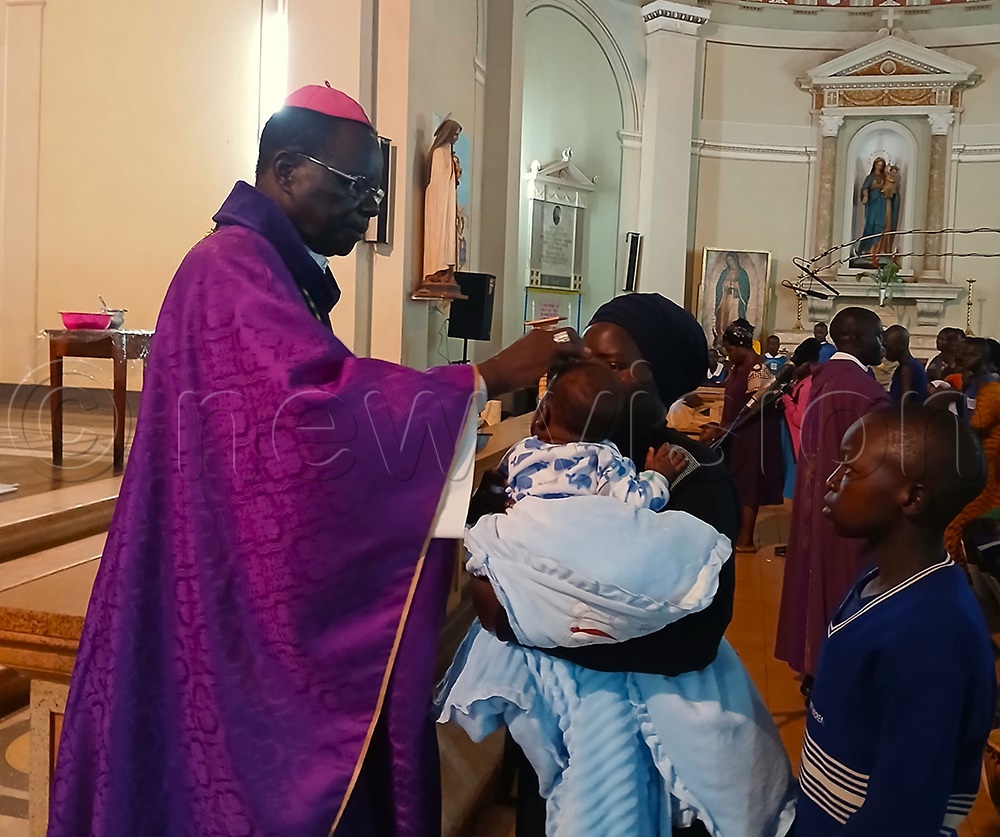
Raphael P’Mony Wokorach, Archbishop of Gulu Archdiocese putting ash on th forehead of a christian. (Photo by Claude Omona)
He explained that the ritual of receiving ashes is far more than a mere tradition; it is a visible sign of an internal commitment to turn away from sin and realign one’s life with the path of righteousness.
The path to the kingdom
Wokorach emphasised that the true essence of Lent lies in the purification of the heart rather than outward displays of piety. He urged the congregation to approach their spiritual disciplines with genuine intention, noting that a renewal of faith is essential for those seeking to enter the Kingdom of God.
The Archbishop reminded the faithful that spiritual growth requires discipline and a focused heart, which serves as the foundation for a deeper connection with the Creator.
The commandment of love
Central to the prelate's message was the practice of brotherly love, which he identified as the primary commandment of Jesus Christ. He made a stirring appeal for reconciliation, urging the community to let go of long-standing animosities and grudges.
According to the Archbishop, forgiveness is not a mere social gesture but a fundamental requirement for any Christian. By fostering a spirit of love and releasing past hurts, he noted, the faithful can truly reflect the grace they receive during this holy season.
Community in devotion
The atmosphere at the cathedral was one of deep communal devotion, drawing people from all walks of life. The congregation included residents from For God Parish in the Bardege-Layibi division, as well as representatives from various Catholic institutions across the region. A notable presence of youth was felt, with pews filled by school children from nearby institutions.
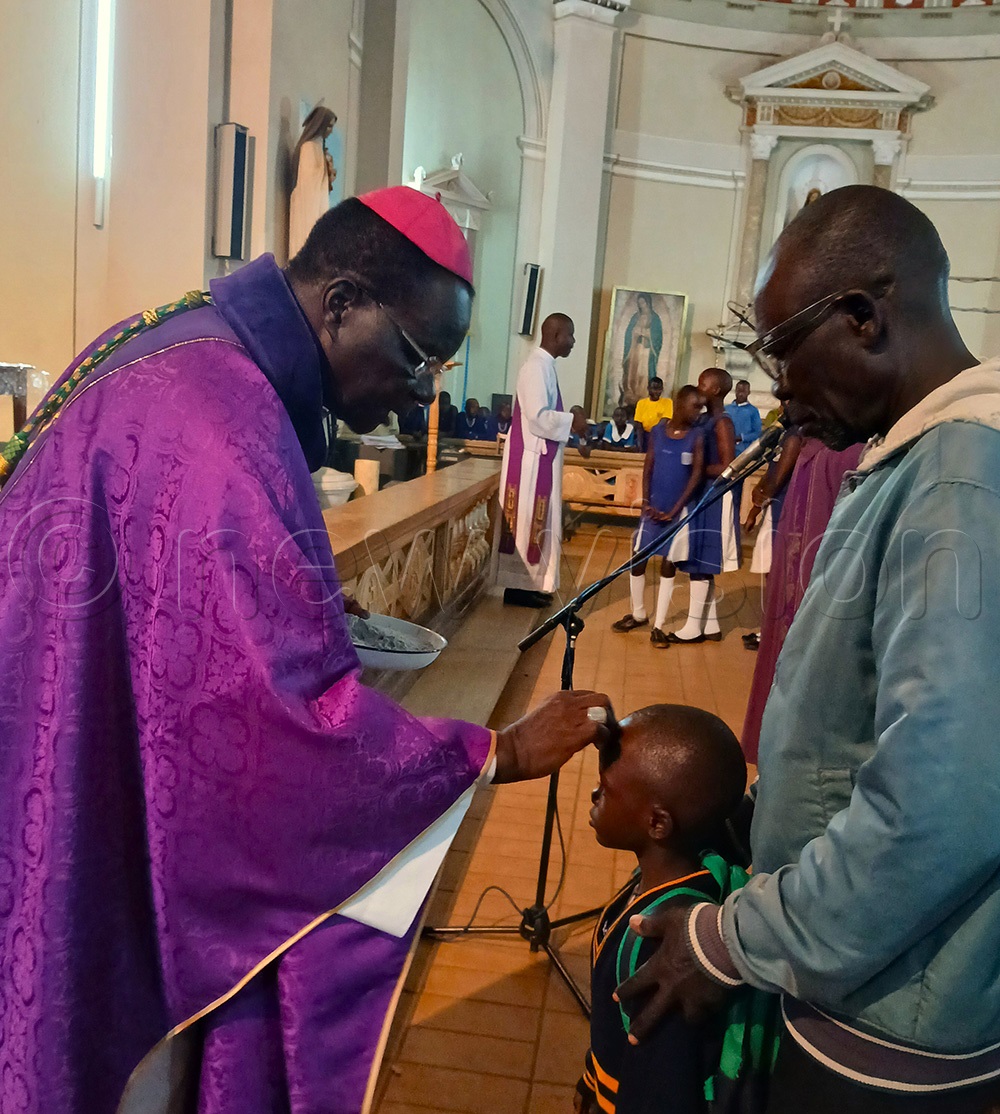
Raphael P’Mony Wokorach, Archbishop of Gulu Archdiocese putting ash on the forehead of a young christian at St Joseph's Cathederal in Gulu city. (Photo by Claude Omona)
Understanding Ash Wednesday
Ash Wednesday marks the start of Lent, a 40-day season (excluding Sundays) of fasting, prayer, and penance leading up to Easter. In the Western Christian tradition, it is a time for believers to reflect on their mortality and seek reconciliation with God.
The defining feature of the day is the "imposition of ashes." During the service, a priest or minister places ashes on the foreheads of worshippers—typically in the shape of a cross.
These ashes are made by burning the blessed palm branches from the previous year’s Palm Sunday celebrations. This act symbolises the transition from the "triumph" of Jesus’ entry into Jerusalem to the "penitence" of the Lenten journey.